
多光谱AI

Search documents
海清智元赴港IPO:一季度营收大增283.6%,刚获5000万融资
Sou Hu Cai Jing· 2025-08-08 01:23
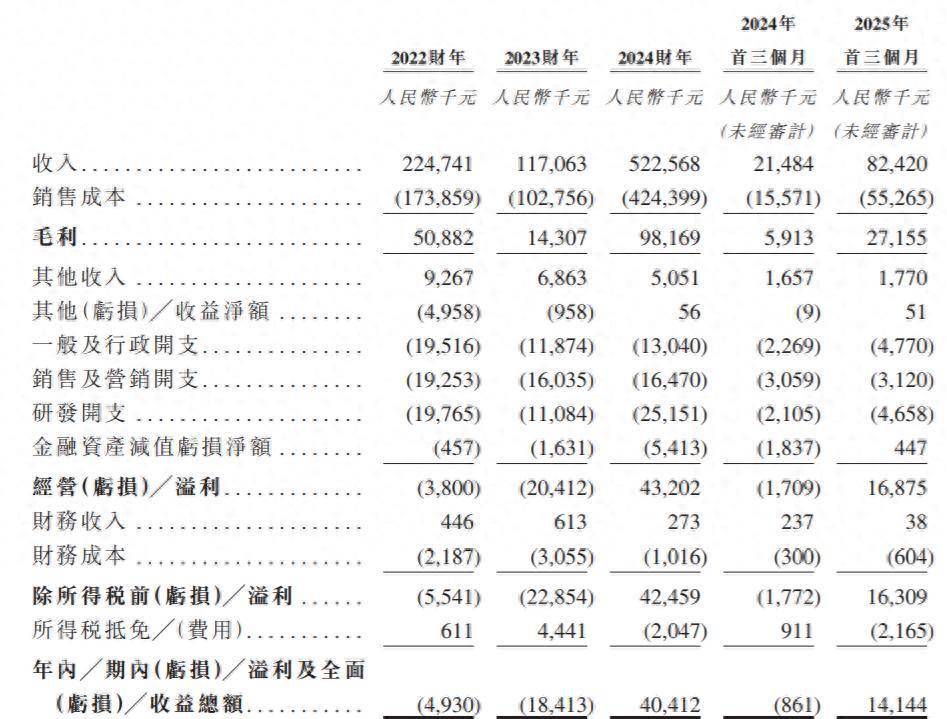
Core Viewpoint - Shenzhen Haijing Zhiyuan Technology Co., Ltd. (referred to as "Haijing Zhiyuan") has submitted its prospectus for an IPO on the Hong Kong Stock Exchange, aiming to leverage its leading position in the multispectral AI technology sector in China [1]. Company Overview - Established in 2013, Haijing Zhiyuan is a leading Chinese company specializing in multispectral AI technology, providing products and services that detect both visible and invisible physical information [1]. - The company ranks first in the Chinese multispectral AI market based on projected 2024 revenue, with its multispectral AI large model services also holding the top position nationally [1]. Financial Performance - In the fiscal years 2022, 2023, and projected for 2024, Haijing Zhiyuan reported revenues of approximately RMB 224.74 million, RMB 117.06 million, and RMB 522.57 million, respectively [2]. - The net profit and total comprehensive income for the same periods were -RMB 4.93 million, -RMB 18.41 million, and RMB 40.41 million, indicating a significant turnaround to profitability in 2024 [2]. - For the first three months of 2025, the company achieved a revenue of RMB 82.42 million, a year-on-year increase of 283.63%, with a net profit of RMB 14.14 million, marking a shift from loss to profit [3]. Investment and Shareholding - On July 18, 2025, Haijing Zhiyuan entered into a capital increase agreement with Shanghai Zhi De Jiu Hao Private Investment Fund, subscribing for 121,311 shares at a total price of RMB 50 million [4]. - Prior to the IPO, key shareholders include Zhou Bo with a direct holding of 5.96%, and other entities holding significant stakes, leading to a total controlling interest of 48.87% [5].

深圳跑出隐形冠军:给摄像头装“超级眼睛”,年入5.23亿,港股上市
3 6 Ke· 2025-08-07 11:51
Core Viewpoint - Shenzhen Haijing Zhiyuan has submitted an application for a main board listing on the Hong Kong Stock Exchange, aiming to become a significant player in China's smart city and industrial digitalization processes [1] Company Overview - Established in 2013, Haijing Zhiyuan has evolved from a startup to a global high-tech company, serving over 3,000 industry clients, including well-known AI companies and listed firms [3] - The company specializes in "intelligent perception algorithms and products," utilizing AI and multispectral sensing technology to enhance decision-making across various sectors [3] Technology and Products - Haijing Zhiyuan's core technology includes a "super wide spectrum perception matrix," enabling devices to detect not only visible light but also ultraviolet, infrared, and other wavelengths, enhancing their operational capabilities in challenging conditions [4][5] - The company offers three main product categories: multispectral AI modules (core hardware), multispectral AI perception terminals (complete devices), and multispectral AI model services (cloud-based intelligent analysis) [1] Market Position - According to Frost & Sullivan, Haijing Zhiyuan holds a leading position in the multispectral AI industry in China, with a market share of approximately 3.5% in 2024 [2][12] - The company ranks first in the multispectral AI model service sector with an 11.8% market share and third in the embedded multispectral AI module sector with a 6.6% market share [2][12] Financial Performance - The company has shown rapid revenue growth, with projected revenues of approximately 225 million RMB in the fiscal year 2022, 117 million RMB in 2023, and 523 million RMB in 2024, reflecting a compound annual growth rate of about 52.5% [11] - Haijing Zhiyuan is expected to turn a profit in the fiscal year 2024, achieving a net profit of approximately 40.4 million RMB, driven by the commercialization of high-margin multispectral AI model services [11] Research and Development - The company invests significantly in R&D, with over 40% of its workforce dedicated to this area, indicating its commitment to developing platform capabilities rather than merely acting as a project contractor [11] Industry Trends - The global multispectral imaging market is projected to reach $6 billion by 2030, with a compound annual growth rate exceeding 10%, while the AI-integrated intelligent perception market is expected to grow even faster, with a projected growth rate of over 15% in the next five years [12]
海清智元招股书解读:营收复合年增52.5%,2023年亏损扩大275.51%
Xin Lang Cai Jing· 2025-08-07 00:24
Core Viewpoint - Haiqing Zhiyuan Technology Co., Ltd. is pursuing an IPO in Hong Kong, revealing various aspects of its business and financial performance, which are crucial for investors to assess its investment value and risks [1] Business Model - The company is a leading player in China's multispectral AI technology, providing multispectral AI modules, perception terminals, and large model services, with applications in smart cities and campuses [2] - Haiqing Zhiyuan employs a vertically integrated business model, covering the entire supply chain to offer comprehensive intelligent perception solutions, with a product system consisting of three core multispectral AI products [3] Financial Performance - Revenue has shown a compound annual growth rate (CAGR) of 52.5% from fiscal year 2022 to 2024, but there have been significant fluctuations, with a 47.09% decline in fiscal year 2023 compared to 2022, followed by a substantial increase of 346.29% in fiscal year 2024 [4] - The company recorded net losses of approximately RMB 0.05 billion in fiscal year 2022 and RMB 0.18 billion in fiscal year 2023, with the loss in 2023 expanding by 275.51%. However, it is projected to turn a profit in fiscal year 2024, achieving a net profit of approximately RMB 0.4 billion [5] Customer and Supplier Dynamics - Customer concentration has increased, with the revenue share from the top five customers rising from 42.1% in fiscal year 2022 to 64.8% in the first three months of 2025 [6] - Supplier concentration has also risen, with the top five suppliers' procurement share increasing from 36.1% in fiscal year 2022 to 89.3% in the first three months of 2025, indicating a growing dependency on a limited number of suppliers [7]