广电视听

Search documents
国家广电总局科技司副司长苗勃:谋划和推进人工智能在广电视听领域健康可持续发展
news flash· 2025-05-22 10:31
Core Viewpoint - The current stage of artificial intelligence (AI) is characterized by iterative breakthroughs and the practical application of industry, significantly impacting the production and service methods in the broadcasting and television sector, presenting both opportunities and challenges [1] Group 1 - The Deputy Director of the Science and Technology Department of the National Radio and Television Administration, Miao Bo, emphasized the importance of planning and promoting the healthy and sustainable development of AI in the broadcasting and television field with a higher perspective, deeper level, larger pattern, and broader vision [1]
千万级规模!“超高清”正走进千家万户
Xin Lang Cai Jing· 2025-04-22 19:11
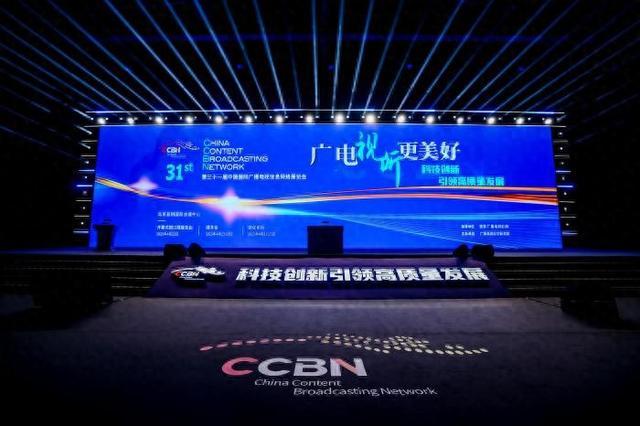
Group 1 - The 31st China International Radio and Television Information Network Exhibition (CCBN2025) opened in Beijing, focusing on the theme of "Technological Innovation Leading High-Quality Development" and showcasing breakthroughs in the ultra-high-definition (UHD) sector [1][3] - The launch of Beijing Satellite TV's 4K UHD channel and the initiation of a large-scale deployment of ultra-high-definition insertable micro set-top boxes signify that UHD is becoming accessible to households [1][3][8] Group 2 - UHD technology enhances the viewing experience by providing "details that reveal reality," with a resolution of 3840×2160, which is four times that of HD, and incorporates high frame rates, high dynamic range, and wide color gamut [3][5] - The application of UHD is driving profound changes in the broadcasting and television industry through technological upgrades, consumer upgrades, industry transformation, and policy support [5][6] - By the end of 2025, the National Radio and Television Administration plans for a significant increase in UHD content production, with new dramas and documentaries expected to achieve UHD standards [5][6] Group 3 - The deployment of ultra-high-definition insertable micro set-top boxes aims to address user pain points related to traditional set-top boxes, simplifying user operations and enhancing service quality [6][8] - The initiative is part of a broader strategy to improve user engagement and service quality in the broadcasting sector, with a notable increase in active users and a positive growth trend in cable TV subscriptions [6][8] - The collaborative efforts in policy, technology, content, and terminal development are expected to propel UHD from a stage of technical validation to large-scale application by 2025 [8]