
非白酒

Search documents
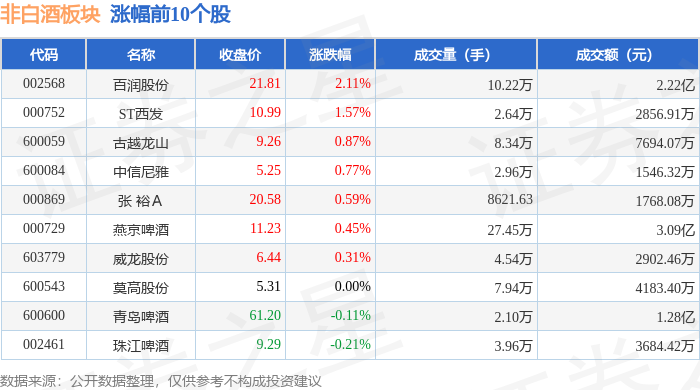
非白酒板块12月31日涨0.17%,百润股份领涨,主力资金净流出3652.26万元
Zheng Xing Xing Ye Ri Bao· 2025-12-31 08:59
Market Overview - The non-liquor sector increased by 0.17% compared to the previous trading day, with BaiRun Co., Ltd. leading the gains [1] - The Shanghai Composite Index closed at 3968.84, up by 0.09%, while the Shenzhen Component Index closed at 13525.02, down by 0.58% [1] Stock Performance - BaiRun Co., Ltd. (002568) closed at 21.81, with a rise of 2.11% and a trading volume of 102,200 shares, amounting to a transaction value of 222 million yuan [1] - ST XiFa (000752) closed at 66.01, up by 1.57%, with a trading volume of 26,400 shares [1] - GuYueLongShan (600059) closed at 9.26, increasing by 0.87% with a trading volume of 83,400 shares [1] - Other notable stocks include ZhongXinNiYa (600084) at 5.25 (+0.77%), ZhangYu A (000869) at 20.58 (+0.59%), and XianJing Beer (000729) at 11.23 (+0.45%) [1] Capital Flow - The non-liquor sector experienced a net outflow of 36.52 million yuan from institutional investors, while retail investors saw a net inflow of 54.50 million yuan [2] - The overall capital flow indicates a mixed sentiment, with institutional investors withdrawing funds while retail investors increased their positions [2] Individual Stock Capital Flow - Qingdao Beer (600600) had a net inflow of over 9.80 million yuan from institutional investors, while retail investors had a net outflow of 9.96 million yuan [3] - WeiLong Co., Ltd. (603779) saw a net inflow of 4.23 million yuan from institutional investors, but a net outflow of 4.59 million yuan from retail investors [3] - Other stocks like ZhongXinNiYa (600084) and ZhangYu A (000869) also showed varied capital flows, with institutional and retail investors reacting differently [3]


今年十大最惨板块,跌麻了
3 6 Ke· 2025-12-30 12:11
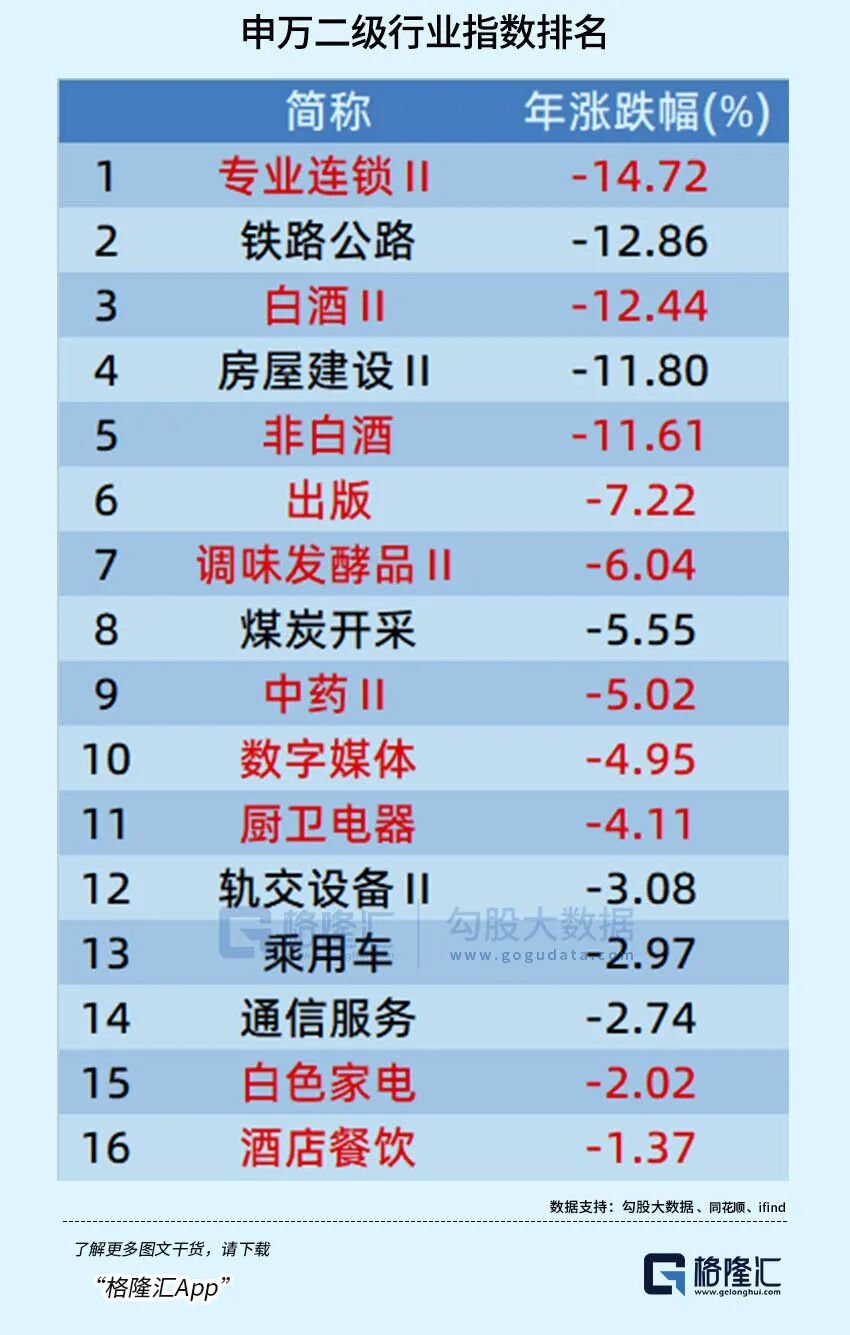
Core Viewpoint - The consumer sector has faced significant challenges in the past year, with many industries within this sector experiencing declines despite overall market growth. The focus on domestic demand and consumption has not translated into positive performance for many consumer-related industries [1]. Group 1: Consumer Sector Performance - In the first half of the year, 10 out of 16 industries that saw declines were from the consumer sector, indicating a troubling trend for consumer-related stocks [1]. - The white liquor sector, a key component of the consumer market, has seen a year-to-date decline of 12.44%, with major brands like Wuliangye experiencing significant drops in revenue and profit [5][8]. - The professional chain sector has been particularly hard hit, with a year-to-date decline of 14.72%, as traditional retail models struggle to adapt to changing consumer behaviors [13][14]. Group 2: White Liquor Industry - The white liquor industry is facing its eighth consecutive year of production decline, with both volume and price dropping, leading to increased inventory pressure and cash flow issues for many companies [9]. - Wuliangye reported a 10.26% decline in revenue and a 13.72% drop in net profit for the first three quarters, marking its first negative growth in nearly a decade [8]. - The changing consumer landscape, with a shift towards lower-alcohol and healthier options, is forcing white liquor companies to adapt or risk further declines [12]. Group 3: Professional Chain Sector - The professional chain sector is experiencing a crisis, with many traditional stores closing and business models failing to adapt to the digital age [14][19]. - The decline of major players like Renrenle, which has seen its market value plummet and faced continuous losses, exemplifies the struggles within this sector [18]. - The shift towards online shopping and personalized consumer experiences is reshaping the retail landscape, leaving traditional large-format stores at a disadvantage [20]. Group 4: Non-White Liquor Sector - The non-white liquor sector, including beer and wine, has also faced challenges, with a year-to-date decline of 11.61% [22]. - Budweiser APAC reported an 8.2% drop in domestic sales and a 24.4% decline in net profit, reflecting broader issues within the beer industry [25]. - The rise of cross-industry competition, with liquor companies diversifying into other beverage categories, indicates a shift in market dynamics [27]. Group 5: Publishing Industry - The publishing industry has seen a decline in the overall market, with a 10.4% drop in the domestic paper book market, yet some companies have managed to increase profits through cost control [35][38]. - Chinese Media, a leading player in the sector, has faced significant revenue and profit declines, highlighting the challenges of adapting to changing educational policies [36][38]. Group 6: Seasoning Industry - The seasoning industry has experienced a 6.04% decline, with companies like Qianhe Flavor struggling due to a drop in sales across key product lines [43][47]. - The industry is facing increased competition and changing consumer preferences, necessitating a shift in strategy for many companies [52]. Group 7: Traditional Chinese Medicine - The traditional Chinese medicine sector has seen a 5.02% decline, with companies like Pian Zai Huang facing significant revenue and profit drops due to rising costs and regulatory pressures [53][56]. - The industry is undergoing a transformation as companies seek to innovate and diversify their product offerings in response to market challenges [62]. Group 8: Digital Media - The digital media sector has faced a 4.95% decline, with traditional advertising models struggling to keep pace with new digital trends [67]. - Companies like Mango TV have reported significant revenue declines, indicating the need for adaptation in a rapidly changing media landscape [66]. Group 9: Kitchen and Bathroom Appliances - The kitchen and bathroom appliance sector has seen a 4.11% decline, largely due to a slowdown in new housing demand and increased competition [69][70]. - Companies like Boss Appliances are experiencing revenue declines for the first time in years, reflecting broader industry challenges [69]. Group 10: White Goods - The white goods sector has faced a 2.02% decline, with major players like Gree Electric experiencing significant revenue and profit drops due to increased competition and market saturation [76][80]. - The industry is shifting towards a focus on product quality and operational efficiency as traditional growth drivers diminish [80]. Group 11: Hotel and Catering - The hotel and catering sector has seen a 1.37% decline, with many businesses struggling to convert increased travel demand into profits due to high commission fees from online platforms [84][85]. - The industry is witnessing a shift towards more refined operational models as companies seek to adapt to changing consumer behaviors and market conditions [86].
2025年A股十大最惨板块,跌麻了
Ge Long Hui· 2025-12-30 11:30
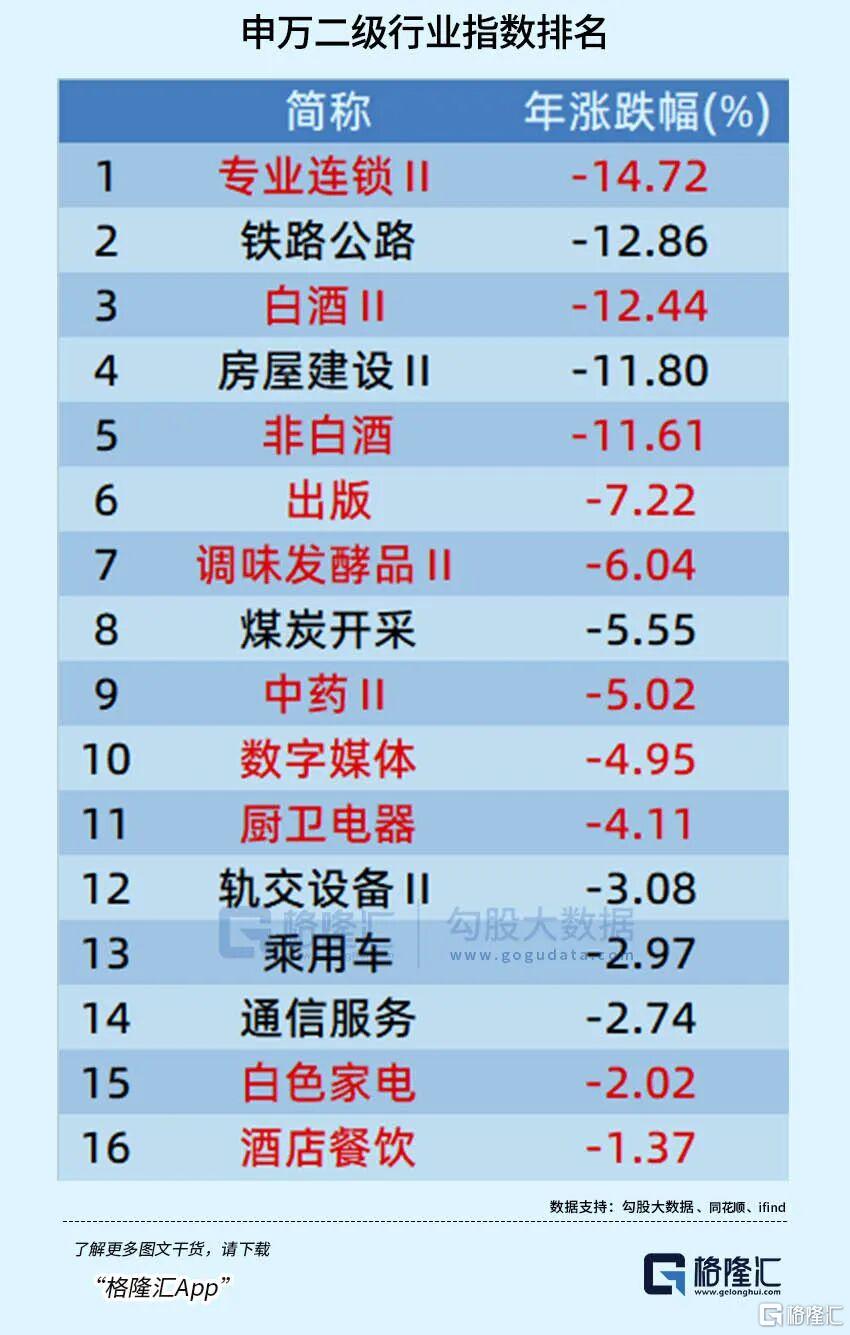
Core Viewpoint - The consumer sector has faced significant challenges in the past year, with many sub-sectors experiencing declines despite overall market growth. The focus on domestic demand and consumption has not translated into positive performance for many consumer-related industries [1][5]. Consumer Sector Performance - In the first half of the year, 10 out of 16 declining industries were from the consumer sector, indicating a broader trend of underperformance [1]. - The white liquor sector, a key component of the consumer market, has seen a year-to-date decline of 12.44%, with major brands like Wuliangye experiencing significant drops in revenue and profit [6][9]. - The professional chain sector has been particularly hard-hit, with a year-to-date decline of 14.72%, exemplified by the struggles of companies like Renrenle [16][20]. White Liquor Sector - The white liquor industry is facing its eighth consecutive year of production decline, with both volume and price dropping simultaneously [10]. - Wuliangye reported a 10.26% decline in revenue and a 13.72% drop in net profit for the first three quarters, marking its first negative growth in a decade [9]. - The industry is shifting from a growth-driven model to one focused on consumer choice, with a need for companies to adapt to changing consumer preferences [15]. Professional Chain Sector - The professional chain sector is experiencing a crisis, with many physical stores closing and traditional business models failing [16][20]. - Renrenle, once a leading private supermarket, has seen its market value plummet and is now facing delisting due to ongoing financial struggles [21][24]. - The shift towards online shopping and personalized consumer demands has further exacerbated the challenges faced by traditional retail chains [24][25]. Non-White Liquor Sector - The non-white liquor sector, including beer and wine, has also faced declines, with the beer segment seeing a notable drop in sales and profits [27][32]. - Budweiser APAC reported an 8.2% decline in domestic sales and a 24.4% drop in net profit, reflecting broader industry challenges [32][33]. - The market is witnessing a trend of cross-industry competition, with liquor companies diversifying into new beverage categories [34]. Publishing Sector - The publishing industry has shown resilience despite a 10.4% decline in the overall market for printed books, with listed companies managing to increase net profits by 14.65% [43][44]. - However, leading companies like Zhongwen Media are struggling, with significant revenue and profit declines due to changes in educational material procurement policies [45][48]. Seasoning Sector - The seasoning industry has faced a 6.04% decline, with companies like Qianhe Flavor struggling due to falling revenues and a loss of consumer trust [51][55]. - The industry is experiencing a shift in consumer preferences and increased competition, necessitating a reevaluation of business strategies [60]. Traditional Chinese Medicine Sector - The traditional Chinese medicine sector is facing challenges, with companies like Pian Zai Huang reporting significant declines in revenue and profit due to rising costs and regulatory pressures [61][66]. - The industry is undergoing a transformation as companies seek to innovate and diversify their product offerings [70]. Digital Media Sector - The digital media industry has seen a 4.95% decline, with companies like Mango TV reporting significant drops in revenue and profit due to changing consumer behaviors and market dynamics [71][74]. - The sector is grappling with the need to adapt to new content consumption trends while facing pressure from traditional advertising models [75]. Kitchen and Bathroom Appliances Sector - The kitchen and bathroom appliance sector has experienced a 4.11% decline, largely due to reduced demand from the real estate market [78][79]. - Companies like Boss Electric are facing revenue declines for the first time in years, highlighting the challenges of adapting to a changing market landscape [79][80]. White Goods Sector - The white goods sector has seen a 2.02% decline, with major players like Gree Electric facing significant revenue and profit pressures due to increased competition and market saturation [83][84]. - The industry is shifting towards a focus on product quality and brand strength as external stimuli diminish [88]. Hotel and Restaurant Sector - The hotel and restaurant sector has faced a 1.37% decline, with revenue pressures stemming from changing consumer spending habits and increased competition from online platforms [89][92]. - Companies are beginning to adopt more refined operational strategies to navigate the challenging market environment [96].




非白酒板块12月30日跌0.44%,莫高股份领跌,主力资金净流出2232.62万元
Zheng Xing Xing Ye Ri Bao· 2025-12-30 09:00
Market Overview - The non-liquor sector experienced a decline of 0.44% compared to the previous trading day, with Mogo Co., Ltd. leading the drop [1] - The Shanghai Composite Index closed at 3965.12, showing no change, while the Shenzhen Component Index closed at 13604.07, up by 0.49% [1] Stock Performance - Key stocks in the non-liquor sector showed varied performance, with Jin Feng Jiu Ye closing at 5.38, up by 0.37%, while Mogo Co., Ltd. closed at 5.31, down by 2.21% [1][2] - Other notable declines included Chongqing Beer at 52.45 (-0.11%) and Huichuan Beer at 12.00 (-1.56%) [2] Trading Volume and Value - The trading volume for Jin Feng Jiu Ye was 76,600 shares, with a transaction value of 41.27 million yuan, while Mogo Co., Ltd. had a trading volume of 66,300 shares and a transaction value of 35.48 million yuan [1][2] Capital Flow - The non-liquor sector saw a net outflow of 22.33 million yuan from main funds, while retail funds experienced a net outflow of 22.79 million yuan [2] - Conversely, speculative funds recorded a net inflow of 45.11 million yuan [2] Individual Stock Capital Flow - Yanjing Lang had a main fund net inflow of 23.92 million yuan, while the retail net outflow was 48.08 million yuan [3] - Jin Feng Jiu Ye saw a main fund net inflow of 7.79 million yuan, with a retail net outflow of 6.75 million yuan [3]

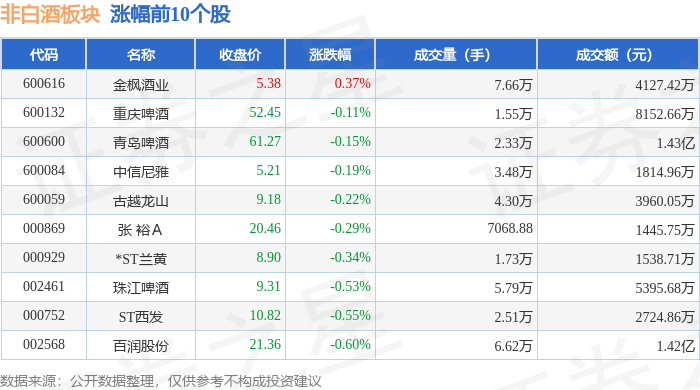
非白酒板块12月29日跌1.42%,惠泉啤酒领跌,主力资金净流出8152.72万元
Zheng Xing Xing Ye Ri Bao· 2025-12-29 09:06
Market Overview - The non-white liquor sector experienced a decline of 1.42% on the previous trading day, with Huichuan Beer leading the drop [1] - The Shanghai Composite Index closed at 3965.28, up 0.04%, while the Shenzhen Component Index closed at 13537.1, down 0.49% [1] Stock Performance - Key stocks in the non-white liquor sector showed varied performance, with Baijiu Co. closing at 21.49, up 0.09%, while other notable declines included Chongqing Beer at 52.51, down 0.70%, and Gu Yue Long Shan at 9.20, down 0.43% [1] - The trading volume for Baijiu Co. was 59,400 shares, with a transaction value of 128 million yuan, while Chongqing Beer had a trading volume of 18,700 shares and a transaction value of 98.4 million yuan [1] Capital Flow - The non-white liquor sector saw a net outflow of 81.52 million yuan from institutional investors, while retail investors contributed a net inflow of 9.23 million yuan [2] - Notable capital flows included Yanjing Lang with a net inflow of 18.08 million yuan from institutional investors, while ST Yedao experienced a net outflow of 9.32 million yuan [3]


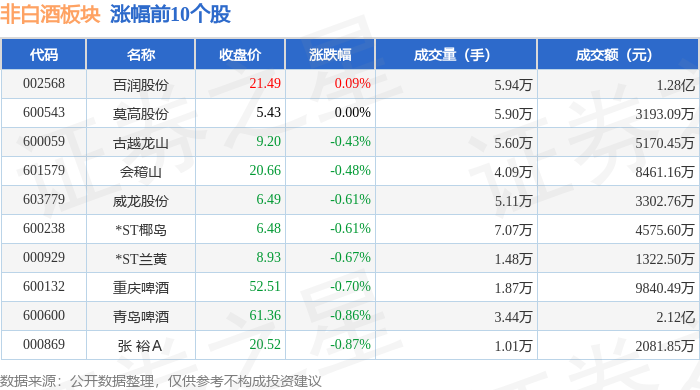
非白酒板块12月23日跌0.65%,*ST椰岛领跌,主力资金净流出7308.87万元
Zheng Xing Xing Ye Ri Bao· 2025-12-23 09:08
Group 1 - The non-liquor sector experienced a decline of 0.65% compared to the previous trading day, with *ST Yedao leading the drop [1] - The Shanghai Composite Index closed at 3919.98, reflecting an increase of 0.07%, while the Shenzhen Component Index closed at 13368.99, showing a rise of 0.27% [1] - A detailed table of individual stock performance in the non-liquor sector is provided [1] Group 2 - In terms of capital flow, the non-liquor sector saw a net outflow of 73.09 million yuan from main funds, while retail funds recorded a net inflow of 35.22 million yuan [2] - The sector also experienced a net inflow of 37.87 million yuan from speculative funds [2] - A detailed table of capital flow for individual stocks in the non-liquor sector is included [2]

非白酒板块12月22日跌0.21%,莫高股份领跌,主力资金净流出7682.14万元
Zheng Xing Xing Ye Ri Bao· 2025-12-22 09:03
Market Overview - The non-liquor sector experienced a decline of 0.21% compared to the previous trading day, with Mogo Co., Ltd. leading the drop [1] - The Shanghai Composite Index closed at 3917.36, up 0.69%, while the Shenzhen Component Index closed at 13332.73, up 1.47% [1] Stock Performance - Notable gainers in the non-liquor sector included: - *ST Yedao: Closed at 6.89, up 5.03% with a trading volume of 101,000 shares and a turnover of 68.83 million yuan [1] - ST Xifa: Closed at 10.96, up 4.98% with a trading volume of 23,300 shares and a turnover of 2.53 million yuan [1] - *ST Lanhua: Closed at 8.96, up 2.99% with a trading volume of 47,800 shares [1] - Other stocks showed minor fluctuations, with some experiencing slight declines [1][2] Capital Flow - The non-liquor sector saw a net outflow of 76.82 million yuan from institutional investors, while retail investors contributed a net inflow of 61.83 million yuan [2] - The capital flow for specific stocks included: - Bai Run Co., Ltd.: Net inflow of 11.99 million yuan from institutional investors, but a net outflow of 14.16 million yuan from speculative funds [3] - Mogo Co., Ltd.: Experienced a net outflow of 136,600 yuan from institutional investors [3] - ST Xifa: Net inflow of 5.94 million yuan from institutional investors, but a net outflow from speculative funds [3]
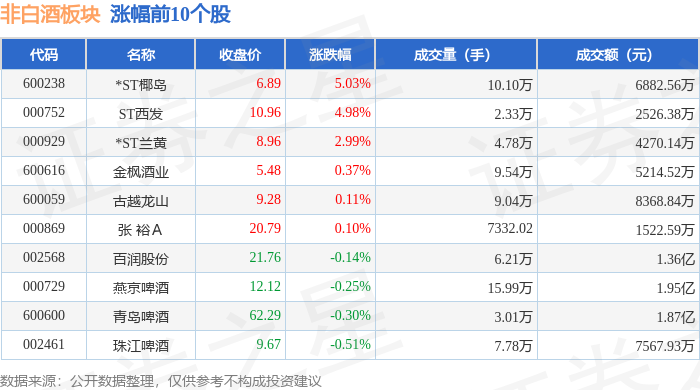
非白酒板块12月18日跌0.28%,*ST椰岛领跌,主力资金净流出5986.11万元
Zheng Xing Xing Ye Ri Bao· 2025-12-18 09:07
Group 1 - The non-liquor sector experienced a decline of 0.28% compared to the previous trading day, with *ST Yedao leading the drop [1] - The Shanghai Composite Index closed at 3876.37, reflecting an increase of 0.16%, while the Shenzhen Component Index closed at 13053.98, showing a decrease of 1.29% [1] - A detailed table of individual stock performance in the non-liquor sector is provided [1] Group 2 - In terms of capital flow, the non-liquor sector saw a net outflow of 59.86 million yuan from main funds, with retail funds experiencing a net inflow of 108 million yuan [2] - The table detailing the capital flow for individual stocks in the non-liquor sector is included [2]
非白酒板块12月16日涨0.16%,惠泉啤酒领涨,主力资金净流出2505.5万元
Zheng Xing Xing Ye Ri Bao· 2025-12-16 09:09
Group 1 - The non-white liquor sector increased by 0.16% on December 16, with Huichuan Beer leading the gains [1] - The Shanghai Composite Index closed at 3824.81, down 1.11%, while the Shenzhen Component Index closed at 12914.67, down 1.51% [1] - Key stocks in the non-white liquor sector showed varied performance, with the highest gain being 3.23% for Yuanzhi Ban [1] Group 2 - The non-white liquor sector experienced a net outflow of 25.06 million yuan from main funds, while retail investors saw a net inflow of 53.38 million yuan [2] - The trading volume and turnover for key stocks in the non-white liquor sector varied, with Yuanzhi Ban achieving a turnover of 421 million yuan [1][2] - The net inflow from retail investors was significant, indicating a potential shift in market sentiment towards the non-white liquor sector [2][3] Group 3 - Specific stocks like Baorun Co. and Huichuan Beer had notable net inflows from retail investors, while others like ST Lanhua and Jin Feng Wine experienced net outflows [3] - The data indicates a mixed sentiment among institutional and retail investors, with some stocks attracting retail interest despite overall sector outflows [3] - The performance of individual stocks varied significantly, highlighting the importance of stock selection within the non-white liquor sector [3]


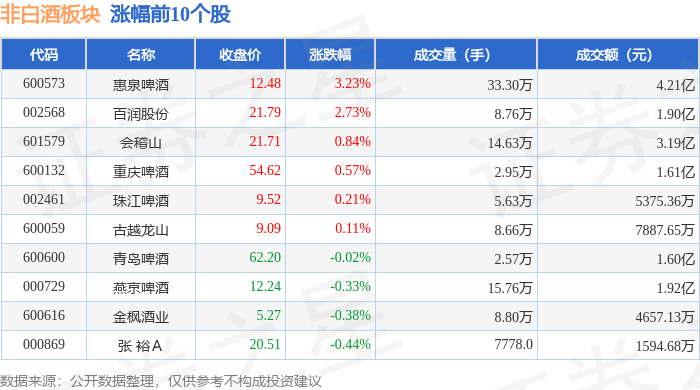
非白酒板块12月15日涨0.37%,*ST兰黄领涨,主力资金净流出7973.66万元
Zheng Xing Xing Ye Ri Bao· 2025-12-15 09:08
Group 1 - The non-liquor sector increased by 0.37% compared to the previous trading day, with *ST Lanhua leading the gains [1] - The Shanghai Composite Index closed at 3867.92, down 0.55%, while the Shenzhen Component Index closed at 13112.09, down 1.1% [1] - A table detailing the individual stock performance in the non-liquor sector is provided [1] Group 2 - In terms of capital flow, the non-liquor sector experienced a net outflow of 79.7366 million yuan from main funds, while retail investors saw a net inflow of 77.9446 million yuan [2] - Speculative funds had a net inflow of 1.792 million yuan [2] - A table showing the capital flow for individual stocks in the non-liquor sector is included [2]