Alternative Asset Management

Search documents
PE危机的“贝尔斯登时刻”?Blue Owl限制赎回、抛售贷款,股价创两年半新低
华尔街见闻· 2026-02-20 12:53
Core Viewpoint - Blue Owl Capital's decision to limit redemptions from its private credit fund has raised concerns about the potential risks in the $1.8 trillion private credit market, leading to significant stock price declines for Blue Owl and its peers [1][3][12]. Group 1: Blue Owl Capital's Actions - Blue Owl Capital announced that investors in Blue Owl Capital Corp II (OBDC II) will no longer be able to redeem shares quarterly, instead opting for periodic distributions funded by loan recoveries, asset sales, or other transactions [3][4]. - The company has sold approximately $1.4 billion in direct loan investments at a face value of 99.7% to provide promised liquidity to investors [3][6]. - Blue Owl's stock price has dropped over 15% this month, reflecting growing investor concerns about the private credit industry amid market valuation issues and the quality of loans to highly leveraged companies [5][12]. Group 2: Market Reactions and Implications - The stock price decline of Blue Owl has negatively impacted the broader market, dragging down shares of other private equity firms such as Ares Management, Apollo Global Management, and Blackstone [1][3]. - Analysts have described the stock price drop as an overreaction, noting that OBDC II had already suspended redemptions since November [9][10]. - The sale of loans is seen as a positive step for liquidity, with analysts suggesting it establishes an efficient process for returning capital to investors [6][8]. Group 3: Broader Industry Context - Bank of America has committed $25 billion to private credit transactions, joining other major banks in increasing their involvement in this rapidly growing market [12][14]. - The private credit industry has seen significant expansion, with firms like Ares Management and Apollo Global Management heavily investing in this sector [13][14]. - The relationship between banks and alternative asset management firms is becoming increasingly complex, with banks sometimes viewing private credit growth with skepticism [14].


'Canary in the coal mine': Blue Owl liquidity curbs fuel fears about private credit bubble
CNBC· 2026-02-20 05:34
Core Viewpoint - The private credit market is experiencing significant stress, highlighted by Blue Owl Capital's decision to restrict withdrawals from its retail-focused debt fund, indicating potential issues within this rapidly growing sector [1][2]. Group 1: Company Actions - Blue Owl Capital has permanently restricted withdrawals from one of its retail-focused debt funds, leading to a nearly 6% drop in its shares following the sale of $1.4 billion in loan assets from three private debt funds [1]. - The sale primarily involved the Blue Owl Capital Corporation II, a semi-liquid private credit fund, which will cease offering quarterly redemption options to investors [2]. Group 2: Market Concerns - The restriction on withdrawals has sparked discussions about the potential resurgence of stress in the private credit market, which has been one of the fastest-growing areas on Wall Street [2]. - Dan Rasmussen from Verdad Capital described the situation as a "canary in the coal mine," suggesting that the private markets bubble may be beginning to burst [2]. Group 3: Industry Trends - The private credit market has expanded to approximately $3 trillion globally, driven by years of ultra-low interest rates and narrow yield spreads that encouraged lenders to take on riskier loans [3]. - Investors have increasingly ventured into riskier credit territories, leading to what Rasmussen refers to as "fool's yield," where high yields do not equate to high returns due to the elevated risk of borrowers [3].


US Market | Credit Concerns Mount: Blue Owl shake-up weighs on US financial stocks
The Economic Times· 2026-02-20 04:21
Core Insights - The private credit market is facing significant pressure as Blue Owl Capital announced the sale of $1.4 billion in assets across three credit funds, which is aimed at returning capital to investors and reducing leverage [13] - The announcement has led to a broader selloff among alternative asset managers, indicating the interconnectedness of private markets and publicly traded financial stocks [2][10] Group 1: Market Reactions - The announcement from Blue Owl Capital unsettled investors, contributing to declines in shares of major firms such as Apollo Global Management, Ares Management, Blackstone, KKR, and Carlyle Group, reflecting anxiety about credit quality and valuation transparency [13] - The developments in private markets have quickly transmitted to publicly traded equities, highlighting how closely listed alternative managers are tied to sentiment around private credit [2][10] Group 2: Credit Quality Concerns - Industry participants have been grappling with questions around credit quality, particularly for portfolios with significant exposure to software and technology companies, as a notable share of the loans being sold is tied to this sector [5][13] - The weakness in private credit has coincided with declines in technology benchmarks within the broader S&P 500, linking concerns in private credit to wider movements in US equities [6][10] Group 3: Liquidity and Restructuring - The asset sale involves loans to over a hundred portfolio companies across multiple industries, with proceeds earmarked for investor distributions and debt reduction, reflecting a balancing act between providing liquidity and maintaining portfolio stability [7][13] - The restructuring follows earlier attempts to merge funds and manage redemption pressures, indicating the cautious approach of private credit managers in the current economic climate [7][8] Group 4: Systemic Risk and Financial Stability - Economist Mohamed El-Erian has indicated that developments in private credit could revive discussions about broader financial stability, prompting investors to reassess whether stresses in less liquid markets could foreshadow tighter conditions elsewhere [9][10] - The situation serves as a reminder that liquidity shifts and valuation adjustments in private assets can have significant repercussions on the US stock market, particularly in sectors like software and leveraged lending [11][10]



How Does all the Challenging Areas in United States Equities Look?
Investment Moats· 2026-02-20 00:58
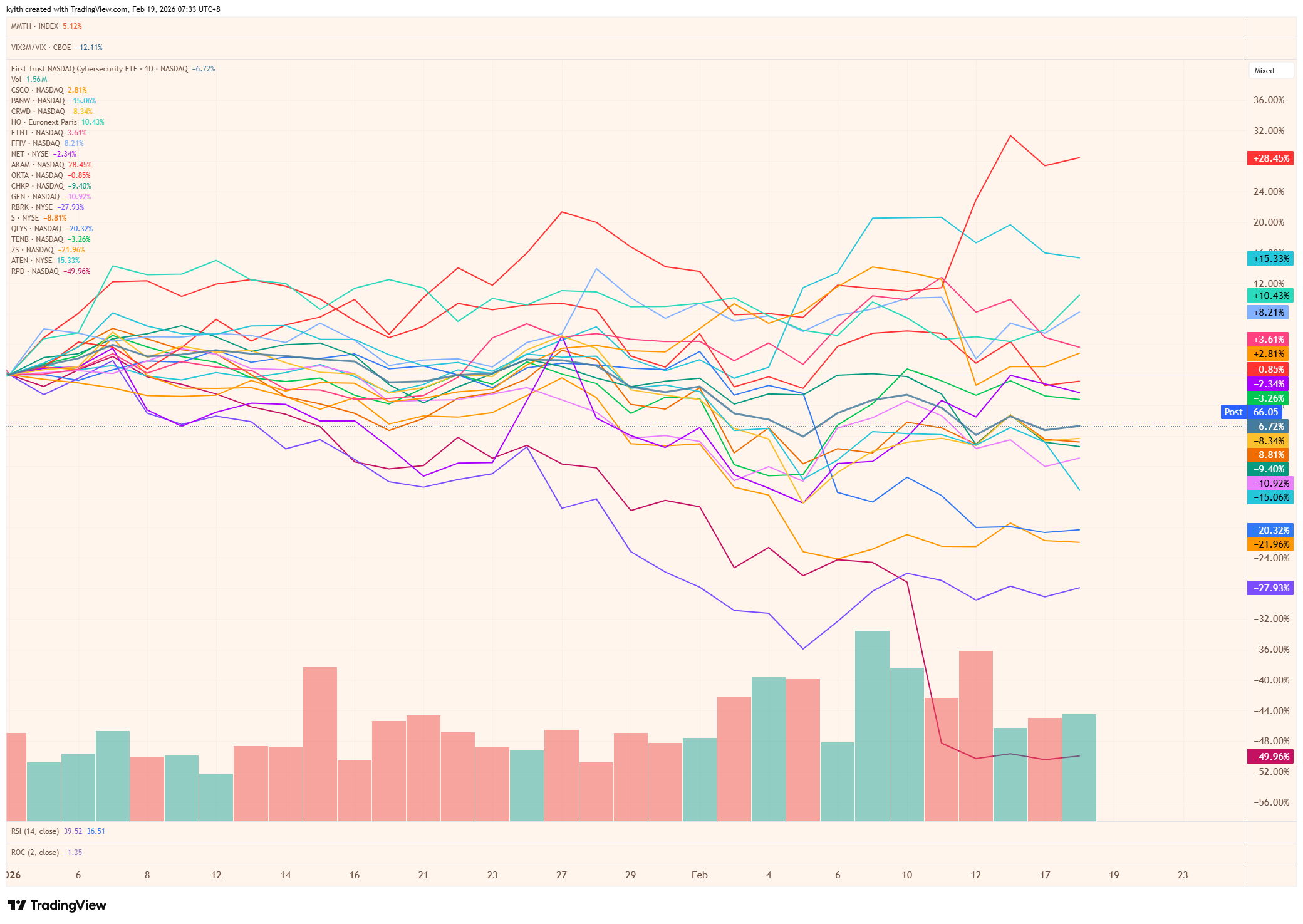
Core Insights - The article discusses potential weaknesses in various sectors of the US economy, particularly focusing on distressed areas and the implications for future earnings and revenues [1][2]. Data Providers - Data providers have shown poor performance year-to-date, with significant declines in stock prices, indicating potential margin issues despite strong competitive moats [2][3]. Biotech Sector - The biotech sector has been underperforming for four years, but there is a belief that prices may mean revert as they become too cheap [2]. Software-as-a-Service (SaaS) - SaaS companies are perceived to have stronger moats than the market currently values, but there are concerns about long-term disruption from new technologies [6][8]. Cybersecurity - The cybersecurity sector has mixed performance, with some companies showing resilience while others face significant declines. The overall outlook remains uncertain [13][14]. Payments Companies - The payments sector has seen poor performance, with companies like PayPal and Adyen experiencing significant declines. However, major players like Visa and Mastercard continue to perform relatively well [16][17]. Business Development Companies (BDCs) - BDCs have faced challenges recently, with declines in performance noted at the start of the year. They are essential for providing private credit [18][19]. US Insurance - The insurance sector is struggling, with companies like Progressive and Brown and Brown facing challenges in raising prices and organic growth capabilities [21][22]. Home Builders and Ancillary Services - The homebuilding sector shows mixed results, with some companies performing well while ancillary service providers are thriving due to increased demand for home improvements [23][24][27]. Consumer Discretionary - The consumer discretionary sector reflects the health of the economy, with mixed performance among various companies. The S&P 500 equal weight consumer discretionary index shows a modest increase [31][34]. Restaurants - The restaurant sector is a key indicator of consumer spending, with many companies showing resilience despite economic challenges. However, some, like Red Robin, are struggling significantly [39][40].

Abacus Global Management to Announce Fourth Quarter and Full Year 2025 Financial Results on Thursday, March 12, 2026
Globenewswire· 2026-02-19 13:00
ORLANDO, Fla., Feb. 19, 2026 (GLOBE NEWSWIRE) -- Abacus Global Management, Inc. ("Abacus" or the "Company") (NYSE: ABX), a leader in the alternative asset management industry, today announced it will release its fourth quarter and full year 2025 financial results after the market closes on Thursday, March 12, 2026. Abacus will hold a conference call to discuss the financial results at 5:00 pm Eastern Time on March 12, 2026. A live webcast of the conference call will be available on Abacus’ investor relation ...

Abacus Global Management to Announce Fourth Quarter and Full Year 2025 Financial Results on Thursday, March 12, 2026
Globenewswire· 2026-02-19 13:00
ORLANDO, Fla., Feb. 19, 2026 (GLOBE NEWSWIRE) -- Abacus Global Management, Inc. ("Abacus" or the "Company") (NYSE: ABX), a leader in the alternative asset management industry, today announced it will release its fourth quarter and full year 2025 financial results after the market closes on Thursday, March 12, 2026. Abacus will hold a conference call to discuss the financial results at 5:00 pm Eastern Time on March 12, 2026. A live webcast of the conference call will be available on Abacus’ investor relation ...

Ares Management CEO Sees Strong 2026 Deal Pipeline, Details AI Strategy at BofA Conference
Yahoo Finance· 2026-02-16 18:06
Core Viewpoint - Ares Management's CEO Michael Arougheti expressed optimism regarding transaction activity and highlighted the potential of AI as both an opportunity and a risk, emphasizing the importance of a diversified pipeline and strategic priorities for future growth [3][5][6]. Transaction Activity and Market Outlook - Ares' pipeline across all businesses reached a record high by the end of January, which is seen as a strong predictor for transaction volumes in the next six months [2][5]. - Arougheti expects transaction volumes to remain "pretty healthy" barring any unforeseen macro events, citing a constructive rate backdrop and a pro-business administration as key factors [2][5]. - The firm deployed approximately $46 billion of capital in Q4, marking a record for the company [2][5]. Strategic Priorities - Ares is focusing on expanding digital infrastructure, particularly through data centers and the GCP deal, as well as growing its presence in Japan and building a vertically integrated real estate platform [4][10]. - The company aims to capture margin upside through middle-office consolidation and technology investments, while reaffirming its growth targets for fee-related earnings (FRE) and realized income (RI) [4][11][15]. AI Strategy - Arougheti cautioned against viewing AI disruption solely as a software issue, noting that software constitutes only about 6% of Ares' exposures [5][7]. - Ares has evaluated around 160 AI use cases and is currently deploying about 25 across various functions, indicating a proactive approach to leveraging AI for operational efficiency [5][19]. - The firm is optimistic about the opportunities AI may create in sectors like digital infrastructure and renewable energy [6][7]. Private Equity Positioning - While private equity is not a top priority, Ares remains open-minded about expanding in this area, citing potential benefits such as alignment with institutional clients and leveraging value-creation skills across the platform [12][13]. - Arougheti emphasized that any expansion in private equity would need to reflect its slower growth profile compared to other segments of the firm [14]. Financial Guidance - Ares reaffirmed its targets for organic growth in FRE by 16% to 20%+ per year and RI by 20%+ per year, alongside a 20% increase in its first-quarter dividend [15]. - The firm aims to align dividend growth with expected FRE growth, indicating a commitment to returning value to shareholders [15].
Apollo Global Management Touts $40T Private Credit Opportunity, AI Financing and Fund XI at BofA Conference
Yahoo Finance· 2026-02-16 17:03
Core Viewpoint - Apollo Global Management emphasizes the expansive nature of private credit, viewing it as a $40 trillion asset class that includes various forms of debt beyond traditional direct lending, such as commercial and residential real estate debt and asset-backed securities [5][18]. Group 1: Private Credit Landscape - Apollo identifies the growth of sponsor-backed direct lending as a significant development in non-investment-grade financing, noting its rise from zero to $2 trillion [1]. - The firm argues that the evolution of banking post-global financial crisis has shifted more financing activity toward non-bank investors, suggesting that the anticipated slowdown in private credit growth overlooks broader economic changes [5][6]. - Zelter expresses skepticism about the size and speed of an equity monetization cycle, indicating that the U.S. IPO market is relatively small compared to the private equity asset base, which is estimated at $5 trillion to $6 trillion [1][4]. Group 2: Strategic Priorities and Fundraising - Apollo is focusing on origination and multi-channel distribution, with plans to raise Fund XI between $22 billion and $25 billion, targeting a first close before mid-year [4][14]. - The firm has invested billions in origination platforms, emphasizing that access to attractive investments is the limiting factor rather than capital raising [6]. - Apollo's private wealth channel has expanded its product offerings, with eight products raising over $500 million each last year [13]. Group 3: AI Infrastructure and Financing - Apollo estimates that AI infrastructure capital needs will reach $5 trillion to $7 trillion over the next five years, indicating a selective financing approach where the firm has a structural advantage [11][12]. - The firm prefers bespoke, contract-backed deals with minimal residual risk, as illustrated by a recent transaction involving a sale-leaseback of chips [12]. Group 4: Retirement Services and Market Expansion - Apollo remains confident in Athene's growth in fixed annuities, supported by a strong balance sheet and competitive operating costs [15]. - The company highlights a "retirement crisis" in the U.S. and identifies potential growth opportunities in various international markets, including Japan, Korea, and Australia [16]. Group 5: Market Dynamics and Liquidity - Zelter notes that while private credit may evolve to trade more like liquid markets, the premium for offering private solutions at scale is likely to persist [9]. - Apollo has facilitated liquidity in high-grade capital solutions, trading nearly $10 billion of these assets last year [10].
Apollo Global Management CFO Sees Higher Rates Ahead as Origination Hits $300B, FRE Jumps 23%
Yahoo Finance· 2026-02-16 16:02
Core Viewpoint - Apollo Global Management reported a strong performance with a 23% growth in fee-related earnings (FRE) and $300 billion in origination, surpassing its five-year target in just one year [2][4]. Financial Performance - The capital solutions business generated $800 million, exceeding expectations and linked to origination activities [1] - Apollo's credit business drove upside in realizations and performance income, with credit funds seeing annual payouts typically in the fourth quarter and growth of 8%-12% across the board [5] - The firm achieved $42 billion in inflows for Q4 and $228 billion for the year, with expectations for higher capital raising in 2026 [7] Market Environment - The current environment is characterized by high activity levels and robust pipelines, driven by strong demand for capital [3] - Kelly noted a mixed economic picture but highlighted several factors that could lead to higher rates and inflation, including fiscal stimulus and rising government debt [3] Capital Formation Strategy - Apollo's capital formation priorities include wealth, institutional, and insurance channels, with a focus on expanding wealth products and launching Fund 11 for institutional capital [8][9] - The firm expects significant growth in institutional capital raising, particularly in credit strategies and infrastructure [8] Origination and Credit Focus - Apollo distinguishes between private credit below investment-grade and its focus on investment-grade private credit, which is seeing increasing demand [11] - The firm originated investment-grade credit at 290 basis points over Treasuries, indicating a strong performance compared to public high-yield indices [12] Operational Initiatives - Apollo's origination platforms consist of 16 platforms and nearly 4,000 employees, with potential for significant growth in international markets [13] - The company is focused on FRE dollar growth rather than margin, with expectations for margin expansion in 2026 [14] Technology and AI Integration - Apollo is evaluating AI's impact on portfolio companies and internal efficiency, with widespread adoption of AI tools across the organization [15]
Apollo, Blackstone execs offer reassurance as software sell-off hits their stocks too
Reuters· 2026-02-13 11:11
Core Viewpoint - Executives from major private capital firms, including Apollo, Blackstone, and Ares, are struggling to reassure investors about the safety of their portfolios amid a selloff in the software sector driven by fears of AI disruption [1] Group 1: Impact of AI on Alternative Asset Managers - Concerns about AI's impact on software companies have negatively affected the stock prices of alternative asset managers, despite significant new client investments and a resurgence in mergers and acquisitions [1] - Executives have defended their portfolios, stating that they are well-constructed to withstand AI-related risks, with Ares reporting only 6% of its assets in software, which is highly diversified [1] - Apollo's CEO indicated that software accounts for less than 2% of its assets under management, with minimal exposure in private equity and insurance portfolios [1] Group 2: Stock Performance and Market Reactions - Despite some recovery in stock prices following earnings reports, shares of these firms remain down approximately 30% over the last six months [1] - KKR has about 7% of its portfolio in software, with its shares down 29% over the same period, while Blue Owl reported 8% exposure and a 36% decline in share price [1] - Blackstone's shares have decreased by 24% over the last six months, with software comprising 7% of its total assets and 10% of its credit holdings [1] Group 3: Executive Insights and Future Outlook - Executives from these firms express confidence in their portfolios, with Blue Owl's co-CEO stating they do not foresee meaningful losses or performance deterioration [1] - KKR's co-CEO mentioned that the firm has identified AI as both an opportunity and a risk, with $118 billion in dry powder available for investment [1] - Analysts suggest that the narrative surrounding alternative asset managers has shifted, with concerns about their role in AI financing and potential losses due to AI's transformative impact [1]