
Exports

Search documents
X @Bloomberg
Bloomberg· 2025-10-27 04:09
Trade Performance - Thailand's exports experienced the most significant increase in three years during September [1] - The export growth occurred despite tariffs imposed by US President Donald Trump [1]
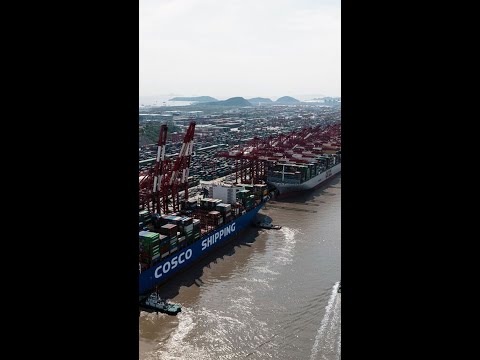
China floods the world with cheap exports
Bloomberg Television· 2025-09-26 08:21
Export Performance - China's exports reached $2.5 trillion through August, the highest ever for any country [1] - This export surge is driven by rising global demand [1] - A weaker yuan and domestic deflation are making Chinese exports cheaper [2] Geopolitical Implications - China's strong export performance strengthens its position in trade talks with the U.S [2] - Some governments are hesitant to push back against China due to a desire to maintain good relations and avoid a trade war [3] Impact on Foreign Firms - The influx of Chinese goods is putting pressure on foreign companies [2] - The U.S. tariffs of 50% or more on Chinese goods have not stopped China's export growth [1] Domestic Economic Impact - Strong exports are boosting China's economic growth amidst domestic challenges [1]

亚洲经济_解答你关于亚洲宏观经济前景的关键问题-Asia Economics Answering your key questions on Asia's macro outlook
2025-08-21 04:44
Summary of Key Points from the Conference Call Industry Overview - The conference call focused on the macroeconomic outlook for Asia, particularly in relation to exports and capital expenditure trends in the region, as presented by Morgan Stanley's Chief Asia Economist, Chetan Ahya [1][2]. Core Insights and Arguments - **Export Trends**: Asia has experienced two distinct rounds of export front-loading to the US, with nominal goods exports showing signs of consolidation from earlier strength [4][5]. - **Impact of AI and Tariffs**: Asia's tech exports are benefiting from a sustained rise in global AI spending and tariff exemptions, although a slowdown in other areas of global demand is expected to weigh on overall exports [7]. - **Tariff Burden**: Asian exporters are currently not bearing the bulk of the tariff burden, as evidenced by aggregate US import prices from Asia. However, ASEAN exporters have seen sharper price increases compared to their Chinese counterparts, who have offered modest discounts [10]. - **Foreign Exchange Burden**: While Asian exporters are not heavily impacted by tariffs, they are facing some foreign exchange (FX) burdens, as they have not been able to fully offset local currency price drags with USD export price increases [14][16]. - **Capital Expenditure Trends**: There is no clear evidence of a pickup in Asia's foreign direct investment (FDI) inflows into the US post "Liberation Day," and capital expenditure momentum in Asia has plateaued [19][20]. Additional Important Insights - **China's Economic Strategy**: To meet growth targets and address demand shortfalls, China has increased investment in manufacturing and infrastructure, but broad-based reflation will require a recovery in demand [22]. - **India's Economic Discrepancy**: There is a persistent gap between lower corporate revenue growth and higher nominal GDP growth in India, which has lasted for nine consecutive quarters [24]. - **Japan's Monetary Policy**: The Bank of Japan (BOJ) is expected to maintain a dovish stance due to subdued demand-side inflationary pressures, with domestic demand recovery still in its early stages [28]. Data Highlights - **US Real Capex**: The data shows fluctuations in US real capital expenditure, with private non-residential IT capex experiencing a decline of 1.0% year-over-year as of June 2025 [8]. - **Export Price Changes**: The Asia dollar index appreciated by 4.2%, while the Asia USD export price saw a change of 1.8% from February 2025 to June 2025 [17]. This summary encapsulates the key points discussed in the conference call, providing insights into the current state and future outlook of the Asian economy, particularly in relation to exports and capital expenditure trends.