Liquefied Natural Gas (LNG)

Search documents
液化天然气追踪 -供应增长仍在轨道上-LNG Tracker_ Supply Wave Still On Track
2026-02-10 03:24
Summary of LNG Market Conference Call Industry Overview - The conference call focused on the global Liquefied Natural Gas (LNG) market, highlighting a significant supply wave expected to last seven years, starting in 2025 and peaking around 2030 [4][25]. Key Points Supply Dynamics - 2025 is projected to be the first year of the largest global LNG supply wave, with supply expected to average 431 million tonnes per annum (mtpa), slightly below the previous expectation of 433 mtpa [4][5]. - The U.S. is anticipated to lead the supply growth, with a notable ramp-up at the Plaquemines facility contributing to the overall supply despite some disruptions and delays in other regions [4][29]. - Global LNG supply growth from 2025 to 2030 is expected to increase by 193 mtpa, which is 45% of the 2025 global supply, significantly outpacing Asia's demand growth of 144 mtpa [4][7]. Price Forecasts - A bearish cycle for European natural gas prices (TTF) and LNG (JKM) is anticipated, with forecasts suggesting prices could drop below $5/mmBtu by 2028/29, more than 50% lower than current prices [4][66]. - The JKM-TTF spread has turned negative, indicating that JKM prices have not fully adjusted to the recent TTF price rally [12][20]. Demand Insights - Asia's LNG demand is expected to rise by 14 mtpa in 2026, driven by a 5 mtpa increase in China and a 7 mtpa rise in Southeast Asia [41][43]. - The demand response to low gas prices is estimated to be over 40 mtpa from China alone, indicating a potential shift in consumption patterns [4]. Regional Supply Challenges - Structural supply losses are anticipated from Algeria and Indonesia due to rising domestic energy demands, with Algeria's export forecast lowered by 1 mtpa for future years [4][34]. - Delays in export capacity starts in the U.S., Canada, Congo, and Australia have led to a slower start for global LNG supply in 2026, although recovery is expected by the second half of the year [4][10]. Future Projects - All but one of the supply projects in the forecast through 2029 have reached a Final Investment Decision (FID), indicating strong commitment to future supply growth [4][3]. - Upcoming liquefaction projects are expected to increase global LNG supply by approximately 50% relative to 2024 by 2030 [4][36]. Additional Insights - The U.S. LNG export contracts are projected to remain profitable only through 2027, with significant implications for future export strategies [22][24]. - The conference highlighted the importance of monitoring the timing of liquefaction projects, as they are critical to balancing supply and demand in the LNG market [4][66]. This summary encapsulates the key insights and projections discussed during the conference call, providing a comprehensive overview of the current and future state of the LNG market.
Japanese gas giants’ Canberra lobbying record exposed
Michael West· 2026-02-09 18:00
Core Insights - Japanese companies have significant financial interests in Australia's liquefied natural gas (LNG) sector, with nearly $70 billion invested in 13 projects, highlighting a strong link between Japanese corporate interests and Australia's gas export economy [1][2] Investment and Economic Impact - The scale of Japanese investment in Australian LNG projects is substantial, with firms like INPEX, JERA, and Mitsubishi Corporation holding a combined equity stake of approximately $70 billion [1][2] - Australia is a key gas supplier to Japan, which has been criticized for reselling Australian gas to other markets, raising concerns about domestic supply adequacy [3][10] Gas Reselling and Consumption - Estimates indicate that Japanese companies onsold between 600 to 800 petajoules of Australian gas to other Asian markets in 2024, which is comparable to the annual domestic gas consumption in eastern Australia [4] Lobbying and Political Engagement - There have been at least 24 meetings between Japanese companies and Australian officials since the Labor government took power in 2022, suggesting a proactive approach to influence policy [5] - The report indicates that these meetings are likely just a fraction of the total interactions, emphasizing the need for greater transparency in government dealings [5] Climate Goals and Industry Tactics - InfluenceMap identifies four tactics used to expand the fossil fuel industry: investment, lobbying, government influence, and narrative control [4] - Common narratives framing gas as a "transition fuel" are challenged by scientific evidence, which suggests that continued investment in LNG could hinder decarbonization efforts [6][7][8] Industry Statements - Industry representatives assert that Australian LNG is crucial for Japan's energy security and contributes to job creation and revenue in Australia [11][12] - INPEX emphasizes its commitment to supporting energy security in the Indo-Pacific while aiming for net-zero emissions by 2050, as outlined in its strategic roadmap [12]

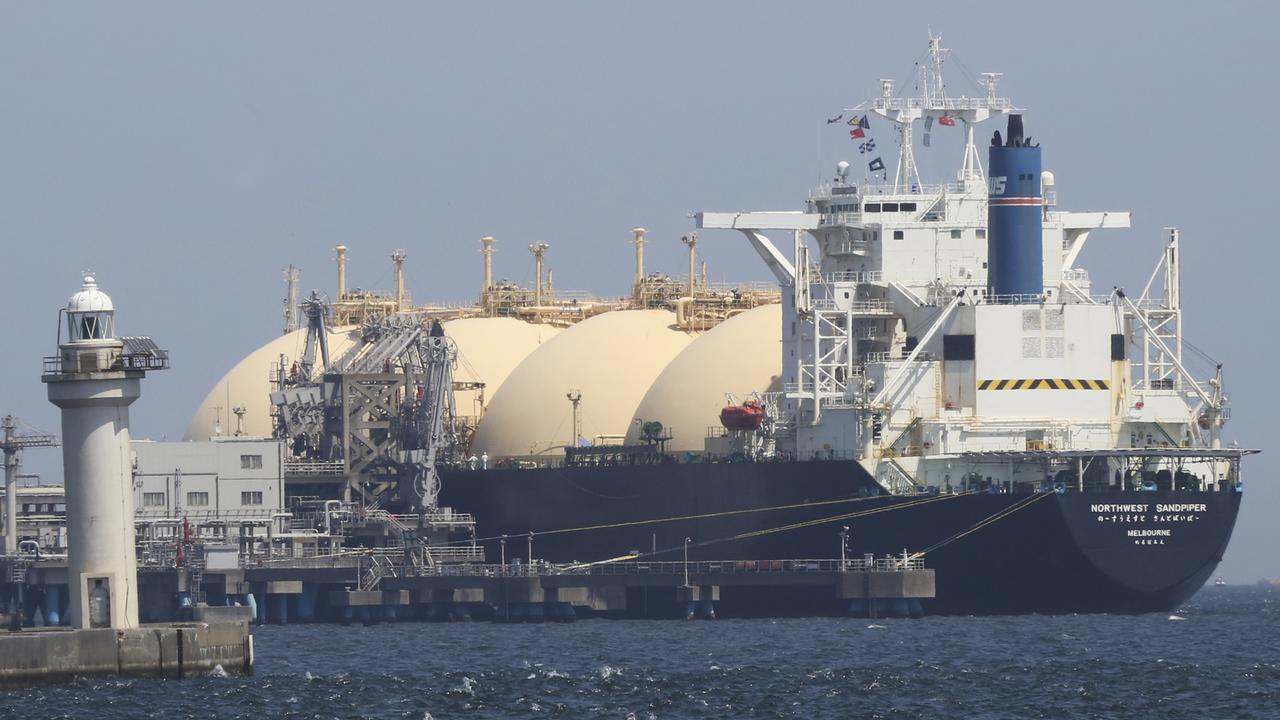
The U.S. LNG Boom Is Lowering Europe’s Energy Costs and Raising America’s
Yahoo Finance· 2026-02-09 00:00
Core Insights - The United States has established itself as the leading exporter of Liquefied Natural Gas (LNG), with exports reaching a record 111 million tons in 2025, driven by high demand in Europe and Asia [1] - The U.S. Energy Information Administration (EIA) forecasts that U.S. LNG export capacity will more than double by 2029, adding an estimated 13.9 Bcf/d of new capacity [2] - European industrial natural gas demand has decreased by 21% since 2021, but new global LNG supply is expected to significantly lower European gas prices by 2030, saving European industries approximately $46 billion annually by 2032 [4] Group 1 - U.S. LNG exports reached a record 111 million tons in 2025, surpassing 100 million metric tons for the first time [1] - The EIA predicts U.S. LNG export capacity will more than double by 2029, with significant contributions from projects like Plaquemines LNG Phase 1 and Corpus Christi Stage 3 [2] - European demand for industrial natural gas has declined by 21% since 2021, but new LNG supply is expected to halve European traded gas prices by 2030 [4] Group 2 - The EU has become increasingly reliant on U.S. LNG, with U.S. supplies accounting for over 57% of EU LNG imports by early 2026, up from 45% in 2024 [5] - Lower energy costs in Europe are expected to benefit energy-intensive industries, allowing sectors like petrochemicals and chemicals to stabilize or recover [5] - Growth opportunities are anticipated in European pharmaceuticals, food processing, and data center sectors due to falling energy prices [5]
Cheniere seeks approval for new LNG plant at Corpus Christi
Yahoo Finance· 2026-02-06 11:29
Core Viewpoint - Cheniere Energy has applied for federal approval to expand its Corpus Christi LNG facility, aiming to significantly increase its production capacity to meet growing demand in the LNG market [1][2]. Group 1: Expansion Plans - The stage four expansion will add 24 million tonnes per annum (mtpa) to the existing capacity, bringing the total to 49 mtpa if approved [2]. - The expansion includes the construction of four additional LNG processing units, each capable of producing 6 mtpa [2]. - Cheniere anticipates needing 3.3 billion cubic feet of gas daily for the expansion and is seeking federal approval by May 2027 [2]. Group 2: Current Capacity and Competition - The current capacity of the Corpus Christi plant is 18 mtpa, which is expected to increase to 25 mtpa by the end of 2026 due to an ongoing stage three expansion [1]. - Cheniere currently operates at a capacity of 52 mtpa and is developing an additional 8 mtpa, positioning itself to compete with Venture Global for a total production capacity of 100 mtpa [3]. - Venture Global has a current capacity of 40 mtpa and is building an additional 28 mtpa [4]. Group 3: Regulatory Progress - In June 2025, Cheniere announced a positive final investment decision for the expansion of the Corpus Christi LNG facility [4]. - The FERC approved the request to begin the Pre-filing Environmental Review Process for the stage four project and the expansion of the Cheniere Corpus Christi Pipeline in August 2025 [4]. Group 4: Infrastructure Integration - The CCL stage four project will integrate with existing facilities at the CCL Terminal, including shared utilities and LNG loading lines [5].

Cheniere Energy (LNG) Upgraded as Market Turns Overly Bearish on LNG
Yahoo Finance· 2026-02-03 10:12
Group 1 - Cheniere Energy, Inc. (NYSE:LNG) has one of the lowest forward PE ratios among stocks, with Jefferies reducing its price target from $290 to $251 while maintaining a Buy rating ahead of the fourth-quarter earnings report [1] - Wolfe Research upgraded Cheniere from Peer Perform to Outperform, setting a price target of $220, following a previous downgrade due to competitor Woodside's investment decision on its LNG project [2] - Wolfe Research noted that around 70 mtpa (10 bcf/d) of export project formal investment decisions were made in 2025, suggesting a potential oversupply in the market by the end of the decade, but believes that the negative news is already priced in as many major U.S. projects have progressed [3] Group 2 - Cheniere Energy is a U.S.-based producer and exporter of liquefied natural gas, supplying LNG to utilities, energy traders, and integrated energy companies globally [3]
What the LNG Wave Means for Gas Market Exposure in 2026
ZACKS· 2026-01-29 14:46
Core Insights - Global natural gas demand is projected to grow nearly 2% in 2026, driven by a new wave of liquefied natural gas (LNG) supply that is reshaping market dynamics [2][9] - North America is leading the LNG investment surge, with over 80 billion cubic meters (bcm) of U.S. capacity reaching final investment decisions in 2025, reinforcing its position as the world's largest LNG supplier [4][9] - The expansion of LNG supply is expected to enhance market liquidity and reduce long-term price pressures, although short-term price volatility may still occur due to external factors [3][7] LNG Market Dynamics - The International Energy Agency anticipates that global LNG supply will grow by 6.7% in 2025, with a further acceleration to over 7% in 2026, marking the fastest growth since 2019 [5] - LNG is increasingly linking gas markets globally, allowing for more flexible cargo movements and tighter price correlations between European and Asian markets [3] - Demand growth is expected to be primarily driven by China and emerging Asian markets, while European gas demand is forecasted to decline as renewables replace gas in power generation [6] Investment Opportunities - Companies such as Shell, Kinder Morgan, and ExxonMobil are positioned to benefit from the expanding LNG market, each playing a significant role in the LNG value chain [9][10] - Shell has a long-standing presence in the LNG industry, with about 40 million tons of equity capacity and operations across the entire LNG value chain [11][12] - Kinder Morgan focuses on reliability and logistics in its LNG business, with a vertically integrated model that includes liquefaction, storage, and delivery capabilities [13][14] - ExxonMobil has extensive LNG experience, producing nearly 25 million tons per year and engaging in key projects globally, including in Papua New Guinea and Australia [15][16]


Cheniere Energy: Strong Cash Flow, Long-Term Contracts, And AI Tailwinds
Seeking Alpha· 2026-01-28 15:25
Group 1 - The analyst has over a decade of experience researching various companies across different sectors, including commodities like oil, natural gas, gold, and copper, as well as technology firms such as Google and Nokia [1] - The analyst has transitioned from writing a blog to creating a value investing-focused YouTube channel, where extensive research on hundreds of companies has been conducted [1] - The analyst expresses a particular interest in covering metals and mining stocks, while also being comfortable with other industries such as consumer discretionary/staples, REITs, and utilities [1]

U.S. LNG Exports Surge Despite 4Q25 Headwinds
Etftrends· 2026-01-27 12:33
Core Insights - U.S. LNG exports surged 24% to a record 14.6 Bcf/d in 2025, driven by new capacity and infrastructure projects, despite facing headwinds in 4Q25 due to tightening spreads between global LNG prices and U.S. benchmarks [1][2] U.S. LNG Capacity Expansion - 2025 marked a historic year for U.S. LNG, with exports reaching new highs and approximately 9 Bcf/d of new capacity beginning construction, including major projects from Venture Global, Woodside Energy, and Sempra Infrastructure [1] - LNG exports increased by 26% year-over-year, primarily due to the ramp-up of Venture Global's Plaquemines facility and the completion of Cheniere Energy's Corpus Christi Stage 3 [1] - An additional ~2.4 Bcf/d of capacity is expected to come online in 2026, driven by expansions from VG and Exxon [1] - The only Final Investment Decision (FID) in 4Q25 was for NextDecade's Rio Grande Train 5, while Energy Transfer suspended its Lake Charles LNG project [1] Global Market Headwinds - LNG-related stocks faced pressure in 4Q25, with liquefaction being the worst-performing subsector in the Alerian Midstream Energy Select Index [1] - The spread between European and Asian LNG markers and the U.S. Henry Hub benchmark compressed to multi-year lows of $4-$6 per million British thermal unit (MMBtu) by December [1] - Cheniere Energy, with over 90% of its production contracted long-term, remained insulated from spot price volatility, while Venture Global faced challenges due to its strategy of delaying commercial operations [1] - Cold weather forecasts and declining gas inventories in early 2026 have led to a rebound in global benchmarks, improving margins for LNG exporters [1] Potential Near-Term FIDs - Three LNG projects that were expected to reach FID by the end of 2025 have now pushed their targets into the first half of 2026, including Delfin FLNG, Commonwealth LNG, and Texas LNG [2] - Glenfarne signed a definitive sales and purchase agreement for its Texas LNG project, fully subscribing the project and targeting completion of financing and FID in early 2026 [2] Bottom Line - LNG export projects under construction are set to double U.S. export capacity by 2031, with more projects potentially starting construction soon [2] - While oversupply concerns impacted the market in 4Q25, fundamentals have shown improvement heading into 2026 [2]

Saudi Aramco Signs Long-Term LNG Supply Agreement in Louisiana
Yahoo Finance· 2026-01-15 07:43
Group 1 - Saudi Aramco signed a long-term supply deal with Commonwealth LNG for annual shipments of 1 million tons of liquefied natural gas [1] - The Cameron, Louisiana facility has a nameplate annual capacity of 9.5 million tons of liquefied gas, with the start date delayed to 2031 [1][3] - The deal is part of Aramco's strategy to develop a significant presence in LNG trading, particularly in the United States [3] Group 2 - Commonwealth LNG aims to reach a contracted volume target of 8 million tons annually, which is a condition for making the final investment decision on the project [4] - The construction of the first phase of the project is expected to cost $11 billion and generate annual export revenues of approximately $3.5 billion [4] - Aramco aims to build an LNG capacity portfolio of 20 million tons annually to secure a position in the global market, having already secured 4.5 million tons as of August last year [5]
LAWSUIT FILED ALLEGING U.S. ENERGY GIANT AES AND PARTNERS COORDINATED A SCHEME TO MONOPOLIZE THE LNG-TO-POWER MARKET IN PANAMA AND THE REGION
Prnewswire· 2026-01-07 20:55
Core Viewpoint - The lawsuit filed by Sinolam against AES Corporation and its partners alleges a long-term scheme to unlawfully exclude Sinolam from Panama's liquefied natural gas (LNG) market, stifling competition and securing monopoly control [1][2]. Group 1: Allegations of Unfair Practices - Sinolam claims that AES and its partners conspired to dismantle its LNG power generation and terminal projects in Panama using coercive tactics and improper influence over government regulators [2][4]. - The lawsuit alleges that AES executives directed strategies from their headquarters to delay Sinolam's permits and undermine its government approvals [5]. - InterEnergy is accused of misusing Sinolam's confidential information to form a joint venture with AES, which displaced Sinolam from the market [6]. Group 2: Impact on Competition and Market Control - Sinolam asserts that AES and InterEnergy's actions removed a key customer from the market, rendering Sinolam's long-term contracts worthless and destroying billions of dollars in expected economic value [7]. - The complaint states that AES now controls both major LNG-fueled power plants in Panama and the only operational LNG terminal, effectively eliminating competition and exerting significant control over energy supply in Central America and the Caribbean [10]. Group 3: Regulatory Manipulation - Sinolam alleges that AES leveraged political influence to obtain regulatory advantages, including expedited approvals for AES-aligned projects and the revocation of Sinolam's licenses [8][9]. - The lawsuit claims that the Panamanian government is a significant shareholder in AES's subsidiary, suggesting a conflict of interest and manipulation at the highest levels of government [9]. Group 4: Claims and Damages - The lawsuit includes ten claims, such as tortious interference with contract and business expectancy, and seeks compensatory damages exceeding $4 billion [11][12]. - Sinolam emphasizes that it followed all legal requirements and invested hundreds of millions of dollars, arguing that the actions of AES and its partners have harmed not only Sinolam but also the people of Panama and other countries facing higher energy prices [13].