Workflow
卫星导航
icon
Search documents
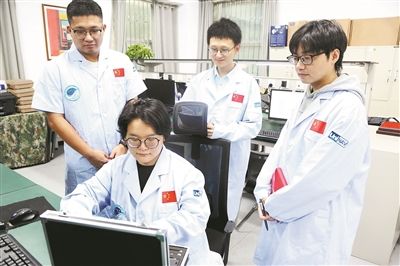
从“中国的北斗”到“世界的北斗”
Ren Min Ri Bao· 2025-10-12 04:27
Core Points - The article emphasizes the significance of the BeiDou system in enhancing the quality of life and its potential to benefit both China and the world [1][14] - It highlights the importance of independent innovation in technology development, particularly in the context of the BeiDou project [2][9] Group 1: BeiDou System Development - The BeiDou system serves as a model for high-level technological self-reliance and innovation, showcasing the dedication of Chinese scientists [3][9] - The BeiDou satellite navigation system has achieved a 100% localization rate for key components and satellites, reflecting the commitment to independent innovation [12] Group 2: Key Technological Innovations - The development of the satellite-based atomic clock, crucial for navigation accuracy, faced challenges due to reliance on imported technology, leading to a push for domestic production [4][5] - The BeiDou team successfully overcame initial setbacks with the atomic clock, ensuring high precision and reliability for the navigation system [6][7] Group 3: Team Efforts and Achievements - The BeiDou team, under the leadership of key figures like Xie Jun and Lin Baojun, has made significant breakthroughs in satellite technology, including inter-satellite link technology and mixed constellation architecture [9][10][11] - The team has demonstrated resilience and innovation, achieving what was previously deemed impossible in satellite technology development [11][12] Group 4: Applications and Future Goals - The BeiDou system is now integrated into various sectors, including national infrastructure, consumer markets, and international standards, enhancing its global presence [12][13] - Future goals include the establishment of a comprehensive national timing and navigation system based on BeiDou by 2035, aiming for continuous improvement and innovation [9][14]
从“中国的北斗”到“世界的北斗”(新发展理念引领高质量发展·一线故事)
Ren Min Ri Bao· 2025-10-11 21:53
Core Points - The article emphasizes the significance of the BeiDou system in enhancing the quality of life and its role in global navigation technology [1][14] - It highlights the commitment of Chinese leaders to innovation and self-reliance in technology, particularly in the development of the BeiDou system [2][12] Group 1: BeiDou System Development - The BeiDou system has evolved from serving China to benefiting the world, showcasing a unique path in satellite navigation exploration [1][14] - The system's key technologies, such as the inter-satellite link technology, have been crucial for its global coverage [9][10] - The BeiDou system has achieved a 100% localization rate for satellite components and key technologies, reflecting the dedication of Chinese scientists [12] Group 2: Innovation and Challenges - The development of the satellite-based atomic clock was essential for the BeiDou system, leading to a realization of the need for independent technology [4][5] - Initial attempts to create the atomic clock faced significant challenges, but through teamwork and perseverance, these obstacles were overcome [6][7] - The BeiDou team, led by key figures like Xie Jun and Lin Baojun, has consistently pushed the boundaries of technology, achieving breakthroughs that were previously deemed impossible [10][11] Group 3: Applications and Future Goals - The BeiDou system is now integrated into various sectors, including national infrastructure, consumer services, and international standards [12][13] - The goal is to make satellite messaging accessible to the general public, enhancing communication capabilities beyond mere location tracking [13] - Future plans include establishing a comprehensive national timing and navigation system based on BeiDou by 2035 [9][12]
第四届北斗规模应用国际峰会举行
Core Insights - The fourth Beidou Scale Application International Summit showcased the latest achievements and future prospects of the Beidou industry, highlighting its integration into China's modernization process and its role as a global public product for economic development and improved livelihoods [1] Industry Development - The "Beidou Industry Development Blue Book (2025)" indicates that the overall output value of China's satellite navigation and positioning service industry, centered around Beidou, is expected to reach 575.8 billion yuan in 2024, reflecting a year-on-year growth of 7.39% [2] - The Beidou navigation system has evolved from the early Beidou-1 to Beidou-3, now serving over 200 countries and regions, with positioning accuracy improving from ten meters to sub-meter level [2] - The Beidou industry chain is increasingly complete, covering upstream components like chips and antennas, midstream terminal devices, and downstream operational services, employing nearly one million people across about 20,000 enterprises [2] Innovation and Projects - The summit highlighted 33 Beidou innovation achievements across various fields, including high-precision chips and low-altitude economic operation systems, with significant projects signed for industrial park construction and overseas application promotion [3] - The establishment of the Beidou Laboratory Alliance aims to enhance key technology research and result transformation through a collaborative model [3] Application in Daily Life - Beidou's applications have penetrated daily life, with 39 cities designated as Beidou demonstration cities, and over 6.23 million independent positioning applications promoted in shared bicycles, wearable devices, and drones [4] - In 2024, approximately 288 million smartphones are expected to support Beidou positioning, achieving an installation rate close to 98% [5] Wearable Devices Market - Wearable devices have become the second-largest market for Beidou applications, with projections indicating that annual shipments will reach 47.95 million units by 2028, with installation rates exceeding 74% [6] - The integration of Beidou voice messaging technology into consumer devices enhances emergency communication capabilities [6] International Cooperation - Beidou's service capabilities extend to over 200 countries, with applications in agriculture and logistics improving efficiency and reducing costs in regions like the Middle East [7] - Collaborative efforts with the Arab League aim to strengthen policy dialogue and practical cooperation for Beidou applications in Arab countries [7] Regional Impact - In Laos, Beidou supports transportation and agriculture, enhancing efficiency in railway operations and providing disaster warning systems [8]
中海达9月30日获融资买入1105.46万元,融资余额4.49亿元
Xin Lang Cai Jing· 2025-10-09 01:31
Core Insights - The company Zhonghaidah experienced a decline of 1.04% in stock price on September 30, with a trading volume of 141 million yuan [1] - The financing buy-in amount for Zhonghaidah on the same day was 11.05 million yuan, while the financing repayment was 29.59 million yuan, resulting in a net financing outflow of 18.54 million yuan [1] - As of September 30, the total financing and securities lending balance for Zhonghaidah was 449 million yuan, with the financing balance accounting for 6.31% of the circulating market value, indicating a low level compared to the past year [1] Financing and Securities Lending - On September 30, Zhonghaidah had a financing buy-in of 11.05 million yuan, with a total financing balance of 449 million yuan [1] - The company’s securities lending showed a repayment of 3,800 shares with no shares sold, resulting in a securities lending balance of 496,200 yuan, which is above the 50th percentile of the past year [1] Company Overview - Zhonghaidah, established on June 21, 2006, and listed on February 15, 2011, is based in Guangzhou, Guangdong Province [1] - The company specializes in high-precision positioning technology, focusing on the development, manufacturing, and sales of related software and hardware products [1] - The main revenue sources for Zhonghaidah are high-precision positioning equipment and industry solutions (83.32%) and spatiotemporal data and information services (16.68%) [1] Financial Performance - For the first half of 2025, Zhonghaidah reported a revenue of 493 million yuan, reflecting a year-on-year growth of 15.39% [2] - The net profit attributable to the parent company was -23.69 million yuan, showing a year-on-year increase of 35.76% [2] Shareholder Information - As of June 30, 2025, Zhonghaidah had 74,000 shareholders, a decrease of 0.78% from the previous period [2] - The average number of circulating shares per shareholder increased by 0.79% to 8,193 shares [2] - The total cash dividends distributed by Zhonghaidah since its A-share listing amount to 102 million yuan, with no dividends paid in the last three years [3]
中国的北斗 世界的北斗
Core Insights - The fourth Beidou Scale Application International Summit showcased the latest achievements and future prospects of the Beidou industry, highlighting its integration into China's modernization process and its role as a global public product for economic development and improved livelihoods [2][3]. Industry Development - The "Beidou Industry Development Blue Book (2025)" indicates that the overall output value of China's satellite navigation and positioning service industry, centered around Beidou, is expected to reach 575.8 billion yuan in 2024, reflecting a year-on-year growth of 7.39% [3]. - The Beidou navigation system has evolved from the early Beidou-1 to the current Beidou-3, which serves over 200 countries and regions, with positioning accuracy improving from ten meters to sub-meter level [3]. - The Beidou industry chain is increasingly complete, encompassing upstream components like chips and antennas, midstream terminal devices, and downstream operational services, employing nearly one million people across approximately 20,000 enterprises [3][5]. Innovation and Application - The summit highlighted 33 innovative Beidou achievements, including high-precision chips and low-altitude economic operation systems, demonstrating the trend of integration between "Beidou+" and "+Beidou" [5]. - A total of 22 major projects were signed during the summit, focusing on industrial park construction, overseas application promotion, and terminal production bases [5]. - The Beidou system's short message communication feature is being extended to consumer markets, enhancing its utility in emergency situations [8]. Public Adoption - Beidou's applications have penetrated daily life, with 39 cities in 22 provinces designated as Beidou demonstration cities, leading to the promotion of over 6.23 million independent positioning applications [6]. - In 2024, the domestic smartphone shipment is projected to reach 294 million units, with approximately 288 million supporting Beidou positioning, resulting in an installation rate close to 98% [7]. - Wearable devices are emerging as the second-largest market for Beidou applications, with expected annual shipments reaching 47.95 million units by 2028 [7]. International Cooperation - The Beidou system's service capabilities extend to over 200 countries and regions, providing services to more than 140 countries [9]. - Collaborative initiatives with Arab nations have been established to enhance policy dialogue and experience sharing regarding Beidou applications [10]. - Beidou is also supporting transportation and agriculture in Laos, improving logistics efficiency and disaster prevention [10].
伊朗高官:想转用中国北斗,更安全
Guan Cha Zhe Wang· 2025-10-05 13:28
Core Viewpoint - Iran is facing significant challenges due to frequent GPS signal disruptions, prompting the need for a national satellite navigation system to reduce reliance on foreign services [1][2]. Group 1: Development of National Navigation System - Iran's Space Research Institute is planning to develop its own satellite navigation system within three to five years to address GPS signal interference and enhance the security of national infrastructure [1][2]. - The country is currently in discussions to transition from the US GPS system to China's BeiDou satellite navigation system, which is perceived to offer better security [1][5]. - The Iranian government acknowledges the lack of a domestic navigation system as a critical issue, having relied on foreign satellites that frequently malfunction [2][5]. Group 2: Regional and Global Implications - The shift towards the BeiDou system reflects a broader global concern about dependence on Western technological infrastructure, signaling a potential end to reliance on US-controlled systems [5][6]. - Analysts suggest that Iran's decision may encourage other countries in the region to deepen cooperation with China, amidst increasing competition between US and Chinese technologies in the Middle East [6][7]. - The BeiDou system has already established a presence in over 140 countries and is recognized as a core global satellite navigation system, challenging the dominance of the US GPS [7].
大地风华·多彩的答卷
Ren Min Ri Bao· 2025-10-04 21:50
Group 1 - The article highlights the advancements in China's manned space technology since the "14th Five-Year Plan," showcasing the successful extravehicular activities of astronauts aboard the Shenzhou 13 spacecraft [1] - The Fujian aircraft carrier, as China's first to utilize electromagnetic catapult technology, signifies a new stage in naval equipment technology, with the J-35 fighter jet representing a key component of national defense strength [1] - The transformation and upgrade of Xiamen Port as a crucial node in the 21st Century Maritime Silk Road is emphasized, reflecting the busy and grand scene of the port [2] Group 2 - The application of the BeiDou satellite navigation system across various sectors such as energy transportation, agriculture, and urban construction illustrates its deep integration into national economic development [3] - The Hainan Free Trade Port has accelerated its development over the past five years, showcasing a vibrant scene through artistic representations of its infrastructure [3] - The ecological restoration success of the mangrove wetlands in Zhanjiang is highlighted, emphasizing the harmonious coexistence of humans and nature [4] Group 3 - The artistic representation of the Xiong'an New Area's rapid development over eight years reflects the city's bright future and the ambitious goals of the "14th Five-Year Plan" [6] - The article presents a collection of artworks that embody the spirit of the times and the achievements of the past five years, showcasing the diverse artistic expressions of China's development [6][7] - The depiction of offshore wind power and marine ranching platforms illustrates the progress in clean energy development in Guangdong [7]
华力创通股价涨5.05%,南方基金旗下1只基金位居十大流通股东,持有490.14万股浮盈赚取539.15万元
Xin Lang Cai Jing· 2025-09-30 02:58
Group 1 - The core point of the news is that Huali Chuangtong's stock price increased by 5.05% to 22.89 CNY per share, with a trading volume of 4.97 billion CNY and a turnover rate of 4.28%, resulting in a total market capitalization of 151.69 billion CNY [1] - Huali Chuangtong, established on June 1, 2001, and listed on January 20, 2010, is based in Beijing and specializes in satellite navigation system applications, radar simulation testing equipment, broadband signal recording and generation, general signal processing platforms, and computer simulation testing platforms [1] - The company's main business revenue composition includes satellite applications (48.32%), electromechanical simulation testing (21.90%), simulation application integration (12.01%), radar signal processing (10.70%), agency and others (5.77%), and urban rail transit applications (1.30%) [1] Group 2 - Among the top ten circulating shareholders of Huali Chuangtong, a fund under Southern Fund has increased its holdings in the Southern CSI 1000 ETF (512100) by 930,900 shares, now holding 4,901,400 shares, which accounts for 0.95% of the circulating shares [2] - The Southern CSI 1000 ETF (512100) was established on September 29, 2016, with a latest scale of 649.53 billion CNY, achieving a year-to-date return of 27.27% and a one-year return of 47.41% [2] - The fund manager of Southern CSI 1000 ETF is Cui Lei, who has been in the position for 6 years and 329 days, with a total fund asset scale of 949.76 billion CNY and a best fund return of 145.53% during the tenure [3]
从厘米级定位到信号灯预测 北斗如何重塑全球“时空感知”
Xin Hua Wang· 2025-09-29 01:58
Core Insights - The Beidou satellite navigation system is rapidly integrating into daily life and various industries, serving as a "spatial-time engine" for technological revolution and future development [1][2][5] Group 1: Daily Life Integration - Beidou technology supports common activities such as navigation, food delivery, and ride-hailing, with significant adoption in smartphones and wearable devices [2][3] - In 2024, China's smartphone shipments are expected to reach 294 million units, with approximately 288 million supporting Beidou, resulting in an installation rate of nearly 98% [2] - The wearable device market for Beidou is projected to grow, with annual shipments expected to reach 47.95 million units by 2028 [2] Group 2: Enhanced Navigation Services - Beidou's high-precision navigation capabilities have improved user experience, with daily calls to Beidou services reaching 600 billion times [3] - The integration of Beidou technology in autonomous vehicles and smart public transport systems is transforming urban mobility [4] Group 3: Industrial Empowerment - Beidou is facilitating a full-chain spatial-time service ecosystem, enhancing various industries from transportation to agriculture [5][6] - In aviation, Beidou provides real-time tracking and data reporting for aircraft, while in rail transport, it supports autonomous positioning and operational adjustments [5] - The agricultural sector is seeing over one million Beidou terminal applications, enabling real-time data integration for efficient farming practices [6] Group 4: Future Developments - The next generation of Beidou is set to enhance precision in positioning and timing, supporting digital economy and deep space exploration [7][8] - A timeline for the next generation Beidou system includes key technology breakthroughs by 2025, pilot satellite launches by 2027, and full network deployment by 2035 [8] - The integration of communication, navigation, and remote sensing (referred to as "通导遥") is expected to significantly enhance Beidou's capabilities across various emerging fields [8]
华测导航20250926
2025-09-28 14:57
Summary of Huace Navigation Conference Call Industry and Company Overview - **Company**: Huace Navigation - **Industry**: High-precision satellite navigation - **Key Focus Areas**: Navigation positioning, timing, geographic spatial information, and automated driving in closed and semi-closed scenarios [2][4][8] Core Insights and Arguments 1. **Technological Strength**: Huace Navigation has significant advantages in high-precision GNSS algorithms and software, with a robust positioning chip technology platform and a global star-ground integrated enhancement network service platform [2][4] 2. **Market Position**: The company holds the top market share in RTK devices domestically, with rapid growth in overseas penetration where profit margins are 15-20% higher than domestic [5][19] 3. **Revenue Growth**: From 2021 to 2024, the company expects a compound annual growth rate (CAGR) of 19.5% in revenue and 25.6% in net profit, with projected net profits of 760 million, 990 million, and 1.29 billion yuan for 2025 to 2027, respectively [6][8] 4. **Product Diversification**: Huace Navigation's products span construction, surveying, agricultural operations, displacement monitoring, and intelligent driving, allowing for growth point transitions across different product systems [2][7] 5. **International Expansion**: The company is actively expanding its overseas market presence, with a focus on mid-to-low-end markets, and has established branches in Hungary and Singapore [7][8] Additional Important Insights 1. **R&D Investments**: Huace Navigation has established five R&D bases in China and the UK to leverage local talent for technological innovation and product development [11] 2. **Global Market Demand**: The global high-precision satellite navigation market is expected to grow from €260 billion to €580 billion from 2023 to 2033, driven by applications in agriculture, digital construction, and mobile terminals [15] 3. **Policy Support**: The Chinese government has been refining high-precision satellite navigation policies, particularly in areas like natural resource management and smart driving, which supports Huace's revenue growth in agricultural automation [16] 4. **Competitive Landscape**: Domestic competitors include Beidou Star, Hexagon, and Topcon, with Huace Navigation adopting a differentiated strategy targeting mid-to-low-end markets [27][28] 5. **Future Profitability**: The company anticipates steady revenue growth of over 30% in public utility sectors and construction, with a projected gross margin of 50-60% [30] Risks and Challenges - **Intense Competition**: The navigation industry faces fierce competition, particularly in the mid-to-high-end manufacturing sector, which could negatively impact profit margins [32] - **Technological Evolution**: Rapid technological iterations in high-precision navigation chips require continuous R&D investment, with potential risks if expectations are not met [32]