Residential Real Estate

Search documents
US existing home sales rise to seven-month high in September
Yahoo Finance· 2025-10-23 14:05
Core Insights - U.S. existing home sales reached a seven-month high in September, increasing by 1.5% to an annual rate of 4.06 million units, the highest since February [1][2] - The increase in home sales is attributed to falling mortgage rates and improving housing affordability, despite rising economic uncertainty and a stalled labor market [2][3] Sales Performance - Home sales rose 4.1% year-over-year, with increases noted in the Northeast, South, and West regions, while the Midwest experienced a decline [2] - The average rate for a 30-year fixed mortgage is at a one-year low of 6.27%, down from 7.04% in January, contributing to the rise in sales [2] Economic Context - A government shutdown has delayed the release of official economic data, including the employment report for September, leading to concerns about muted hiring due to economic uncertainty [3] - The shutdown has also affected real estate transactions, particularly in flood-prone areas where necessary insurance is unavailable [4] Inventory and Pricing - The inventory of existing homes increased by 14.0% year-over-year to 1.550 million units, although it remains below pre-pandemic levels [4] - The median existing home price rose by 2.1% year-over-year to $415,200, with current inventory expected to last 4.6 months at the September sales pace [5] Market Dynamics - Properties stayed on the market for an average of 33 days, up from 28 days a year ago, indicating a slight slowdown in sales velocity [6] - First-time buyers represented 30% of sales, an increase from 26% a year ago, though a 40% share is considered necessary for a robust housing market [6]
Lower mortgage rates push home sales higher in September, but prices still stubbornly high
CNBC· 2025-10-23 14:02
Core Insights - Sales of previously owned homes increased by 1.5% in September compared to August, reaching a seasonally adjusted annualized rate of 4.06 million units, marking the highest pace in seven months despite being slightly below analyst forecasts [1] - Year-over-year, sales were up 4.1% compared to September of the previous year [1] Regional Performance - On an annual basis, sales were strongest in the South and Northeast regions, while the West saw the highest monthly sales increase from August, and the Midwest experienced a slight decline [2] - The average mortgage rate for a 30-year fixed loan decreased from 6.67% in early July to 6.17% by the end of September, contributing to the sales increase [2] Market Dynamics - Falling mortgage rates are positively impacting home sales, with improved housing affordability also playing a role in the sales increase, according to the chief economist of the National Association of Realtors [3] - Inventory of homes for sale rose by 14% year-over-year to 1.55 million units at the end of September, although this remains historically low [3] - At the current sales pace, there is a 4.6-month supply of homes available, with a balanced market typically considered to have a six-month supply [3]

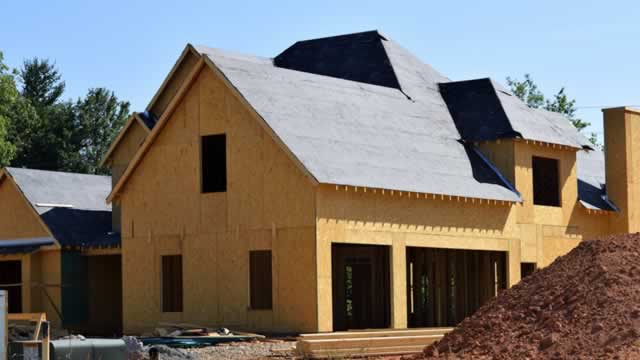
NAR Existing-Home Sales Report Shows 1.5% Increase in September
Benzinga· 2025-10-23 14:00
Core Insights - Existing-home sales increased by 1.5% month-over-month in September, reaching a seasonally adjusted annual rate of 4.06 million units, and rose by 4.1% year-over-year [1][5] - The increase in sales is attributed to falling mortgage rates and improving housing affordability, as stated by NAR Chief Economist Dr. Lawrence Yun [2][3] - Inventory levels reached 1.55 million units, up 1.3% from August and 14.0% from September 2024, although still below pre-COVID levels [5][6] Sales Performance - Month-over-month sales increased in the Northeast, South, and West, while the Midwest experienced a decline [2] - Year-over-year sales rose in the Northeast, Midwest, and South, with the West remaining flat [2] Pricing Trends - The median existing-home price in September was $415,200, reflecting a 2.1% increase from $406,700 a year ago, marking the 27th consecutive month of year-over-year price increases [3][5] - The median home price in the South was $500,300, up 4.1% from September 2024, while the West saw a median price of $360,300, down 0.6% from the previous year [6][13] Inventory and Supply - The unsold inventory supply remained at 4.6 months, unchanged from August but up from 4.2 months in September 2024 [5] - Inventory is at a five-year high, indicating a stable market despite being below pre-COVID levels [2][5] Mortgage Rates - The average 30-year fixed-rate mortgage in September was 6.35%, down from 6.59% in August but up from 6.18% a year ago [8]

160万买的房子,跌到39万,2025年到底还能不能买房?
Sou Hu Cai Jing· 2025-10-22 06:04
Core Viewpoint - The ongoing adjustment in the national real estate market has led to significant price drops in many cities, sparking discussions on whether 2025 is a good time to buy a home. There are differing opinions, with some viewing it as a buying opportunity while others believe there is still room for further declines, suggesting a wait-and-see approach. Group 1: Key Indicators for Home Buying Decision - Monitoring the ratio of mortgage burden to household income is crucial. A healthy standard is that monthly mortgage payments should not exceed 30% of total household income. If first-time buyers are required to allocate over 45% of their income to mortgage repayments, entering the market in 2025 may not be wise [3]. - Examining the disparity between housing prices and personal income is essential. Currently, the price-to-income ratio in second and third-tier cities ranges from 20 to 25, while in first-tier cities like Shanghai and Shenzhen, it exceeds 40. A reasonable price-to-income ratio should be between 12 and 15, indicating that families can afford a home without extreme financial strain [5]. - Keeping a close watch on rental price trends is important. Nationwide, rental prices are generally declining, which correlates with decreasing household incomes. For instance, in Shanghai, the monthly rent for a 35 square meter one-bedroom apartment has dropped from 4000 yuan to 3300 yuan [6]. Group 2: Market Trends and Implications - The ongoing decline in rental prices, coupled with high housing prices, is leading more young people to prefer renting over buying. If the trend of falling rents continues, it suggests that housing prices may still face downward pressure [8]. - Not all regions are experiencing the same real estate market conditions. Some cities have seen extreme cases of significant price drops. For example, a residential property in Tianjin's Wuqing district fell from 1.6 million yuan in 2016 to 390,000 yuan, a drop of 1.21 million yuan. Similar situations have occurred in Yanjiao, where a property that peaked at 3.1 million yuan in 2017 is now listed at 680,000 yuan, reflecting a 78% decline [8]. - Even first-tier cities like Shanghai and Shenzhen are not immune to price declines. In Shanghai's Minhang District, the price per square meter dropped from 96,000 yuan in 2021 to 48,000 yuan, nearly halving in just four years. Since early 2022, national housing prices have been on a downward trend for three consecutive years, with an average decline of nearly 30% across the country [8].

回迁房低价诱人,到底能不能买?住建调查员说清风险与门道
Sou Hu Cai Jing· 2025-10-21 07:30
Core Viewpoint - The article discusses the complexities and risks associated with purchasing relocation housing, emphasizing that while these properties may appear to be a bargain, they come with significant legal and procedural challenges that potential buyers should be aware of [1]. Group 1: Nature of Relocation Housing - Relocation housing is not classified as small property rights housing; it typically involves state-owned land allocated through formal government processes, allowing for potential buying and selling, as well as property certificate issuance [3]. - The process of obtaining property certificates for relocation housing can be lengthy, often taking five to ten years, which introduces risks for buyers [3]. Group 2: Risks and Challenges - The price difference between unregistered and registered properties can be substantial, with properties selling for 3 million before certification potentially increasing to 4 million afterward, creating a tempting but risky scenario for buyers [3]. - Buyers face the risk of sellers backing out of agreements once property values increase, and any changes in policy could lead to significant costs for land transfer fees and taxes, potentially amounting to hundreds of thousands [3][5]. Group 3: Legal Considerations - Properties with a property certificate can be directly transferred, while those only with a relocation agreement require notarization but cannot change the registered owner in the system until the certificate is obtained [5]. - Buyers should conduct thorough due diligence, including checking land status and the seller's marital situation, and consider retaining part of the payment in escrow to mitigate risks [5].

Equity Residential: Buying Opportunity In Class-A Apartments (NYSE:EQR)
Seeking Alpha· 2025-10-20 17:03
It isn’t every day that one can say Equity Residential (NYSE: EQR ) is offering an attractive valuation proposition. This is the kind of stock that typically trades at rich valuations relative to the broader market. That dynamic has flipped as of lateJulian is the leader of the investing group Best Of Breed Growth Stocks where he only shares positions in stocks which have a large probability of delivering large alpha relative to the S&P 500. He also combines growth-oriented principles with strict valuation ...


Homeowners Were Asked If They Regretted Paying Off Their Mortgage Early. 'Not Even When My Financial Advisor Told Me Not To'
Yahoo Finance· 2025-10-20 13:16
Core Insights - Many homeowners express no regrets about paying off their mortgages, valuing the emotional relief and security it provides over potential investment gains [1][2][3] - Some individuals highlight that being debt-free allows for more aggressive investing and reduced stress in their lives [3] - A minority of commenters reflect on missed financial opportunities, suggesting that investing the funds used to pay off mortgages could have yielded significant returns [5][6] Emotional and Financial Perspectives - The emotional benefits of owning a home outright are emphasized, with many stating that the peace of mind outweighs financial considerations [2][6] - Homeowners who paid off their mortgages report feeling less stressed and more secure, especially during job loss situations [3] - The contrast between emotional satisfaction and financial efficiency is noted, with some acknowledging that paying off a mortgage may not have been the best financial decision [5][6] Investment Considerations - A few commenters regret not investing their mortgage payoff funds, citing substantial potential gains had they invested in the S&P 500 index fund instead [5][6] - The discussion highlights a broader debate on the balance between emotional security and financial strategy in personal finance decisions [5][6]
American Homes 4 Rent: The Smart Way To Be A Landlord In This Market
Seeking Alpha· 2025-10-20 12:15
Group 1 - The article highlights Julian's leadership in the investing group Best Of Breed Growth Stocks, focusing on stocks with a high probability of delivering significant alpha compared to the S&P 500 [1] - Julian employs a strategy that combines growth-oriented principles with strict valuation criteria to enhance the conventional margin of safety [1] - The features of Julian's investment approach include exclusive access to high-conviction stock picks, comprehensive research reports, real-time trade alerts, macro market analysis, individual industry reports, a curated watchlist, and 24/7 community chat access [1] Group 2 - Julian Lin is identified as a financial analyst who specializes in finding undervalued companies with long-term growth potential [1] - The investment strategy focuses on companies with robust balance sheets and strong management teams, particularly in sectors with extended growth trajectories [1]


Hong Kong residential property market's improvement whets investor appetite, analysts say
Yahoo Finance· 2025-10-20 09:30
Market Sentiment - The Hong Kong residential property market is showing signs of mending investor sentiment, although analysts remain cautious about a full recovery due to geopolitical tensions and economic uncertainties [1] - Investors accounted for 20% of the market's total transactions in 2025, with certain districts near universities potentially having a higher proportion of investor activity [1] Rental Yields - The average gross rental yield for mass residential units in Hong Kong is 3.7%, which is appealing to mainland buyers [2] - Hong Kong's residential rents increased in August, with the rental index rising by 1.12%, marking the largest increment in 14 months, bringing it close to the record high of 200.1 recorded in August 2019 [6] Interest Rates and Economic Factors - Investor interest is being driven by expectations of further interest rate cuts and potential rent increases, with HSBC offering a fixed-rate mortgage plan at 2.73% per annum [3] - Following the US Federal Reserve's easing of policy rates, the Hong Kong Monetary Authority reduced the prime lending rates by 12.5 basis points on September 18 [4] Market Challenges - The Hong Kong economy faces challenges such as weak consumption, high vacancy rates in commercial buildings, and an oversupply of private residential units [5] - While rental yields may not be the most attractive incentive, lower residential flat prices could present a good entry point for investors seeking capital gains [6]


购房选楼层为何买单不买双?听内行人一席话恍然个悟!
Sou Hu Cai Jing· 2025-10-18 05:27
Group 1 - The phrase "buy odd, not even" originates from feng shui, suggesting that odd numbers are auspicious while even numbers are not, particularly in housing design [2][3] - There is a lack of scientific evidence supporting the belief in "buy odd, not even," indicating it may reflect a mindset of caution among buyers rather than a factual basis [2] - Buyers are advised not to overly fixate on this belief when making purchasing decisions [2] Group 2 - When selecting a floor, factors such as comfort, health, lighting, and ventilation should be prioritized over superstitions [5][6] - Key recommendations for assessing natural lighting include evaluating during winter, checking midday sunlight, and considering the building's distance from others [5] - For new properties, buyers can assess the width and depth of the unit to gauge potential lighting quality [5][6] Group 3 - For tower buildings, it is suggested to choose floors above the 6th level, while for slab buildings, floors above the 3rd level are recommended [6] - Overall, the focus should be on practical factors like lighting, ventilation, and noise rather than adhering to the "buy odd, not even" belief [6]