Credit Reporting

Search documents
Equifax Unveils New Tools to Streamline Auto Lending with Verified Job and Income Data
Crowdfund Insider· 2026-01-30 22:20
Core Insights - Equifax has launched Employment Insights solutions specifically for auto dealers, integrating employment and earnings data with consumer credit reports [1][2] Product Overview - The Employment Insights suite consists of two components: one for prequalification and another for the financing stage [2][4] - The prequalification component provides key metrics such as yearly income, job status, and employment length, aiding in accurate debt-to-income and payment-to-income calculations [3] - The financing component verifies income and employment details alongside identity checks, ensuring accurate information for loan applications [4][5] Benefits to Stakeholders - Dealers can customize vehicle recommendations and promotional offers based on a buyer's actual financial capacity, enhancing the sales experience [4] - The integration of verified data reduces discrepancies, leading to a more secure closing process and lower likelihood of loan buybacks [5][8] - Auto lenders gain confidence in applicant data, reducing exposure to fraud and errors, while consumers experience smoother transactions without repeated documentation requests [8] Industry Context - The launch reflects Equifax's commitment to leveraging data solutions to address challenges in credit and lending, particularly in the evolving auto industry [9][10] - As vehicle buyers become more cost-conscious, the urgency for efficient financing solutions increases, making tools like Employment Insights critical for maintaining competitive advantage [7][10]



Equifax Launches Credit Abuse Risk Model to Help Protect Lenders Against the Rising Financial Impact of First-Party Fraud
Prnewswire· 2026-01-30 12:45
Core Insights - Equifax has launched a new predictive model called Credit Abuse Risk to help lenders combat the rising financial impact of first-party fraud [1] - The model identifies atypical patterns indicative of loan stacking and credit washing, allowing lenders to make informed lending decisions [1] Product Features - Actionable intelligence enables real-time, FCRA-compliant decisions on credit terms, including adverse action reason codes [1] - Comprehensive portfolio protection offers insights across all credit tiers, enhancing risk assessment [1] - Targeted decisioning addresses the lifecycle of fraud without compromising consumer protections [1] - Enhanced insights focus on behavioral indicators to reveal atypical credit activity [1] Strategic Importance - Credit Abuse Risk is part of Equifax's layered fraud defense strategy, complementing existing tools like Synthetic Identity Risk to provide a holistic view of identity legitimacy [1] - The model supports a more confident lending environment, helping to maintain credit availability for consumers [1]

失信人群、灵活就业者受益,全国首份报告解锁个人信用经济新赛道
Di Yi Cai Jing· 2026-01-29 11:29
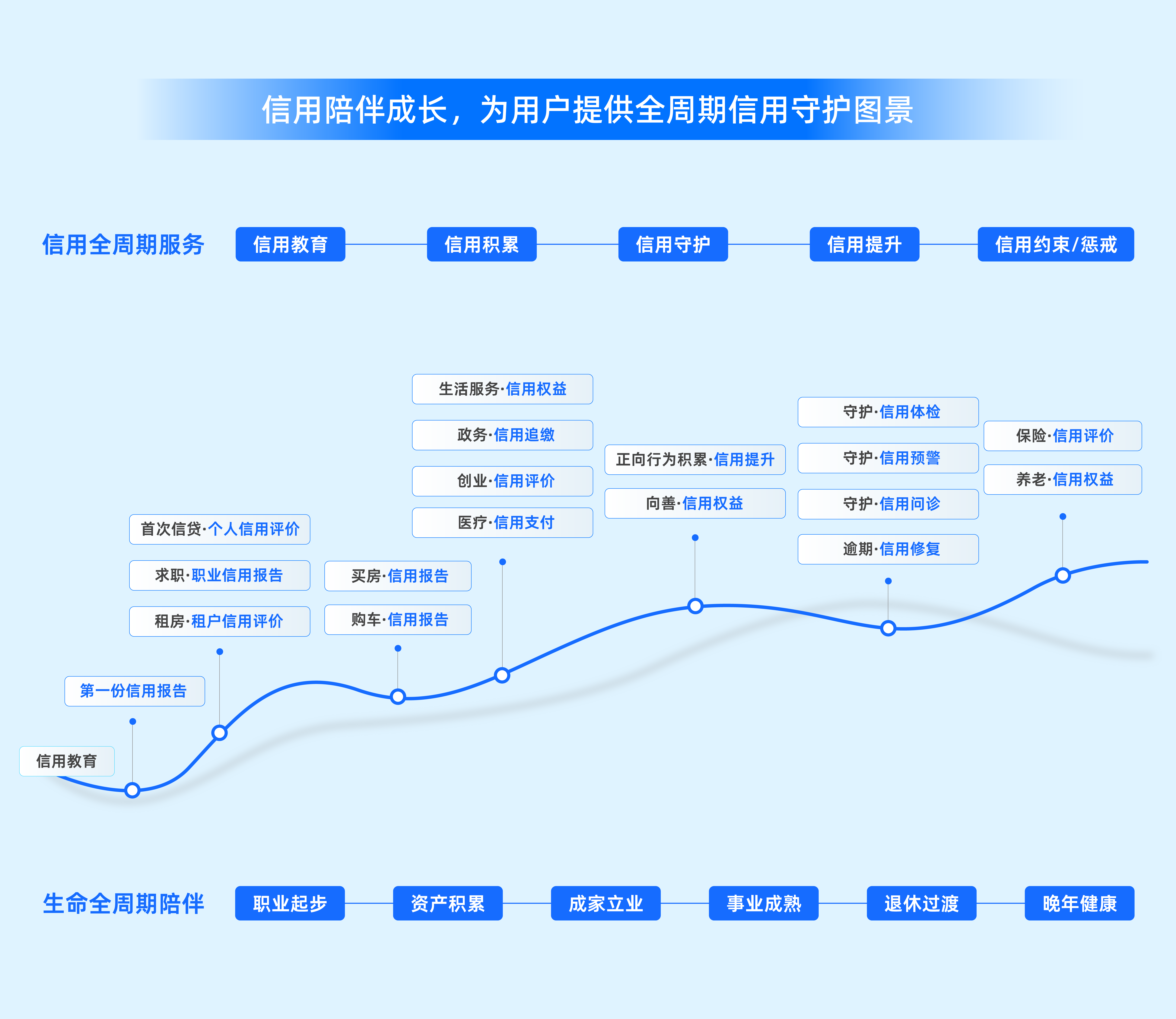
Core Insights - The report defines personal credit economy as a new economic form centered on personal credit data, providing credit services to individuals, financial institutions, and business entities through compliant data circulation and diverse application scenarios [1][10] Group 1: Target Demographics - The personal credit economy should primarily benefit four groups: individuals in credit distress, flexible employment groups, small business operators, and "virtuous" individuals [10][15] - There are over 100 million individuals in China with a history of bad credit records, highlighting the need for innovative credit repair mechanisms [10] Group 2: Credit Service Development - The report emphasizes the importance of a full-cycle personal credit management service, which includes credit protection, repair, incentives, education, and constraints [9][14] - As of November 2025, the financial credit information database has recorded 1.16 billion individuals, with approximately 810 million having credit records [12] Group 3: Industry Evolution - The personal credit industry in China has evolved from a focus on credit reporting to a broader application of credit data, with over 700 million personal information subjects recorded by market-oriented credit agencies [13][14] - The annual revenue of the domestic personal credit service industry has exceeded 10 billion yuan, with projections suggesting it could reach 80 to 100 billion yuan during the 14th Five-Year Plan period [14] Group 4: Future Trends - The report identifies three major trends in personal credit development: a shift from passive recording to active management, integration of long-term credit management with short-term credit consumption, and a transition from punitive measures to positive reinforcement and education [14][15] - The growth of the personal credit economy is expected to lower social trust costs and enhance the visibility and respect for individual credit value, leading to improved resource allocation and social governance efficiency [15]
TransUnion and FrontLobby to Launch Rental Payment Reporting on Credit Files
Globenewswire· 2026-01-28 11:00
Core Insights - TransUnion and FrontLobby are collaborating to integrate rental payment data into TransUnion's alternative data reporting system, enhancing visibility for housing providers and allowing renters to report their consistent, on-time rental history [1][2]. Group 1: Collaboration Details - The partnership will add rental payment information from FrontLobby to TransUnion credit reports as a separate category, enabling timely rent payments to contribute positively to credit files without being classified as debt [2][4]. - FrontLobby's platform facilitates monthly reporting of rent payments, serving over 60,000 housing providers and more than one million rental units in Canada, with reported delinquencies reduced by up to 92% [3][4]. Group 2: Benefits for Renters and Housing Providers - The integration aims to help over five million Canadian households by recognizing consistent rental payments, thereby improving their creditworthiness [4]. - Housing providers will gain enhanced insights and tenant stability, fostering stronger rental relationships and providing a competitive advantage [4][8].


TransUnion and Zenbase Bring Rental Payment Information to Credit Reports
Globenewswire· 2026-01-28 11:00
Core Insights - TransUnion and Zenbase have partnered to enhance the credit reporting ecosystem by including rental payment information, allowing renters to improve their credit reports and access better financial opportunities [1][2][4] Company Overview - TransUnion is a global information and insights company with over 13,000 associates in more than 30 countries, recognized as a leading credit bureau in Canada [5] - Zenbase is a Canadian financial health platform that offers automated rent reporting and flexible rent payment solutions, focusing on economic inclusion for renters [7] Financial Inclusion - The integration of rental payment data into credit reports represents a significant advancement in financial inclusion, enabling approximately five million Canadian households to showcase responsible payment behavior [1][2] - By treating rental payments as a distinct category, this initiative allows timely rent payments to enhance credit files without being classified as debt [1][2][4] Technological Integration - Zenbase's direct integration with property management systems allows for seamless rent reporting, minimizing administrative overhead for property managers [3] - This technological advancement facilitates the delivery of rental data to TransUnion, ensuring that residents are recognized for their rent payment history [3] Economic Impact - The initiative aims to improve the financial health of renters by transforming their largest monthly expense into a tool for building credit and unlocking capital [4][8] - Zenbase currently supports over 200,000 homes across Canada, contributing to a more inclusive financial ecosystem [9]
Equifax Offers Verified Employment and Income Data Alongside Credit Reports
PYMNTS.com· 2026-01-26 20:30
Core Insights - Equifax has launched a new product called Income Confirm, which integrates employment and income data with credit reports to enhance lenders' decision-making during credit card origination [2][4]. Group 1: Product Offering - Income Confirm combines data from The Work Number database with Equifax Consumer Credit Reports, providing lenders with verified employment and income information [2]. - The product includes details such as employee name, Social Security Number, current or most recent employer, current employment status, and calculated annual income [3]. Group 2: Benefits for Lenders - The new offering aims to improve lenders' confidence in decision-making by allowing them to base decisions on factual data rather than estimates, optimizing initial credit lines according to the consumer's actual ability to pay [4]. - This product is expected to facilitate a smoother application process and enhance early engagement and spending from new cardholders [4]. Group 3: Strategic Developments - Equifax has enhanced The Work Number database by acquiring Vault Verify, which provides additional employment and income verification services, thereby improving the data available to verifiers [4]. - The company has also introduced Equifax Ignite AI Advisor, a generative AI solution that helps lenders analyze portfolio performance and identify growth opportunities through conversational data insights [5]. Group 4: Market Demand - The CEO of Equifax noted an increase in demand for verification services in consumer lending and the government sector, particularly as states implement stricter verification requirements [6].

My mom opened a credit card in my name with my permission but she's run up a balance of $40K. How will this impact me?
Yahoo Finance· 2026-01-25 13:15
Core Insights - The case of Bryce illustrates the complexities of credit card debt and legal responsibility, particularly when family members are involved [2][3] - The average credit card balance in the U.S. was reported to be $6,735 in mid-2025, highlighting a common financial challenge faced by many Americans [2] Group 1: Legal Responsibility - Legal responsibility for credit card debt is determined by the account setup, not by who used the card; in Bryce's case, he is the primary account holder and thus legally responsible for the $40,000 balance [3][4] - The distinction between authorized users and joint account holders is crucial; authorized users can make purchases but are not liable for repayment, while joint account holders and primary borrowers are [4] Group 2: Impact on Credit Score - A high credit card balance can negatively impact credit scores due to credit utilization, which is a significant factor in credit scoring [5] - The large balance on Bryce's card can affect his credit report and future loan qualifications, emphasizing the importance of managing credit responsibly [4][5]
Equifax Launches AI-Powered Tool to Combat Synthetic Identity Fraud
PYMNTS.com· 2026-01-23 21:39
Core Insights - Equifax has launched a new product utilizing artificial intelligence to combat synthetic identity fraud, a rapidly growing threat in the consumer lending ecosystem [1][4] - The Synthetic Identity Risk product employs machine learning algorithms to identify fraud patterns and flag potentially fraudulent activities, aiding enterprises in decision-making regarding identity verification and fraud prevention [3][4] Group 1: Product Overview - The Synthetic Identity Risk product can be utilized during account opening or as a continuous account management tool [3] - The product aims to enhance lenders' fraud defenses by shifting from reactive loss recovery to proactive prevention [4] Group 2: Industry Context - Synthetic identity fraud is increasingly common and costly for financial services firms, exploiting automation and traditional verification checks [4][5] - The rise of artificial intelligence tools has exacerbated the threat, enabling fraudsters to create fake identities and circumvent fraud prevention measures [5] Group 3: Company Strategy - Equifax is focusing on leveraging advanced AI capabilities and unique data assets to develop a new generation of fraud prevention tools [7] - The company has acknowledged that fraud remains a significant and evolving threat faced by its customers [7]

Nearly One in Three Millennial and Gen Z Gig Workers Rent Their Gig Platform Accounts to Unverified Users
Globenewswire· 2026-01-15 13:00
Core Insights - The TransUnion report reveals that gig workers are increasingly renting or selling access to their accounts to boost income amid financial pressures, particularly affecting those in the lower end of the K-shaped economy [1][2] Gig Worker Trends - One in four gig workers have rented their accounts, with younger generations (Gen Z and Millennials) being more likely to engage in this practice [2][3] - 20% of gig workers reported selling their accounts, with the percentage being higher among Millennials (27%) compared to Baby Boomers (7%) [3] Risks and Concerns - Renting and selling accounts pose risks to consumers, workers, and platforms, as unverified users can lead to fraud and physical danger [3] - Less than half (45%) of gig workers believe that gig platforms have effective ID verification processes, highlighting a gap in security measures [4] Fraud Experiences - 34% of gig workers reported being defrauded by consumers while working, indicating a significant issue with safety and trust on these platforms [6] - Workers expect platforms to enhance identity verification processes, including checks on identities, devices, delivery addresses, and biometrics [6] Solutions and Strategies - Gig platforms are utilizing identity verification and device intelligence solutions to combat fraud and ensure that workers are who they claim to be [5][7] - These solutions aim to detect and block suspicious activities early, thereby maintaining trust and protecting both workers and customers [5][7]
Experian: Credit Builders Alliance Drives Progress for Often Overlooked Consumers
Businesswire· 2026-01-15 11:00
Core Insights - Experian's analysis reveals that Credit Builders Alliance (CBA) tradelines significantly aid credit-challenged consumers in improving their financial status and accessing mainstream credit products [1][2]. Group 1: Impact of CBA Tradelines - 70% of previously unscored borrowers with a CBA tradeline achieved prime or near-prime credit status within one year, compared to 48% of unscored U.S. borrowers [2]. - Consumers starting from deep subprime credit tiers who had a CBA tradeline experienced an average credit score increase of 48 points within a year [2]. Group 2: Profile of CBA Clients - Clients served by CBA member organizations have a lower average VantageScore of 658 compared to 724 for the general U.S. population, higher credit utilization rates of 75% versus 67%, and greater debt-to-income ratios of 33% compared to 19% [4]. - This demographic represents a more financially vulnerable population, highlighting the need for targeted financial support [4]. Group 3: Role of Nonprofit Lenders - Nonprofit and mission-driven lenders, including community development financial institutions (CDFIs), are instrumental in helping consumers overcome systemic barriers through responsible lending, financial coaching, and education [5]. - These programs enable consumers to build savings and gain access to mainstream credit products, thereby unlocking financial opportunities [5]. Group 4: Commitment to Inclusive Credit Reporting - The analysis underscores the importance of inclusive credit reporting and the positive impact organizations like CBA have on improving the financial lives of underserved consumers [6]. - Experian is dedicated to expanding access to credit for historically excluded populations, reinforcing its commitment to financial empowerment [6].