互联网医疗

Search documents
从峰会到共赢!方舟健客(06086)、旺山旺水-B(02630)深化“AI+慢病管理”领域战略合作,共筑健康产业数智未来
智通财经网· 2025-11-26 02:37
Core Insights - The core theme of the conference was "Collaborative Win-Win: Smartly Leading the Future," focusing on enhancing chronic disease management through artificial intelligence [1][2] Group 1: Strategic Partnerships - Ark Health and Suzhou Wangshan Wangshui Biopharmaceutical Co., Ltd. announced a strategic cooperation aimed at integrating core industry resources with digital technology capabilities [1][5] - The partnership is designed to break down industry barriers and achieve a full-chain upgrade from drug supply to health services [5][6] Group 2: AI and Chronic Disease Management - The Chinese government has emphasized the importance of "AI + healthcare," providing a clear direction for the industry's development over the next five years [2][4] - Ark Health's CEO highlighted the critical role of AI in addressing the challenges posed by an aging population and the increasing prevalence of chronic diseases [2][4] Group 3: Technological Advancements - The application of AI technology has led to significant user engagement, with a 2.4 times increase in users experiencing AI features in October compared to September, and a 50% increase in GMV [4] - The company aims to create replicable and scalable AI-driven solutions for chronic disease management, enhancing the quality of health services [4][6] Group 4: Future Outlook - The collaboration is expected to enhance the alignment between biopharmaceutical research and health service delivery, ensuring that research outcomes meet user needs more effectively [6] - Ark Health plans to continue deepening its focus on chronic disease management and strengthening its technological foundation to drive the digital transformation of health services [6]


从峰会到共赢!方舟健客(06086)、旺山旺水-B(02630)深化“AI+慢病管理”领域战略合作
Xin Lang Cai Jing· 2025-11-26 02:18
Core Insights - The article discusses the successful convening of the Ark Health (方舟健客) Double 12 Core Partner Summit, focusing on the theme "Collaborative Win-Win, Intelligent Future," which gathered key players in the internet healthcare industry to explore the enhancement of chronic disease management through artificial intelligence [1][2] - A strategic partnership was announced between Ark Health and Suzhou Wangshan Wangshui Biopharmaceutical Co., Ltd. (旺山旺水), aimed at integrating core industry resources with digital technology capabilities to drive innovation in the health industry [1][6] Industry Trends - The Chinese government has emphasized the importance of "AI+" initiatives across various sectors, including healthcare, as part of its strategic direction for the next five years [1][2] - The aging population and the increasing prevalence of chronic diseases among younger individuals highlight the critical role AI technology can play in healthcare [2] Company Developments - Ark Health's CEO, Dr. Xie Fangmin, highlighted the company's commitment to addressing real problems and delivering tangible changes in chronic disease management through AI applications [2][5] - The company reported a significant increase in user engagement with its AI features, with a 2.4 times increase in users experiencing AI functionalities and a 50% rise in Gross Merchandise Volume (GMV) in October compared to September [4] Strategic Collaboration - The partnership between Ark Health and Wangshan Wangshui is designed to break down industry barriers and integrate technological empowerment with product pipeline advantages, facilitating a comprehensive upgrade from drug supply to health services [5][6] - Both companies aim to create a customer-centric health service system, providing tailored, efficient, and professional health management solutions throughout the entire lifecycle [6][8] Future Outlook - The collaboration is expected to enhance the connection between biopharmaceutical research and health services, ensuring that research outcomes align more closely with user needs [8] - Ark Health plans to continue its focus on chronic disease management, strengthening its technological foundation and enhancing application scenarios to promote digital transformation in health services [9]

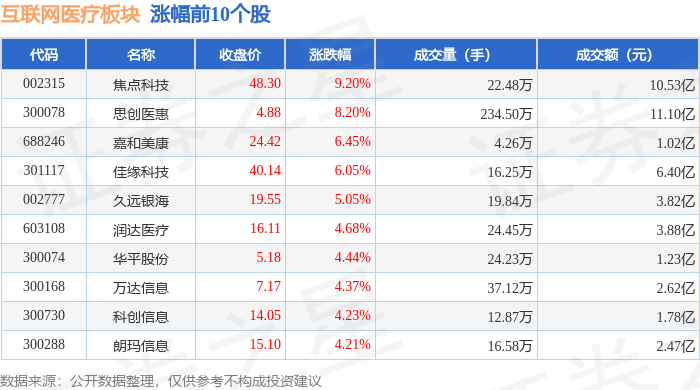
互联网医疗板块11月24日涨1.26%,焦点科技领涨,主力资金净流出8965.77万元
Sou Hu Cai Jing· 2025-11-24 09:25
Core Viewpoint - The internet healthcare sector experienced a rise of 1.26% on November 24, with Focus Technology leading the gains, while the overall market indices showed modest increases [1]. Group 1: Market Performance - The Shanghai Composite Index closed at 3836.77, up 0.05%, and the Shenzhen Component Index closed at 12585.08, up 0.37% [1]. - Focus Technology (002315) saw a significant increase of 9.20%, closing at 48.30, with a trading volume of 224,800 shares and a transaction value of 1.053 billion [1]. - Other notable performers included Sichuang Medical (300078) with an 8.20% increase, closing at 4.88, and Jiahe Meikang (688246) with a 6.45% increase, closing at 24.42 [1]. Group 2: Capital Flow - The internet healthcare sector experienced a net outflow of 89.6577 million from institutional investors, while retail investors saw a net inflow of 763 million [2]. - The leading stocks in terms of net inflow from retail investors included Focus Technology with a net outflow of 97.1479 million, and Jiahe Meikang with a net inflow of 46.0728 million [3]. - The overall capital flow indicates a mixed sentiment, with institutional investors pulling back while retail investors are actively participating [2][3].




蚂蚁AQ探路,用AI撬动万亿健康之门?
Sou Hu Cai Jing· 2025-11-24 03:05
Core Insights - The Chinese healthcare industry is valued at 20 trillion, characterized by long cycles, slow pace, and heavy investment, making it a challenging yet correct business opportunity. The future will depend on strategic determination and the effective implementation of AI technology to solve problems and gain user trust [2][31]. Group 1: Company Developments - Ant Group has restructured its digital healthcare division, upgrading it to the "Ant Health Group," marking a significant business adjustment in the past five years [3]. - Ant Group's AI ToC product, Ant AQ, has achieved over 10 million monthly active users within just four months of launch [4][20]. - The health sector is now a strategic pillar for Ant Group, with Zhang Junjie leading the health group, reporting directly to CEO Han Xinyi [13]. Group 2: Competitive Landscape - Major players in AI healthcare include Alibaba, JD Health, Tencent, and ByteDance, all of which have established early advantages in the market [5][6]. - Ant Group's entry into healthcare is seen as a move to transition from a payment tool to a comprehensive healthcare platform, leveraging its existing user base of over 800 million for medical insurance services [11]. Group 3: AI Applications and Challenges - The AI healthcare sector is becoming increasingly competitive, with many services showing signs of homogenization, such as AI digital doctors and health consultations [14]. - Ant AQ's integration with various health services, including online consultations and health records, positions it as a key player in the AI healthcare landscape [19]. Group 4: Future Prospects and Commercialization - Ant Group's future commercialization strategy for Ant AQ is still under development, with a focus on potential collaborations in pharmaceutical sales and medical insurance [22][27]. - The company aims to leverage its resources and technology to create a differentiated competitive edge in the healthcare market [31].

全省已建成互联网医院256家 “指尖就医”更便利
Xin Hua Ri Bao· 2025-11-23 23:25
Core Insights - The trend of "cloud-based consultations" is becoming the new norm in Jiangsu's healthcare system, with 256 internet hospitals established and a 52% year-on-year increase in service volume [1] Group 1: Internet Hospitals - Jiangsu has built 256 internet hospitals, achieving full coverage of tertiary hospitals, with a service volume increase of 52% this year [1] - The Nanjing Drum Tower Hospital's internet hospital has over 6.5 million registered users and is the leading provider in the province, with 226,000 online consultations expected in 2024 [3] - The internet hospital model allows for efficient management of medical resources, with over 50% of the medical staff holding senior titles, ensuring professional online medical services [3] Group 2: Patient Experience - Patients are increasingly benefiting from the convenience of online consultations, with doctors able to provide timely responses and avoid unnecessary panic for high-risk situations [2] - The integration of online and offline services has improved patient experiences, such as reducing wait times for medication refills and consultations [2][5] - The implementation of a "smart pharmacy" allows patients to access medications for chronic diseases at local healthcare facilities, enhancing accessibility [6] Group 3: Rural Healthcare - The benefits of smart healthcare are extending from urban to rural areas, with successful cases of remote consultations leading to surgeries performed locally [4] - The collaboration between community health centers and larger hospitals has improved patient care and increased the number of patients served [4][5] Group 4: Digital Transformation - The digital transformation of Jiangsu's healthcare system is evident through the establishment of a unified "smart brain" for healthcare information, facilitating real-time data sharing and reducing redundant tests [7] - The development of remote consultation and diagnostic platforms has created a more efficient network for healthcare resource allocation [7] Group 5: Community Impact - The effectiveness of Jiangsu's smart healthcare initiatives is reflected in improved access for specific groups, such as children and the elderly, leading to positive public feedback [8] - Initiatives like "first diagnosis, then payment" and zero wait times for seniors are contributing to a more convenient and efficient healthcare experience [8]
线上预约问诊全周期健康管理
Hai Nan Ri Bao· 2025-11-23 00:40
日前,位于海口江东新区企业港的海口今康互联网医院美兰今康综合门诊部营业以来,依托实体医疗资 源构建的互联网医疗平台,打破就医时空限制、简化诊疗流程。用户注册建档后,选择科室或医生预约问 诊,诊疗后凭电子处方选取药并结算,后续可在个人中心查阅记录与复诊,实现全周期健康追踪管理。 海南日报全媒体记者 李天平 摄 ...

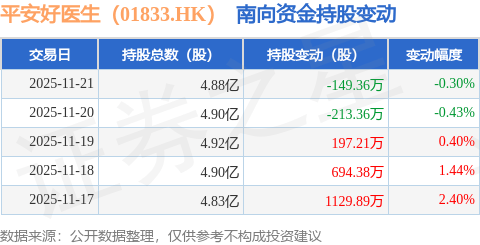
平安好医生(01833.HK):11月21日南向资金减持149.36万股
Sou Hu Cai Jing· 2025-11-21 19:28
Core Insights - Southbound funds reduced their holdings in Ping An Good Doctor (01833.HK) by 1.4936 million shares on November 21, 2025, marking a decrease of 0.30% [1][2] - Over the past five trading days, southbound funds increased their holdings on three occasions, with a total net increase of 16.5876 million shares [1] - In the last twenty trading days, there were fourteen days of net increases, totaling 37.3394 million shares [1] Company Overview - Ping An Good Doctor operates through mobile platforms and offline resources to provide medical and health services [2] - The company has two main business segments: - The Medical Services segment focuses on online consultations, referrals, appointment scheduling, hospitalization arrangements, disease diagnosis, and sales of related pharmaceuticals and medical devices [2] - The Health Services segment offers standardized health service packages that integrate various medical health institution services, covering areas such as physical examinations, elderly care, dental services, anti-aging, and general health [2]
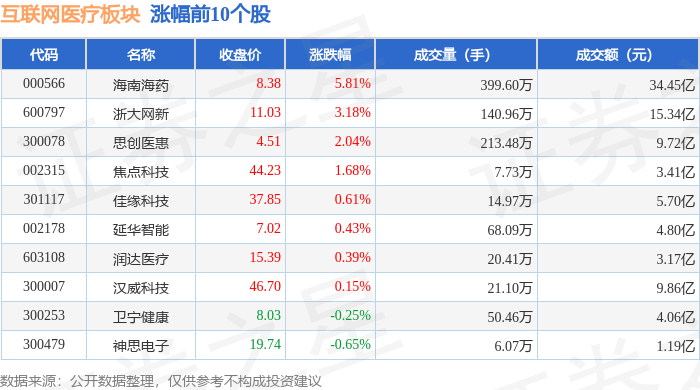
互联网医疗板块11月21日跌2.47%,海峡创新领跌,主力资金净流出27.94亿元
Sou Hu Cai Jing· 2025-11-21 09:52
证券之星消息,11月21日互联网医疗板块较上一交易日下跌2.47%,海峡创新领跌。当日上证指数报收 于3834.89,下跌2.45%。深证成指报收于12538.07,下跌3.41%。互联网医疗板块个股涨跌见下表: | 代码 | 名称 | 收盘价 | 涨跌幅 | 成交量(手) | 成交额(元) | | --- | --- | --- | --- | --- | --- | | 000566 | 海奥迪奥 | 8.38 | 5.81% | 399.60万 | 34.45 Z | | 600797 | 浙大网新 | 11.03 | 3.18% | 140.96万 | 15.34亿 | | 300078 | 思创医惠 | 4.51 | 2.04% | 213.48万 | 9.72亿 | | 002315 | 焦点科技 | 44.23 | 1.68% | 7.73万 | 3.41亿 | | 301117 | 佳塚科技 | 37.85 | 0.61% | 14.97万 | 5.70 Z | | 002178 | 延祥智能 | 7.02 | 0.43% | 68.09万 | 4.80亿 | | 603108 | 润达医疗 ...

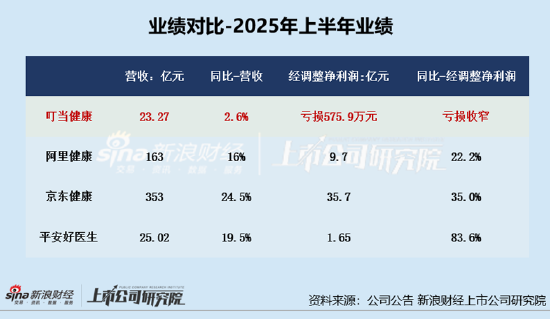
叮当健康持续失血亏超60亿、巨头环伺之下艰难前行业绩垫底 配送时效频遭投诉“28分钟送到家”成噱头?
Xin Lang Zheng Quan· 2025-11-21 09:44
Core Viewpoint - Dingtang Health is struggling in the competitive internet healthcare market, facing significant losses and lagging behind major competitors like JD Health, Alibaba Health, and Ping An Good Doctor, with cumulative losses exceeding 60 billion yuan since its inception [1][2][5]. Financial Performance - In the first half of 2025, Dingtang Health reported revenue of 2.327 billion yuan, with a shareholder loss of 51.67 million yuan, indicating a slight improvement in losses but still significantly trailing behind competitors [1][4]. - Cumulative losses from 2018 to 2025 amount to approximately 64 billion yuan, with annual losses increasing each year [5][6]. - The company’s revenue growth has been minimal, with a year-on-year increase of only 2.6% in the first half of 2025 [4]. Competitive Landscape - Dingtang Health operates in a highly competitive environment dominated by larger players like JD Health and Alibaba Health, which have established profitable business models and strong market positions [8]. - Competitors have significant advantages in user traffic, financial resources, and supply chain capabilities, making it difficult for Dingtang Health to maintain its market share [8]. Business Model and Operational Challenges - The company's heavy asset and marketing-focused business model has led to high operational costs, which continue to erode profit margins [8][9]. - Dingtang Health has invested heavily in building its own pharmacies and delivery teams to ensure quick service, but this has resulted in substantial ongoing expenses [8]. Market Sentiment and Stock Performance - Dingtang Health's stock price has plummeted by 92% since its IPO, with a current market capitalization of only 1.3 billion HKD [11][12]. - The company has faced numerous customer complaints regarding service quality, particularly related to delivery times, which has further damaged its reputation [14][15].
丁香园、微医、医联,谁的AI牌最硬?
Sou Hu Cai Jing· 2025-11-21 09:08
Core Insights - The IPO plans for two medical technology companies, Dingxiangyuan and Yilian, have stalled, with no specific updates available from either company [2][3] - Weiyi Holdings is actively pursuing an IPO in Hong Kong, having updated its prospectus in September [3][11] - The shift towards AI healthcare is evident as companies like Weiyi, Dingxiangyuan, and Yilian pivot from traditional internet healthcare to AI-driven solutions [4][7] Company Developments - Weiyi has transformed into an AI healthcare company, with over 90% of its revenue from AI medical services, totaling 28.41 billion yuan in the first half of 2025 [6][24] - Dingxiangyuan has launched AI tools like ClinMaster, focusing on clinical decision support, and has a significant user base of over 9 million registered professionals [6][15] - Yilian is developing a large medical model, MedGPT, and has been collaborating with companies for patient management solutions [20][29] Market Trends - The internet healthcare sector is struggling, with only drug sales proving profitable, as evidenced by the acquisition of Haodaifu Online by Ant Group [8][9] - Companies are increasingly adopting AI labels to attract investment, with recent IPOs in the AI healthcare space showing strong market interest [4][12] - The market for AI healthcare is hot, but investors remain cautious, focusing on business models, regulatory impacts, and unique competitive advantages [12][21] Business Models - Dingxiangyuan is shifting towards a consumer market, leveraging its large doctor user base to drive e-commerce without selling drugs [14][15] - Weiyi is focusing on a hybrid model that combines online and offline services, particularly in chronic disease management through partnerships with local healthcare systems [18][20] - Yilian is exploring two revenue streams: membership fees from individual users and expanding its corporate partnerships [28][29] Financial Performance - Weiyi's revenue grew by 69.4% year-on-year to 30.8 billion yuan in the first half of 2025, with a narrowing loss rate of 4.2% [24][25] - Dingxiangyuan's profitability remains uncertain, with its business model still needing to prove its viability in the consumer market [22][23] - Yilian's success hinges on establishing a robust technical barrier and acquiring quality medical data for its AI models [29][30]