
AI医疗健康

Search documents
全国政协常委贾楠:推广城市级医疗健康智能体,破解排队多难题
21世纪经济报道· 2026-03-09 12:51
Core Viewpoint - The article emphasizes the importance of promoting urban-level healthcare intelligent systems to enhance medical services and address common issues faced by patients, such as long wait times and fragmented services [1][6]. Group 1: Current Challenges in Healthcare - The healthcare experience for patients still has significant room for improvement, with complex processes in large hospitals leading to common issues like long wait times and multiple visits [6]. - There is a lack of strong outpatient health service capabilities that can complement inpatient care, particularly in areas like chronic disease management and maternal and child health services [6]. - Data and services are not interconnected, resulting in a lack of continuity in healthcare services, as patients' medical records and health data are often scattered across different institutions [7]. Group 2: Urban Healthcare Intelligent Systems - The urban healthcare intelligent system model being explored in regions like Zhejiang, Chongqing, and Guangzhou utilizes AI technology to efficiently connect the entire healthcare service chain, enhancing the integration of inpatient and outpatient services [7]. - For instance, Zhejiang's "Anzhen Er" provides 42 specialized medical and health services, including appointment scheduling and report interpretation, significantly improving patient experience [7]. Group 3: Recommendations for Nationwide Promotion - The first recommendation is to accelerate the "smart cloud companion" program, breaking down the patient journey into standardized nodes to improve data and service flow, allowing patients to receive clear guidance through a mobile device [9]. - The second recommendation focuses on enhancing the connection between inpatient treatment and outpatient health management by promoting a "digital family doctor" model, integrating online signing and intelligent follow-up capabilities [10]. - The third recommendation is to strengthen the interconnectivity of healthcare data across provinces, establishing unified standards for data sharing to create comprehensive personal health profiles and facilitate proactive health management [10].


押注“健康福”,蚂蚁AI的差异化突围
经济观察报· 2026-02-12 13:26
Core Viewpoint - The introduction of the AI health assistant "Ant Afu" and its "Health Blessing" during the 2026 Spring Festival has significantly boosted the popularity of Alipay's "Collecting Five Blessings" activity, positioning Ant Group strategically in the AI health sector [1][2]. Group 1: Social Sentiment and Health Focus - The enduring appeal of the "Collecting Five Blessings" activity is attributed to its ability to capture and respond to changes in social sentiment, reflecting public desires for health and well-being [3][5]. - In 2026, the launch of "Health Blessing" resonated with the public's increasing focus on health, as evidenced by Accenture's data showing that the importance of "physical and mental health" has risen to the top of life goals [5]. Group 2: Strategic Focus on Health - Ant Group's AI strategy is extending into the healthcare sector, with plans to make AI healthcare a core growth engine, positioning it among China's largest investors in medical AI [6]. - The company's AI First strategy emphasizes financial and health sectors, aiming to use AI medical services to cover 1.4 billion people in China within three years [6][10]. Group 3: AI Health Service Development - Ant Afu's success is attributed to its comprehensive health service offerings, including appointment scheduling, medication purchasing, and insurance payment, connecting users to over 5,000 hospitals and 300,000 licensed doctors [6][9]. - The "AI Doctor Avatar" initiative aims to train over 1,000 doctors to handle routine inquiries, significantly reducing the workload for healthcare professionals [9]. Group 4: Market and Technological Support - The online healthcare market in China reached 480 billion RMB in 2025, with online pharmacy sales growing nearly fivefold over five years, indicating a favorable environment for Ant Group's AI health strategy [11]. - Ant Group has developed a robust technological foundation, with its self-developed models supporting its AI health initiatives, ensuring alignment with real-world needs [12]. Group 5: Evolution of User Engagement - The shift from seeking "Diligent Blessing" to "Health Blessing" reflects changing societal needs and the strategic focus of tech companies on embedding AI capabilities into real-life scenarios [13].
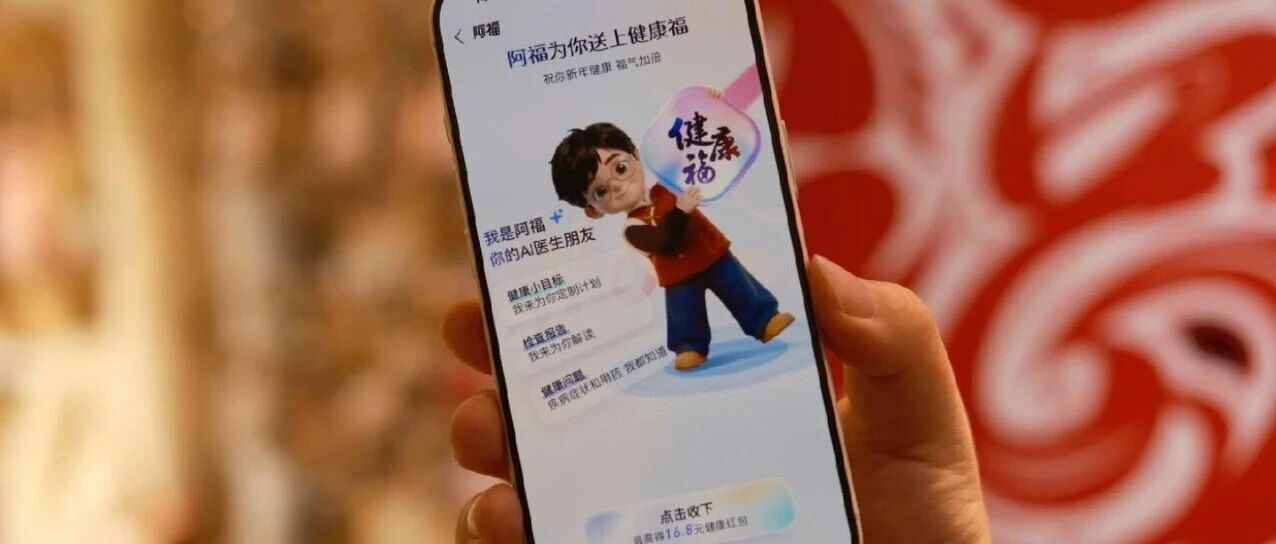
押注“健康福”,蚂蚁AI的差异化突围
Jing Ji Guan Cha Wang· 2026-02-12 13:14
Core Insights - The introduction of the AI health assistant "Ant Afu" and its "Health Blessing" initiative has significantly boosted user engagement in Alipay's "Collect Five Blessings" campaign, positioning Ant Group strategically in the AI health sector [1][2] - The "Health Blessing" reflects a growing societal emphasis on health, with public concern for physical and mental well-being rising to the top of life goals, especially in the context of an aging population [2][3] Group 1: Market Position and User Engagement - The "Health Blessing" campaign has propelled Ant Afu to the second position in the Apple App Store, marking it as a leading player in the health app sector [1][13] - The campaign's design allows users to easily claim and share health blessings, effectively merging social interaction with health service access, thus reaching a broad user base [2][4] Group 2: Strategic Focus on Health - Ant Group is positioning AI in the healthcare sector as a core growth engine, aiming to cover 1.4 billion people in China with AI medical services within three years [3][10] - The health business has been elevated to a strategic level alongside payment and finance, indicating a long-term commitment to health as a key area of focus [3][10] Group 3: Technological Integration and Service Offerings - Ant Afu aims to provide a comprehensive health service platform, connecting users with over 5,000 hospitals and 300,000 certified doctors for online consultations, medication purchases, and insurance payments [4][10] - The "AI Doctor Avatar" initiative has trained over 1,000 doctors to handle routine inquiries, significantly reducing the workload on healthcare professionals [9][10] Group 4: Market Trends and Future Outlook - The online healthcare market in China is projected to reach 480 billion RMB by 2025, with online pharmacy sales expected to grow nearly fivefold in five years, indicating a robust market opportunity for Ant Group [13] - Ant Group's long-term strategy emphasizes lowering the barriers to professional services, which is seen as a key differentiator in a competitive landscape [14]
【早知道】中国石化与中国航油实施重组;OpenAI进军医疗健康领域
Sou Hu Cai Jing· 2026-01-09 00:27
Group 1 - The Ministry of Commerce responded to the review of Meta's acquisition of Manus, stating that enterprises engaging in foreign investment activities must comply with Chinese laws and regulations [1] - The Ministry of Industry and Information Technology warned against irrational competition in the lithium battery industry, with participation from over ten leading companies [1] - China National Petroleum Corporation and China Aviation Oil Group Company are implementing a restructuring [1] Group 2 - Guangzhou is promoting the construction of the liquid rocket assembly testing base of CASIC in Nansha and the rapid establishment of the assembly base for Huangpu Xinghe Power Rocket [1] - OpenAI is entering the healthcare sector, with multiple companies targeting the AI healthcare market [1] - The China Development Bank plans to support nearly 20 billion yuan in funding for the elderly care sector by 2025 [1] Group 3 - Jiangxi is advancing the "Ying Shan Hong Action" upgrade project to support technology-based companies in formulating listing plans [1]

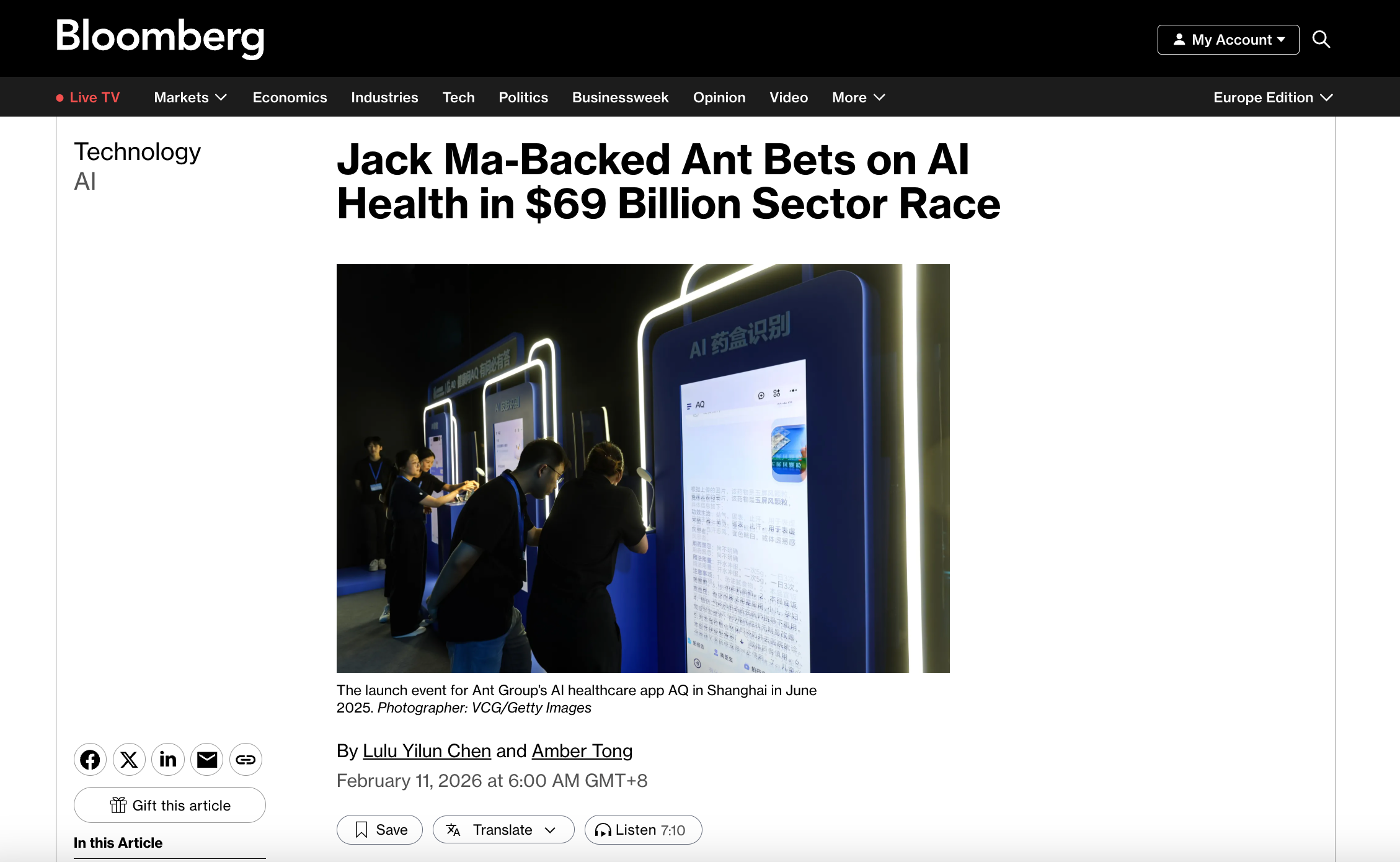
蚂蚁AQ探路,用AI撬动万亿健康之门?
Sou Hu Cai Jing· 2025-11-24 03:05
Core Insights - The Chinese healthcare industry is valued at 20 trillion, characterized by long cycles, slow pace, and heavy investment, making it a challenging yet correct business opportunity. The future will depend on strategic determination and the effective implementation of AI technology to solve problems and gain user trust [2][31]. Group 1: Company Developments - Ant Group has restructured its digital healthcare division, upgrading it to the "Ant Health Group," marking a significant business adjustment in the past five years [3]. - Ant Group's AI ToC product, Ant AQ, has achieved over 10 million monthly active users within just four months of launch [4][20]. - The health sector is now a strategic pillar for Ant Group, with Zhang Junjie leading the health group, reporting directly to CEO Han Xinyi [13]. Group 2: Competitive Landscape - Major players in AI healthcare include Alibaba, JD Health, Tencent, and ByteDance, all of which have established early advantages in the market [5][6]. - Ant Group's entry into healthcare is seen as a move to transition from a payment tool to a comprehensive healthcare platform, leveraging its existing user base of over 800 million for medical insurance services [11]. Group 3: AI Applications and Challenges - The AI healthcare sector is becoming increasingly competitive, with many services showing signs of homogenization, such as AI digital doctors and health consultations [14]. - Ant AQ's integration with various health services, including online consultations and health records, positions it as a key player in the AI healthcare landscape [19]. Group 4: Future Prospects and Commercialization - Ant Group's future commercialization strategy for Ant AQ is still under development, with a focus on potential collaborations in pharmaceutical sales and medical insurance [22][27]. - The company aims to leverage its resources and technology to create a differentiated competitive edge in the healthcare market [31].

国际医药创新公园迎“新”记
Xin Hua She· 2025-11-22 03:17
Core Insights - Bayer has established its first innovation center in China, located in the International Pharmaceutical Innovation Park in Beijing, aimed at fostering local pharmaceutical innovation and enhancing clinical research capabilities [1][2] - The park is part of a broader strategy to attract global pharmaceutical companies and create a collaborative ecosystem for drug development, with significant infrastructure already in place [2][3] Group 1: Bayer's Innovation Center - The Bayer Innovation Center will incubate local pharmaceutical companies and facilitate their international expansion [1] - The center aims to collaborate with high-level research and clinical institutions to improve basic research and clinical translation capabilities [1] Group 2: International Pharmaceutical Innovation Park - The park covers an area of 5.8 square kilometers and is divided into four functional zones: headquarters cluster, medical-engineering integration area, R&D transformation area, and pharmaceutical manufacturing area [2] - The existing built-up area of the park is 280,000 square meters, with ongoing construction of supporting facilities for pharmaceutical R&D [2] Group 3: Future Developments - By 2026, a new batch of leading innovative pharmaceutical and medical device companies is expected to settle in the park [3] - The park is also focusing on developing an AI healthcare industry cluster, with plans for key infrastructure such as a supercomputing base and trusted data spaces for the healthcare and pharmaceutical sectors [3]



四中全会精神在基层丨国际医药创新公园迎“新”记
Xin Hua She· 2025-11-21 10:41
Core Insights - Bayer has officially launched its Open Innovation Center in the International Pharmaceutical Innovation Park in Beijing, marking a significant step in fostering local pharmaceutical innovation and collaboration with high-level research institutions [1][2] - The park aims to incubate local innovative pharmaceutical companies and facilitate their global expansion, aligning with China's strategic focus on developing innovative drugs and medical devices [1][3] Group 1: Development and Infrastructure - The International Pharmaceutical Innovation Park covers an area of 5.8 square kilometers and is divided into four functional zones: headquarters cluster, medical-engineering integration area, R&D transformation area, and pharmaceutical manufacturing area [2][3] - The park has a built-up area of 280,000 square meters, with ongoing construction of supporting facilities for pharmaceutical R&D [2] Group 2: Industry Collaboration and Growth - The park is attracting major international pharmaceutical companies, including AstraZeneca and Medtronic, with 12 global pharmaceutical giants expected to establish operations [2][3] - The park is leveraging Beijing's policy, innovation, and openness advantages to create a preliminary agglomeration of the biopharmaceutical industry, with plans for more leading innovative drug and device companies to settle by 2026 [3] Group 3: Future Directions and Innovations - The park is set to develop an AI healthcare industry cluster, focusing on AI applications in pharmaceutical manufacturing and precision diagnosis [3] - A comprehensive ecosystem is being constructed, integrating industry chains, innovation chains, talent chains, and ecological chains to support the entire lifecycle of product development from R&D to large-scale production [3]
蚂蚁集团的AI医疗豪赌:长征刚起步,考验正开始
Sou Hu Cai Jing· 2025-11-13 01:26
Core Viewpoint - Ant Group is transforming its digital healthcare division into an independent Health Business Group, marking a significant strategic shift aimed at establishing healthcare as a core pillar of its business alongside financial and lifestyle services [2][3]. Group 1: Strategic Shift - The upgrade of the digital healthcare division to an independent Health Business Group is the most significant strategic adjustment for Ant Group in the past five years [2]. - The new organizational structure includes five core business segments: Ant International, Ant Digital Technology, OceanBase, Alipay Business Group, Digital Payment Business Group, Wealth Insurance Business Group, Credit Business Group, and the newly established Health Business Group [2][3]. Group 2: Market Potential - The healthcare sector is identified as a key area for growth, with the Chinese health industry projected to grow from 8 trillion yuan in 2019 to 20 trillion yuan by 2025, reflecting a compound annual growth rate (CAGR) of 15% [3]. - The aging population in China is expected to drive the elder care market to exceed 20 trillion yuan by 2030, indicating a substantial market opportunity for healthcare services [3]. Group 3: Historical Context - Ant Group has been strategically positioning itself in the healthcare sector since 2014, evolving from basic online appointment and payment services to a comprehensive ecosystem that includes payment, service, and AI capabilities [3][4]. - The company has connected with 5,000 hospitals and 300,000 registered doctors, serving nearly 900 million users [4]. Group 4: Leadership and Execution - CEO Han Xinyi's strategic vision and organizational collaboration have been pivotal in the establishment of the Health Business Group, showcasing strong execution and resource integration capabilities [4][5]. - The strategic elevation of the health business reflects a growing recognition of its importance within the company's overall strategy [4]. Group 5: Competitive Landscape - The healthcare sector is characterized by high investment requirements, long cycles, and profitability challenges, with competitors like Tencent and Huawei already deeply entrenched in the market [5][6]. - Ant Group faces significant challenges in navigating a complex healthcare ecosystem involving multiple stakeholders, including hospitals, doctors, patients, and insurance companies [6][7]. Group 6: Future Outlook - Ant Group aims to leverage its unique combination of resources in payment, service, and data to differentiate itself in the competitive landscape [10][11]. - The company is focused on building a comprehensive ecosystem that integrates various healthcare services, from prevention to treatment and insurance, to create a sustainable competitive advantage [11].

大厂AI新战场:AQ狂飙,蚂蚁押注大健康赛道
量子位· 2025-11-09 07:01
Core Viewpoint - Ant Group has strategically upgraded its "Digital Healthcare Division" to "Healthcare Business Group," aiming to accelerate the development of healthcare services as a strategic pillar of the company [2][3]. Group 1: Strategic Adjustments - The restructuring has led to a more comprehensive business matrix for Ant Group, which now includes five core business segments: Ant International, Ant Digital Technology, OceanBase, Alipay Business Group, and the newly formed Healthcare Business Group [3]. - The timing of this strategic shift is notable as it reflects a broader trend in the AI industry, moving from model competition to focusing on practical applications and commercialization [5][7]. Group 2: AI Application in Healthcare - Ant Group's AI strategy is taking shape with a focus on three key areas: lifestyle services, financial services, and healthcare services [5]. - The launch of the AI health management app AQ has been a significant success, achieving over 10 million monthly active users within four months and a compound growth rate of 83.4% in Q3 2023, far exceeding the industry average of 13.5% [8][10]. Group 3: Market Dynamics and Trends - The competition among major tech companies is shifting from parameter optimization to application-level differentiation, with a focus on creating value through AI models [13][14]. - The healthcare sector is becoming increasingly competitive, driven by the need for specialized AI applications that can address complex healthcare challenges [6][19]. Group 4: Long-term Vision and Market Potential - The healthcare market in China is projected to exceed 20 trillion RMB by 2025, driven by an aging population and increasing demand for chronic disease management and personalized health services [44][46]. - Ant Group's historical investments in digital healthcare infrastructure have positioned it well to capitalize on these emerging opportunities, transitioning from a connector in the healthcare system to an active participant with service capabilities [22][39]. Group 5: Challenges and Future Outlook - The transition to AI-driven healthcare services presents challenges, including the need for deep integration into existing healthcare systems and the establishment of unique competitive advantages in vertical markets [17][19]. - The success of Ant Group's healthcare initiatives will depend on its ability to navigate these challenges and leverage its existing capabilities to meet the evolving demands of the healthcare market [59][61].

韩歆毅首谈蚂蚁健康战略方向:聚焦AI健康应用AQ 让看病更简单、生活更健康
Zhong Zheng Wang· 2025-11-08 11:51
Core Insights - Ant Group's CEO, Han Xinyi, emphasized the company's commitment to AI in healthcare, aiming to simplify medical access and promote healthier living [1][6] - The establishment of the Health Business Group marks a strategic shift for Ant Group, focusing on addressing the growing health demands of the population [1][4] Group 1: Market Demand and AI Application - There are over 500 million chronic disease patients in China, with a significant increase in health needs among the elderly population and younger generations [4] - Ant Group's AI health application, AQ, surpassed 10 million monthly active users within four months of launch, achieving a compound growth rate of 83.4%, the highest in the industry [4][5] - The application includes over a hundred AI features, such as health education, consultation, report interpretation, and health records management [4] Group 2: Enhancing Healthcare Accessibility - Ant Group collaborated with Shanghai Renji Hospital to create an intelligent urology specialist that improved diagnostic accuracy for grassroots doctors by 4%-8% [4] - The "Digital Family Doctor" initiative has deployed AI avatars for 208 family doctors, serving 400,000 residents and one million professionals in Shanghai [4] - Over 300 "Famous Doctor AI Avatars" have been developed in partnership with top-tier hospitals, significantly increasing access to quality medical services for patients across various cities [5] Group 3: Chronic Disease Management and Research - AQ provides personalized management services for over 500 million chronic disease patients through AI health records and integration with smart health devices [5] - Ant Group has partnered with Sichuan University West China Hospital to enhance research and service systems for chronic diseases like lung nodules, aiming to bridge the gap between AI medical research and clinical application [5][6]
