Real Estate Development

Search documents
4.6亿元!五华区黑林铺街道6宗住宅用地成交
Sou Hu Cai Jing· 2025-12-12 20:49
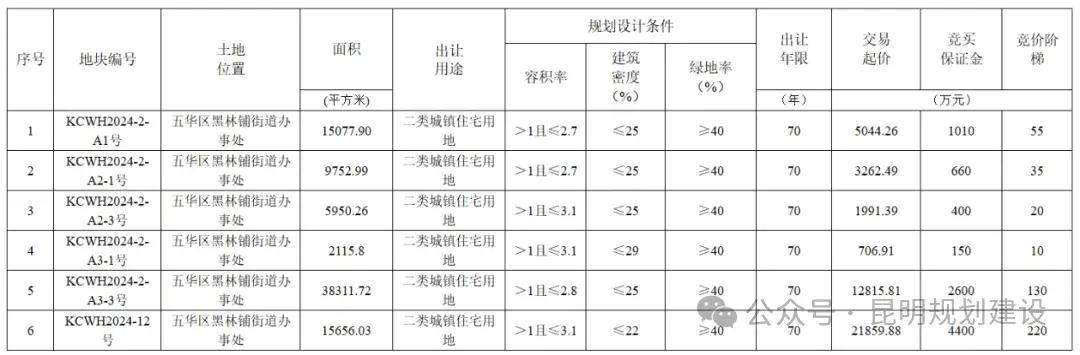
12月12日,昆明市五华区黑林铺街道办事处6宗城镇住宅用地成功底价出让,共计揽金约4.6亿元。 | | | 十地 | 面积 | 出让 | | 规划设计条件 | | 出让 | 交易 | 竞买 | 竞价阶 | | --- | --- | --- | --- | --- | --- | --- | --- | --- | --- | --- | --- | | 序号 | 地块编号 | 位置 | | 用途 | | 建筑 | 绿地率 | 年限 | 起价 | 保证金 | 相 | | | | | | | 容积率 | 密度 | (%) | | | | | | | | | (平方米) | | | (%) | | (年) | | (万元) | | | | KCWH2024-2- | 五华区黑林铺街道办 | 15077.90 | 二类城镇住宅用 | >1月≤2.7 | ≤25 | ≥40 | 70 | 5044.26 | 1010 | રેર | | | A1号 | 事处 | | 地 | | | | | | | | | 2 | KCWH2024-2- | 五华区黑林铺街道办 | 9752.99 | 二类城镇住宅用 | >1 ≤2. ...

单价2千多起!赣州这个新小区一房源,吸引9人争抢!
Sou Hu Cai Jing· 2025-12-12 20:37
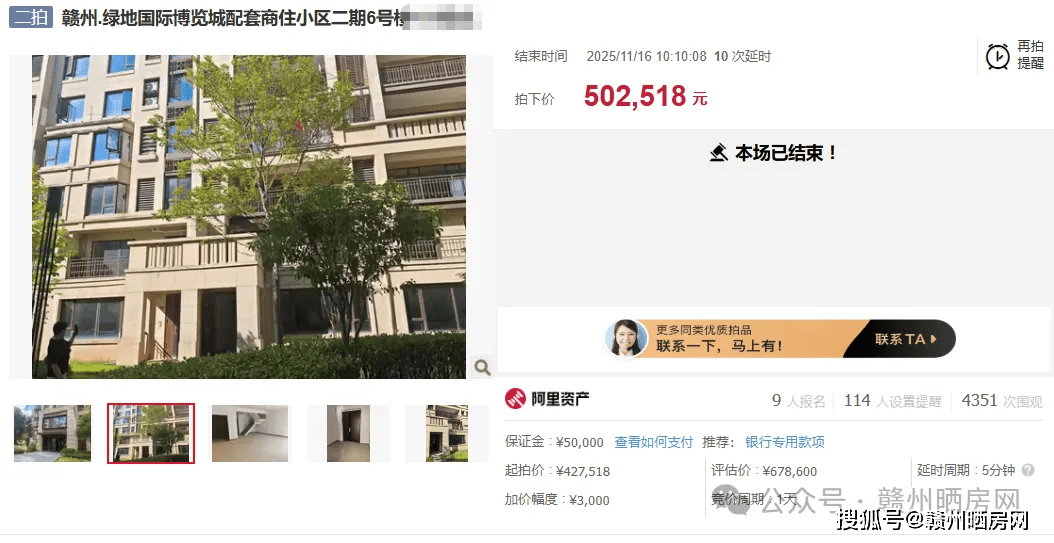
但该小区一套房产竟然吸引了9位买家争相抢购,是什么情况?一起来看看: 近日,小编浏览法拍房平台时发现,赣州绿地国际博览城配套商住小区二期6号楼成交了一套房源,为建筑面积约157.92㎡复式房源。 这套房源起拍价42.7万元,起拍单价2707元/㎡,起拍价格优势明显,甚至比许多老旧小区还要便宜,故吸引9人报名,经过13次出价。 最终成交总价50.2万元,成交单价3182元/㎡。溢价率17.56%。 该房源为建筑面积约157.92㎡的复式,共7层,位于1-2层,复式下层为客厅、餐厅、厨房、卫生间,复式下层为三房两卫一阳台,为毛坯房,装有入户防 盗门、铝合金窗。通水电,通风采光效果较好。评估价67.86万。建筑年代2020年。 各方面原因影响,赣州绿地城际空间站小区的房价回落幅度较大,常被吐槽。 目前二手房挂牌均价5977元/㎡,正在出售266套房源,近90天成交8套,近30天带看553次;在市场上,带看热度及成交量较高。 ■ % 公公园面手创新闻网 and No. 1 th 101 7日 F right 2 公公 分 介 中 小 该房源之所以能吸引这么多人竞拍,很大一部分原因是其起拍单价较低。虽然小区周边发展尚不 ...
6.55%溢价率!莱山实验二小北地块成功出让,核心区位价值获市场认可
Sou Hu Cai Jing· 2025-12-12 13:39
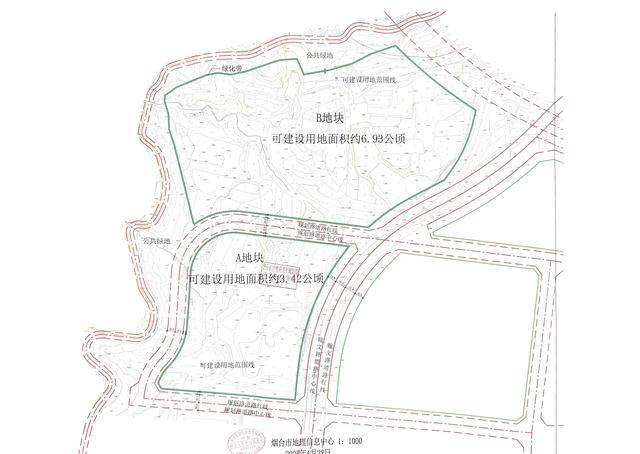
胶东在线12月12日讯(记者 秦秀鹏)今天上午10时,烟台市莱山区第二实验小学北侧两宗优质地块 (烟J[2025] 2002号莱山区第二实验小学北侧A宗地、烟J[2025] 2003号莱山区第二实验小学北侧B宗地) 正式挂牌成交,总成交金额达9.54亿元,分别由烟台市建治置业有限责任公司、上海招悦汇尔城市建设 发展有限公司出价最高3.09亿、6.45亿竞得。本次出让地块地处城市核心发展片区,紧邻优质教育资 源,是烟台市推进城市更新、优化民生配套的重点项目,标志着莱山区居住品质与社区服务将迎来新一 轮升级。 本次成交的两宗地块均位于莱山区第二实验小学北侧,地理位置优越,周边路网规划完善。第一宗地 (烟J[2025] 2002号莱山区第二实验小学北侧A宗地)出让面积34206.7平方米,成交总价3.09亿元,容 积率1.0-1.05。地块规划强调低密宜居与社区配套融合,将建设住宅不大于3.51万平方米,并配建城市 书房、社区商业、警务室、党群服务站等公共服务设施,充分满足居民文化、生活与政务需求。第二宗 地(烟J[2025] 2003号莱山区第二实验小学北侧B宗地)出让面积69336.8平方米,成交总价6.45亿 ...
NewGen to Exercise Option to Convert Ras Al Khaimah Joint Venture into Joint Development, Projected to Boost Profits from US$67 Million to US$123 Million
Globenewswire· 2025-12-12 13:30
Core Viewpoint - NewGenIVF Group Limited is transitioning its Ras Al Khaimah development project from a Joint Venture to a Joint Development structure, aiming to enhance profitability and shareholder returns through increased profit entitlement and strategic control [1][2][8] Group 1: Strategic Conversion - The conversion to a Joint Development structure allows NewGenProperty Limited to fully finance the project and entitles it to 64% of net profits, potentially increasing projected pre-tax profit from US$67 million to US$123 million [2][4][7] - The legal endorsement from Ravenscroft & Schmierer confirms NewGen's right to exercise the conversion option, ensuring the transaction's legality and enforceability [5] Group 2: Fundraising and Financial Flexibility - To support the new structure and its financial commitments, NewGen plans to raise additional funds, which will enhance its financial flexibility and accelerate project activities [3][8] - The presale phase of the project is expected to begin soon, unlocking significant proceeds to finance ongoing development and reduce reliance on external funding [6] Group 3: Project Timeline and Profitability - The project completion is targeted for 2028, with the revised structure projected to generate an 83% increase in pre-tax profit compared to the original joint venture model [7] - The strategic move is expected to amplify shareholder value by aligning profit entitlements with the project's growth trajectory in a rapidly appreciating real estate market [8]

太古地产携手陆家嘴集团推出上海“前滩广场”
Sou Hu Cai Jing· 2025-12-12 10:21
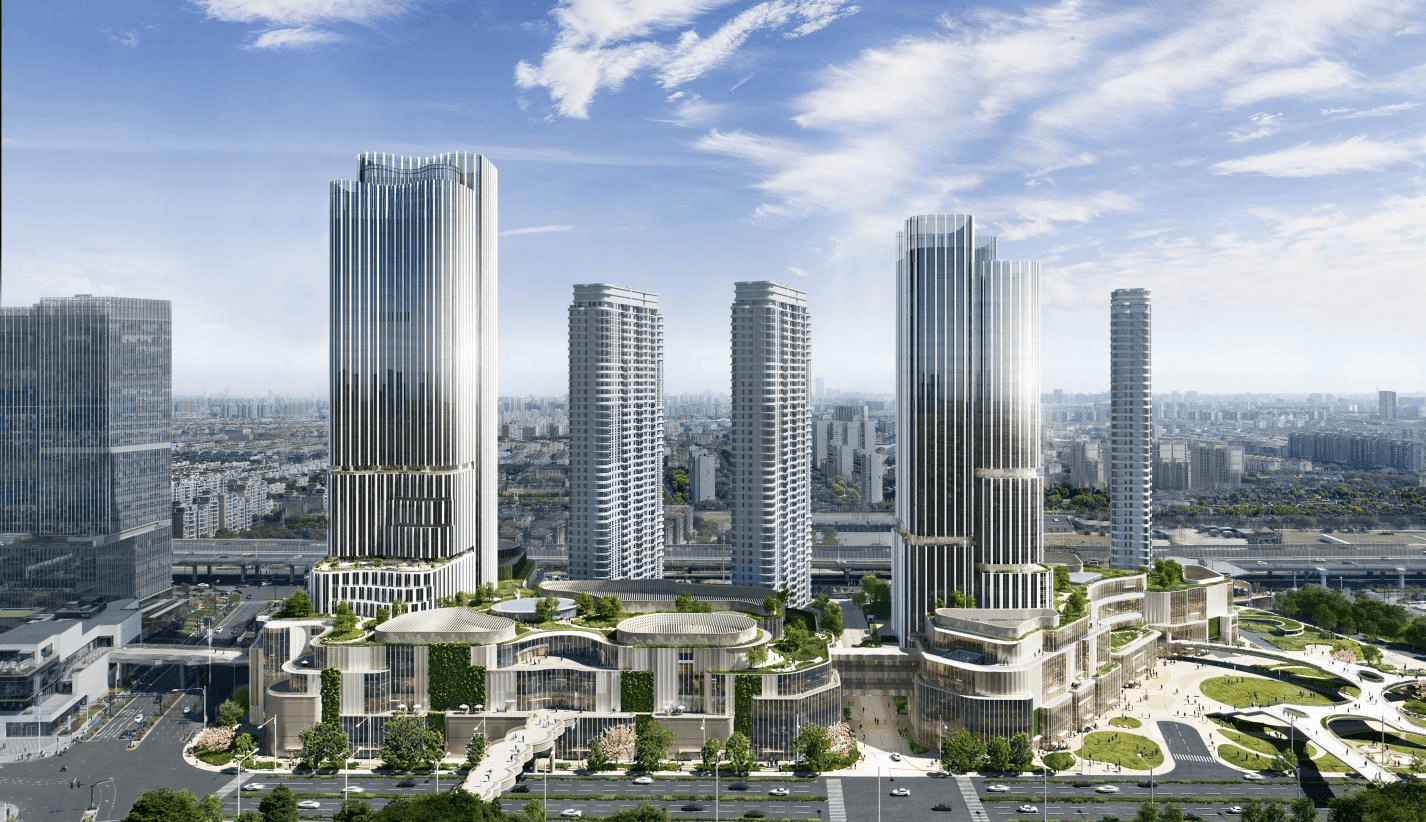
Core Insights - Swire Properties and Lujiazui Group have jointly launched "Qiantan Plaza," which includes two super-grade A office buildings as part of the expansion of the Qiantan Taikoo Li integrated development project, with pre-leasing officially commenced [1][3] Group 1: Project Overview - Qiantan Plaza consists of two super-grade A office buildings, Qiantan Plaza One and Qiantan Plaza Two, located in the Qiantan International Business District of Shanghai [3] - The total construction area of the project is approximately 125,600 square meters, with one building having 30 floors and the other 24 floors, expected to be completed by the end of 2026 [3] - The project is designed by KPF and features outdoor terraces, rooftop greenery, and panoramic views of the Huangpu River, focusing on employee well-being and office efficiency [3] Group 2: Connectivity and Sustainability - The project boasts convenient transportation links, adjacent to major roads and connecting to metro lines 6, 8, and 11, with the 19th line expected to enhance connectivity by 2028 [3] - Qiantan Plaza emphasizes sustainable development, having received dual platinum pre-certifications from LEED and WELL, and includes green technologies such as a dedicated energy center, air quality monitoring systems, and rooftop solar panels [3] Group 3: Strategic Importance - The collaboration continues the successful experience of the Qiantan Taikoo Li, which has become a benchmark since its opening in 2021, with the expansion project set to double the retail area to 267,000 square meters [3] - As a core project for Swire Properties in Shanghai, Qiantan Plaza aims to leverage the mature business environment of Qiantan to attract global enterprises and talent, injecting new vitality into Shanghai's urban business landscape [3]


Hongkong Land poised to launch US$6 billion Singapore property fund
Yahoo Finance· 2025-12-12 09:30
Core Insights - Hongkong Land is launching the Singapore Central Private Real Estate Fund (SCPREF), anticipated to be the largest private real estate fund in Singapore with over S$8 billion (US$6.2 billion) in assets under management [1] - The fund will focus on prime commercial properties in Singapore, including significant stakes in One Raffles Quay and Marina Bay Financial Centre Towers 1 and 2 [1][3] - The transfer of assets to the fund follows the lapse of pre-emptive offers to joint venture partners [2] Asset Details - The total attributable property value of One Raffles Link, Marina Bay Financial Centre Towers 1 and 2, and One Raffles Quay is S$3.9 billion, encompassing 3.2 million sq ft of prime office space [4] - Hongkong Land sold its one-third stake in Marina Bay Financial Centre Tower 3 for approximately S$1.5 billion, which is 2% above the property's valuation as of June [4] Financial Impact - The net proceeds from the sale of Tower 3 will increase Hongkong Land's total capital recycling since 2024 to US$2.8 billion, achieving around 70% of its 2027 target of US$4 billion [5] - SCPREF is expected to launch with more than double the assets of Hongkong Land's seed portfolio, with equity commitments from third-party investors in the final documentation stage [6]
着力稳定房地产市场,以盘活存量促长效发展
Zhong Guo Xin Wen Wang· 2025-12-12 06:39
Core Viewpoint - The central economic work conference emphasizes the need to stabilize the real estate market in 2025, focusing on policies to control new supply, reduce inventory, and improve supply quality [1][2]. Group 1: Market Conditions - The real estate market in China is entering a critical phase of deep adjustment and structural reshaping in 2025, with the total unsold residential property area reaching 75.606 million square meters as of the end of October, marking an 8-month consecutive decline [2]. - The key to stabilizing the market lies in inventory reduction, which remains a priority for the current "stabilize the real estate market" strategy [2]. Group 2: Inventory Management Strategies - The strategy for inventory reduction focuses on "optimizing existing stock and controlling new supply," with an emphasis on encouraging the acquisition of existing residential properties for use as affordable housing [3]. - Local governments, such as Guangzhou, are actively pursuing the acquisition of existing residential properties to be repurposed for affordable housing, increasing their acquisition efforts [4]. Group 3: Policy Initiatives - The conference highlights the need to deepen the reform of the housing provident fund system to enhance its role in the market, with over 260 new policies introduced since 2025 aimed at increasing loan limits and expanding usage [5]. - The approach to controlling new supply is not merely about reducing land supply but involves optimizing the structure under total control, aligning with the construction of "good houses" [5]. Group 4: Quality Development Focus - The concept of "good houses" is identified as a key focus for high-quality development in the real estate sector, shifting the industry's emphasis from scale expansion to quality enhancement, including aspects like green low-carbon, smart home features, and elderly-friendly designs [5]. - The transition in the real estate sector is clear: moving away from high turnover and high leverage models towards a new phase prioritizing inventory operations and quality [5].
China Vanke Seeks a One-Year Extension on a Second Local Bond
Yahoo Finance· 2025-12-12 03:23
Core Viewpoint - China Vanke Co. is seeking to delay payments on its bonds to avoid default amid liquidity challenges, with a total of nearly $2 billion in local debt due soon [1][4]. Group 1: Bond Payment Delays - Vanke is requesting a 12-month delay on both principal and interest payments for its 3.7 billion yuan ($524 million) note due on December 28, while maintaining the 3% coupon rate during the extension [2]. - The company is also trying to secure creditor support for delaying a 2 billion yuan bond due on December 15, highlighting its urgent need for liquidity [4][5]. Group 2: Financial Health and Market Impact - Vanke's total interest-bearing liabilities amount to approximately $51 billion, and the recent extension requests have raised concerns about the overall health of China's property sector, causing some of its bonds to hit record lows [5]. - The company's decision not to redeem a 1.1 billion yuan bond ahead of maturity indicates increasing liquidity issues [7]. Group 3: Expert Opinions - Analysts suggest that Vanke's strategy of extending bonds is merely a temporary measure to buy time for a comprehensive restructuring plan, which is seen as inevitable [6].

年度湾区综合品质城市地标
Nan Fang Du Shi Bao· 2025-12-11 23:18
Group 1 - The awarded project "Yuehai·Yungang City" is located in the core area of Baiyun New City CBD, featuring a 730,000 square meter comprehensive development with a focus on quality and respect for elite living standards [1] - "Yuexiu·Wanbo Hezhen" is a large urban complex developed by Yuexiu Real Estate in the Wanbo CBD, integrating residential, commercial, educational, and medical facilities, and promoting luxury residences with dual scenic views [3] - "Guangzhou Binjiang Tiandi" is a 1.25 million square meter riverside complex developed by China Shipbuilding Group and CITIC Pacific, featuring a mix of commercial, residential, and hospitality spaces, designed by international architects [4] - "Guangfo New World" represents New World China’s commitment to sustainable development, featuring a LEED Gold certified building complex and high greenery, developed in collaboration with four international design teams [6]

3 Overlooked Growth Stocks That Could Double Over the Next 5 Years
The Smart Investor· 2025-12-11 09:30
Group 1: Investment Landscape - The current investment landscape is dominated by trillion-dollar companies like Nvidia and Alphabet, benefiting from the artificial intelligence trend [1] - Risk-averse investors may prefer blue-chip companies such as DBS Group, which have consistently increased dividends and share prices [1] Group 2: Overlooked Growth Stocks - There are overlooked growth stocks that present strong growth potential, with three highlighted as candidates that could double in the next five years [2] Group 3: On Holding AG - On Holding AG has gained visibility through endorsements from celebrities and has a market capitalization exceeding US$15 billion [3][4] - The company experienced a 90% sales increase from CHF 1.22 billion to CHF 2.32 billion between 2022 and 2024, with a forecasted 34% sales increase for 2025 [4] - Analysts project a 22.6% revenue growth for On in 2026, compared to Nike's expected 5.2% growth [5] - The footwear market is projected to reach US$588 billion by 2030, with On's growth dependent on expanding into adjacent segments [5][6] - In the first nine months of 2025, On's revenue from apparel and accessories grew by 83% and 127%, respectively, while footwear grew by only 30% [6] - On recorded a 107% growth in the Asia Pacific region for the same period, compared to 19% in the Americas and 35% in EMEA [7] Group 4: Keppel Corp - Keppel Corp has transitioned from being an oil rig builder to focusing on asset management, aiming to generate recurring income [10][11] - In 9M 2025, net profit from "New Keppel" increased by 25% year-on-year, excluding non-core assets [12] - The company returned S$6.6 billion to shareholders between January 2022 and September 2025, representing over a third of its market capitalization of S$18.6 billion [13] - Keppel aims to manage S$200 billion in assets by 2030, having acquired 50% of Aermont Capital to expand its AUM by S$24 billion [14] - The asset management industry’s high operating leverage could lead to increased profits and distributions to investors [15] Group 5: Capitaland Investment - Capitaland Investment has restructured to focus on asset management after its real estate development business was privatized [18][19] - Despite a nearly 50% increase in Keppel's stock price, CLI's stock price has declined due to poor financial performance, with a 24% revenue drop in H1 2025 [20] - CLI's recent listing of two Chinese assets on the Shanghai Stock Exchange raised S$409 million, indicating strong demand [22] - Partnerships with Coronade Properties and SC Capital Partners Group may enhance CLI's market presence and revenue potential [24] - A potential merger with Mapletree Investments could create a significant asset manager with S$195 billion in AUM, positioning CLI as a dominant player [25] Group 6: Investment Potential - The rule of 72 suggests that a stock with a 15% growth rate could double in approximately 4.8 years, applicable to On if it continues its expansion [26] - Keppel and CLI, being more mature, may not see such rapid growth but can still increase earnings through economies of scale in asset management [27] - A merger between CLI and Mapletree could accelerate growth, although it may present integration challenges [28] - Overlooked companies may provide significant upside potential for investors who recognize early momentum [29]