
Autonomous Vehicles

Search documents
The Best Robotics ETF to Invest $100 In Right Now
The Motley Fool· 2025-07-16 09:10
Group 1: AI Market Growth - Artificial intelligence (AI) is a significant driver of stock market gains, with predictions indicating the AI market could reach trillions of dollars in about a decade, highlighting substantial growth potential [1] - AI encompasses various related technologies, including robotics, which are expected to generate revenue and enhance share price performance for involved companies [2] Group 2: Investment Opportunities in Robotics - The current market conditions present an ideal opportunity to invest in the robotics industry, with accessible entry points starting at $100 [3] - Exchange-traded funds (ETFs) provide a diversified investment approach, allowing investors to gain exposure to a broad range of stocks within the robotics sector, thereby reducing risk [5] Group 3: Ark Autonomous Technology and Robotics ETF - The Ark Autonomous Technology and Robotics ETF (ARKQ) is highlighted as a top investment choice, managed by Cathie Wood, who focuses on disruptive innovations [7] - The ETF includes over 30 companies involved in various aspects of autonomous technology and robotics, aligning with Wood's strategy of early investment in innovators [8] - The fund's largest holdings include Kratos Defense and Security, Tesla, Palantir Technologies, and Amazon, providing broad exposure to companies poised for growth in autonomous technology [10] Group 4: Fund Performance - The Ark Autonomous Technology and Robotics ETF has shown significant growth, advancing over 50% in the past year and more than 300% since its inception approximately a decade ago [11] - Given the early stage of autonomous and robotic technology, there is potential for even greater performance as the industry evolves, making it a strategic investment opportunity [11]


L4产业链跟踪系列第三期-头部Robotaxi公司近况跟踪(技术方向)
2025-07-16 06:13
Summary of Conference Call Company and Industry - The conference call primarily discusses advancements in the autonomous driving industry, specifically focusing on a company involved in Level 4 (L4) autonomous driving technology. Key Points and Arguments 1. **Technological Framework**: The company has a modular architecture for its autonomous driving system, which includes perception, prediction, control, and planning. This framework has evolved to incorporate advanced techniques like reinforcement learning and world models, although the core structure remains intact [1][2][3]. 2. **Transition to Large Models**: The industry is shifting from CNN architectures to transformer-based models. The company is gradually replacing its existing models with these new frameworks, which may take longer due to the high baseline performance of their current systems [3][4]. 3. **Data Utilization**: The company emphasizes the importance of both real and simulated data for model training. While real data is primarily used, there is a plan to increasingly incorporate simulated data to address data shortages, especially for control models [8][9][10]. 4. **Learning Techniques**: Imitation learning has been used for scenarios where rule-based approaches fail, while reinforcement learning is applied in end-to-end (E2E) models. The proportion of reinforcement learning used is not significant, indicating a cautious approach to its implementation [11][12]. 5. **Operational Deployment**: The company has deployed several autonomous vehicles in major cities like Beijing and Guangzhou, with plans to expand in Shenzhen and Shanghai. The current fleet consists of a few hundred vehicles [14][21]. 6. **Cost Structure**: The cost of vehicles includes hardware components such as multiple radars and cameras, with estimates suggesting that the total cost could be reduced to around 200,000 yuan [15][19]. 7. **Computational Resources**: The company is facing challenges with computational capacity, particularly with the integration of various models across different chips. There is a focus on optimizing the use of existing resources while planning for future upgrades [19][20]. 8. **Profitability Goals**: The company aims to achieve a break-even point by deploying a fleet of over 10,000 vehicles by 2027 or 2028. Current estimates suggest that achieving profitability may require a fleet size closer to 100,000 vehicles [26]. 9. **Market Positioning**: The company acknowledges competition from other players in the autonomous driving space, particularly in terms of regulatory approvals and operational capabilities. It aims to maintain a competitive edge by leveraging its faster acquisition of commercial licenses [27][28]. Other Important Content - The discussion highlights the ongoing evolution of the autonomous driving technology landscape, with a focus on the balance between technological advancement and operational scalability. The company is committed to addressing challenges in data acquisition, model training, and fleet management to enhance its market position [22][23][30].
X @TechCrunch
TechCrunch· 2025-07-15 18:06
Exclusive: AV startup https://t.co/JJthzdPzE5 acquires off-road autonomous vehicle rival SafeAI | TechCrunch https://t.co/ynsAzS0KMq ...
Why Baidu Stock Was Driving in the Fast Lane on Tuesday
The Motley Fool· 2025-07-15 17:15
Core Viewpoint - Baidu's shares surged significantly due to a strategic partnership with Uber to deploy autonomous vehicles globally, indicating a potential growth opportunity for the company [1][3]. Group 1: Partnership Details - Baidu and Uber announced a multi-year strategic partnership aimed at deploying thousands of Baidu's Apollo Go autonomous vehicles on the Uber platform in various global markets outside the U.S. and mainland China [3]. - The partnership focuses on increasing the supply of affordable and reliable ridesharing options, leveraging Uber's extensive reach as a leading ride-hailing platform [3]. Group 2: Market Context - Uber facilitated 3 billion rides in the first quarter, with over 170 million monthly active users, showcasing the platform's significant market presence and growth potential [3]. - The partnership could serve as a major catalyst for Baidu, which has been diversifying beyond its core search business into areas like AI and cloud services [5]. Group 3: Baidu's Autonomous Fleet - Baidu's Apollo Go fleet consists of over 1,000 driverless vehicles, making it the world's leading autonomous ride-hailing service [4]. - Initial deployments of the partnership are expected in Asia and the Middle East later this year, with options for riders to choose fully driverless vehicles for their trips [4]. Group 4: Financial Outlook - Baidu is currently valued at just 9 times trailing-12-month earnings, suggesting an attractive price point given the potential opportunities from the partnership with Uber [6].



Uber's latest robotaxi partner is China's Baidu
TechCrunch· 2025-07-15 15:02
Core Viewpoint - Uber has formed a multi-year strategic partnership with Baidu to deploy thousands of Baidu's Apollo Go autonomous vehicles on its platform in various markets outside the U.S. and mainland China, starting in Asia and the Middle East later this year [1] Group 1: Partnerships and Collaborations - Uber has been actively pursuing partnerships with various autonomous vehicle (AV) providers to enhance its ride-hailing business amid the rise of robotaxis [2] - Recent partnerships include agreements with Waymo, Volkswagen, May Mobility, and Pony AI, with Uber also taking direct stakes in some of these companies [3] - In May, Uber expanded its partnership with WeRide, which included a $100 million investment [3] Group 2: Implementation and User Experience - The deployment of Baidu's AVs is still in early stages, and initially, riders will not be able to request a Baidu AV directly through Uber's app [4] - Instead, riders may be presented with the option to have their trip fulfilled by a fully driverless Apollo Go AV, similar to existing arrangements with other partners [4]

小马智行第七代自动驾驶Robotaxi启动量产及路测,为规模化部署奠定基础
IPO早知道· 2025-07-14 12:23
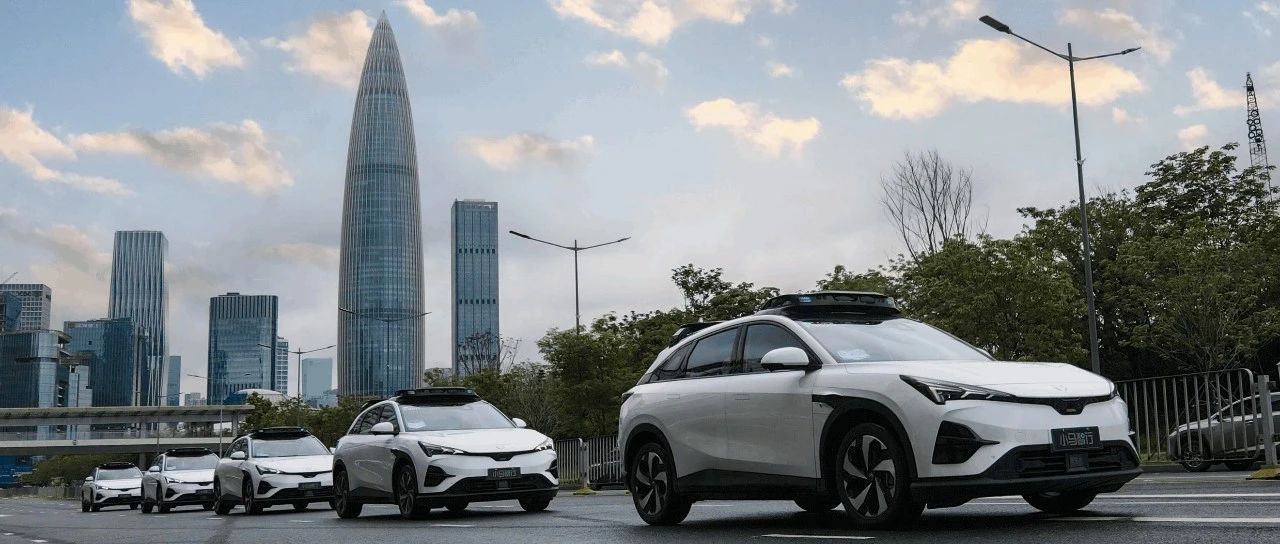
Core Viewpoint - The article highlights the significant progress made by Xiaoma Zhixing in the development and deployment of its seventh-generation autonomous driving system, marking a crucial step towards achieving a fleet size of 1,000 vehicles by the end of 2025 [2][8]. Group 1: Development and Testing - Xiaoma Zhixing has commenced road testing of its seventh-generation Robotaxi, the Beiqi Extreme Fox Alpha T5, in Shenzhen, following the successful launch of the GAC Aion Dinosaur Robotaxi in Guangzhou and Shenzhen [2]. - The seventh-generation autonomous driving system has transitioned from laboratory and closed environment testing to real traffic applications, demonstrating its capabilities in various complex conditions [4]. Group 2: Technological Advancements - The seventh-generation system has achieved three core breakthroughs: it is the first globally to use 100% automotive-grade components, has reduced total system costs by 70% compared to previous generations, and features a platform design that allows for rapid adaptation to various vehicle models [6]. - The system includes over 20 safety redundancies, more than 1,000 detection designs, and multiple degradation strategies, ensuring robust safety for driving [6]. Group 3: Future Outlook - Xiaoma Zhixing's CEO, Peng Jun, stated that 2025 will be the year of mass production for Robotaxi, with plans to build a fleet of over 1,000 vehicles by the end of the year [8]. - The advancements in cost-effectiveness and technology are expected to drive growth for Xiaoma Zhixing's business and contribute to the transformation of transportation methods, fostering a new ecosystem for safe, efficient, and convenient future mobility [8].
Aurora Innovation: Long Growth Runway
Seeking Alpha· 2025-07-12 07:41
Group 1 - Aurora Innovation Inc. (NASDAQ: AUR) has transitioned from a concept to a commercially operating business, marking a significant milestone in its development [1] - The company is viewed positively due to its potential for long-term growth and the ability to de-risk its operations [1] Group 2 - The investment approach focuses on identifying undervalued companies with long-term growth potential, emphasizing value investing principles [1]


Aurora Innovation CEO on Self-Driving Trucks, Working With Nvidia
Bloomberg Television· 2025-07-10 19:47
Autonomous Trucking Technology & Development - Aurora's autonomous trucking technology has reached a point where rapid launch and iteration are possible, demonstrating significant progress in the field [7] - Aurora is one of the lead customers for Nvidia's next-generation automotive computer system on a chip, viewing them as a strategic partner for computational power [11][12] - Aurora believes it currently has the best autonomous trucking technology globally, capable of doing things that others cannot safely achieve on the road [16] - Aurora plans to expand its autonomous trucking operations to include nighttime and rainy conditions, and to operate routes from Fort Worth to El Paso, El Paso to Phoenix, and Fort Worth to Phoenix by the end of the year [6][7] Regulatory & Governmental Support - The US government, including the Secretary of Transportation and the Vice President, is showing support for automation in trucking, which is considered vitally important for the industry's transformation [13][14] - Most states are supportive of autonomous trucking, with Aurora confident in its safety and ability to operate in 44 states [20][21] - California's Department of Motor Vehicles is putting in place regulations for heavy-duty trucks, indicating a positive regulatory environment [22] Business Model & Partnerships - Aurora's long-term business model involves providing "drivers" (autonomous driving systems) to customers who purchase trucks from manufacturers like PACCAR and Volvo [8][9] - Trucking companies like FedEx, Werner, Herschbach and Schneider will buy trucks with Aurora's "driver" installed and pay Aurora to operate the trucks [9] - PACCAR requested a human be present in the truck for supervisory purposes, which Aurora agreed to in the spirit of partnership, without impacting their technology roadmap [4][5]

PONY AI Inc. Begins Mass Production and Road Testing of Multiple Gen-7 Robotaxi Models
Globenewswire· 2025-07-10 05:15
Core Viewpoint - Pony.ai has achieved a significant milestone with the mass production of its seventh-generation Robotaxi, moving closer to its goal of expanding its fleet to 1,000 vehicles by the end of 2025, which sets the stage for large-scale commercial deployment [1][5]. Group 1: Production and Testing - The Gen-7 Robotaxi models from Guangzhou Automobile Group (GAC) and Beijing Automotive Industry Corporation (BAIC) have entered mass production, showcasing the successful integration of Pony.ai's autonomous driving technology [2]. - Road testing for the Gen-7 Robotaxi has commenced in Guangzhou and Shenzhen, marking a transition from controlled environments to real-world traffic scenarios [3]. Group 2: Technological Advancements - The Gen-7 autonomous driving system features three key advancements: the use of 100% automotive-grade components, a 70% reduction in bill-of-materials (BOM) costs for the autonomous driving kit compared to the previous generation, and a platform-based design that allows for rapid adaptation across various vehicle models [4]. Group 3: Strategic Goals - The year 2025 is designated as the "year of mass production" for Pony.ai, with plans to build a fleet of over 1,000 vehicles by year-end, indicating a focus on scalable growth and significant commercial opportunities [5].

X @mert | helius.dev
mert | helius.dev· 2025-07-08 19:36
hivemapper team continues to be the most impressive and underrated team in cryptoa product that's actually better than its web2 competitornow used by Lyft and Volkswagenon Solanaariel seidman (@aseidman):Excited to announce that Volkswagen's autonomous vehicle subsidiary, Volkswagen ADMT, has selected Bee Maps (powered by Hivemapper) spatial intelligence services to support its autonomous vehicle testing operations.Robotaxis + Hivemapper are a match made in heaven. Onwards 🚀 https://t.co/lo77YQn16b ...