
广汽埃安霸王龙Robotaxi

Search documents
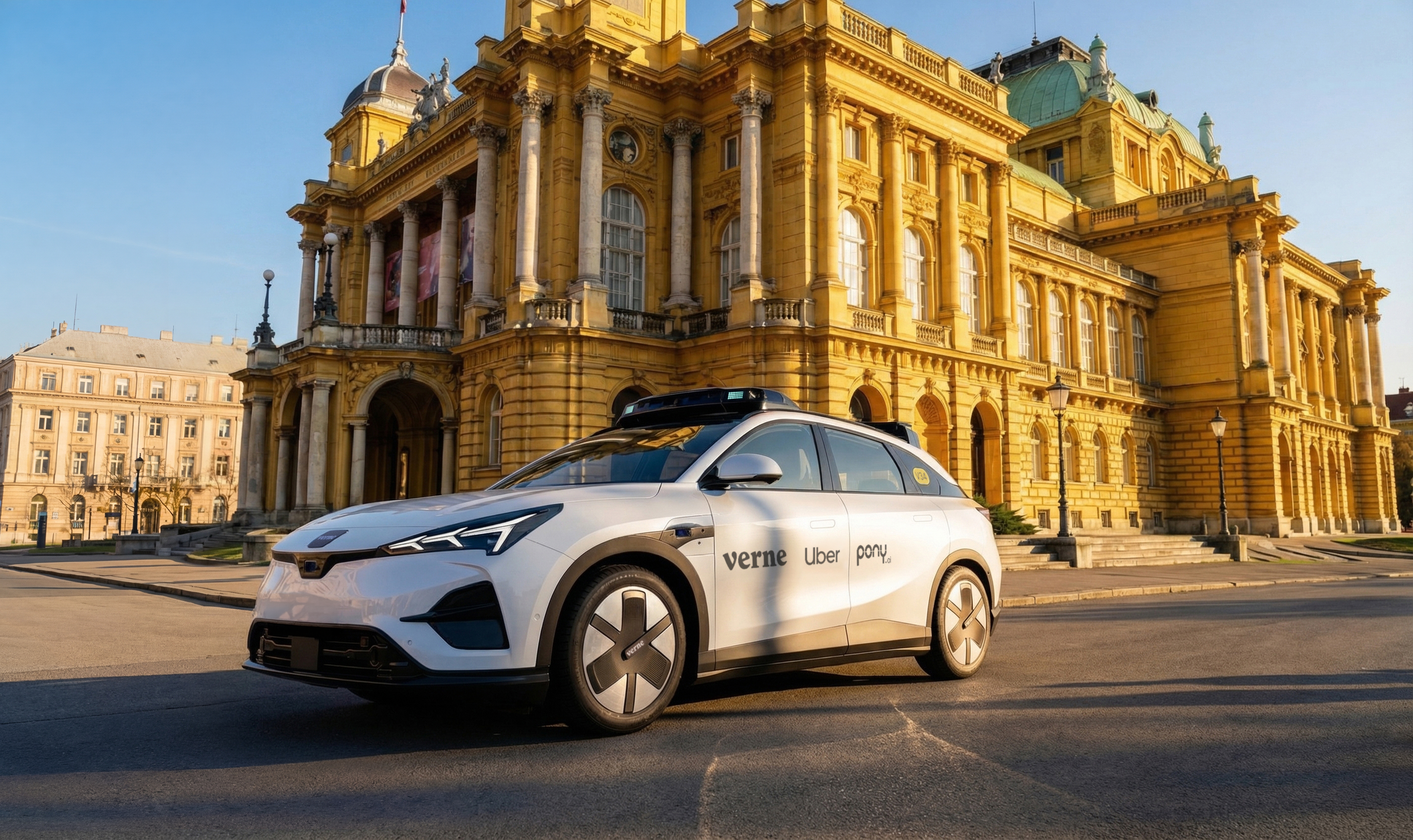
共建车队模式扩张Robotaxi规模化 小马智行加速推进全球布局
Di Yi Cai Jing· 2026-03-27 03:35
Core Viewpoint - The autonomous driving industry is transitioning from technology validation to large-scale commercialization, facing challenges such as heavy asset investment, cross-market adaptation, and long profit cycles, which need to be addressed by all players in the sector [1]. Group 1: Strategic Collaboration - Pony.ai, Verne, and Uber have announced a strategic partnership to launch commercial Robotaxi services in Zagreb, Croatia, marking the first paid Robotaxi operation in Europe [1][3]. - This collaboration showcases Pony.ai's efficient international expansion strategy and its commitment to advancing the autonomous driving sector [3][8]. Group 2: Business Model Innovation - Pony.ai has developed a "co-built fleet" model that redefines industry chain roles, allowing for scalable expansion and addressing high capital expenditures and long profit cycles [4]. - The model involves a triad collaboration of technology providers, asset operators, and platform partners, creating a complete commercial loop that enhances operational efficiency [5][12]. Group 3: Operational Efficiency - The co-built fleet model allows Pony.ai to focus on its core technology while leveraging local partners for fleet management and operations, thus facilitating the local deployment of autonomous driving services [11][12]. - The company has achieved significant cost reductions, with the seventh-generation autonomous driving suite's costs decreasing by 70% compared to the previous generation, enabling cross-model adaptability and lowering lifecycle costs [7]. Group 4: Market Expansion and Performance - Pony.ai's Robotaxi fleet has surpassed 1,000 vehicles, achieving full unmanned paid operations in major Chinese cities, with the seventh-generation Robotaxi reaching operational breakeven in Guangzhou and Shenzhen [7]. - The partnership with Verne and Uber in Croatia is expected to replicate the successful business model from China, providing a framework for international expansion and market penetration [8][13]. Group 5: Globalization and Competitive Position - The co-built fleet model is a key component of Pony.ai's global strategy, allowing the company to adapt to various market conditions and regulatory environments while establishing a comprehensive autonomous driving service network [12][13]. - By integrating successful Chinese market experiences with local resources and platform advantages globally, Pony.ai is positioned favorably in the competitive landscape of the autonomous driving industry [13].

岚图汽车港股上市,岚图泰山X8亮相;小鹏GX全球量产首发博世新一代线控转向系统丨汽车交通日报
创业邦· 2026-03-20 07:25
Group 1 - Lantu Automotive has officially listed on the Hong Kong Stock Exchange, becoming the first high-end new energy vehicle stock from a state-owned enterprise, marking a significant integration of China's high-end manufacturing with the Hong Kong capital market [2] - The Lantu Tai Shan X8, the first SUV equipped with four LiDARs and the new Harmony cockpit, was unveiled, offering both PHEV and EV versions with battery capacities of 65kWh and 120kWh, providing industry-leading electric range for family travel [2] Group 2 - Pony.ai has delivered over 100 units of its seventh-generation autonomous vehicles to Ruqi Mobility, marking the commencement of operations for this fleet on the Ruqi platform [2] - XPeng Motors has announced the global mass production debut of Bosch's next-generation steer-by-wire system in its XPeng GX, which is designed for L4 autonomous driving and integrates over 100 functions, making it the first L4 steer-by-wire capability to be mass-produced in vehicles priced under 500,000 [2] Group 3 - Zhiji Automotive has launched the AI super intelligent agent IM Ultra Agent, which integrates the Qianwen large model into vehicles, enabling closed-loop control from intent understanding to vehicle execution [2] - Zhiji has partnered with Momenta to introduce IM AD ZETA, enhancing L2 driving assistance with L4 model capabilities to improve system decision-making and generalization [2]

小马智行与如祺出行共建Robotaxi车队
Zhong Guo Qi Che Bao Wang· 2026-03-19 01:32
Core Insights - Xiaoma Zhixing officially delivered over 100 units of the new GAC Aion Baolong Robotaxi equipped with its seventh-generation autonomous driving system to Ruqi Mobility on March 19 [1] - Ruqi Mobility and Xiaoma Zhixing will deepen their strategic cooperation to build a larger-scale Robotaxi fleet and efficiently collaborate on broader operational efforts [1] Company Developments - The first batch of Robotaxis has been integrated into the Ruqi Mobility platform and is beginning operations [1] - The partnership aims to enhance the operational scale and efficiency of autonomous vehicle services [1]
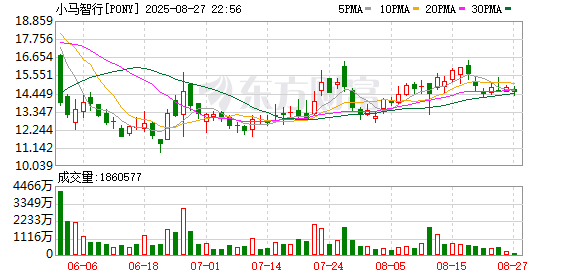
小马智行:一线城市全布局 深度合作整车厂商助力实现盈亏平衡
Zheng Quan Shi Bao Wang· 2025-08-27 14:55
Core Insights - Pony.ai has launched a 24/7 autonomous driving service in Shenzhen, aiming to expand its fleet to over 1,000 vehicles by the end of 2025, accelerating the commercialization of autonomous driving [2][3] - The company has established a comprehensive autonomous driving service network across major Chinese cities, covering over 2,000 square kilometers, with plans for further expansion [4] - Pony.ai's technology includes a "world model" for virtual simulations and a remote assistance system, enhancing safety and operational efficiency [5][6] Domestic Expansion - Pony.ai operates in four major cities (Beijing, Shanghai, Guangzhou, and Shenzhen) with a focus on gradual commercialization and regulatory collaboration [4] - The company has received support from Shenzhen's local government, which has established regulations for autonomous driving, facilitating industry growth [3] Technology Development - The "world model" allows for extensive virtual training, achieving a safety level ten times higher than that of human drivers [6] - The remote assistance system enables real-time support for vehicles in complex situations, allowing for efficient management of multiple vehicles by a single operator [6] Product and International Expansion - The seventh generation of autonomous vehicles has been developed in collaboration with major automotive manufacturers, with over 200 units produced and plans for deployment in major cities by 2025 [7] - Pony.ai is expanding internationally, conducting road tests in Dubai, Seoul, and Luxembourg, while sharing regulatory experiences with foreign authorities [7] Future Outlook - The company is pursuing deep collaborations with automotive manufacturers to reduce costs and achieve profitability [8] - Industry experts believe that safety must remain a priority in the pursuit of scaling autonomous driving services, especially in light of recent developments in the U.S. market [9]
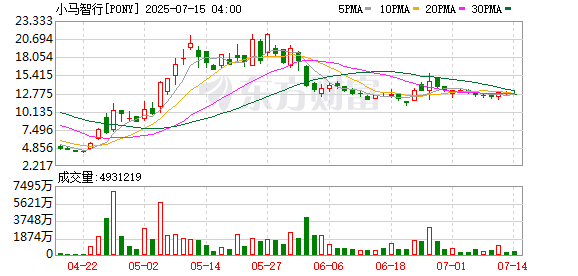
第七代自动驾驶的士,广深开启路测!小马智行:年底前超千辆
Nan Fang Du Shi Bao· 2025-07-15 09:19
Core Insights - The introduction of the latest member of the Pony.ai Robotaxi family, the BAIC Arcfox Alpha T5, marks a significant step towards the company's goal of expanding its fleet to 1,000 vehicles by the end of 2025 [2] - Pony.ai's CEO, Peng Jun, emphasizes that 2025 will be the year of mass production for Robotaxis, with plans to build a fleet of over 1,000 vehicles by the end of the year [2] - The seventh-generation autonomous driving system has achieved three major breakthroughs: the use of 100% automotive-grade components, a 70% reduction in total system costs compared to previous generations, and a platform design that allows for quick adaptation to various vehicle models [3] Technological Advancements - The new system includes over 20 safety redundancies, more than 1,000 detection designs, and multiple degradation strategies, ensuring robust safety for driving [3] - The autonomous driving system, based on the PonyWorld world model technology, surpasses human safety levels and continuously iterates to enhance its ability to handle complex scenarios, aiming for full-scene, all-weather autonomous driving [3] Market Considerations - The capital market is particularly interested in when the autonomous driving industry will cross the break-even point and overcome safety barriers [3] - Achieving sustainable operation for Robotaxis requires a monthly driving distance of over 9,000 kilometers, which exceeds the average distance of traditional taxis in the Guangzhou-Shenzhen area by 30% [4] Operational Challenges - The operational efficiency of the vehicles must be high, especially during peak traffic hours, to bridge the gap between the current capabilities and the goal of fully autonomous, cost-effective operation [4] - The collaboration between Pony.ai and major manufacturers like GAC and BAIC appears to be a win-win for technology empowerment and capacity release, but it also conceals a power struggle within the industry chain [4][5]
小马智行第七代自动驾驶Robotaxi启动量产及路测,为规模化部署奠定基础
IPO早知道· 2025-07-14 12:23
Core Viewpoint - The article highlights the significant progress made by Xiaoma Zhixing in the development and deployment of its seventh-generation autonomous driving system, marking a crucial step towards achieving a fleet size of 1,000 vehicles by the end of 2025 [2][8]. Group 1: Development and Testing - Xiaoma Zhixing has commenced road testing of its seventh-generation Robotaxi, the Beiqi Extreme Fox Alpha T5, in Shenzhen, following the successful launch of the GAC Aion Dinosaur Robotaxi in Guangzhou and Shenzhen [2]. - The seventh-generation autonomous driving system has transitioned from laboratory and closed environment testing to real traffic applications, demonstrating its capabilities in various complex conditions [4]. Group 2: Technological Advancements - The seventh-generation system has achieved three core breakthroughs: it is the first globally to use 100% automotive-grade components, has reduced total system costs by 70% compared to previous generations, and features a platform design that allows for rapid adaptation to various vehicle models [6]. - The system includes over 20 safety redundancies, more than 1,000 detection designs, and multiple degradation strategies, ensuring robust safety for driving [6]. Group 3: Future Outlook - Xiaoma Zhixing's CEO, Peng Jun, stated that 2025 will be the year of mass production for Robotaxi, with plans to build a fleet of over 1,000 vehicles by the end of the year [8]. - The advancements in cost-effectiveness and technology are expected to drive growth for Xiaoma Zhixing's business and contribute to the transformation of transportation methods, fostering a new ecosystem for safe, efficient, and convenient future mobility [8].
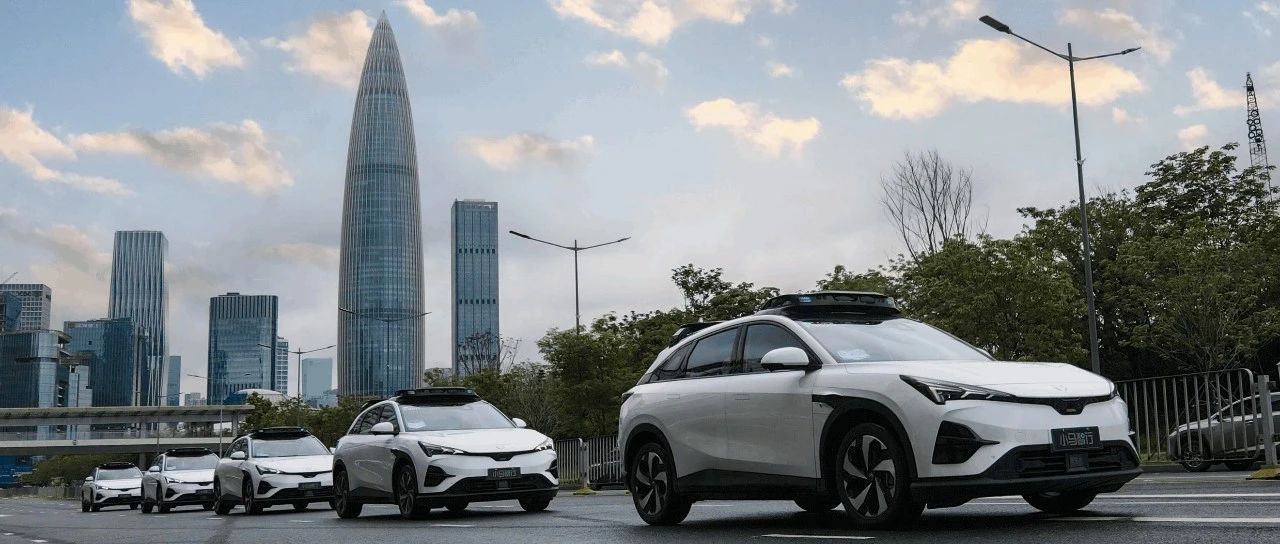
小马智行第七代自动驾驶Robotaxi启动量产及路测
news flash· 2025-07-14 10:55
Core Viewpoint - Pony.ai has announced the road testing of its seventh-generation autonomous driving system, the BAIC Arcfox Alpha T5 Robotaxi, in Shenzhen, marking a significant step towards its goal of expanding its fleet to 1,000 vehicles by the end of 2025 [1] Group 1 - The BAIC Arcfox Alpha T5 Robotaxi is now undergoing public road testing [1] - Pony.ai's seventh-generation Robotaxi has multiple models entering mass production [1] - This event follows the Guangzhou and Shenzhen road testing licenses obtained by GAC Aion's Bawanglong Robotaxi [1]
人工智能成“生活搭子”
Guang Zhou Ri Bao· 2025-06-06 19:03
Group 1 - The Guangdong Artificial Intelligence and Robotics Industry Alliance held its first member conference in Guangzhou, showcasing various robots and their capabilities, attracting significant attention from attendees [1] - Shenzhen Zhongqing Robot Technology Co., Ltd. presented the PM01 robot, which features human-like walking and multi-dimensional intelligent interaction, emphasizing energy efficiency and social integration during its development [1] - Xiaoma Zhixing introduced the seventh-generation Robotaxi, which has accumulated over 45 million kilometers of real-world driving experience, utilizing a unique world model for enhanced simulation and understanding of complex driving scenarios [1] Group 2 - Guangzhou Shiyuan Electronic Technology Co., Ltd. introduced the MAXHUB Lingxiao Smart Model, which improves the accuracy of meeting minutes and transcription by comparing audio with presentation materials to reduce errors in similar-sounding words [2] - The system integrates multiple large models, including DeepSeek and Doubao, to generate comprehensive and high-quality meeting reports [2]