
显示面板

Search documents
合肥国资超29亿元入主,维信诺一字涨停
Huan Qiu Lao Hu Cai Jing· 2025-11-10 08:11
Core Viewpoint - VisiNote announced a private placement to raise up to 2.937 billion yuan by issuing 419 million shares at 7.01 yuan per share, aimed at replenishing working capital and repaying debts, with Hefei Jianxu becoming the controlling shareholder [1] Group 1: Company Actions - VisiNote plans to issue 419 million shares to Hefei Jianxu, which will increase its ownership from 11.45% to 31.89%, making it the controlling shareholder [1] - The company has been in a "no owner" status for years, and this move will change its actual controller to the Hefei Shushan District People's Government [1] Group 2: Financial Performance - VisiNote has faced continuous losses for three years, with a cumulative loss of nearly 8.3 billion yuan from 2022 to 2024 [3] - In the first three quarters of this year, VisiNote's revenue reached 6.051 billion yuan, a year-on-year increase of 3.5%, while the net profit attributable to shareholders was -1.623 billion yuan, improving by 9.67% year-on-year [3] Group 3: Market Position - VisiNote ranks third globally and second domestically in the smartphone AMOLED panel market with an 11.2% market share for 2024, and it holds the first position in the smart wearable panel market with a 27% share [2]

002387,涨停!将由国资控股31.89%
Di Yi Cai Jing· 2025-11-10 03:48
Core Viewpoint - The control change of Visionox (维信诺) is progressing, with Hefei Jianshu Investment Co., Ltd. (合肥建曙) planning to become the controlling shareholder of the OLED panel supplier [2] Group 1: Company Developments - Visionox's stock price surged by 10.04% to 9.32 CNY per share after resuming trading on November 10, following a one-week suspension [2] - Visionox signed an agreement on November 7 to issue 419 million A-shares to Hefei Jianshu at a price of 7.01 CNY per share, raising up to 2.937 billion CNY [2] - Hefei Jianshu currently holds 11.45% of Visionox's shares, and after the issuance, its stake will increase to 31.89%, making it the controlling shareholder [2][3] Group 2: Financial Performance - Visionox reported revenues of 7.477 billion CNY, 5.926 billion CNY, 7.929 billion CNY, and 6.051 billion CNY for the years 2022, 2023, 2024, and the first three quarters of 2025, respectively, with net losses of -2.07 billion CNY, -3.726 billion CNY, -2.5 billion CNY, and -1.623 billion CNY [3] - As of September 30, 2025, Visionox's consolidated debt-to-asset ratio was 84.36%, which is expected to decrease after the new share issuance [4] Group 3: Industry Context - The OLED industry is experiencing intense competition, with major players like BOE, Visionox, TCL Huaxing, and Samsung building 8.6-generation OLED production lines to expand into IT and automotive markets [4] - The competition is shifting from "scale competition" to "profit competition" as high-generation OLED production lines are set to begin mass production, leading to an oversupply of capacity compared to terminal demand [4]


面板龙头今日复牌,合肥国资拟投超29亿入主
21世纪经济报道· 2025-11-09 23:33
Core Viewpoint - The article discusses the recent announcement by Visionox to issue 419 million shares to Hefei Jianshu at a price of 7.01 yuan per share, raising up to 2.937 billion yuan to supplement working capital and repay debts. This move will make Hefei Jianshu the controlling shareholder of Visionox, changing the actual controller to the Hefei Shushan District People's Government [1][4]. Group 1 - Visionox plans to issue 419 million shares at 7.01 yuan per share, raising a total of up to 2.937 billion yuan [1]. - Upon completion of the issuance, Hefei Jianshu will hold 31.89% of Visionox's shares, becoming the controlling shareholder [1]. - Before this issuance, Visionox had no controlling shareholder or actual controller [1]. Group 2 - Hefei Jianshu had previously acquired shares in Visionox in 2021, purchasing 160 million shares from the controlling shareholder for 1.76 billion yuan [3]. - The recent capital operation reflects Hefei Jianshu's strong support and confidence in Visionox's future business [4]. - Visionox has been a leader in the OLED industry for over 20 years, with a projected 11.2% market share in the global smartphone AMOLED panel market in 2024, ranking third globally and second domestically [4]. Group 3 - In the first three quarters of 2025, Visionox reported revenue of approximately 6.051 billion yuan, a year-on-year increase of 3.5%, but continued to incur a net loss of approximately 1.623 billion yuan [5]. - Prior to the suspension of trading, Visionox's stock price was 8.47 yuan per share, with a total market capitalization of 11.831 billion yuan [5].

国资拟入主!面板龙头,今日复牌
Zhong Guo Zheng Quan Bao· 2025-11-09 22:27
Core Viewpoint - The company Visionox plans to issue 419 million shares to Hefei Jianshu at a price of 7.01 yuan per share, raising up to 2.937 billion yuan to supplement working capital and repay debts, resulting in a change of controlling shareholder to Hefei Jianshu and actual controller to the Hefei Shushan District People's Government [1][2][5] Group 1: Stock Issuance Details - The stock issuance is directed towards Hefei Jianshu, with a total fundraising amount not exceeding 2.937 billion yuan after deducting issuance costs, aimed at enhancing liquidity and debt repayment [2][9] - Following the issuance, Hefei Jianshu's shareholding will increase from 11.45% to 31.89%, making it the controlling shareholder [5][9] Group 2: Financial Performance and Future Outlook - For the first three quarters of 2025, Visionox reported approximately 6.051 billion yuan in revenue, a year-on-year increase of 3.5%, but incurred a net loss of about 1.623 billion yuan, although the loss has narrowed compared to previous periods [10] - The company focuses on new display technologies, including OLED and Micro-LED displays, with applications in smartphones, wearables, and other sectors, indicating a strategic direction towards expanding its market presence [9][10]
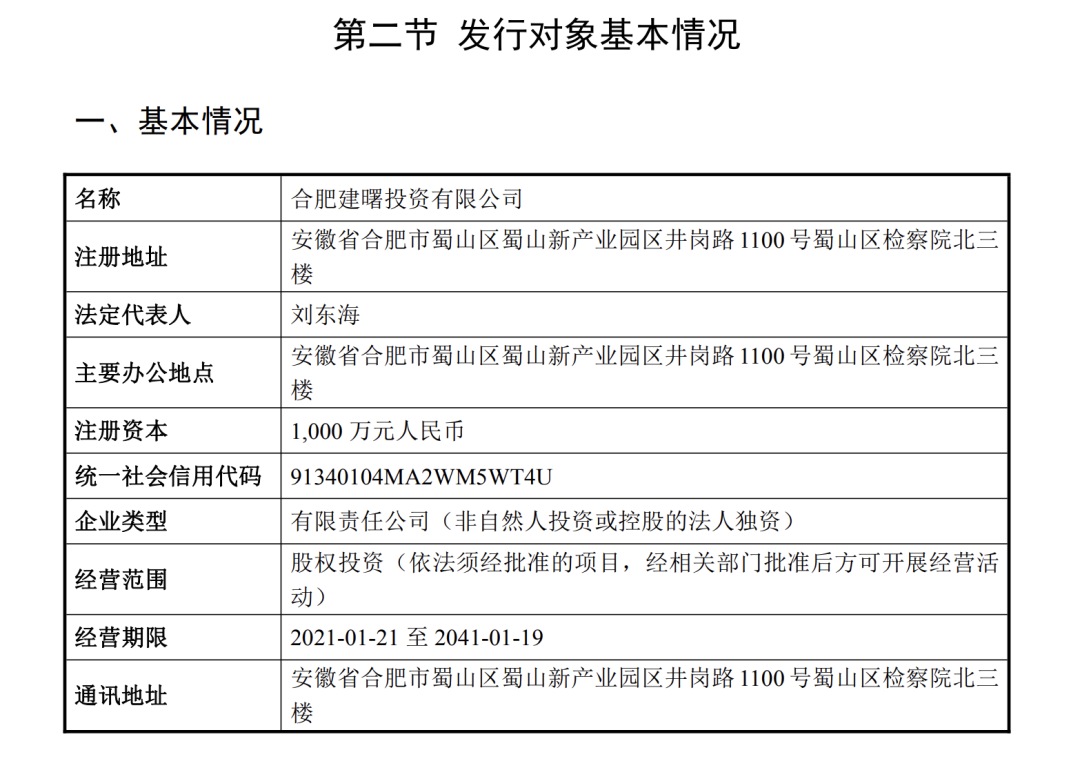
合肥国资拟入主!维信诺股票明日复牌
Ju Chao Zi Xun· 2025-11-09 13:02
Core Viewpoint - The company, Visionox, is planning to issue A-shares to specific investors, which may lead to a change in control of the company, with the funds raised aimed at improving liquidity and repaying debts [2][3] Group 1: Stock Issuance Details - Visionox intends to issue 419 million shares at a price of 7.01 yuan per share, raising a total of up to 2.937 billion yuan, with net proceeds to be used for enhancing liquidity and debt repayment [2] - The company has signed a conditional share subscription agreement with Hefei Jianshu Investment Co., Ltd., which will subscribe to the shares in cash [2] - If the issuance is completed, the controlling shareholder will change to Hefei Jianshu, and the actual controller will become the People's Government of Shushan District, Hefei City [2] Group 2: Industry Position and Market Share - Visionox is a leading player in the OLED industry, holding a global market share of 11.2% in smartphone AMOLED panels, ranking third globally and second domestically [2] - In the smart wearable AMOLED panel market, Visionox leads globally with a 27% shipment share in 2024 [2] Group 3: Financial Strategy and Business Development - The company requires additional funding to support market expansion, production, and operational activities due to rapid business growth [3] - The funds raised from the stock issuance will enhance cash flow and reduce debt pressure, providing financial support for further business development [3] - Visionox aims to strengthen its competitive advantage by increasing investment in technology and focusing on high-end AMOLED development to improve overall profitability and industry position [3]
重磅!合肥国资拟29.37亿控股维信诺
WitsView睿智显示· 2025-11-09 13:00
Core Viewpoint - The company, Visionox, plans to issue A-shares to a specific investor, Hefei Jianshu Investment Co., Ltd., to raise up to 2.93 billion yuan, primarily for working capital and debt repayment [1][4]. Group 1: Stock Issuance Details - Visionox intends to issue no more than 419,036,598 shares, which does not exceed 30% of the total shares before the issuance [1]. - The pricing for the new shares is set at 7.01 yuan per share, with total fundraising expected to be no more than 293,744.66 thousand yuan (29.37 billion yuan) [1]. Group 2: Related Party Transactions - Hefei Jianshu, as a related party, will subscribe to the shares in cash, constituting a related party transaction [4]. - The issuance requires several approvals, including shareholder meeting approval, government authority consent, and regulatory approvals from the Shenzhen Stock Exchange and the China Securities Regulatory Commission [4]. Group 3: Control Changes - Before the issuance, Visionox has no controlling shareholder or actual controller; if the issuance proceeds, Hefei Jianshu will become the controlling shareholder [4]. - Hefei Jianshu was established in 2021 and is controlled by the Hefei Shushan District People's Government [5]. Group 4: Company Background and Strategy - Visionox focuses on new display technologies, including the research, production, and sales of OLED and Micro LED displays, with applications in smartphones, wearables, tablets, laptops, automotive displays, and large-size displays [4]. - The company aims to enhance its strength and promote sustainable long-term development through this transaction, which will also help maintain the interests of minority shareholders and boost market confidence [7].

002387,控制权拟变更!明日复牌
中国基金报· 2025-11-09 12:06
Core Viewpoint - Hefei State-owned Assets has officially taken control of the panel leader Visionox (002387) through a targeted issuance of A-shares [3][6]. Group 1: Company Control and Financing - Visionox plans to issue 419 million shares to Hefei Jianxu Investment Co., Ltd. at a price of 7.01 yuan per share, raising up to 2.937 billion yuan for working capital and debt repayment [6]. - Upon completion of this issuance, Hefei Jianxu will become the controlling shareholder, with the actual controller being the People's Government of Shushan District, Hefei City [6][7]. - This issuance reflects the strong support and confidence of shareholders in Visionox's business and future [7]. Group 2: Market Position and Industry Leadership - Visionox is a leading enterprise in China's OLED industry, holding a 11.2% share of the global smartphone AMOLED panel market in 2024, ranking third globally and second domestically [6]. - In the global AMOLED smart wearable panel market, Visionox leads with a 27% shipment share in 2024 [6]. Group 3: Strategic Investments and Developments - Since acquiring shares in Visionox in 2021, Hefei State-owned Assets has continued to invest in the panel sector, including a 55 billion yuan project to establish and operate a production line for AMOLED products [8]. - The project is significant for Hefei's goal of creating a competitive new display industry cluster and is progressing well, with the main plant of the 8.6-generation AMOLED production line recently completed [8]. Group 4: Future Growth and Competitive Strategy - Visionox aims to enhance its competitiveness by increasing investment in technology and focusing on high-end AMOLED development [9]. - The funds raised from the share issuance will strengthen the company's financial position, allowing for more investment in production, operations, and R&D, thereby improving overall profitability and competitiveness in the digital era [9].

维信诺:合肥建曙将认购公司本次发行的4.19亿股股票
Bei Ke Cai Jing· 2025-11-09 10:23
Core Viewpoint - The company, Visionox, is planning to issue A-shares to a specific entity, which may lead to a change in control of the company [1] Group 1: Stock Issuance Details - Visionox intends to issue 419 million shares at a price of 7.01 yuan per share, aiming to raise no more than 2.937 billion yuan [1] - The funds raised will be used to supplement working capital and repay company debts [1] - A subscription agreement was signed with Hefei Jianshu Investment Co., Ltd. on November 7 [1] Group 2: Control Change Implications - Currently, the company has no controlling shareholder or actual controller [1] - If the issuance proceeds successfully, the controlling shareholder will change to Hefei Jianshu [1] Group 3: Stock Trading Resumption - The company's stock will resume trading on November 10, 2025 [1]
明日复牌,002387面板龙头,合肥国资拟入主
Zheng Quan Shi Bao· 2025-11-09 09:59
Core Viewpoint - Hefei State-owned Assets has officially taken control of the panel leader Visionox (002387) through a planned issuance of A-shares, which may lead to a change in the company's control [1][3]. Group 1: Company Control and Financing - Visionox plans to issue 419 million shares to Hefei Jianshu Investment Co., Ltd. at a price of 7.01 yuan per share, raising up to 2.937 billion yuan to supplement working capital and repay debts [3]. - Upon completion of this issuance, Hefei Jianshu will become the controlling shareholder, with the actual controller changing to the Hefei Shushan District People's Government [3]. - This issuance reflects the strong support and confidence of Hefei Jianshu in Visionox's business after its initial investment in 2021 [4]. Group 2: Market Position and Industry Leadership - Visionox is a leading enterprise in the OLED industry, holding a 11.2% share of the global smartphone AMOLED panel market in 2024, ranking third globally and second domestically [3]. - In the global AMOLED smart wearable panel market, Visionox ranks first with a 27% shipment share in 2024 [3]. Group 3: Strategic Investments and Projects - Following its investment in Visionox, Hefei State-owned Assets has continued to invest in the panel sector, including a collaboration to establish a production line with a total investment of 55 billion yuan [5]. - The project aims to develop and operate an 8.6-generation flexible active matrix organic light-emitting diode production line, which is significant for building a competitive new display industry cluster in Hefei [5]. - The project is progressing well, with the main plant of the 8.6-generation AMOLED production line recently completed, marking a significant step towards large-scale production using ViP technology [5]. Group 4: Future Development and Competitive Strategy - Visionox aims to enhance its competitiveness by increasing investment, improving technological reserves, and focusing on high-end AMOLED development [6]. - The funds raised from the share issuance will strengthen the company's financial position, providing more liquidity for daily operations and R&D, thereby improving overall profitability and competitiveness in the industry [6].
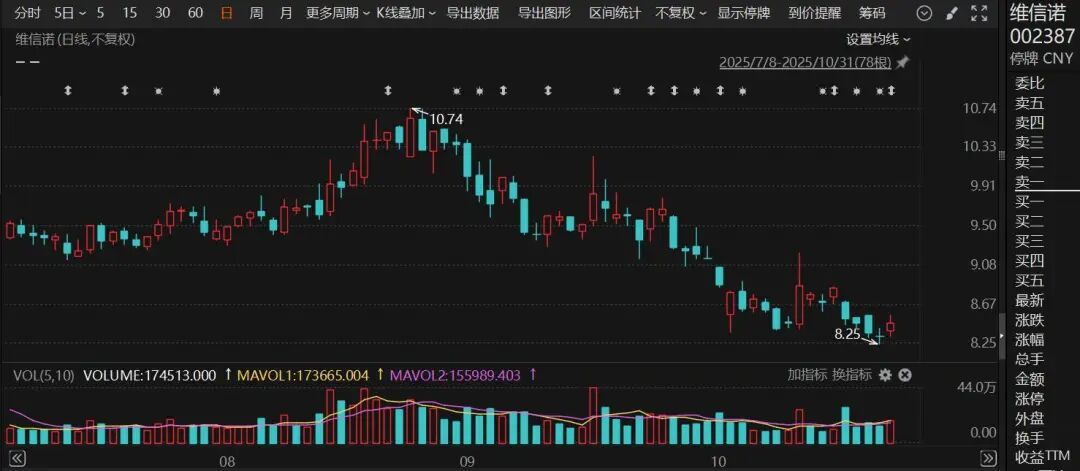
维信诺:控股股东将变更为合肥建曙 11月10日复牌
Ge Long Hui· 2025-11-09 08:25
Core Points - The company, Visionox (002387.SZ), announced a plan to issue A-shares to a specific investor, Hefei Jianshu, with a total of 419,036,598 shares to be issued at a price of 7.01 yuan per share [1] - The total amount raised from this issuance is expected to not exceed 293,744.66 million yuan, which will be used to supplement working capital and repay company debts [1] - The company’s stock will resume trading on the Shenzhen Stock Exchange starting November 10, 2025 [2] Group 1 - The company held its 28th meeting of the 7th Board of Directors and the 24th meeting of the 7th Supervisory Board on November 7, 2025, where several resolutions regarding the issuance of A-shares were approved [1] - The issuance will not exceed 30% of the company's total share capital prior to the issuance [1] - The issuance price is set at no less than 80% of the average trading price of the company's stock over the 20 trading days prior to the pricing benchmark date [1] Group 2 - The company signed a conditional share subscription agreement with Hefei Jianshu on November 7, 2025, for the cash subscription of the newly issued shares [1] - The company is following the regulations set forth by the Shenzhen Stock Exchange regarding the resumption of trading [2]