国资入主

Search documents
申科股份2026年2月27日涨停分析:战略转型+国资入主+业务拓展
Xin Lang Cai Jing· 2026-02-27 02:30
Group 1 - The core viewpoint of the news is that Shenkai Co., Ltd. (SZ002633) experienced a limit-up in stock price due to strategic transformation, state-owned capital involvement, and business expansion [1] Group 2 - The company is undergoing a strategic transformation by establishing multiple subsidiaries in new fields such as power equipment, gas turbines, and deep-sea wind power, which broadens its business scope [1] - The establishment of the Taierzhuang State-owned Assets Supervision and Administration Commission as the new actual controller provides more stable shareholder support and resources, which is beneficial for the company's long-term development [1] - The company has set up a research and development headquarters in Shanghai focusing on "bottleneck" technologies to enhance core competitiveness, and has established branches in Shenzhen and Shandong to optimize production capacity and market responsiveness [1] Group 3 - Shenkai Co., Ltd. has played a role in the underwater robotics supply chain by providing components for deep-sea equipment such as the "Deep Sea Warrior," indicating potential for business expansion [1] - Recent data from Tonghuashun shows that some stocks in the machinery manufacturing sector have been active, indicating increased market attention towards the sector where Shenkai Co., Ltd. is located [1] - From a technical perspective, if the MACD indicator forms a golden cross and short-term moving averages show a bullish arrangement, it may attract more capital inflow, contributing to the stock price increase [1]

杉杉重整新进展 安徽国资拟入主
Shang Hai Zheng Quan Bao· 2026-02-09 15:20
Core Viewpoint - The restructuring of Sunwoda Group has made significant progress with the signing of a restructuring investment agreement between its controlling shareholder, Sunwoda Group, and investors Anhui Waye Group and Ningbo Jinzi, which could lead to a change in control of Sunwoda shares [2][3] Group 1: Restructuring Agreement - Anhui Waye Group will acquire control of 21.88% of Sunwoda shares for a total consideration not exceeding 7.156 billion yuan [2][3] - The restructuring aims to resolve previous issues faced by Sunwoda, including the death of its founder, debt crisis, and failed initial restructuring attempts [2][3] Group 2: Background of Investors - Anhui Waye Group is a large state-owned enterprise under the control of the Anhui Provincial State-owned Assets Supervision and Administration Commission, with a reported revenue of 9.235 billion yuan and a net profit of 398 million yuan in 2024 [3] - The consortium also includes Ningbo Jinzi, which is controlled by the Ningbo Municipal Finance Bureau and specializes in the acquisition and disposal of non-performing financial assets [3] Group 3: Business Operations - Sunwoda has transitioned from a clothing company to a major player in lithium battery materials, focusing on negative electrode materials and polarizers [3] - The company is a leader in the global polarizer industry, aligning with Anhui Province's development plans for new energy and green low-carbon industries [5] Group 4: Financial Performance and Debt - Sunwoda expects to achieve a net profit of 400 million to 600 million yuan in 2025, with core business segments showing robust growth [7] - As of the end of Q3 2025, Sunwoda's total liabilities reached 21.968 billion yuan, with short-term loans of 5.293 billion yuan and long-term loans of 6.528 billion yuan, while cash reserves were only 3.150 billion yuan [7] Group 5: Market Reaction - Following the announcement of the restructuring agreement, Sunwoda's stock price experienced significant increases, closing at 15.81 yuan per share on February 9, 2025 [7]

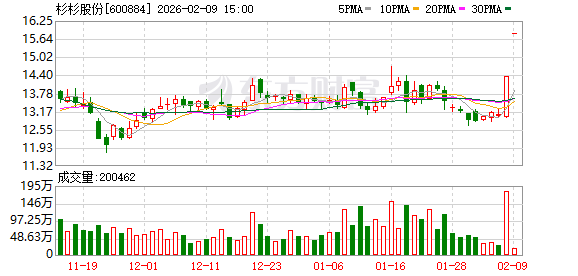
封死涨停!杉杉股份将易主安徽国资
Shen Zhen Shang Bao· 2026-02-09 05:13
Group 1 - The core point of the news is that Ningbo Shanshan Co., Ltd. has signed a restructuring investment agreement with Anhui Wanwei Group and Ningbo Financial Asset Management Co., marking a significant development in the restructuring process of its controlling shareholder, Shanshan Group [1][2][3] - The restructuring agreement was signed on February 6, 2026, and if successful, the controlling shareholder will change to Wanwei Group, with the actual controller becoming the Anhui Provincial State-owned Assets Supervision and Administration Commission [1][3] - The investment amount from Wanwei Group for the acquisition and related rights is capped at approximately 7.156 billion yuan, which will allow them to control 21.88% of Shanshan's voting rights [3] Group 2 - Shanshan Co. is expected to turn a profit in 2025, projecting a net profit of 400 million to 600 million yuan, marking a recovery after a period of losses [4] - The company's core businesses, particularly in negative electrode materials and polarizers, are anticipated to see significant growth, contributing to a total net profit of 900 million to 1.1 billion yuan from these segments [4][5] - The company has faced substantial financial challenges in recent years, with total liabilities reaching 24.882 billion yuan at the end of 2023, indicating a critical financial situation prior to the restructuring [5][7] Group 3 - The restructuring process follows a tumultuous period for Shanshan Group, including a high-profile family dispute over control after the founder's death, leading to a court-ordered restructuring [7][8] - The involvement of Wanwei Group and Ningbo Financial Asset Management is seen as a turning point for Shanshan Co., potentially stabilizing its future [9]

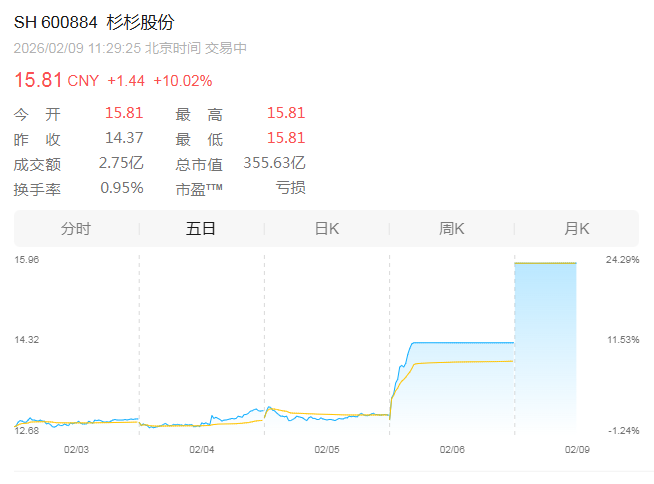
安徽国资拟溢价入主杉杉系
Xin Lang Cai Jing· 2026-02-09 01:09
Core Viewpoint - The restructuring of the Shanshan Group has reached a critical point with the entry of Anhui state-owned assets, indicating a significant shift in control from a private entity to a state-owned one [1][4]. Company Overview - Shanshan Group's restructuring involves a merger with Anhui Wanwei Group and Ningbo Financial Asset Management Co., with the potential change of control to the Anhui Provincial State-owned Assets Supervision and Administration Commission [1][2]. - Shanshan Group, founded in 1989, has evolved from a clothing business to a conglomerate focused on lithium battery materials and polarizers [17]. Financial Details - Shanshan shares reached a closing price of 14.37 yuan per share, with a market capitalization of 32.32 billion yuan prior to the restructuring announcement [2]. - The acquisition price for Shanshan shares by Wanwei Group is set at approximately 16.42 yuan per share, representing a 43.53% premium over the initial round's price of 11.44 yuan [9]. Strategic Implications - The involvement of Anhui state-owned assets is seen as a strategic move to stabilize the company and enhance confidence among financial institutions, facilitating future funding arrangements [4][8]. - The restructuring aligns with Anhui Province's goals to develop key industries, including new energy vehicle components, with plans to cultivate leading enterprises in advanced photovoltaic and energy storage sectors by 2027 [4]. Restructuring Process - The restructuring process has faced challenges, including a failed initial plan due to lack of support from certain creditor groups, leading to a second round of investor recruitment with higher entry thresholds [19][21]. - The latest performance forecast for Shanshan indicates a projected net profit of 400 million to 600 million yuan for 2025, driven by strong sales growth in core businesses [22].

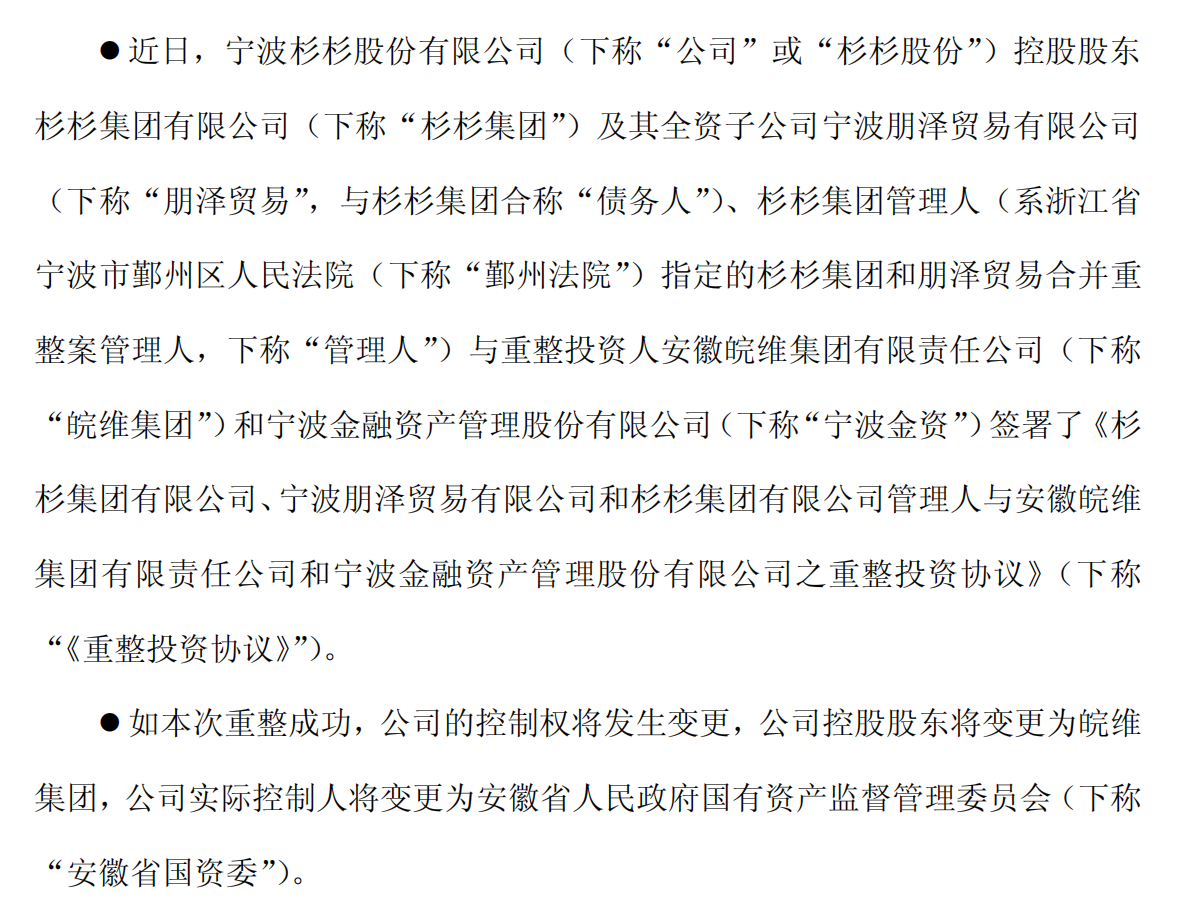
国资大股东掌舵再续,郭川出任第一创业董事长
Sou Hu Cai Jing· 2026-02-06 10:22
Core Viewpoint - The appointment of Guo Chuan as the new chairman of First Capital (002797) marks a significant leadership change, continuing the trend of state-owned enterprise influence in the company's governance structure [1][7]. Group 1: Leadership Changes - Guo Chuan, a veteran of state-owned enterprises, has been elected as the chairman of First Capital, succeeding Wu Lishun, who resigned in July 2025 [1]. - Guo Chuan has a clear career trajectory within state-owned enterprises, having held various positions in Beijing Beichen Industrial Co., Ltd. and later at Beijing State-owned Capital Operation Management Co., Ltd. [3]. - The governance practice of linking the chairman position to the general manager role at First Capital has been established since Beijing State-owned Capital became the largest shareholder [7]. Group 2: Shareholding Structure - First Capital has a unique shareholding structure characterized by both concentration and dispersion, with no controlling shareholder and Beijing State-owned Capital holding 11.06% [5]. - Other significant shareholders include Beijing Jingguo Rui State-owned Enterprise Reform Development Fund and Beijing Shou Nong Food Group, each holding 4.99% [5]. Group 3: Financial Performance - In 2025, First Capital experienced notable revenue fluctuations, with Q1 revenue at 661 million yuan, down 1.87% year-on-year, while by Q3, revenue rebounded to 2.985 billion yuan, up 24.32% year-on-year [8]. - The company reported a net profit of 118 million yuan in Q1, a decline of 17.59%, but a net profit of 771 million yuan in the first three quarters, an increase of 20.21% [8]. Group 4: Compliance Challenges - Following Guo Chuan's appointment, First Capital faces compliance challenges, including an administrative penalty related to a convertible bond project, resulting in a fine of 12.736 million yuan [9]. - Guo Chuan emphasized the importance of improving the "Beijing model" for government-guided funds, which may influence the company's strategic direction under his leadership [9]. Group 5: Industry Context - The leadership change at First Capital reflects a broader trend in the securities industry, where at least eight brokerages have undergone executive changes since 2026, driven by factors such as mergers, state-owned capital involvement, and retirements [10]. - The appointment of state-owned enterprise executives in the securities sector indicates a significant strategic transformation within the industry, aligning with the long-term capital and innovation ecosystem goals emphasized by Beijing State-owned Capital [10].

国资入主未满月,黑芝麻董事长宣布辞职
Guo Ji Jin Rong Bao· 2026-01-29 12:49
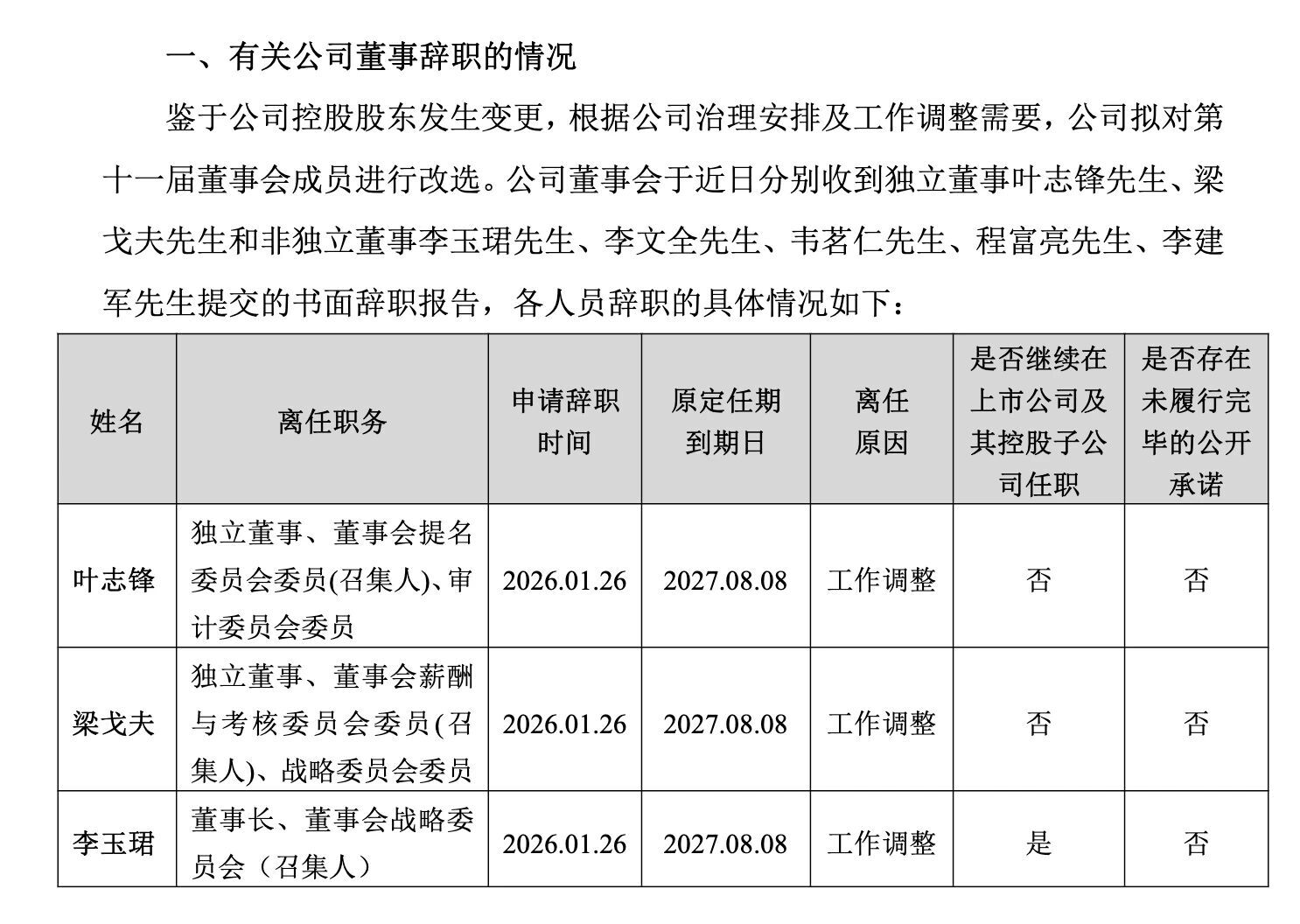
Core Viewpoint - The recent personnel changes at Black Sesame (000716) following the transfer of control signify a critical phase in the company's governance restructuring after state-owned assets took over [2][3]. Group 1: Personnel Changes - The resignation of Chairman Li Yujun and several board members is part of a governance adjustment, with all resignations attributed to "work adjustments" [3][5]. - Li Yujun will continue to serve as a director after stepping down as chairman until a new chairman is appointed, while other resigning members will retain positions in the company or its subsidiaries [3][5]. - This personnel shift is widely interpreted as a necessary governance adjustment following the change in control of Black Sesame [5]. Group 2: Control Transfer - The control transfer was completed in December 2025, when the former controlling shareholder, Guangxi Heiwulv Food Group, sold 20% of its shares to Guangxi Lvfa Health Industry Group for approximately 942 million yuan at a price of 6.25 yuan per share [6][7]. - Following this transfer, the actual controller changed from the previous group to the Guangxi State-owned Assets Supervision and Administration Commission, marking the beginning of a state-owned era for Black Sesame [7]. Group 3: Financial Performance - Black Sesame has faced significant financial challenges, with revenues declining from 40.25 billion yuan in 2021 to 24.65 billion yuan in 2024, representing a nearly 40% decrease over four years [9][10]. - The company reported a cumulative net loss of 1.28 billion yuan over the same period, despite a slight recovery in net profit in 2023 and 2024 [9][10]. - In the first three quarters of 2025, revenue fell by 7.52% year-on-year to 1.469 billion yuan, and net profit dropped by 83.67% to 6.82 million yuan, indicating ongoing operational difficulties [10][13]. Group 4: Business Challenges - The decline in performance is attributed to weak growth in core business and unsuccessful diversification attempts, with traditional products like Black Sesame paste losing appeal among younger consumers [11][12]. - The company has attempted to diversify by launching new products and entering e-commerce, but these efforts have not yielded the expected results, with e-commerce revenue declining by 6.75% in the first half of 2025 [12]. - Financial pressures are evident, with short-term borrowings of 720 million yuan compared to cash reserves of only 147 million yuan, indicating significant short-term debt obligations [13]. Group 5: Performance Commitments - As part of the control transfer, performance commitments were established, requiring Black Sesame to achieve net profits of no less than 950 million yuan, 1.05 billion yuan, and 1.15 billion yuan from 2026 to 2028, with specific non-recurring profit targets as well [14]. - Given the current performance trajectory, meeting these commitments poses a considerable challenge for the company [14].

财经连线 | 378天,山东药玻被划入央企版图
Da Zhong Ri Bao· 2026-01-23 10:53
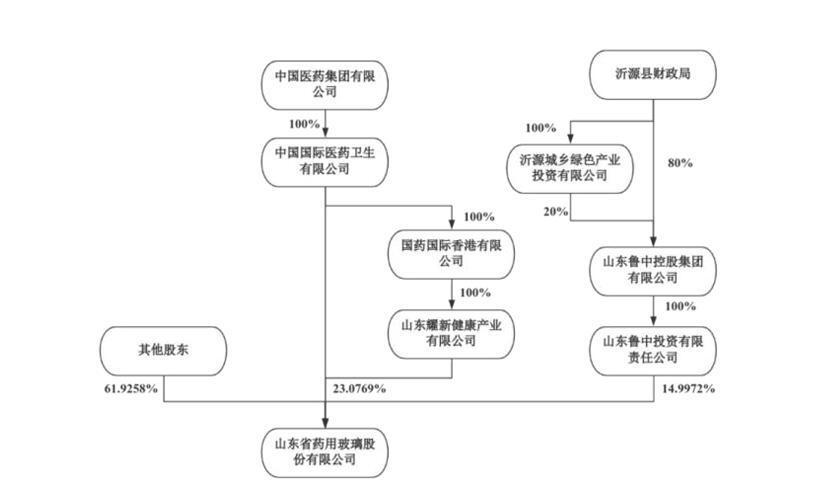
Core Viewpoint - Shandong Pharmaceutical Glass (山东药玻) is undergoing a significant change in its ownership structure, with plans to issue shares to China International Pharmaceutical Health Co., Ltd. (国药国际) and its affiliates, which will result in a new controlling shareholder, China National Pharmaceutical Group (国药集团) [2][12]. Group 1: Ownership Change - The company plans to issue shares at a price of 16.25 yuan per share, raising a total of approximately 3.235 billion yuan [2]. - Following the issuance, the controlling shareholder will change from Shandong Luzhong Investment Co., Ltd. to 国药国际, with the ultimate controller being the State-owned Assets Supervision and Administration Commission of the State Council [2][12]. - This transition marks a shift from a local state-owned enterprise to a central state-owned enterprise, potentially enhancing governance, financing channels, and industrial collaboration [12]. Group 2: Financial Performance - In 2024, the company reported revenue of 5.125 billion yuan, a year-on-year increase of 2.87%, and a net profit of 943 million yuan, up 21.55% year-on-year [5]. - However, the 2025 Q3 report indicated a decline in revenue to 3.401 billion yuan, down 11.10% year-on-year, and a net profit of 542 million yuan, a significant drop of 24.70% [6][7]. - The company's core product, molded bottles, accounted for 60% of revenue, with a domestic market share exceeding 75% [5]. Group 3: Leadership Changes - The chairman, Hu Yonggang, resigned due to age reasons, and the general manager, Zhang Jun, has taken over as acting chairman [10][11]. - Hu Yonggang's tenure saw significant achievements, including overcoming technical barriers and leading the company to become a national champion in manufacturing [9]. - The leadership transition occurs amid financial pressures and potential changes in control, signaling a new phase for the company [10][11]. Group 4: Market Reactions - Following the announcement of the share issuance, the company's stock experienced volatility, with a cumulative increase of 2.67% over eight trading days [17]. - As of January 23, the stock price was 21.08 yuan per share, reflecting a 1.39% increase on that day [17].

锐新科技2026年1月22日涨停分析:国资入主+治理优化+研发投入
Xin Lang Cai Jing· 2026-01-22 05:39
Group 1 - The core viewpoint of the news is that Ruixin Technology (sz300828) experienced a significant stock price increase, reaching a limit up of 21.62 yuan, with a rise of 19.98% and a total market capitalization of 3.598 billion yuan [1] - The surge in stock price is attributed to several factors including state-owned capital entering the company, governance optimization, and increased R&D investment [2] - The company has revised multiple internal management systems, introduced cumulative voting, and replaced the supervisory board with an audit committee, which has significantly improved governance efficiency [2] Group 2 - The Huangshan State-owned Assets Supervision and Administration Commission has become the actual controller of the company through its subsidiary, which is expected to bring new resource support and enhance market confidence in the company's future development [2] - Ruixin Technology is engaged in the R&D, production, and sales of industrial precision aluminum alloy parts, with applications in industrial automation, medical devices, new energy vehicles, and clean energy, benefiting from the positive development trends in these sectors [2] - The former general manager has transitioned to an honorary chairman role to focus on technology R&D, and the company's ongoing R&D investment is expected to strengthen its long-term competitiveness [2]

复牌!603078拟易主上海国资
Xin Lang Cai Jing· 2026-01-19 14:43
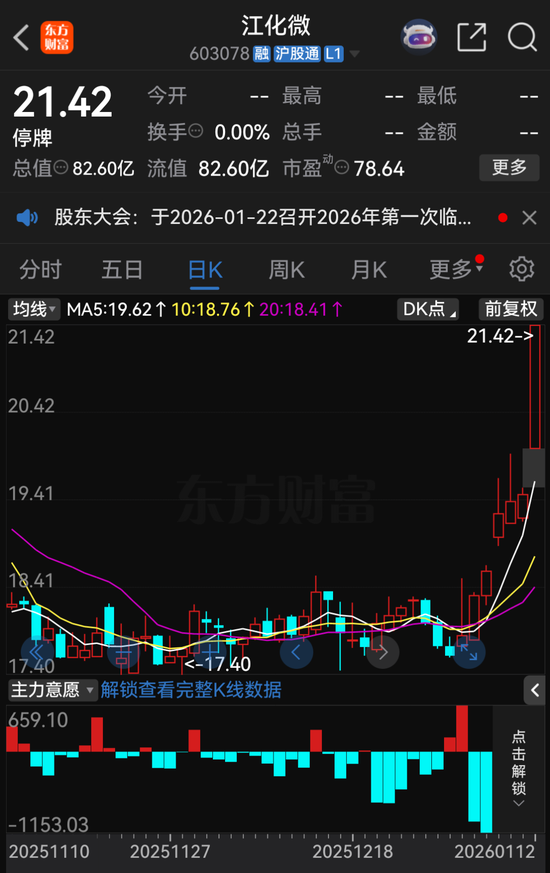
Core Viewpoint - Jianghuai Microelectronics plans to change its controlling shareholder from Zibo Xingheng Tusheng Holdings to Shanghai Fuxun Technology, with the actual controller changing to Shanghai State-owned Assets Supervision and Administration Commission, resuming trading on January 20 [1][13]. Share Transfer Agreement - On January 19, Zibo Xingheng Tusheng signed a conditional share transfer agreement to sell 23.96% of Jianghuai Microelectronics' shares at a price of 20 yuan per share, totaling 1.848 billion yuan [3][15]. - After the transaction, Zibo Xingheng Tusheng will no longer hold shares in Jianghuai Microelectronics, and the controlling shareholder will be Shanghai Fuxun Technology [4][16]. Shareholding Structure - Before the transaction, Zibo Xingheng Tusheng held 92,382,329 shares (23.96%), while other shareholders held 293,254,919 shares (76.04%). Post-transaction, Shanghai Fuxun will hold the same number of shares [5][17]. Strategic Focus - The share transfer is part of Zibo Urban Asset Operation Group's strategy to focus on its core business and optimize its industrial layout [6][18]. - Zibo Urban Asset Operation Group is responsible for the unified management and operation of state-owned assets authorized by the Zibo municipal government [6][18]. Support from Shanghai Huayi - The transfer also aims to support Jianghuai Microelectronics in leveraging the technological and industrial advantages of Shanghai Huayi Holding Group to explore development potential and achieve high-quality growth [8][20]. - Shanghai Huayi, a major chemical enterprise group, holds 95% of Shanghai Fuxun Technology and is fully owned by the Shanghai State-owned Assets Supervision and Administration Commission [10][22]. Business Performance - Jianghuai Microelectronics specializes in the R&D, production, and sales of ultra-pure reagents and photoresist materials for semiconductor chips and other electronic components [20][22]. - Despite revenue growth, Jianghuai Microelectronics has faced declining net profits, with a revenue increase of 6.73% and 10.92% in 2024 and the first three quarters of 2025, respectively, while net profit decreased by 6.29% and 8.66% [20][22].

复牌!603078拟易主上海国资
中国基金报· 2026-01-19 14:37
Core Viewpoint - Jianghua Microelectronics plans to change its controlling shareholder from Zibo Xingheng Tusheng Holdings to Shanghai Fuxun Technology, with the actual controller shifting to the Shanghai State-owned Assets Supervision and Administration Commission [2][9]. Group 1: Shareholder Change - On January 19, Zibo Xingheng Tusheng signed a conditional share transfer agreement to sell 23.96% of Jianghua Microelectronics' shares at a price of 20 yuan per share, totaling 1.848 billion yuan [9]. - After the transaction, Zibo Xingheng Tusheng will no longer hold shares in Jianghua Microelectronics, and Shanghai Fuxun Technology will become the new controlling shareholder [10]. Group 2: Strategic Focus - The share transfer is part of Zibo Urban Asset Operation Group's strategy to focus on its core business and optimize its industrial layout [10][11]. - Zibo Urban Asset Operation Group manages state-owned assets in Zibo and aims to enhance its core functions through this divestment [11]. Group 3: Partnership with Shanghai Huayi - The transfer also aims to support Jianghua Microelectronics in leveraging the technological and industrial advantages of Shanghai Huayi Holding Group to explore development potential [14]. - Shanghai Huayi, a major chemical enterprise group, holds 95% of Shanghai Fuxun Technology, which will now have a significant role in Jianghua Microelectronics' future [16]. Group 4: Financial Performance - Jianghua Microelectronics has experienced revenue growth without corresponding profit increases, with revenues growing by 6.73% and 10.92% in 2024 and the first three quarters of 2025, respectively, while net profits decreased by 6.29% and 8.66% [17]. - For the current reporting period, Jianghua Microelectronics reported revenues of approximately 329.44 million yuan, a year-on-year increase of 10.27%, but a net profit attributable to shareholders of 30.71 million yuan, reflecting a decline of 8.66% [18].