
Retailers

Search documents
Marks & Spencer and MAKSY: A Comparative Financial Analysis
Financial Modeling Prep· 2025-11-05 18:03
Group 1: Marks & Spencer Group PLC - The company reported an adjusted pre-tax profit of £184 million, exceeding analysts' expectations of £76 million, aided by a £100 million insurance payout [1][3][6] - Despite the strong earnings report, Marks & Spencer's share price declined by 3% during early trading, attributed to the impact of a cyber attack that led to a 55.4% drop in first-half underlying profit [3][6] - The company's food sales increased by 7.8%, generating an adjusted operating profit of £89.1 million, although profit margins fell from 5.1% to 2.0% [5][6] - Marks & Spencer is implementing a recovery strategy that includes a dividend hike, indicating confidence in future prospects [5] Group 2: MAKSY - MAKSY reported an earnings per share (EPS) of $0.16, surpassing the estimated EPS of $0.10, and revenue reached approximately $10.39 billion, exceeding the estimated $8.76 billion [2][6] - The company has a price-to-earnings (P/E) ratio of approximately 27.27, indicating strong investor confidence in its earnings potential [4] - MAKSY's price-to-sales ratio is about 0.57, and its enterprise value to sales ratio is around 0.72, reflecting a favorable market valuation relative to sales [4][6] - The company's debt-to-equity ratio is roughly 1.00, suggesting a balanced capital structure, while its current ratio of approximately 0.87 indicates the ability to cover short-term liabilities [5]

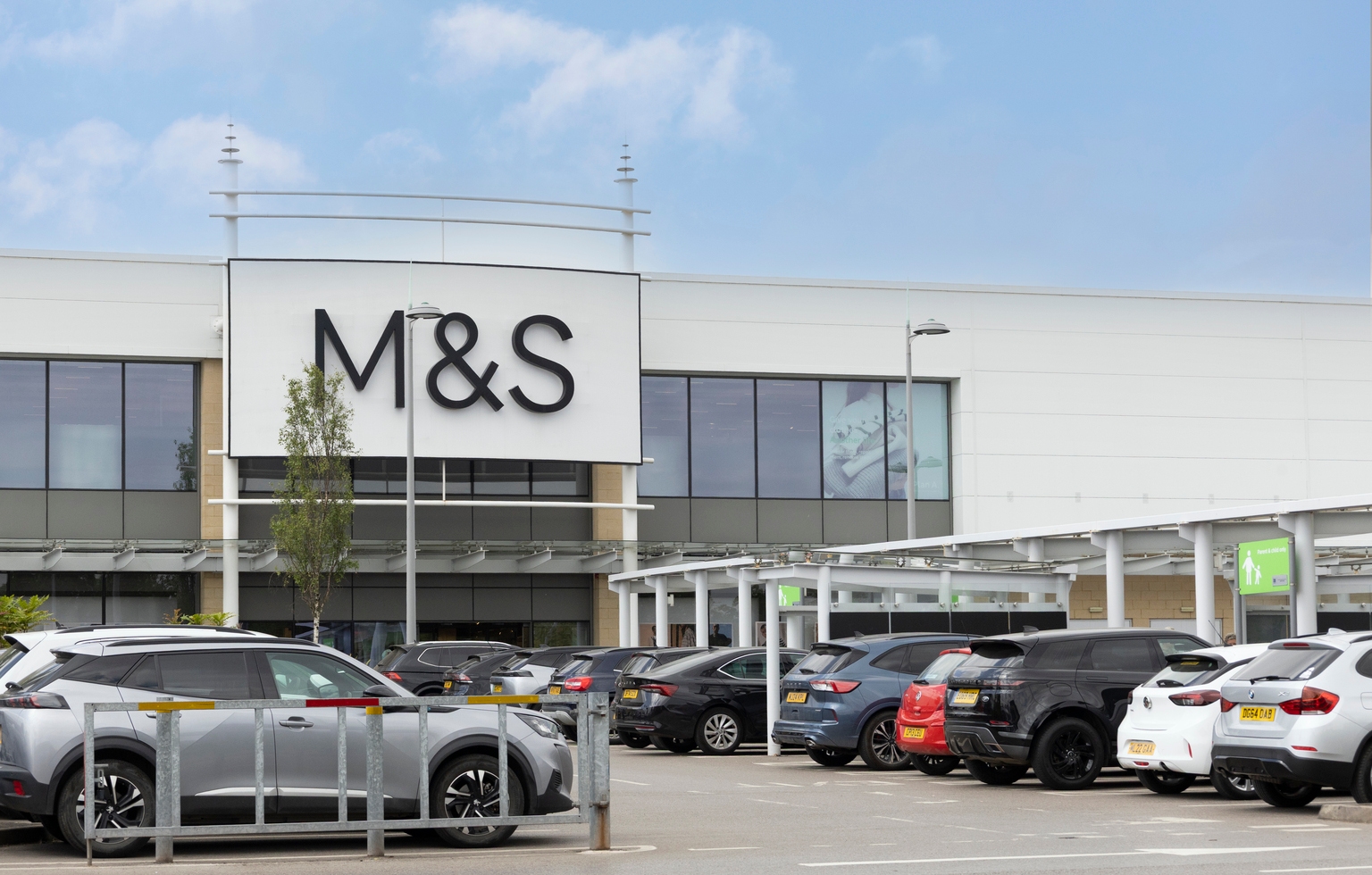
UK consumers bracing for higher taxes from budget, warns M&S boss
Reuters· 2025-11-05 11:57
Core Viewpoint - British consumers are preparing for increased taxes due to the upcoming budget, which may negatively impact Christmas demand according to the CEO of a major retailer [1] Group 1: Economic Impact - The finance minister has issued a warning about shared economic pain, indicating that consumers may face financial strain [1] - Anticipated tax increases could lead to reduced disposable income for consumers, affecting their spending behavior during the holiday season [1] Group 2: Retail Sector Implications - The warning from the finance minister raises concerns for retailers, particularly regarding key sales periods like Christmas [1] - Retailers may need to adjust their strategies to cope with potential declines in consumer spending due to the economic outlook [1]


Target Offers Under-$20 Thanksgiving Meal and Adds Popular Brands to its Assortment to Help Consumers Host in Style on a Budget
Prnewswire· 2025-11-05 11:01
Core Insights - Target Corporation is offering an affordable Thanksgiving meal for four at under $20, which is less than $5 per person, marking the lowest price ever for this meal option [1][5] - The retailer is also promoting Good & Gather turkey at a competitive price of 79 cents per pound, which is one of the lowest prices available among grocers [3] - Target is enhancing the holiday shopping experience by introducing new seasonal sides, stylish table décor, and exclusive host gifts from various brands [2][4] Pricing and Meal Options - The Thanksgiving meal for four includes a frozen turkey (up to 10 lb.), russet potatoes (5 lb. bag), jellied cranberry sauce (14 oz.), stuffing mix (6 oz.), turkey gravy (12 oz.), soft French bread, and frozen corn [5] - Additional seasonal items such as apple and pumpkin pies, harvest squash empanadas, and mashed sweet potatoes are available for $4.99 each [5] Shopping Experience - Target is providing flexible shopping options, including Same Day Delivery, Drive Up, and Order Pickup, as well as Next-Day Delivery or 2-Day Shipping for free on orders over $35 [6] - The retailer is also focusing on creating a stylish holiday atmosphere with table décor priced at $20 and under, and seasonal greenery starting at $8 [8] Brand Collaborations and New Offerings - Target has added new brands to its holiday assortment, including Harry & David, Hearth & Hand with Magnolia Table, John Derian for Target, Stonewall Kitchen, and Sugarfina, offering unique gift options [4][8] - The new collection features giftable food items and gourmet flavors, with prices starting at $4.99 for food items and $14.99 for gourmet gifts [8]


Marks & Spencer Profits Plummet on Cyberattack
WSJ· 2025-11-05 08:13
Core Insights - The retailer reported a significant decline in adjusted pretax profit, which plunged by 55% [1] - Despite the current downturn, the company anticipates a recovery in the second half of its fiscal year [1] Financial Performance - Adjusted pretax profit decreased by 55% compared to previous periods [1] - The company is optimistic about a potential rebound in financial performance later in the fiscal year [1]

Walmart de México's Digital Payments App Integrates Aplazo's BNPL Offering
PYMNTS.com· 2025-11-05 01:29
Core Insights - Walmart de México has integrated a buy now, pay later (BNPL) option into its digital payments app, Cashi, allowing users to make online purchases and pay in installments without needing a credit card [2][3] - Aplazo, the BNPL partner, has preapproved 1.5 million credit lines as part of this collaboration, enhancing credit accessibility for consumers [2][3] Group 1: Partnership and Features - The partnership between Walmart de México and Aplazo enables users to register and receive approval in under five minutes, choose biweekly payment options, and view payment amounts and total costs instantly [3] - Aplazo's CEO emphasized that this collaboration aims to make credit more accessible, transparent, and responsible, addressing the needs of over 60 million adults in Mexico who require flexible financial options [4] Group 2: Market Context and Consumer Behavior - The PYMNTS Intelligence report indicates that Mexico is transitioning into a mobile-first consumer market, with nearly half of purchases made via mobile devices [5] - The report also highlights that 29% of Mexican shoppers faced payment-related issues during their last online purchase, presenting an opportunity for retailers to improve payment processes and enhance customer experience [6]

Walmart CEO said paying its star managers upwards of $620,000 yearly empowered them to ‘feel like owners’
Yahoo Finance· 2025-11-03 17:54
Core Insights - Walmart has significantly increased compensation for its top-performing regional store managers, raising total pay to between $420,000 and $620,000, with base pay increasing from $130,000 to $160,000, reflecting a strategic investment in employee morale and retention [1][2] - The company aims to enhance its corporate culture and employee satisfaction through these pay raises, which are part of a broader trend of wage investments that began in 2015 [2][5] - Walmart's efforts have resulted in improved employee retention rates, with a reported 10% increase in hourly worker retention over the past decade, and recognition as a top company to work for [3][4] Compensation Strategy - The compensation structure for managers includes substantial stock grants and annual bonuses, contributing to a total compensation package that is competitive within the retail industry [2] - The decision to raise manager salaries is seen as a calculated move to foster a sense of ownership among managers, which is expected to positively influence their commitment to the company's performance [1][3] Industry Context - The retail sector is facing challenges related to employee satisfaction and retention, with a significant percentage of workers indicating a willingness to leave for higher pay [5] - The ongoing cost-of-living crisis and rising grocery prices have heightened the importance of competitive compensation in retaining talent within the industry [6]

Walmart Vs. Costco: Which Retail Stock Is The Better Buy
The Motley Fool· 2025-11-02 19:06
Core Insights - Walmart and Costco have both outperformed the S&P 500 over the past five years, but Walmart is identified as the better long-term investment option today [1][3][10] Company Overview - Walmart operates 10,750 retail stores and 600 Sam's Club locations, while Costco has 914 membership warehouse locations [2] - Both companies leverage their scale to provide affordable prices on essential products, including groceries [2] Financial Performance - Costco achieved 8% year-over-year revenue growth in its fourth quarter, surpassing Walmart's 4.8% growth rate [10] - Walmart's net income increased by 56% year-over-year in the second quarter, significantly higher than Costco's 10.9% improvement [12] - Walmart's advertising business grew by 46% year-over-year in the second quarter, contributing $4.4 billion to its total revenue of $681 billion for fiscal 2024 [6][12] Growth Metrics - Costco reported 5.7% same-store sales growth in Q4 FY25, while Walmart's comparable sales growth was 4.3% year-over-year in the second quarter [8][10] - Costco's e-commerce segment grew by 15.6% compared to the previous year, indicating strong digital sales performance [9] Valuation and Investment Considerations - Walmart has a P/E ratio of 40, compared to Costco's 51, suggesting Walmart is more attractively valued [12] - Despite Costco's higher revenue growth, Walmart's faster profit growth and lower valuation make it a more appealing investment option at this time [11][13]

The Reliable Dividend Stocks Retirees Count On Year After Year
The Motley Fool· 2025-11-01 07:15
Core Viewpoint - The article emphasizes the importance of focusing on reliable dividend stocks, particularly within the consumer staples sector, highlighting Coca-Cola and Walmart as prime examples of Dividend Kings that have consistently increased their dividends over decades [1][2][4]. Group 1: Dividend Kings and Consumer Staples - Dividend Kings are companies that have raised their dividends annually for at least 50 years, indicating a strong business model and commitment to returning value to investors [2]. - The consumer staples sector is characterized by companies that sell essential goods, making them reliable even during economic downturns [3]. Group 2: Coca-Cola Analysis - Coca-Cola is identified as a desirable dividend stock, being one of the largest companies in the consumer staples sector with a strong position in the beverage industry [7]. - The stock's price-to-sales and price-to-earnings ratios are near or slightly below their five-year averages, making it a fair price for a high-quality company [8]. - Coca-Cola offers a dividend yield of 2.9%, significantly higher than the market average of 1.2% [8]. Group 3: Walmart Analysis - Walmart is another major player in the consumer staples sector, known for selling basic necessities and maintaining a strong operational history as a Dividend King [10][11]. - However, Walmart's price-to-sales and price-to-earnings ratios are above their five-year averages, indicating potential overvaluation [11]. - The stock's dividend yield is only 0.9%, which is lower than the broader market yield [11]. Group 4: Investment Considerations - For investors seeking reliable dividend stocks, both Coca-Cola and Walmart are viable options, but Coca-Cola is favored for its higher yield and better valuation [12]. - Building a retirement income portfolio requires careful consideration of both reliability and valuation to avoid overpaying for quality companies [13][14].


Best Growth Stocks to Buy for Oct. 30th
ZACKS· 2025-10-30 14:26
Core Insights - Three stocks with strong growth characteristics and buy ranks are highlighted for investors: Micron Technology, Skillsoft, and Tesco [1][2][3] Group 1: Micron Technology (MU) - Micron Technology is a leading provider of semiconductor memory solutions with a Zacks Rank 1 (Strong Buy) [1] - The Zacks Consensus Estimate for Micron's current year earnings has increased by 24.4% over the last 60 days [1] - The company has a PEG ratio of 0.49, significantly lower than the industry average of 1.40, and possesses a Growth Score of A [2] Group 2: Skillsoft (SKIL) - Skillsoft specializes in digital learning, training, and talent solutions, also holding a Zacks Rank 1 [2] - The Zacks Consensus Estimate for Skillsoft's current year earnings has surged by 240.9% over the last 60 days [2] - Skillsoft has a PEG ratio of 0.36 compared to the industry average of 1.09, and it has a Growth Score of B [2] Group 3: Tesco (TSCDY) - Tesco is the UK's largest retailer and one of the leading international retailers, maintaining a Zacks Rank 1 [3] - The Zacks Consensus Estimate for Tesco's current year earnings has increased by 4.6% over the last 60 days [3] - Tesco has a PEG ratio of 1.30, which is lower than the industry average of 2.34, and it possesses a Growth Score of B [3]


Target's next CEO finds a bold solution to alarming sales declines
Yahoo Finance· 2025-10-30 04:03
Core Insights - Target has experienced a decline in sales and foot traffic, leading to financial challenges and a tarnished reputation [2][3][4] - The company is undergoing leadership changes, with COO Michael Fiddelke set to become CEO in February 2026, focusing on revitalizing the brand [5] Sales Performance - In Q2 of fiscal 2025, Target reported a nearly 1% decline in net sales year-over-year, with comparable sales falling almost 2% [3] - Significant drops were noted in the Apparel & Accessories and Household Essentials categories [3] Customer Traffic - Foot traffic has decreased by 5.3% during Target Circle Week compared to the previous year, indicating a slowdown in customer visits [4] Strategic Initiatives - Michael Fiddelke's strategy includes returning to Target's roots by offering stylish, affordable products and leveraging technology for a consistent customer experience [5] - The company plans to introduce 20,000 new items in Q4, doubling the previous year's offerings, as part of its strategy for the holiday season [6]