
Sportswear

Search documents
Hong Kong stocks rebound as investors weigh rate-cut odds after mixed US job data
Yahoo Finance· 2025-12-17 09:30
Market Performance - Hong Kong stocks rebounded from a three-week low, with the Hang Seng Index rising 0.9% to 25,468.78, while the Hang Seng Tech Index gained 1% [1] - The CSI 300 Index on the mainland climbed 1.8%, and the Shanghai Composite Index added 1.2% [1] Company Movements - China Life Insurance increased by 4.3% to HK$28.56, and Li Ning also rose by 4.3% to HK$19.07 [3] - Pop Mart International Group saw a gain of 3.4% to HK$195.70 [3] - ENN Energy declined by 2.4% to HK$69.90, and Techtronic Industries retreated by 2% to HK$89.80 [3] Economic Indicators - The US added 64,000 jobs in November, improving from a loss of 105,000 jobs in the previous month, but the unemployment rate rose to 4.56% from 4.44% in September [5] - Analysts suggest that the US jobs market is cooling but on track for a soft landing, indicating limited urgency for the Federal Reserve to cut interest rates in January [5] - Investors are looking forward to the November US inflation data, with core consumer prices expected to rise by 2.9% year-on-year, down from a 3.02% increase in September [6]
中国运动服饰 - 专家电话会要点:短期趋势波动,2026 年展望偏谨慎-China Sportswear_ Expert call takeaways_ choppy near-term trends; guarded in 2026 outlook
2025-12-16 03:30
15 December 2025 | 6:26PM HKT Equity Research China Sportswear: Expert call takeaways: choppy near-term trends; guarded in 2026 outlook On Dec.15, 2025, we invited a sportswear distributor company based in Eastern China to share some of the latest updates on the industry. The expert called out: 1) Generally lukewarm sales in Oct+Nov in his distribution region (Eastern China), though sequentially improved from Sep's trough level; 1H of Dec deteriorated due to unfavorable weather but yesterday's temperature's ...
Final Full Trading Week of 2025 Filled with Data
ZACKS· 2025-12-15 16:41
Market Overview - The market is showing positive movement after a down-session on Friday, with the Dow up by 244 points, S&P 500 up by 36 points, Nasdaq up by 160 points, and Russell 2000 up by 21 points [2] - The 10-year bond yield remains stable at 4.17%, while the 2-year bond yield has decreased to 3.50% [2] Economic Indicators - The Empire State Manufacturing Index reported a negative reading of -3.9 for December, significantly missing expectations of +10 and down from +18.7 in the previous month [3][4] - This marks only the second negative monthly print in the last six months, indicating ongoing struggles in domestic manufacturing [4] - The Homebuilders Confidence survey for December is expected to show a print of 38, indicating ongoing challenges for domestic homebuilders [5] Federal Reserve Insights - Fed Governor Stephen Miran and New York Fed President John Williams are scheduled to discuss interest-rate decision-making, with differing views on rate cuts [6] - The upcoming jobs report is anticipated to show an increase of 50,000 new jobs for November, which is below the threshold needed to maintain positive job growth, with the unemployment rate expected to rise to 4.5% [9][10] Earnings Reports - Key earnings data is expected from various companies, including homebuilders Lennar and KB Home, data storage producer Micron, FedEx, and Nike during the final full trading week of 2025 [11]



中国运动服饰:调研-行业排序未变;安踏 “买入”、滔搏 “买入”、李宁 “买入”
2025-12-10 02:49
Summary of Key Points from the Conference Call Industry Overview - The report focuses on the **China Sportswear** industry, particularly the performance and outlook of major brands including **Nike**, **Anta**, **Topsports**, and **Li Ning** [1][2][3][4]. Core Insights and Arguments - **Nike's Market Position**: Nike retains its No.1 ranking in both "intent to purchase" and "most innovative brand" categories, despite a slight decline of 1 percentage point quarter-over-quarter (QoQ) [2][3]. - **Anta's Performance**: Anta's Net Promoter Score (NPS) increased by 11 points QoQ, moving from 10 to 4 in rankings, indicating a solid brand equity among Chinese consumers [3][10]. - **Topsports' Recovery**: Anticipated support from Nike, due to organizational changes, is expected to aid Topsports in recovering sales, which are heavily reliant on Nike products (50-60% of sales) [3][4]. - **Promotional Environment**: 65% of survey respondents noted an increase in promotional activity for sports footwear and clothing, up from 60% in September [19][20]. Financial Performance and Projections - **Anta's Sales Guidance**: Anta is expected to meet its full-year retail sales guidance, projecting low single-digit year-over-year growth for its business [3][4]. - **Topsports Valuation**: The target price for Topsports shares is set at HK$3.75, based on a 16x calendarized year 2025E P/E, reflecting a 45% discount to Nike's historical trading P/E [40][42]. - **Li Ning's Growth Outlook**: Despite anticipated weak growth in 2025, Li Ning is expected to resume earnings growth in 2026 due to enhanced brand equity and new product rollouts [35][36]. Additional Important Insights - **Consumer Sentiment**: The survey indicates a shift in consumer preferences, with Nike leading in "intent to purchase" at 21%, followed by Li Ning at 17% and Anta at 13% [12][14]. - **Discount Trends**: The percentage of consumers receiving discounts greater than 10% on recent purchases increased to 29% in November, indicating a competitive pricing environment [23][24]. - **Nike's Organizational Changes**: Nike's recent restructuring aims to enhance operational flexibility and brand support in China, which is expected to positively impact Topsports [3][26]. Conclusion - The China sportswear market is experiencing dynamic shifts, with Nike maintaining a strong position, while Anta and Li Ning show promising growth potential. The promotional landscape is becoming increasingly competitive, which may influence pricing strategies and consumer purchasing behavior in the near future.


What's Happening With Nike Stock?
Forbes· 2025-12-09 12:45
Core Viewpoint - Nike's stock has declined by approximately 15% over the past year, contrasting with a 14% rise in the S&P 500, raising questions about whether this presents a buying opportunity or signals deeper issues [2] Valuation - Nike's valuation metrics are surprisingly high despite its stock decline, with a price-to-sales ratio of 2.2, a P/E ratio of 35.6, and a price-to-free-cash-flow ratio of 34.2, all exceeding broader S&P 500 benchmarks [3] Growth - Nike's revenue has not only slowed but has also declined, with a drop of more than 7% in the past twelve months, falling from $50 billion to $46 billion [4] - The most recent quarter showed only a modest 1.1% year-over-year growth, significantly lagging behind the broader market expectations for a brand of Nike's stature [5] Profitability - Nike's operating margin is at 7.4%, well below the S&P 500's near 19%, indicating slim margins compared to peers and historical performance, which raises concerns for investors [6] Financial Stability - Nike maintains a strong balance sheet with manageable debt levels relative to its $97 billion market cap and a solid cash position that constitutes nearly a quarter of its total assets [7][8] Downturn Resilience - Nike has shown mixed performance during market downturns, with significant volatility in its stock price, including a 53% drop during the 2022 inflation shock, which was more than double the market's decline [11][10] Bottom Line - The current situation presents a paradox for Nike, with an undervalued stock but low sentiment, weak revenue growth, and below-market margins, suggesting caution for potential investors [11][12]
中国消费策略:摩根大通亚太消费论坛要点-China Consumer Strategy_ Takeaways from JPM APAC Consumer Forum
摩根· 2025-12-08 00:41
Investment Rating - The report maintains an "Overweight" rating for several companies in the China consumer space, including Laopu, Pop Mart, Luckin, Guming, Mixue, MGP, YUMC, Nongfu, Anta, Yili, CR Beer, BSD, WHG, Hengan, Tingyi, and UPC [2][28]. Core Insights - Companies are "cautiously optimistic" about the 2026 outlook, not assuming additional stimulus policies in their budgets, which could provide upside risk if implemented [2][6]. - Major drivers for sales growth in 2026 include more value product launches, efficiency improvements, and overseas expansion [2][6]. - Leading companies are committed to increasing shareholder returns through dividends and buybacks to compensate for low visibility in business growth [2][6]. Summary by Relevant Sections Consumer Sector - Overall consumption stabilized in Q3 2025, with a significant recovery expected to be challenging without policy support [6]. - Companies are maintaining light channel inventory and rational promotional levels in Q4 2025, anticipating that shipments for the 2026 Chinese New Year holiday sales will be booked in Q1 2026 [6]. - Sales and EPS growth rankings by sector indicate strong growth in IP and soft drinks, followed by sportswear and OEM, home appliances, and QSR restaurants [6]. Shareholder Returns - Companies are increasing their dividend payout ratios, with CR Beer targeting 60% in 2025 and 70-80% over the next 2-3 years [7]. - Yili plans to raise its dividend payout ratio from 70%+ to 75%+ from 2025 to 2027 [7]. - Midea and YUMC are also expected to implement significant buyback programs, with Midea planning over RMB 10 billion for 2025 [7]. Company-Specific Insights - CR Beer expects to drive revenue growth through premiumization and product differentiation, with a focus on maintaining earnings and margin guidance [11]. - WH Group anticipates a decline in hog prices in both China and the US for 2026, while targeting MSD volume growth in packaged meat [11]. - Nongfu Spring aims for double-digit revenue and earnings growth in 2026, with a focus on enhancing market share in bottled water [15]. - Tingyi maintains a DD earnings guidance for 2025, despite pressures in the non-carbonate beverages segment [15]. - Haier targets sales growth of MHSD and OP margin expansion, with plans for significant investment in the US market [20].
ANTA Makes Its Debut at The Running Event, Unveils New Tech Lineup with Kenenisa Bekele
Prnewswire· 2025-12-05 04:25
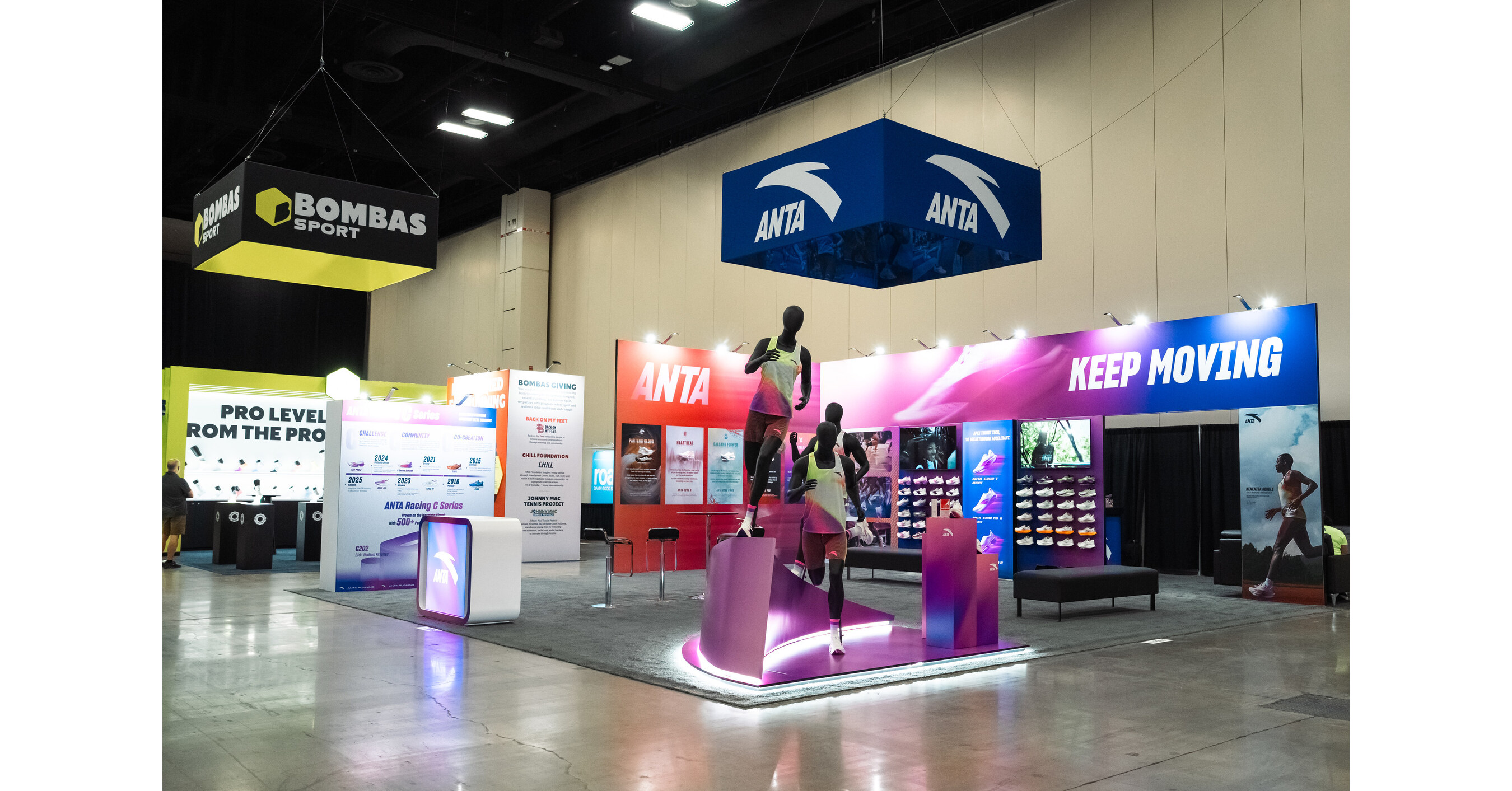
Core Insights - ANTA Sports Products Limited has established itself as one of the top three sportswear companies globally, focusing on high-quality products and global expansion since its founding in 1991 [1] - The brand made its debut at The Running Event (TRE) in December 2025, showcasing its professional running lineup and engaging with the running community [2][3] Product Highlights - ANTA introduced a suite of elite racing products featuring ANTA Nitrogen Tech, including the C-series racing family: ANTA C202 7, ANTA C202 G9 2, and ANTA C10 PRO 2, designed for high rebound and lightweight performance [3] - The ANTA PG7 running shoes, utilizing PG7 midsole technology, cater to the everyday needs of runners with advanced cushioning [4] Cultural Engagement - A "Color Story Zone" at TRE featured designs inspired by runners' stories, including the "Awaken" colorway symbolizing good fortune, which was celebrated through a traditional "Eye-Dotting Ceremony" [5][6] - The ceremony attracted significant interest, with attendees eager to try the special-edition model, reflecting the cultural significance of the "Awaken" colorway [6] Global Expansion and Community Engagement - ANTA has signed endorsement deals with NBA stars and Olympic champions, enhancing its visibility in the sports community [7] - The company launched the "ANTA PG7 Cushion Evolution Global Plan" in 2025, connecting runners across major U.S. cities to foster a global running community [7] - ANTA plans to open a new store in Beverly Hills, Los Angeles, to increase consumer access and brand awareness [7]

Can NIKE Stay Ahead as Global Sportswear Faces Tariff Headwinds?
ZACKS· 2025-12-03 16:51
Core Insights - NIKE Inc. is facing a challenging sportswear market characterized by slowing consumer demand and increasing tariff pressures, yet the company is committed to regaining its leadership position through strategic initiatives [1][11] Financial Performance - In the first quarter of fiscal 2026, NIKE's running segment grew over 20% year-over-year, indicating that consumers respond positively to the brand's innovation and storytelling [2] - The Zacks Consensus Estimate for NIKE's fiscal 2026 earnings suggests a year-over-year decline of 24.1%, while fiscal 2027 indicates a growth of 54.2% [15] Tariff Impact - Newly implemented reciprocal tariffs are expected to add approximately $1.5 billion in annualized costs, resulting in a 120-basis-point headwind to the fiscal 2026 gross margin [3][11] - Management has acknowledged that the tariff impact will significantly affect margins until mitigation strategies are fully implemented [4] Strategic Initiatives - NIKE is focusing on sport-led innovation and has an expanding product pipeline across various segments, including running, global football, and basketball [5] - The company is working on supply-chain efficiencies, pricing strategies, and marketplace rationalization to offset tariff pressures [3][11] Market Position - Wholesale partners have shown increased confidence by raising their spring order books, reflecting a positive outlook on NIKE's product direction [6] - Despite the challenges, NIKE's renewed focus on product creation and brand storytelling positions it to remain competitive in the market [6] Valuation - NIKE trades at a forward price-to-earnings ratio of 31.02X, compared to the industry average of 27.39X, indicating a premium valuation [13]
中国消费板块优选标的与五大投资主题-China Consumer Sector Top Buys with Five Investment Themes-China Consumer
2025-12-01 00:49
Summary of Key Points from the Conference Call Industry Overview - **Industry**: China Consumer Sector - **Event**: Citi's 2025 China Conference - **Participants**: 44 China consumer companies were hosted, leading to the identification of five investment themes in the consumer sector [1][9] Investment Themes 1. **Shift Towards Experience Consumption**: - Consumers are increasingly valuing emotional experiences over physical goods, seeking happiness and self-expression through services [2] - Companies like Pop Mart provide affordable entertainment options that resonate with young consumers [2] 2. **Focus on Well-being**: - Younger generations are prioritizing spending on wellness, including health, fitness, and mindfulness [3] - Growth opportunities are seen in sectors like sportswear (Anta), health supplements (H&H), and beauty care (Giant Bio) [3] 3. **Rising Silver Economy**: - The aging population is driving demand for leisure and cultural experiences, benefiting industries like tourism (H World, Atour) and health supplements [4] 4. **Emerging New Channels**: - New offline channels such as membership stores and snack specialty chains are gaining traction, helping to offset declines in traditional distribution [5] 5. **Multi-brand Strategy**: - Companies are expanding their brand portfolios to meet diverse consumer demands, with a focus on easing channel inventory pressure [6] Company-Specific Insights Pop Mart (9992.HK) - **Sustainability of IP Operation**: Pop Mart is seen as a growth play due to its strong IP incubation capabilities. Concerns about growth sustainability are being addressed through new product launches [10] - **LABUBU Durability**: The company plans to enhance its LABUBU IP with new products and has postponed the launch of LABUBU 4.0 to 2026 [11] - **Overseas Expansion**: Plans to operate over 60 stores in the US by the end of 2025, with expansions into Canada and Mexico [13] Laopu Gold (6181.HK) - **Sales Growth Expectations**: Management expects high revenue growth in 2H25E driven by price adjustments and new store sales [16] - **Price Adjustment Strategy**: A recent price increase of over 25% aims to maintain a gross profit margin (GPM) of at least 40% [17] - **Store Expansion Plans**: Focus on expanding floor areas in existing malls rather than entering new ones [22] Haidilao International Holding Ltd (6862.HK) - **Recovery in Table-Turn**: Management anticipates positive momentum in table-turn rates due to seasonal factors and a low comp base [30] - **Operational Improvements**: Plans to terminate loss-making pilot programs to save on operational expenses [32] China Resources Beer (0291.HK) - **Sales Performance**: The company reported low single-digit year-over-year sales growth, outperforming peers [34] - **Margin Outlook**: Expected GPM improvement in 2H25E, with a target dividend payout ratio increase to ~60% in 2025E [36] Midea Group (0300.HK) - **Sales Growth Target**: Management maintains a target of ~10% sales growth for 2025, with a focus on air-conditioning sales recovery [40] - **Overseas Business Expansion**: Plans to increase overseas production to ~30% and grow sales in developed markets through M&A [41] Li Ning (2331.HK) - **Sales Guidance**: Maintained guidance for 2025 with expectations of flat sales and high single-digit net profit margin growth [48] Nongfu Spring (9633.HK) - **Sales Guidance**: Management reiterated a mid-teen percentage growth target for 2025, with limited impact from price wars in the beverage sector [51] Cosmetics Sector - **Mixed Performance**: Domestic brands like Mao Geping and Chicmax showed strong growth, while others lagged behind [56] - **Growth Strategies**: Companies are focusing on online sales growth and improving operational efficiency to enhance margins [57][59] Additional Insights - **Consumer Trends**: There is a notable shift towards experiential consumption and wellness, indicating a changing landscape in consumer preferences [2][3] - **Operational Strategies**: Companies are adopting multi-brand strategies and optimizing supply chains to enhance profitability and meet diverse consumer demands [6][14] This summary encapsulates the key insights and trends discussed during the conference, highlighting the evolving dynamics within the China consumer sector and specific company strategies.



How To Resolve The Housing Logjam
Seeking Alpha· 2025-11-28 11:50
Group 1: Market Dynamics - Trading was halted at CME, affecting forex, commodities, and futures markets [2] - U.S. oil rig count has dropped to the lowest level since 2021, indicating potential shifts in the energy sector [7] Group 2: Housing Market Trends - The housing market has experienced an affordability crisis due to rising interest rates initiated by the Federal Reserve in 2022, alongside trends from the COVID-19 pandemic [3][4] - Higher borrowing costs have increased new construction prices, while supply remains constrained due to real estate investors and the "lock-in effect" preventing homeowners from moving [4][5] Group 3: Proposed Solutions - Creative solutions like mortgage assumability and portability are being considered to alleviate the housing crisis, although challenges exist due to local land ownership records and securitized mortgages [5][6] - A recent poll indicates that Seeking Alpha readers view mortgage assumability and portability favorably, while 50-year mortgages are less favored [6] Group 4: Corporate Developments - Chinese tech firms are shifting AI training abroad to utilize Nvidia chips, reflecting a strategic move in the tech industry [8] - Netflix experienced an outage coinciding with the premiere of the final season of "Stranger Things," impacting its service delivery [8] - The SEC is investigating Jefferies over its connections with bankrupt First Brands, highlighting regulatory scrutiny in the financial sector [8]
