
Financial Technology

Search documents
If you think you’re ‘middle class' you’re probably wrong. Half of Americans are ‘treading water’: How to come up for air
Yahoo Finance· 2025-11-30 13:13
Core Insights - The article discusses strategies for reducing personal debt, highlighting the snowball and avalanche methods as effective approaches to manage and eliminate debt [2][4]. Debt Management Strategies - The avalanche method suggests starting with the largest debt and using any financial windfall to pay it down aggressively, while the snowball method focuses on paying off smaller debts first to build momentum [1][2]. - In 2024, there were 494,201 personal bankruptcy filings in the U.S., an increase of over 60,000 from the previous year, indicating a growing concern over consumer debt [2]. Economic Context - A survey by the National Foundation for Credit Counseling revealed that 53% of U.S. adults feel they cannot make financial progress, and 48% feel they are "constantly treading water financially," reflecting widespread financial insecurity [3][4]. - The Pew Research Center defines the middle class as households earning between $56,600 and $169,800, with 51% of American households fitting this category as of 2023 [6]. Financial Health Recommendations - Reducing debt can mitigate bankruptcy risks and lower monthly financial burdens, allowing individuals to redirect funds towards investments once debts are managed [7]. - Establishing an emergency fund that covers six months of living expenses is recommended to provide financial security in case of income loss [10]. Investment Opportunities - Automated investing in low-cost index ETFs is suggested as a way to grow savings over time, with platforms like Acorns allowing users to invest spare change from everyday purchases [8][9]. - Wealthfront Cash Account offers competitive interest rates for emergency funds, with a base variable APY of 3.50% and a potential boost for new clients, significantly higher than the national deposit savings rate [11][12].
Retail Stocks Usually Rise the Week After Black Friday. This BNPL Play Stands Out.
Barrons· 2025-11-29 18:31
Core Insights - Affirm has experienced an average increase of 9.1% in stock price during the week following Black Friday [1] Company Performance - The surge in Affirm's stock price indicates strong market performance and investor confidence post-Black Friday [1]



Needham Reiterates Buy on Block (XYZ) With $80 Price Target After Investor Day
Yahoo Finance· 2025-11-29 10:33
Core Insights - Block Inc. has received a Buy rating from Needham with a price target of $80.00, following insights gained from the company's investor day in San Francisco [1][4] - Analysts are optimistic about Block's growth strategy, AI roadmap, and capital return plans, indicating a favorable risk-reward scenario [1][4] Growth Strategy - The investor day provided clarity on Block's growth and go-to-market (GTM) strategies, emphasizing new products and AI initiatives [2] - New products announced include Neighborhoods and Moneybot for Cash App, and Managerbot, an AI agent for restaurant operators in the Square division [3] Financial Plans - Block announced a $5 billion share repurchase program and plans to return 80% of non-GAAP free cash flow (FCF) to investors [4] - The company is currently trading at approximately 9x EV/FY26 EBITDA, which is considered reasonable by analysts [4]
Buy These 5 Best Value Stocks to Make the Most of P/B Ratio
ZACKS· 2025-11-28 15:55
Core Insights - Investors primarily utilize price-to-earnings (P/E) and price-to-sales (P/S) ratios for stock evaluation, while the price-to-book (P/B) ratio serves as an additional metric for identifying undervalued stocks with growth potential [1][5][10] Group 1: P/B Ratio and Its Importance - The P/B ratio is defined as the ratio of stock price to book value, calculated as market capitalization divided by book value of equity [2] - A P/B ratio of less than one indicates that a stock is trading below its book value, suggesting it may be undervalued and a good buy [5] - Conversely, a P/B ratio greater than one suggests the stock may be overvalued [5][6] Group 2: Book Value Definition - Book value represents the total value remaining for shareholders if a company were to liquidate its assets after settling all liabilities [3] - It is calculated by subtracting total liabilities from total assets, equating to common stockholders' equity on the balance sheet [4] Group 3: Limitations of P/B Ratio - The P/B ratio is particularly useful for industries with tangible assets, such as finance and manufacturing, but may be misleading for companies with high R&D expenses or significant debt [8] - A low P/B ratio could indicate weak asset returns or overstated assets, while a high P/B may suggest a company is a takeover target [7] Group 4: Stocks with Low P/B Ratios - StoneCo (STNE) has a low P/B ratio with a projected 3-5 year EPS growth rate of 30.3% and a Zacks Rank of 2 [9][15] - Great Lakes Dredge & Dock (GLDD) also features a low P/B ratio with a projected EPS growth rate of 12.0% and a Zacks Rank of 1 [9][16] - Keros Therapeutics (KROS) is highlighted with a projected EPS growth rate of 23.6% and a Zacks Rank of 1 [9][20] Group 5: Screening Parameters for Investment - Screening for stocks involves comparing P/B, P/S, and P/E ratios against industry medians to identify attractive investment opportunities [11][12][13] - A PEG ratio of less than 1 indicates undervaluation relative to future growth prospects [13] - Stocks should have a minimum trading price of $5 and a substantial average trading volume for liquidity [14]




Do You Believe in the Growth Potential of Q2 Holdings (QTWO)?
Yahoo Finance· 2025-11-28 13:53
Core Insights - The Alger Small Cap Focus Fund's third-quarter 2025 investor letter indicates that U.S. equity markets continued to rise, with the S&P 500 Index increasing by 8.12% due to improving economic conditions, solid corporate earnings, and expectations for monetary easing [1] - The fund's class A shares underperformed compared to the Russell 2000 Growth Index during the same period [1] Company Overview: Q2 Holdings, Inc. (NYSE:QTWO) - Q2 Holdings, Inc. is a digital solutions provider for financial institutions, offering secure, cloud-based digital banking software and related services [3] - The stock experienced a one-month return of 17.90%, but it has lost 31.35% of its value over the past 52 weeks, closing at $71.73 per share with a market capitalization of $4.485 billion as of November 27, 2025 [2] Performance Analysis - Despite reporting solid second-quarter results and raising its full-year outlook, Q2 Holdings' shares detracted from performance due to mixed signals, including higher-than-typical churn and a slight dip in gross margin related to cloud-migration costs [3] - The company is believed to be well-positioned to benefit from the ongoing digitization of banking and expanding relationships with larger institutions, despite the recent valuation reset and mixed sell-side signals [3] Hedge Fund Interest - Q2 Holdings, Inc. was held by 28 hedge fund portfolios at the end of the third quarter, a decrease from 29 in the previous quarter [4] - While the potential of Q2 Holdings as an investment is acknowledged, certain AI stocks are considered to offer greater upside potential with less downside risk [4]

4 Value Stocks to Buy After the Thanksgiving Market Surge
ZACKS· 2025-11-28 13:32
Market Overview - Major U.S. indices rose before Thanksgiving, with the Dow Jones Industrial Average gaining 314.67 points to close at 47,427.12, the S&P 500 increasing by 46.73 points to settle at 6,812.61, and the Nasdaq Composite outperforming with a gain of 0.82% to finish at 23,214.69 [1] Federal Reserve Policy Impact - Market momentum was driven by shifting expectations regarding Federal Reserve policy, with growing confidence that interest rate cuts may occur as soon as next month, fostering optimism [2] - Easing concerns about an overvalued artificial intelligence sector contributed to improved market sentiment [2] Value Stocks Opportunity - Value stocks are seen as appealing due to the potential benefits of lower borrowing costs for companies with stable earnings and discounted valuations [2] - The Price to Cash Flow (P/CF) ratio is highlighted as an effective valuation metric for evaluating value stocks, indicating better value when lower [3][4] Financial Health Indicators - P/CF stands out because it reflects a company's financial health by adding back non-cash charges to net income, making it a more reliable measure than earnings, which can be subject to manipulation [4][5] - Positive cash flow indicates increased liquid assets, allowing companies to manage debt, expenses, and reinvestment, while negative cash flow suggests declining liquidity [6] Value Investing Strategy - A comprehensive investment strategy should include multiple metrics such as price-to-book, price-to-earnings, and price-to-sales ratios, along with a favorable Zacks Rank and Value Score to avoid value traps [7] - Parameters for selecting true-value stocks include a P/CF ratio less than or equal to the industry median, a minimum stock price of $5, and an average 20-day trading volume greater than 100,000 [8] Highlighted Value Stocks - Four value stocks with low P/CF ratios were identified: Great Lakes Dredge & Dock Corporation (GLDD), StoneCo Ltd. (STNE), PG&E Corporation (PCG), and EnerSys (ENS), all showing year-over-year sales and EPS growth projections [9] - Each of these stocks holds a Value Score of A or B and ranks in the top two Zacks Ranks, indicating strong potential [9] Company-Specific Insights - Great Lakes Dredge & Dock (GLDD) has a trailing four-quarter earnings surprise of 65.5% and is projected to see sales and EPS growth of 11.6% and 31%, respectively [12][13] - StoneCo (STNE) has a trailing earnings surprise of 9.1% and is expected to grow sales and EPS by 12.7% and 27.4%, respectively, with shares having rallied 68% in the past year [13][14] - PG&E Corporation (PCG) has a trailing earnings surprise of 0.5% and is projected for sales and EPS growth of 6.7% and 10.3%, respectively, although shares have declined 26% in the past year [14][15] - EnerSys (ENS) has a trailing earnings surprise of 4.9% and is expected to see sales and EPS growth of 4% and 1.3%, respectively, with shares surging 47.8% in the past year [15][16]


Inverite's AI Platform Becomes Core Data Layer for a Global Fintech's Tier 1 Canadian Wealth Management Clients
Newsfile· 2025-11-28 13:00
Core Insights - Inverite Insights Inc. has been selected by a global fintech enterprise as a core integrated data and verification provider for its Canadian wealth management ecosystem, enhancing its role in the financial sector [1][4]. Partnership Details - The partnership will embed Inverite's AI-enabled, real-time data intelligence layer into the fintech provider's Canadian wealth management infrastructure, facilitating onboarding, payment initiation, identity verification, and compliance workflows [2][5]. - This integration allows Tier-1 financial institutions to access Inverite's services without requiring separate integrations, streamlining operations [2][3]. Market Positioning - The agreement establishes a scalable distribution channel for Inverite, reinforcing its position in Canada's open banking ecosystem and supporting recurring revenue growth as its services are utilized across a national Tier-1 client base [3][4]. - The global wealth management technology provider involved manages over US$2 trillion in assets and serves more than 26 million end investors, indicating a significant market presence [5]. Product Offerings - Inverite's AI-driven Real-Time Data Platform will provide automated EFT collection and real-time KYC confirmation, enhancing the onboarding process and ensuring regulatory compliance [5][6]. - Automated EFT Collection offers a faster, more secure, and less error-prone onboarding process, while Real-time KYC Confirmation allows for instant verification of account ownership and identity [6]. Financial Activities - The company has announced a non-brokered private placement of $0.25 units, aiming for gross proceeds of up to $1,000,000, with each unit consisting of a Common Share and one-half Warrant [7].

Hang Feng Technology Innovation Co., Ltd. Announces SFC Approval to Provide Virtual Asset Advisory and Management Services
Prnewswire· 2025-11-28 08:00
Core Viewpoint - Hang Feng Technology Innovation Co., Ltd. has received approval from the Securities and Futures Commission of Hong Kong to upgrade its subsidiary's licenses, allowing it to provide virtual asset-related asset management and investment advisory services, which aligns with the growing demand for secure access to digital asset investment opportunities [1][4]. License Upgrades - The Type 4 License Upgrade allows Hang Feng International Asset Management Limited (HFIAM) to offer investment advice on virtual assets, adhering to specific terms set by the SFC [2]. - The Type 9 License Upgrade enables HFIAM to manage investment portfolios with virtual asset exposures exceeding 10% of the gross asset value, as well as standalone virtual asset funds, in compliance with the SFC's framework [3]. Strategic Importance - The company views the license upgrades as a cornerstone of its digital asset strategy, aiming to meet the increasing institutional and professional investor demand for compliant virtual asset investment options [4]. - Management emphasizes a commitment to SFC standards, ensuring that all virtual asset products are developed with a focus on prudence, transparency, and investor protection [5]. Future Outlook - The company aims to enhance service depth, accelerate business growth, and deliver long-term value to clients by responsibly bridging traditional finance with digital asset innovation [6].

资产代币化:除了效率提升,投资者还需关注什么?
Sou Hu Cai Jing· 2025-11-28 06:04
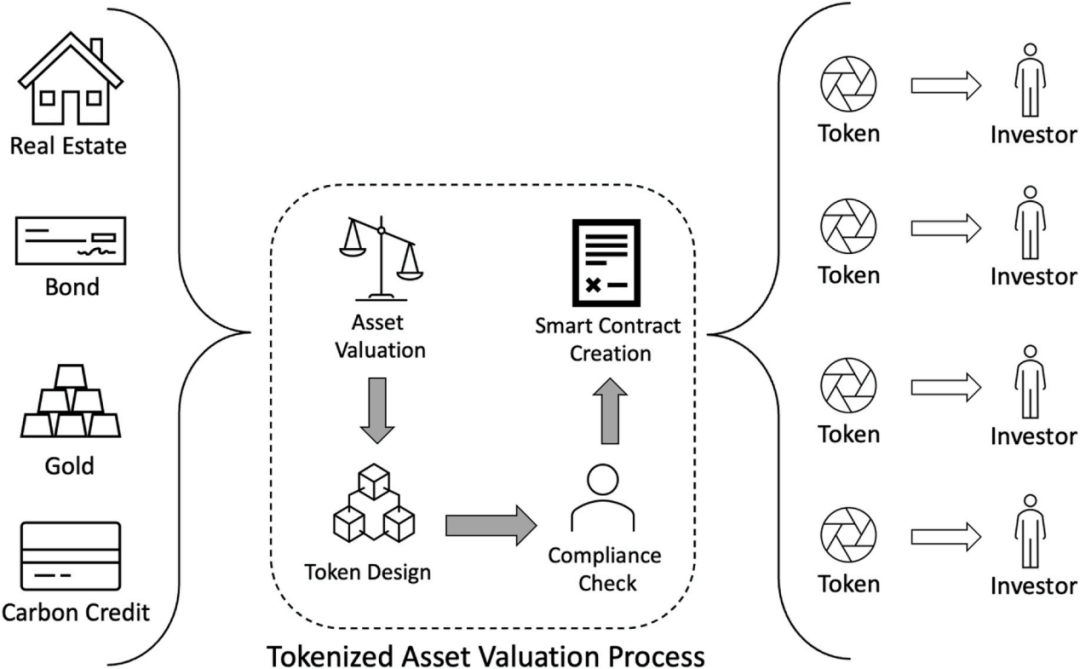
Core Insights - The article discusses how blockchain technology is reshaping traditional asset management through asset tokenization, highlighting its potential to enhance transaction efficiency and create value while also presenting new challenges in governance, risk distribution, and market trust [1][2]. Group 1: Asset Tokenization Overview - Asset tokenization refers to converting physical or digital assets into blockchain-based tokens, enabling trading and management on decentralized platforms, which alters liquidity structures and significantly reduces costs and time delays associated with traditional transactions [2][3]. - The motivation behind tokenization is to enhance asset liquidity, lower investment barriers, and promote more effective resource allocation [3]. Group 2: Transaction Cost Theory (TCT) and Tokenization - Transaction Cost Theory (TCT) provides a framework for analyzing cost structures in economic exchanges, indicating that traditional markets often have high transaction costs due to information asymmetry and imperfect contract enforcement [5]. - Tokenization reduces these costs through automation via blockchain and smart contracts, enhancing market efficiency, but it also raises concerns about governance and regulatory challenges in decentralized environments [5]. Group 3: Methodology - The research involved four case studies representing different asset classes: real estate, gold, bonds, and carbon credits, utilizing semi-structured interviews with 30 participants from various roles to gather data on transaction efficiency, value creation, governance, and market trust [6]. Group 4: Findings on Transaction Mechanisms - Tokenization significantly impacts transaction mechanisms by eliminating intermediaries and reducing costs, as seen in real estate where smart contracts facilitate direct ownership transfers, cutting down on time and fees [8]. - However, the removal of intermediaries introduces challenges in dispute resolution and error handling, potentially undermining investor confidence [8]. Group 5: Access and Ownership - Tokenization lowers investment barriers for high-value assets through fractional ownership, allowing smaller investors to participate in markets previously inaccessible, thus democratizing investment opportunities [9]. - It also enhances trading flexibility for traditionally illiquid assets, as demonstrated in the carbon credit market, where real-time trading is made possible [9]. Group 6: Governance and Oversight - Tokenization promotes decentralized governance, allowing token holders to participate in key decisions, which theoretically reduces agency costs and single points of failure [10]. - However, decentralized governance faces challenges in coordination efficiency and compliance, particularly across different regulatory jurisdictions [10]. Group 7: Compliance and Trust - The immutability and transparency of blockchain are seen as tools to enhance market trust, providing reliable transaction records and preventing fraud [12]. - Nonetheless, the rigidity of blockchain can limit the system's ability to respond to errors or market manipulation, potentially harming long-term trust [12]. Group 8: Discussion on Efficiency and Value Creation - Tokenization enhances transaction efficiency by eliminating intermediaries and lowering costs, with significant implications for various asset classes, particularly in real estate [15]. - It creates value by enabling broader access to previously inaccessible asset classes, although market volatility and security vulnerabilities may offset theoretical benefits [15]. Group 9: Decentralization and Risk Distribution - While decentralization improves efficiency and inclusivity, it complicates risk distribution and trust mechanisms, as the absence of intermediaries can increase system vulnerability to errors and fraud [16]. - Decentralized governance may be less efficient due to participant interest divergence and high coordination costs, while blockchain's transparency can limit flexibility in addressing market manipulation [16].
Nearly Half Of Gen Z Lives With Their Parents To Save Money — Here's How They're Cutting Costs Everywhere Else
Yahoo Finance· 2025-11-27 21:30
Core Insights - Nearly 50% of Gen Z lives with their parents to save money, indicating a trend towards multifamily living arrangements [1] - Approximately 40% of Gen Z engages in side gigs and freelance work to supplement their income, reflecting a proactive approach to financial stability [2] - A significant 64% of Gen Z regularly considers their financial future, suggesting a strong inclination towards financial planning and income generation through side hustles [3] Spending Habits - Only 26% of Gen Z adheres to a strict budget for vacations, while 43% find a balance between spending and saving for travel [4] - Gen Z shows a preference for experience-based purchases, with a focus on catching up on missed experiences post-pandemic [5] - Thrifting is prevalent among Gen Z, with 58% combining new clothing with secondhand items, indicating a shift towards sustainable consumption [6] Financial Consciousness - The findings from the Affirm survey highlight that Gen Z is financially conscious, with almost half avoiding credit cards and preferring debit cards for spending [7] - 37% of Gen Z actively maintain budgets, demonstrating a commitment to managing their finances effectively [7]