仓储式会员超市

Search documents
山姆外卖员的一天
虎嗅APP· 2025-11-05 13:25
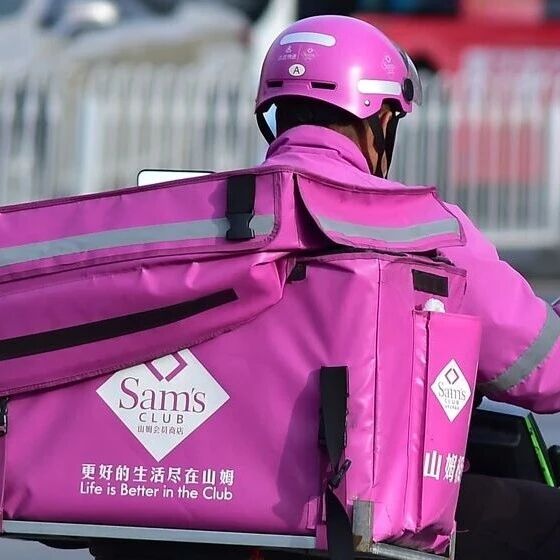
Core Viewpoint - The article provides a narrative of a day in the life of a delivery worker for Sam's, highlighting the challenges, experiences, and emotional aspects of the job, while also reflecting on the broader implications of gig economy work in urban settings [4][6]. Group 1: Daily Routine and Work Environment - The delivery worker starts the day early, emphasizing the importance of clocking in early to secure orders and maximize delivery opportunities [7][8]. - The work environment is described as competitive, with riders needing to navigate traffic and adhere to delivery schedules while managing the physical demands of the job [10][12]. - The article illustrates the camaraderie among delivery workers, as they share experiences and strategies to cope with the pressures of their roles [11][16]. Group 2: Challenges Faced - Delivery workers encounter various challenges, including navigating complex urban environments, dealing with customer complaints, and managing heavy loads [18][20]. - The narrative highlights the physical toll of the job, with workers often carrying heavy items up multiple flights of stairs, which can lead to exhaustion and frustration [36][40]. - The pressure to meet delivery deadlines is a recurring theme, with workers facing penalties for late deliveries, which adds to the stress of the job [44][46]. Group 3: Customer Interactions - Customer interactions can be both positive and negative, with some customers expressing understanding and appreciation, while others may react harshly to delays [18][49]. - The article emphasizes the emotional labor involved in maintaining customer satisfaction, as delivery workers often have to apologize and negotiate with customers over delivery issues [18][50]. - The importance of communication with customers is highlighted, as timely updates can help mitigate complaints and improve customer relations [44][58]. Group 4: Insights on the Gig Economy - The narrative reflects on the broader implications of gig work, including the lack of job security and benefits for delivery workers, which is a common issue in the gig economy [4][6]. - The article suggests that while gig work offers flexibility, it also comes with significant challenges that can impact workers' well-being and financial stability [4][20]. - The experiences shared in the article serve as a microcosm of the gig economy, illustrating the complexities and realities faced by workers in this sector [4][6].

山姆“变阵”与“扩张”
3 6 Ke· 2025-06-05 23:34
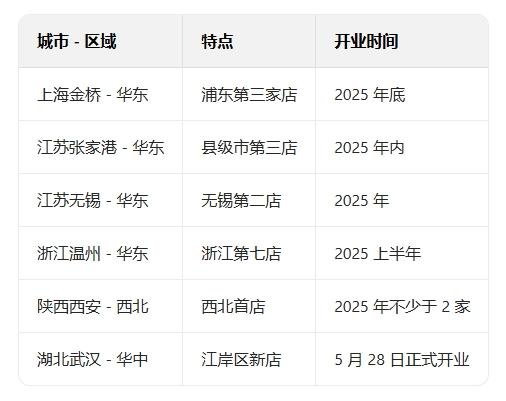
Core Insights - Sam's Club is undergoing a significant organizational restructuring, increasing its regions from six to seven, with the addition of Jiangsu and Zhejiang, while eliminating the original Eastern region. This change reflects a new phase of "scale efficiency" under the leadership of Jane Ewing, who has been in position for only 100 days [1][4]. Expansion Strategy - Sam's Club is rapidly expanding, with plans to open 11 new stores in 2025, surpassing the original target of eight. By June, six new stores had already opened, bringing the total to 56 nationwide. The expansion is heavily concentrated in the East China region, where 70% of the new stores are planned [2][4]. - The expansion strategy focuses on "high net worth sinking" into county-level markets, targeting affluent areas rather than just first-tier cities. For instance, Zhangjiagang, with a projected GDP per capita of 218,000 yuan (approximately $31,000) in 2024, exemplifies this approach [4][12]. Store Distribution and Characteristics - The planned new store openings include: - Shanghai Jinqiao - Third store in Pudong, opening by the end of 2025 - Jiangsu Zhangjiagang - Third store in a county-level city, opening in 2025 - Jiangsu Wuxi - Second store in Wuxi, opening in 2025 - Zhejiang Wenzhou - Seventh store in Zhejiang, opening in the first half of 2025 - Shaanxi Xi'an - First store in Northwest China, with at least two stores planned for 2025 - Hubei Wuhan - New store in Jiang'an District, opened on May 28 [3][4]. Organizational Restructuring - The restructuring into seven regions is seen as a crucial step towards "efficiency-driven" management. This change aims to enhance local competition and organizational vitality, particularly in the densely populated East China region, which houses nearly 40% of Sam's stores [5][12]. Performance and Operational Efficiency - Sam's Club is projected to exceed 100 billion yuan in sales in 2024, with top-performing stores achieving annual sales of 3.67 billion yuan, significantly outperforming traditional hypermarkets [6][12]. - The company's unique growth model is supported by three core engines: product selection, rapid delivery through front warehouses, and strong member trust. The product strategy involves a streamlined SKU count of around 4,000, with a focus on high-quality, exclusive items [6][8][11]. Supply Chain and Delivery Network - The integration of front warehouses allows for over 50% of sales to come from online channels, with 80% of orders delivered within an hour. This efficient delivery network is crucial for member acquisition and retention [10][11]. - The "first warehouse, then store" model has been validated in cities like Hefei, where online sales began before the physical store opened, demonstrating the effectiveness of this strategy [10][11]. Member Engagement and Trust - Membership revenue grew by 35% during the 2025 Spring Festival sales season, with average annual spending per member exceeding 10,000 yuan and a renewal rate of 92%. This high level of trust among members is a significant competitive advantage for Sam's Club [11][12].