低空旅游业

Search documents
两部门发文促进文旅与民航业融合发展
Zheng Quan Ri Bao· 2025-12-03 16:26
Core Insights - The Ministry of Culture and Tourism and the Civil Aviation Administration of China jointly issued the "Action Plan for the Integrated Development of Culture, Tourism, and Civil Aviation," aiming for significant improvements in tourism services and deeper integration by 2027 [1] Group 1: Action Plan Objectives - The Action Plan outlines four main areas: enhancing tourism service levels, optimizing travel routes and facilities, cultivating new integrated products and scenarios, and creating a favorable environment for integrated development [2] - It proposes 15 specific measures to achieve these objectives, including encouraging airlines to offer multi-destination packages and promoting collaboration among various tourism-related entities [2][3] Group 2: Low-altitude Tourism Development - The Action Plan emphasizes the regulated development of low-altitude tourism, advocating for local governments to establish joint regulatory mechanisms and support qualified enterprises in offering low-altitude tourism projects [3] - Low-altitude tourism is seen as a key driver for the transformation and upgrading of the cultural tourism industry, with significant market potential expected to be released following the implementation of the Action Plan [3] Group 3: Enhancing Inbound Tourism - The Action Plan aims to improve the convenience of inbound tourism by implementing policies that facilitate entry for foreign tourists and enhancing services at major airports [4] - It encourages the expansion of direct flights from key source countries and the development of diverse travel products to meet the varied needs of inbound tourists [4] Group 4: Policy Synergy and Market Growth - The integration of cultural tourism and civil aviation is crucial for breaking down industry barriers and creating a collaborative mechanism for demand matching, product co-creation, and data sharing [5] - Recent trends indicate a resurgence in inbound tourism, with a recovery rate projected at 123% by 2025, significantly surpassing global averages, driven by visa facilitation and improved payment environments [6][7]
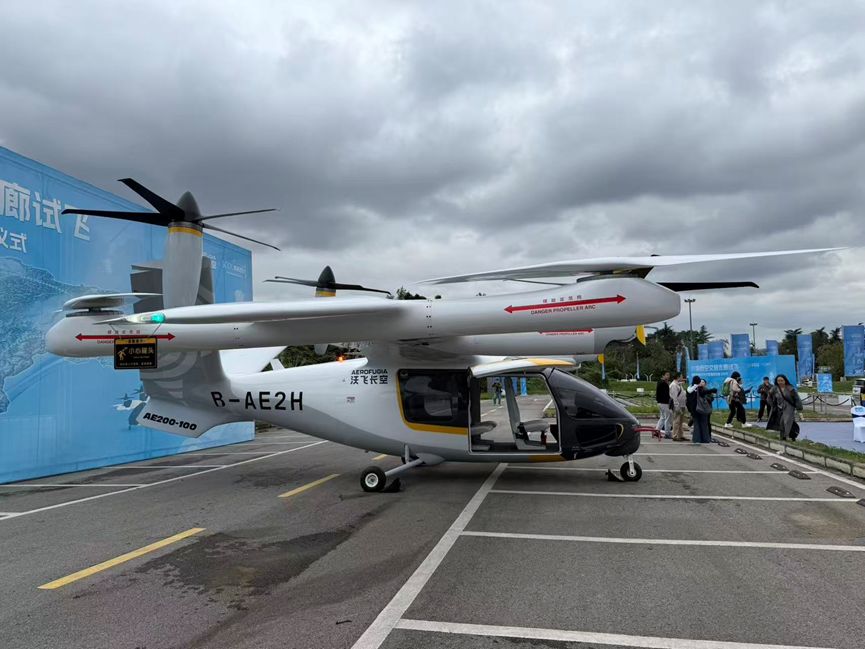
打“飞的”串着玩!沃飞长空熊猫专线首飞 低空文旅走廊打造巴蜀“天际任意门”
Mei Ri Jing Ji Xin Wen· 2025-10-21 14:53
Core Insights - The launch of the "Panda Special Line" marks the beginning of the "Chuan-Yu Low-altitude Cultural Tourism Corridor" trial flight activities, showcasing the potential of low-altitude tourism in transforming traditional travel experiences [1][2] Group 1: Low-altitude Tourism Development - The trial flight aims to address the challenge of connecting scenic spots efficiently, enabling point-to-point travel and validating the integrated "transportation + sightseeing" model [2] - The AE200 electric vertical takeoff and landing (eVTOL) aircraft will eventually replace traditional helicopters, enhancing the travel experience by reducing travel time significantly [1][4] Group 2: Future Travel Experience - The eVTOL will allow tourists to travel from the Dujiangyan Panda Valley to the Chengdu Research Base of Giant Panda Breeding in just 17 minutes, and to Yaan Bifengxia in half an hour, enabling a comprehensive exploration of panda habitats within half a day [4] - The noise level of eVTOL flights at 300 meters is only 48 decibels, which is lower than typical environmental noise, ensuring minimal disturbance to wildlife [5] Group 3: Collaborative Efforts and Infrastructure - The successful launch of the "Panda Base - Dujiangyan" flight signifies a collaborative effort among tourism, transportation, and airspace management sectors to overcome systemic challenges in airspace usage and route approval [6] - Various local tourism departments have signed cooperation agreements to build the corridor, share resources, and develop collaboratively [6] Group 4: Commercial Viability and Cost Efficiency - The initial operational costs of eVTOL are projected to be 1/5 to 1/3 of traditional helicopters, with potential price reductions as orders increase [6] - eVTOL's vertical takeoff capability allows for smaller landing areas, requiring only minimal infrastructure, which significantly lowers the entry barrier for operations [6] - The cost of eVTOL travel is expected to be 2 to 3 times that of ground taxi services, offering a compelling value proposition by drastically reducing travel time [7]