
充电桩运维

Search documents
新春走基层丨护航“满电”出行路
Yang Guang Wang· 2026-02-06 06:55
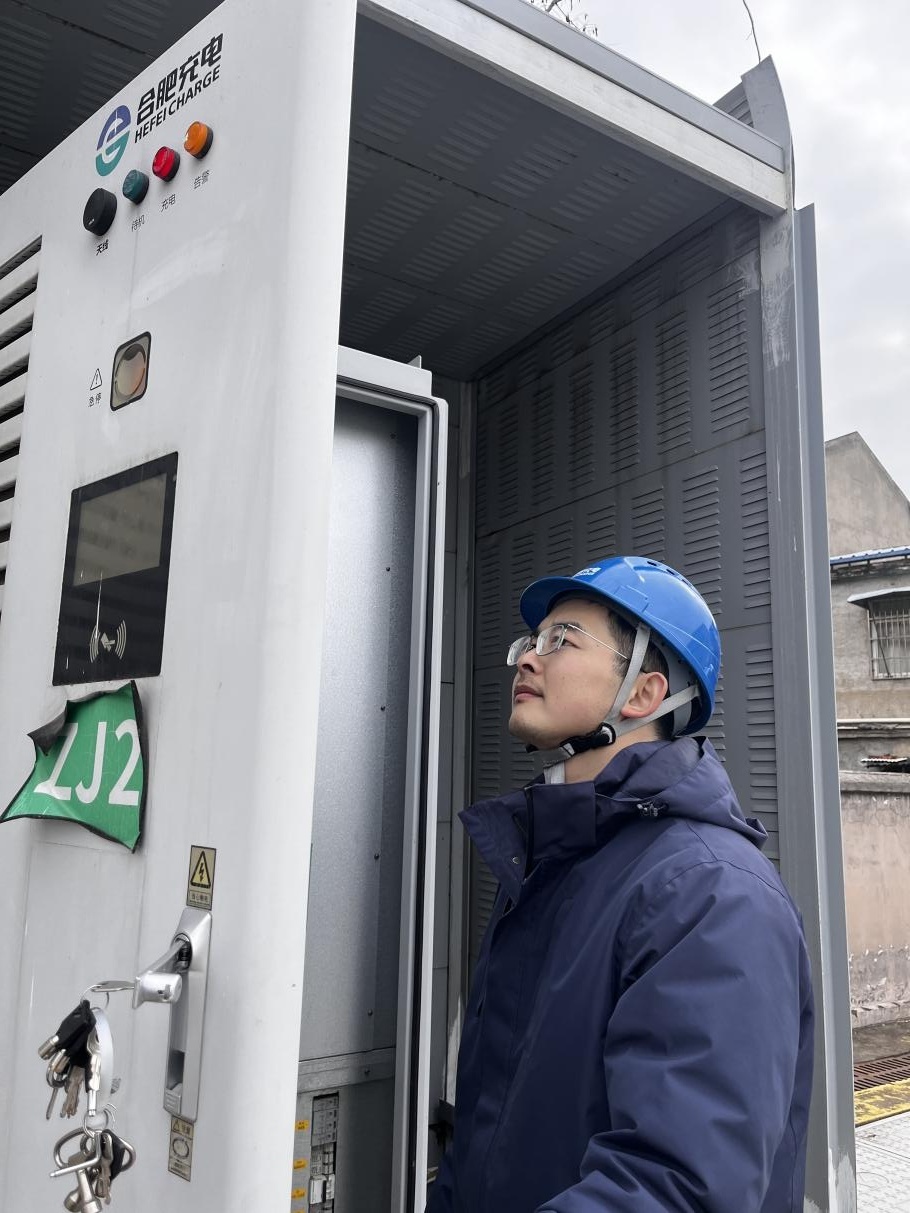
Core Insights - In 2025, China's new energy vehicle (NEV) production and sales are expected to reach a historical high, with the current ownership of NEVs at 43.97 million units, highlighting the increasing user base and the importance of charging infrastructure as a "livelihood hub" for public transportation [1][8] Group 1: Industry Overview - Hefei has become the leading city in NEV production in China, with over 300,000 charging facilities creating a 2-kilometer service circle for charging [1][8] - The surge in NEV ownership necessitates efficient operation and maintenance of charging stations, especially during peak travel periods like the Spring Festival [1][8] Group 2: Operational Insights - Charging station maintenance engineers, referred to as "general practitioners," play a crucial role in ensuring the smooth operation of charging facilities, conducting inspections and repairs [1][4] - Engineers like Li Wenjie are responsible for troubleshooting both software and hardware issues, with common problems including equipment disconnection and charging gun malfunctions [4][5] Group 3: Seasonal Challenges - During the Spring Festival, passenger traffic at major hubs like Hefei South Station is expected to peak, with an estimated 3.87 million travelers and daily peaks of 115,000 departures [3] - Maintenance schedules are strategically planned to avoid peak charging times, ensuring minimal disruption to users [4][5] Group 4: Technological Advancements - The charging infrastructure is continuously upgraded to keep pace with advancements in NEV technology, with charging power increasing from 15KW to as high as 600KW [5][8] - A city-level charging operation management platform has been established to enhance user convenience and optimize charging resource allocation [8]

瞄准新能源风口:充电桩运维市场机遇与在线智能产业人才培训
Jiang Nan Shi Bao· 2026-01-19 07:14
Group 1 - The core viewpoint is that the Chinese electric vehicle (EV) industry is transitioning from a "policy-driven" model to a "market-driven" model, leading to a significant transformation in the charging infrastructure sector, particularly in the operation and maintenance of charging stations, which is becoming a key value segment worth billions [1][2] - Charging station operation and maintenance (O&M) is essential for ensuring user experience, operator profitability, and grid safety, and is now recognized as a critical area within the new energy industry chain [1][2] - The development of charging station O&M is driven by three main factors: policy changes focusing on operational quality assessments, a growing market with over 16 million public charging stations, and technological advancements such as IoT and AI that enhance maintenance practices [2] Group 2 - The industry faces significant challenges, including a shortage of skilled professionals, lack of unified technical standards, slow fault response times, and unclear responsibilities, which hinder high-quality development [2] - "Online Intelligent" has launched a systematic training solution for charging station O&M engineers, targeting individuals with backgrounds in electrical power, new energy, traditional electrical work, and veterans, offering a three-tiered curriculum to meet diverse needs [3] - The training program emphasizes practical skills and includes a certification from the Ministry of Industry and Information Technology, which serves as a national endorsement of professional capability and facilitates entry into the charging O&M field [3][4] Group 3 - The quality of charging infrastructure operations will be a decisive factor in the competitive landscape of the EV industry, making certified professionals in charging station O&M highly sought after [4] - As industry standards improve, certified O&M engineers will become a rare resource, presenting unprecedented career development opportunities in the new energy sector [4]