公益医疗

Search documents
嫣然医院风波:公益医疗如何“将爱进行到底”
21世纪经济报道· 2026-01-23 13:23
Core Viewpoint - The article discusses the challenges faced by the Yanran Hospital, a charity hospital founded by Li Yapeng, which has provided free surgeries for over 10,000 children with cleft lips over 14 years but is now facing relocation due to inability to pay rent. It highlights the broader issues of social resource allocation, sustainability of public welfare, and resilience of the healthcare system [1]. Group 1: Medical and Economic Context - Cleft lip and palate, commonly known as "rabbit lip," affects approximately 1 in every 600 to 1,000 newborns. About 80% of patients experience middle ear dysfunction, and 60% have speech issues, with additional dental and occlusal problems being common. The psychological and social costs are significant, as adolescents with cleft lip face bullying at three times the rate of their peers, and adults may encounter hidden discrimination in social and professional settings [1]. - The ideal treatment process spans over a decade, starting from lip repair at 3-6 months to palate repair before the age of one, followed by bone grafting, orthodontics, speech therapy, and psychological support. Each step has strict timelines to maximize the child's reintegration into society [1]. Group 2: Role of Charity Organizations - The cost of a single cleft lip repair surgery is approximately 50,000 yuan, with additional burdens from ongoing treatment, travel, accommodation, and lost wages for parents. This creates a significant financial gap that charity organizations like Yanran need to fill, positioning them as "providers of social cost solutions" that utilize public funds to purchase professional medical services for underprivileged families [2]. - Despite the apparent effectiveness of this business model, Yanran Hospital faces operational challenges due to the legal requirement for funds to be used exclusively for patient care, preventing them from covering daily operational costs such as rent and salaries [2]. Group 3: Future Directions for Charity Healthcare - The public discourse surrounding Yanran Hospital's situation has opened discussions on the legal relationship between funds and hospitals, corporate donation processes, and liability issues. This indicates a shift towards a more rational and sustainable framework for public welfare [3]. - Future solutions may involve innovative resource inputs, such as corporate donations of free space, which could alleviate fixed cost pressures on hospitals. The charity healthcare sector may need to explore a "light asset model" by collaborating with existing medical institutions to reduce fixed costs and improve resource efficiency [3].

李亚鹏7天涨粉197万,直播提现29万元全捐了,一文详解唇腭裂
21世纪经济报道· 2026-01-21 05:19
Core Viewpoint - The article discusses the operational challenges faced by the Yanran Angel Children's Hospital due to unpaid rent, which has led to public concern and increased donations to the Yanran Angel Foundation [1][8]. Group 1: Hospital and Foundation Operations - Yanran Angel Children's Hospital is facing potential closure due to unpaid rent, prompting public donations to support its operations [1]. - The Yanran Angel Foundation, established to assist children with cleft lip and palate, is legally separate from the hospital and cannot publicly solicit donations [12]. - The hospital continues to operate normally, providing cleft lip and palate surgeries, with ongoing support from the foundation [8][12]. Group 2: Cleft Lip and Palate Awareness - Cleft lip and palate, known as "harelip," affects approximately 1 in every 600 to 1000 newborns, leading to various health and social challenges [9]. - The psychological impact on patients is significant, with many facing bullying and discrimination throughout their lives [10]. - The article highlights the long journey of treatment for cleft lip and palate, which often spans from infancy to adulthood, requiring multiple surgeries and ongoing rehabilitation [11]. Group 3: Community Response and Support - The public response to the hospital's situation has been overwhelmingly positive, with many individuals contributing donations, reflecting a strong community support network [8][12]. - Personal stories of patients like Pengpeng, who received free surgery through the foundation, illustrate the hospital's impact on families in need [7][12]. - The article emphasizes the importance of continued public awareness and support for cleft lip and palate treatment, showcasing a shift towards a more inclusive understanding of these conditions [15][18].

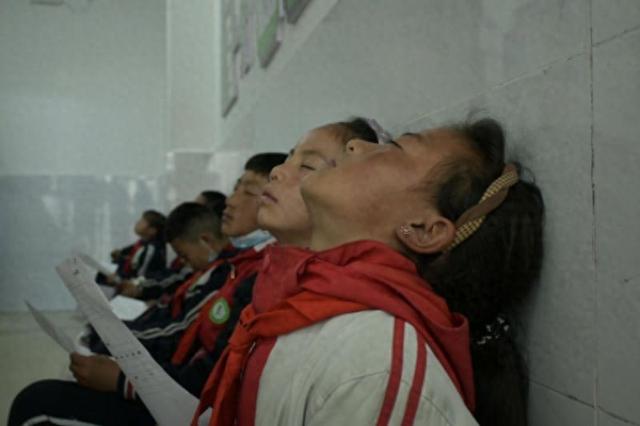
特稿|翻越4500米高原,为眼睛开路
Hua Xia Shi Bao· 2025-08-05 02:04
Core Viewpoint - The "Eye Brightness and Peace of Mind" project aims to improve eye health among children in Tibet through early screening, diagnosis, and treatment, addressing the lack of medical resources and awareness in the region [4][20][46]. Group 1: Project Overview - The project was initiated in 2022 by the Beijing Bethune Public Welfare Foundation, Beijing Qi Anxin Public Welfare Foundation, and experts from Peking University, focusing on enhancing the diagnostic capabilities for childhood blindness and low vision in Tibet [4][20]. - As of this summer, the project has completed its fourth year, conducting screenings and training in Yadong County, Tibet, with a total of nearly 2,500 children screened over two years [5][20]. Group 2: Screening and Findings - The screening revealed that the most common eye issues among 1,282 students aged 3-18 were refractive errors, with myopia being the most prevalent, reaching up to 1300 degrees in some cases [11][20]. - Other detected conditions included strabismus, conjunctivitis, and congenital cataracts, highlighting the urgent need for eye health interventions in the region [11][20]. Group 3: Training and Capacity Building - The project emphasizes training local doctors to build a sustainable healthcare workforce capable of addressing children's eye health needs, with a focus on practical training and remote guidance [30][41]. - A comprehensive training system has been established, combining theoretical lessons with hands-on practice to enhance local medical professionals' skills in diagnosing and treating common eye conditions [30][41]. Group 4: Challenges and Solutions - The project faces challenges such as a lack of medical equipment, insufficient local expertise, and low awareness among parents regarding children's eye health [18][46]. - Solutions include providing advanced screening equipment, offering specialized training for local healthcare providers, and raising awareness about the importance of eye health among families [24][30][46]. Group 5: Future Directions - The project aims to create a self-sustaining model for eye health care in Tibet, with plans to establish a tiered diagnostic and treatment system that can operate independently after the project's completion [39][46]. - Continuous efforts will be made to ensure that local healthcare providers are equipped with the necessary skills and resources to maintain eye health services for children in the region [39][48].