
化工中试

Search documents
浙江大学衢州研究院高端化学品中试平台:科技成果“孵化器” 行业生态“建设者”
Zhong Guo Hua Gong Bao· 2026-01-05 03:07
Core Viewpoint - The Ministry of Industry and Information Technology has announced the first batch of national-level manufacturing pilot platforms, with a notable seven platforms in the petrochemical sector, highlighting their role in the efficient transformation of major scientific achievements and supporting high-quality development in manufacturing [1] Group 1: Platform Overview - The Zhejiang University Quzhou Research Institute's high-end chemical pilot platform has been recognized as a national benchmark, focusing on innovative mechanisms, safe and efficient operations, and deep industry integration [1][2] - The platform aims to address the urgent needs of the local and national chemical industry, providing a comprehensive service that includes pilot research, virtual training, and analysis testing [2] Group 2: Innovative Mechanisms - The platform has developed a replicable and promotable innovative management model that simplifies pre-approval processes while enhancing supervision during and after project implementation [3] - A comprehensive safety management system has been established, ensuring zero safety incidents over three years, with a unique "1+2+6+N" safety framework [3] Group 3: Commercial Confidentiality - The platform has implemented a robust multi-layered confidentiality protection system, maintaining zero leakage incidents and fostering strong trust relationships with numerous partner enterprises [4] Group 4: Achievements and Impact - Since its inception, the platform has hosted 58 pilot projects, with 45 completed, ranking among the top in the country for both project numbers and completion rates [5] - The platform has successfully facilitated the industrialization of 13 projects, expected to generate over 3.7 billion yuan in investments and create more than 9 billion yuan in output value [6] Group 5: Industry Ecosystem Development - The platform has initiated the first national chemical pilot innovation development alliance, uniting over 40 member units to promote resource sharing and standardization across the country [7] - It has extended its expertise into public service, collaborating with local authorities to establish key technical support centers for public safety and emergency response [7] Group 6: Future Outlook - The Zhejiang University Quzhou Research Institute's pilot platform is committed to bridging the gap in the transformation of scientific achievements into production, aiming to continue its impactful journey from laboratories to production lines [8]
化工中试基地:既要“建得起” 更要“用得好”
Zhong Guo Hua Gong Bao· 2025-12-22 03:25
Core Viewpoint - The construction and operation of chemical pilot bases in China face challenges such as insufficient funding, unbalanced income and expenditure, and inadequate project management systems, necessitating a shift towards diversified operational models and scientific management to ensure both construction and effective utilization [1][2]. Group 1: Funding Challenges - Insufficient funding is a common issue for chemical pilot bases, which necessitates exploring diverse and flexible operational models that allow for shared investment, risk, and benefits [2]. - Various operational models have been explored, including government-led, enterprise-led, and research institution-led approaches, which have provided valuable experiences in achieving sustainable funding [2]. - Enhancing the policy framework, including financial support and infrastructure development, is crucial for addressing funding challenges [2]. Group 2: Effective Utilization - The core value of chemical pilot bases lies in their effective utilization, which requires precise positioning and scientific operation to meet regional industrial needs and enhance conversion efficiency [3]. - Optimizing project approval processes and leveraging technologies like AI and big data can improve operational efficiency and management standards [3]. - Successful examples, such as the Zhejiang Shangyu New Materials Pilot Platform, demonstrate effective utilization through innovative operational models [4]. Group 3: Sustainable Development - Achieving sustainable development is a primary goal for chemical pilot bases, with a focus on transitioning from short-term operations to long-term empowerment [6]. - Many pilot bases struggle to achieve financial balance without government subsidies, highlighting the need for self-sustaining operational models [6]. - Transitioning from a "landlord" model to a "shareholder" model, where pilot bases generate revenue through technology services and equity stakes, is essential for sustainability [6][7]. Group 4: Innovative Approaches - The Ningdong pilot base is exploring sustainable development through joint research and technology incubation, aiming to create a positive cycle of technology and industrialization [7]. - The Anhui Huabei pilot base is focusing on equity investment as a core profit direction, seeking to balance rental income with project value [7]. - The introduction of an "insurance bottom line" model by state-owned enterprises aims to mitigate investment risks while promoting project advancement [8]. Group 5: Future Outlook - The number of chemical pilot bases in China is expected to experience explosive growth in the next five years, with successful bases encouraged to share management practices and talent to maximize their value [8].
中试基地发展需兼顾安全与可持续——2025第二届化工中试基地创新发展促进会观点集萃
Zhong Guo Hua Gong Bao· 2025-08-27 02:43
Group 1 - The development of chemical pilot bases in China is uneven, with nearly 70 bases established, but many lack technical services and have unclear policies and safety management standards [3] - The construction of pilot bases should balance public welfare and commercial needs, focusing on shared service platforms for small and medium-sized enterprises and innovation teams [3] - The first industry standard for pilot projects, the "Guidelines for Safety Risk Control of Chemical Pilot Projects," has been established to enhance safety management [5] Group 2 - The implementation of the national standard "Guidelines for the Construction of Chemical Park Pilot Bases" aims to improve the establishment of pilot bases [7] - There are challenges in the pilot research process, including a lack of effective management systems and high costs, which hinder the overall conversion rate of scientific achievements [9] - The "Ganzhi Hui" innovation park in Lanzhou New Area aims to create a full-chain service system for the conversion of research and development to industrialization [11] Group 3 - Modular pilot technology developed by Donggeng Chemical addresses key bottlenecks in the chemical materials industry, achieving high single-pass yields [13] - Continuous flow reactors developed by Feili Chemical enhance safety levels in pilot bases, with automated features for emergency situations [15] - The rental of specialized combustion equipment simplifies operational processes for pilot projects, reducing costs and addressing temporary emission needs [17] Group 4 - The Ningdong pilot base aims to create a replicable and sustainable operational model, facilitating the entire chain from concept validation to industrialization [19] - The "Insurance-Loan Linkage" model introduced by Guoke New Materials provides a risk-sharing mechanism for pilot projects, facilitating financing [21] - The Shandong Green Chemical and New Materials Pilot Platform promotes the integration of innovation, industry, finance, and talent [23] Group 5 - The Dalian Changxing Island pilot base explores sustainable operational models by transitioning from landlord to shareholder through project profit-sharing [25] - There is a need for improved policies regarding the sales and application of pilot products to prevent waste and enhance market validation [27] - Recommendations for safety production regulations and standards for pilot projects are necessary to address uncertainties and enhance profitability [29]

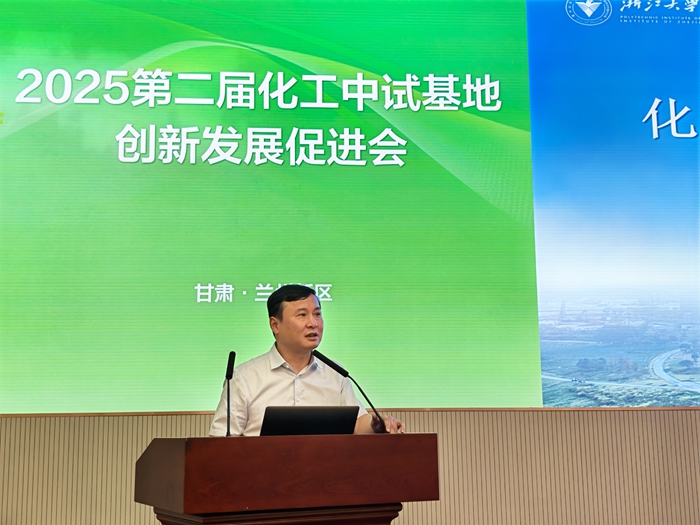
第二届化工中试基地创新发展促进会召开
Zhong Guo Hua Gong Bao· 2025-08-25 06:13
Group 1 - The construction of chemical pilot test bases is crucial for integrating technological and industrial innovation, requiring enhanced collaboration across various sectors, safety standards, advanced processes, and financial services for sustainable high-quality development [1] - There are nearly 70 pilot test bases in China, but their development is uneven, necessitating collaborative efforts to improve policies and provide diverse financial services, build a multidisciplinary talent pool, balance public and commercial needs, and establish robust safety management and intellectual property systems [1] - The primary responsibility for safety in pilot test projects lies with the project unit, emphasizing the need for a comprehensive standard system covering the entire process of chemical pilot testing [1] Group 2 - The pilot testing process in the chemical industry is unique, requiring flexible and supportive policies due to the many uncertainties and the need for optimization based on actual conditions [2] - The "Ganzhi Hui" innovation park in Lanzhou New Area aims to create a full-chain transformation mechanism from R&D to pilot testing to industrialization, establishing a supportive system for efficient research outcome transformation [2] - A "guarantee-loan linkage" model has been proposed to mitigate economic risks associated with project failures in pilot test bases, providing loans and financing services through partnerships with financial companies [2] Group 3 - Representatives from various companies shared cases of advanced technological processes empowering pilot test bases during the conference, highlighting the importance of collaboration and innovation in the sector [3]
化工中试基地建设亟待多要素赋能
Zhong Guo Hua Gong Bao· 2025-08-25 02:02
Core Insights - The construction of chemical pilot bases is crucial for integrating technological and industrial innovation, requiring enhanced collaboration across various sectors, environmental standards, advanced processes, and financial services to promote sustainable and high-quality development [1] Group 1: Industry Needs and Standards - The core demand for pilot bases in the chemical industry is the establishment of shared service platforms, with nearly 70 pilot bases in China exhibiting uneven development [1] - The first national standard for pilot base construction in chemical parks, titled "Guidelines for the Construction of Chemical Park Pilot Bases," emphasizes the importance of pilot testing in reducing R&D costs and improving the conversion rate of scientific achievements [2] Group 2: Policy and Financial Support - A flexible and supportive policy environment is necessary for optimizing pilot research processes, which often involve uncertain factors and require adjustments based on actual conditions [2] - The "Ganzhi Hui" innovation park in Lanzhou New Area aims to create a full-chain achievement transformation mechanism, supporting R&D, pilot testing, and industrialization through shared platforms and funding mechanisms [2] Group 3: Risk Management and Financing - A "guarantee-loan linkage" model has been proposed to mitigate economic risks associated with pilot projects, establishing a risk-sharing mechanism with financial companies to provide loans and financing services [3] - Financial support for pilot projects can include subsidies covering up to 30% of R&D investments, with a maximum of 5 million yuan available for key projects in the Ningdong Energy and Chemical Base [2]