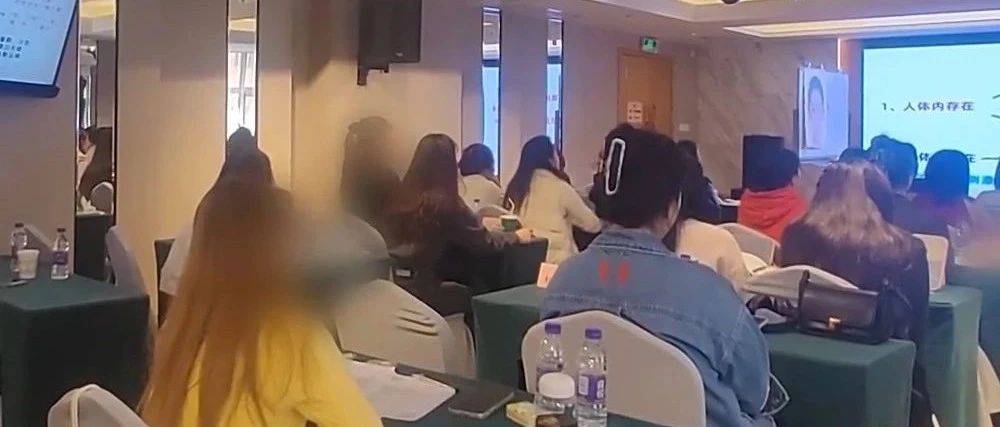
医美培训

Search documents
中国国家卫健委点名“轻医美速成班”:往往存在多种违法行为
Zhong Guo Xin Wen Wang· 2026-02-10 12:33
Core Viewpoint - The National Health Commission of China has raised concerns about "light medical beauty crash courses," highlighting that these programs often involve various illegal activities and mislead consumers through vague qualifications and simplified techniques [1][2] Group 1: Industry Concerns - The rapid growth of the medical beauty industry, particularly in non-surgical procedures like injections and laser treatments, has attracted many consumers, but it has also led to the emergence of unscrupulous businesses exploiting "appearance anxiety" [1] - Illegal activities associated with "light medical beauty crash courses" include unauthorized medical practices, false training, illegal use of medical beauty drugs and devices, and issuing fake training certificates [2] Group 2: Public Advisory - The National Health Commission advises the public to be cautious and not to trust marketing phrases like "three-day crash course in injections" or "zero foundation, learn with confidence," as these can lead to significant health risks [1][2] - It is emphasized that "light medical beauty" procedures must be conducted in qualified medical institutions by licensed medical professionals, and non-medical establishments like beauty salons and nail shops are prohibited from offering these services [1]
记者调查医美速成培训班乱象:“轻医美技师”培训三五天就上岗
Sou Hu Cai Jing· 2025-09-23 05:40
Core Insights - The "light medical beauty" market in China is experiencing rapid growth, with user numbers expected to reach 31.05 million by 2025 and market size projected to exceed 300 billion yuan by 2026 [1] - "Light medical beauty" refers to non-surgical cosmetic procedures, which are marketed as low-risk and quick, but still involve medical practices [1] - There is a concerning trend of unregulated training programs that promise quick mastery of "light medical beauty" techniques, often without proper medical qualifications [2][3][7] Market Growth - The user base for "light medical beauty" is on the rise, with projections indicating significant market expansion in the coming years [1] - The market is characterized by a blend of medical and cosmetic services, leading to potential consumer confusion regarding the risks involved [1] Training and Qualifications - Numerous training institutions offer short courses that claim to teach "light medical beauty" techniques in just three days, often targeting individuals without medical backgrounds [3][5][6] - Many of these institutions provide certificates that lack official recognition, raising concerns about the legitimacy of the training [7][9] - Experts emphasize that practitioners in "light medical beauty" must possess medical qualifications, contrary to claims made by some training providers [9][13] Regulatory Concerns - The lack of stringent regulations and oversight in the "light medical beauty" sector has led to the proliferation of unlicensed practices and training programs [12][16] - Experts recommend enhancing regulatory frameworks and increasing penalties for violations to deter illegal activities in the industry [16][17] - There is a need for better consumer education to help individuals discern legitimate services from fraudulent ones [15][17] Consumer Awareness - Many consumers are misled by the marketing of "light medical beauty" services, often underestimating the associated risks due to aggressive promotional tactics [15] - The blurred lines between medical and cosmetic services complicate consumer understanding and decision-making [15] Recommendations for Improvement - Establishing a formal training system and regulatory oversight for "light medical beauty" practices is essential to ensure safety and efficacy [16][17] - Implementing stricter advertising regulations to prevent misleading claims and ensuring that promotional materials are scientifically accurate [16][17] - Creating a public platform for authentic case studies and outcomes in the "light medical beauty" sector to enhance transparency and accountability [17]
“轻医美技师”培训三五天就上岗,记者调查医美速成培训班乱象
Sou Hu Cai Jing· 2025-09-22 23:35
Core Insights - The "light medical beauty" market in China is experiencing rapid growth, with user numbers expected to reach 31.05 million by 2025 and the market size projected to exceed 300 billion yuan by 2026 [2] - "Light medical beauty" refers to non-surgical cosmetic procedures, which are characterized by flexibility, minimal trauma, short recovery times, and low risks, yet still fall under medical practices [2] - There is a concerning trend of unregulated training institutions offering quick courses that promise to teach "light medical beauty" techniques in just a few days, often without proper medical qualifications [3][4][7] Market Growth - The user base for "light medical beauty" is continuously expanding, contributing to the overall market growth [2] - The market is expected to surpass 300 billion yuan by 2026, indicating a significant opportunity for investment and development in this sector [2] Training Institutions - Numerous training institutions are advertising short courses that claim to enable individuals with no medical background to perform "light medical beauty" procedures [3][4] - These institutions often promote a "quick and easy" approach to learning, with some courses lasting only three days and covering various techniques [4][6] - Many of these institutions provide certificates that lack proper accreditation, raising concerns about the legitimacy of the training [7] Employment Opportunities - Graduates from these training programs are often encouraged to work as beauty consultants or to refer clients to medical institutions, creating a potential gray market for medical referrals [9] - The training institutions promote a model where individuals can earn significant income through client referrals, even if they do not perform the procedures themselves [9][10] Regulatory Concerns - There is a lack of regulatory oversight in the "light medical beauty" sector, with many practitioners operating without the necessary medical qualifications [8] - Experts emphasize that individuals performing "light medical beauty" procedures should possess medical licenses and be registered with health authorities [8]

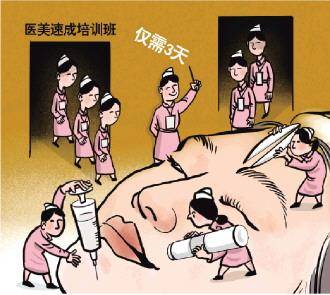
起底推广泛滥的医美速成班:强调结业就能上手或涉嫌非法行医
Sou Hu Cai Jing· 2025-08-16 06:56
Core Viewpoint - The medical beauty industry is experiencing rapid growth driven by the "beauty economy," with numerous training institutions promoting quick training courses for beginners, often misleadingly claiming that participants can quickly become profitable in the field [1][3][12]. Group 1: Industry Practices - Many training institutions falsely advertise themselves as affiliated with "public universities," while they are actually private training companies [3][6]. - Some institutions encourage students to practice on each other, which raises significant safety concerns [4][6]. - The courses often promise quick financial returns, with instructors emphasizing that medical beauty relies on technical skills that can be learned quickly [6][9]. Group 2: Regulatory Environment - In 2023, the State Administration for Market Regulation issued guidelines prohibiting training for individuals without medical qualifications, emphasizing that medical beauty training should only be conducted by accredited institutions [1][12]. - The guidelines also prohibit the use of misleading claims regarding the potential for quick wealth through medical beauty training [12][10]. - Legal experts highlight that engaging in medical beauty practices without the necessary qualifications constitutes illegal medical practice, which can lead to severe legal consequences [11][13]. Group 3: Consumer Awareness - There is a growing concern about the proliferation of "quick training" programs that mislead consumers regarding their ability to practice legally in the medical beauty field [13][14]. - Consumers are advised to be cautious and to choose legitimate medical beauty institutions, as many of these training programs lack proper accreditation and oversight [13][14]. - Social media platforms are identified as key channels for the promotion of these unregulated training programs, and there is a call for stricter monitoring of such content to prevent illegal practices [13][14].

“回家捡起注射器就能干”,日收入无上限……多地查处→
第一财经· 2025-06-30 03:12
Core Viewpoint - The article highlights the alarming rise of illegal medical beauty training programs that promise quick financial success with minimal training, posing significant risks to public health and safety [1][3][4]. Group 1: Illegal Training Programs - Illegal medical beauty training programs are being conducted across multiple cities, with claims of transforming "zero-based" students into practitioners within just three days [2][3]. - Trainers emphasize the potential for high daily earnings in the medical beauty industry, suggesting that procedures can be completed in as little as 10 to 30 minutes, leading to income ranging from hundreds to thousands of yuan per customer [3][4]. Group 2: Training Content and Methods - The training includes theoretical lessons, practical injection techniques, and marketing strategies to attract customers, with a focus on how to handle customer complaints [4][8]. - Trainers openly discuss the risks associated with using unregulated products, such as botulinum toxin, and acknowledge the use of potentially dangerous substitutes [4][5]. Group 3: Marketing and Customer Acquisition - Trainers instruct students on how to market themselves effectively, encouraging them to create a persona that attracts clients, even if they lack formal qualifications [8][9]. - The concept of "packaging oneself" is emphasized, where students are advised to present their training as advanced to gain customer trust [8]. Group 4: Regulatory Violations - The training programs operate without the necessary medical licenses, and trainers provide guidance on how to evade regulatory scrutiny [9][11]. - The article notes that the certificates issued by these programs are essentially worthless in terms of legal compliance, with trainers admitting that the industry often operates without oversight [11][12]. Group 5: Enforcement Actions - Following investigations, regulatory authorities in multiple regions have begun to crack down on these illegal training programs, uncovering unlicensed medical products and unsafe practices [12][13].