
古村落旅游

Search documents
松阳古村落的艺术新生:从“拯救老屋”到山居慢生活
Di Yi Cai Jing· 2025-09-29 06:25
Core Insights - Songyang has created a unique slow-living experience by preserving old houses and developing ancient village tourism, attracting niche audiences and forming a brand effect [1] Group 1: Tourism Development - The ancient village of Chenjiapu in Songyang County is popular among young people from the Yangtze River Delta, offering a blend of cultural and leisure activities [3] - Chenjiapu village has been recognized as a national traditional village and has attracted various cultural projects, enhancing its tourism appeal [5] - The village's average altitude is 750 meters, providing a scenic environment that supports local tourism and hospitality businesses [3][5] Group 2: Cultural Heritage Preservation - Songyang County has initiated a "Save the Old Houses" campaign, protecting over 1,200 traditional buildings and restoring 326 old houses, which has led to innovative cultural and creative developments [8][9] - The county has signed contracts with 50 artists and established 19 studios, promoting local cultural initiatives and enhancing the artistic atmosphere [9] - The preservation of historical sites like the Yanjing Temple Tower and Huang Family Courtyard showcases the region's commitment to maintaining its cultural heritage [11][14] Group 3: Economic Impact - Local residents, particularly women, are benefiting economically from tourism-related jobs, with many earning around 5,000 yuan per month through roles in hospitality [3] - The introduction of social capital and creative talents has revitalized villages like Songzhuang, leading to successful operations of guesthouses and art galleries [8] - The development of new cultural spaces, such as the Wenli Songyang Cultural Exchange Center, is creating new consumption scenarios and enhancing local economic activity [14]


平陆运河风物志㊶丨大芦“三古”韵悠长
Guang Xi Ri Bao· 2025-08-23 02:46
Core Viewpoint - Dalu Village in Lingxian County, Guangxi, is a well-preserved historical village with rich cultural heritage, showcasing ancient architecture and a strong emphasis on education and family values, which has contributed to its sustained prosperity over nearly 500 years [1][4][5] Group 1: Historical Significance - Dalu Village features the largest and most complete collection of Ming and Qing dynasty residences in Guangxi, with a population of over 5,000 and a harmonious coexistence of 15 surnames [1] - The village is known for its "three ancient" elements: ancient houses, ancient trees, and ancient couplets, which reflect its historical depth and cultural significance [1][2] Group 2: Architectural Features - The village includes nine ancestral houses and one ancestral hall built by the Lao family over 350 years, surrounded by artificial lakes that enhance the aesthetic and functional aspects of the residences [2] - The architectural layout of the ancestral homes, such as the Huoe Ear Building, reflects strict social norms and cultural values, emphasizing the importance of hierarchy and propriety in daily life [1][4] Group 3: Cultural Heritage - Dalu Village is renowned for its 305 pairs of couplets, earning it the title of "the first village of couplets in Guangxi," which encapsulates the wisdom and teachings of the local scholars over centuries [4] - The tradition of rewriting couplets during festivals fosters a sense of community and continuity of cultural values among the villagers [4] Group 4: Modern Developments - In 2024, Lingxian County will be recognized as a national traditional village protection demonstration area, with Dalu Village set to become a cultural exchange hub along the Belt and Road Initiative [5] - Plans for the future include the establishment of a digital museum, guesthouses, and an ASEAN traditional village exchange center, aiming to enhance cultural dialogue and tourism [5]
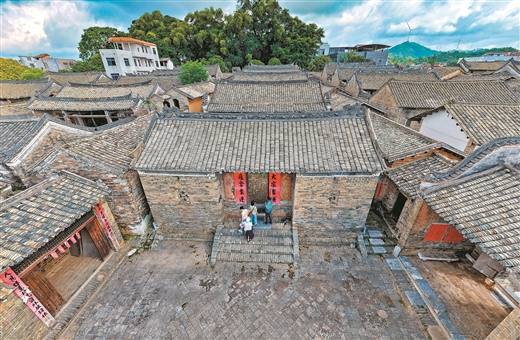
云浮市云城区腰古镇水东村保护规划获批 保护与发展并重 古村落焕发新生
Nan Fang Ri Bao Wang Luo Ban· 2025-07-30 07:55
Core Viewpoint - The approval of the protection plan for historical and cultural sites in Guangdong, including the ancient village of Water East, marks a significant step in preserving cultural heritage and promoting sustainable development in the region [1] Planning - The new protection plan emphasizes not only the preservation of physical structures but also the inclusion of intangible cultural heritage, addressing the limitations of the previous 2015 plan [2] - The plan outlines a clear protection area of approximately 12.41 hectares, with a core zone of about 3.92 hectares that includes significant cultural sites [2] - Immediate actions include cleaning up 156 areas and restoring 23 ancient buildings, while long-term goals focus on integrating cultural tourism elements to foster economic development [2] Protection - In 2024, a budget of 3.01 million yuan from a central enterprise and 80,000 yuan from the village committee will be allocated for the restoration of ancient buildings [4] - The protection strategy involves a dual approach: government-led funding for cultural preservation and market-driven initiatives to develop cultural tourism projects [4] - A new operational model is being explored, where a third-party company manages tourism resources, with profits shared among villagers, the company, and a maintenance fund [4] Revitalization - The village is incorporating modern expressions of traditional culture, such as creating paths that encourage respect among villagers and showcasing local customs [5] - The transformation of the ancestral hall into a cultural museum highlights the village's historical significance and attracts media attention for film productions [5] - Increased awareness among villagers regarding the importance of preserving their heritage has led to improved protection and utilization of ancient buildings [6] Historical Context - Water East Village, established in 1404, has a rich history of over 600 years and is recognized for its well-preserved ancient architecture, including 588 structures from the Ming and Qing dynasties [7] - The village embodies the philosophical principles of Confucianism, which are reflected in its architecture and community life, earning it the title of "the first village of Lingnan Confucianism" [7]