国际商务

Search documents
“一次过检”“一码通关”! 上海东方枢纽推动货物与人员双向自由流动
Shang Hai Zheng Quan Bao· 2026-02-24 17:49
◎记者 宋薇萍 陈梦娜 2025年7月18日,《中华人民共和国海关对上海东方枢纽国际商务合作区监管暂行办法》正式发布,推 动了"货物"与"人员"的双向自由流动。上海海关依托智慧监管手段,以"先期机检、一次过检"等模式创 新开展嵌入式监管,为人员及物品出入区提供最大程度便利,真正做到"放得活、管得好"。 上海海关介绍:如今,境外人员携带自用物品入区,仅需经过安全准入和动植物检疫监管;境内人员在 入区前提前登记物品信息,出区时即可快速通行。这种"一线放开、二线管住"的分线管理模式,已从货 物监管领域拓展至自然人领域,实现了区域内国际商务交流、会展、培训三大功能集成。 1月底,上海东方枢纽迎来区内首次大型国际商务活动——快奥森多将公司的大亚太区年会放到了这里 举行,900多名参会人员中,有400多名来自韩国、印度、泰国等11个亚太国家的外国员工。 作为上海全力打造的新时代国际开放枢纽门户新标杆,上海东方枢纽国际商务合作区(简称"上海东方 枢纽")先行启动区交出封闭管理试运行的"满月"成绩单。上海海关2月24日披露,上海东方枢纽先行启 动区自2025年12月28日封闭管理试运行以来,截至今年1月底,上海海关累计监管参 ...
上海东方枢纽国际商务合作区实际运作在即 全力打造国际开放枢纽门户新标杆
Shang Hai Zheng Quan Bao· 2025-11-28 18:47
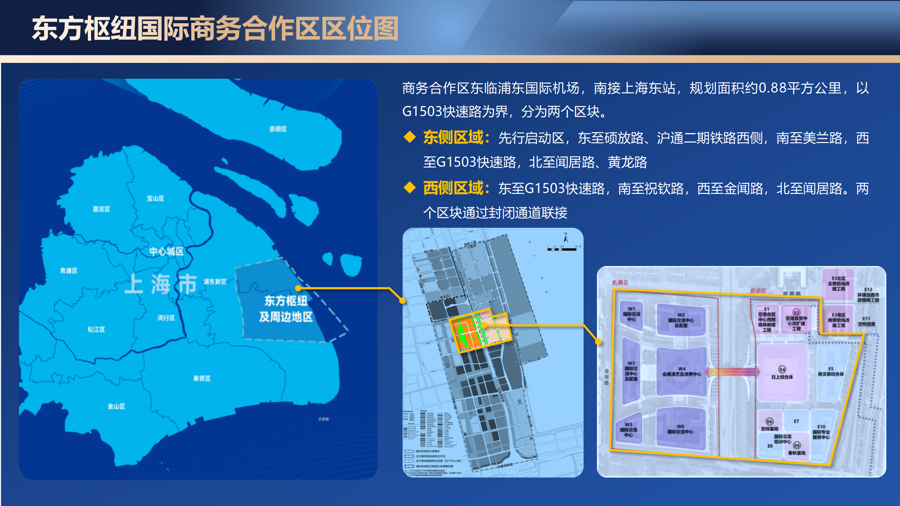
Core Viewpoint - The Shanghai Oriental Hub International Business Cooperation Zone has successfully passed a joint acceptance inspection led by the General Administration of Customs, marking the imminent operational launch of this innovative zone aimed at enhancing international business exchanges and facilitating high-level reform and opening-up in China [1][2]. Group 1: Overview of the International Business Cooperation Zone - The International Business Cooperation Zone, established in February 2024, covers an area of approximately 0.88 square kilometers, divided into two blocks, with the eastern area designated as the pilot zone covering about 0.44 square kilometers [1]. - The zone aims to promote international business exchanges by integrating a comprehensive bonded area, customs supervision area, and port restricted area, while also facilitating cross-border movement of personnel and enhancing business services [1][2]. Group 2: Future Development Plans - Following the acceptance, the zone will leverage Shanghai's advantages in foreign trade and utilize the results of the Free Trade Zone's institutional innovations to enhance institutional innovation, functional cultivation, resource allocation, and service guarantees [2]. - The Shanghai municipal government has issued management measures for the zone, allowing foreign personnel to stay for 30 days for business activities, with the possibility of extension under reasonable circumstances [2]. Group 3: Infrastructure and Regulatory Framework - The Shanghai Customs has established high-standard customs supervision facilities and an intelligent access control system, focusing on five regulatory objects: people, goods, vehicles, and enterprises [3]. - The National Immigration Administration has released regulations to support the free movement of personnel in and out of the zone, with completed infrastructure for closed management and categorized management facilities for international and domestic personnel [3]. Group 4: Strategic Importance and Goals - The establishment of the International Business Cooperation Zone is a significant move for Shanghai to expand high-level opening-up and enhance its open economy [4]. - The zone aims to focus on key industries and enterprises, planning impactful activities in international business, exhibitions, training, and technology exchanges to improve service levels and attract more international personnel [4].
重磅!上海东方枢纽先行启动区通过验收
Guo Ji Jin Rong Bao· 2025-11-28 10:05
Core Points - The Shanghai Oriental Hub International Business Cooperation Zone has been officially certified as the first of its kind in China, aimed at enhancing high-level reform and opening up [1] - The zone covers an area of approximately 0.88 square kilometers, with the initial operational area being 0.44 square kilometers, and is set to facilitate international business exchanges [2][4] - The zone is expected to achieve full operational capabilities by 2030, with significant infrastructure and management systems already in place [4] Summary by Sections Development and Structure - The Shanghai Oriental Hub International Business Cooperation Zone was approved by the State Council in February 2024, with a planned area of about 0.88 square kilometers, divided into two sections [2] - The initial operational area is designed to enhance international business exchanges and is part of a broader strategy to integrate the Yangtze River Delta region [4] Policy and Management - The zone has implemented a "1+2" foundational system, including management regulations and customs supervision measures to facilitate efficient management of personnel and goods [5] - Foreign personnel can enter the zone without a visa if invited, allowing for a stay of up to 30 days, with options for extension [5][7] Infrastructure and Services - Comprehensive infrastructure has been established, including high-standard regulatory facilities and smart access systems, to support efficient management and operations [6] - The zone has developed various support services, including commercial, dining, and leisure facilities, to ensure a conducive environment for business activities [7] Business Opportunities - The zone allows for a wide range of international business activities, including cross-border research and development, professional services, and trade facilitation [8][9] - It serves as a pilot area for expanding foreign-invested hospitals, enabling the introduction of high-level international medical resources [9]