日化代工

Search documents
又有90后联手地方国资,拿下一家上市公司
投中网· 2026-01-24 07:36
Core Viewpoint - The article highlights the emergence of a 90s entrepreneur, Xu Yi, who, in collaboration with local state-owned capital, is acquiring a controlling stake in Jiaheng Jiahua for 1.7 billion yuan, marking a significant shift in ownership dynamics within the company [2][5][7]. Group 1: Acquisition Details - Jiaheng Jiahua announced that Hangzhou Pinbianyi plans to acquire 50.80% of its shares through a combination of agreement transfer, voting rights waiver, and tender offer, totaling 1.7 billion yuan [2][3]. - The acquisition process involves three steps: the initial share transfer agreement, the waiver of voting rights by the original owner, and a tender offer to other shareholders [14][15]. Group 2: Background of the Acquirer - Xu Yi, born in 1990, founded Hangzhou Pinbianyi in 2017, focusing on B2B fast-moving consumer goods (FMCG) and leveraging AI to optimize traditional supply chains [5][6]. - The company has achieved rapid growth, covering over 30 cities and serving nearly 700,000 stores within eight years, establishing itself as an industry unicorn [5][6]. Group 3: Financial Performance - Hangzhou Pinbianyi's revenue grew from 604 million yuan in 2022 to 1.079 billion yuan in 2023, with a slight decline to 999 million yuan projected for 2024. However, net profits showed consistent growth during the same period [8]. Group 4: Challenges in Succession - The previous owner, Zeng Ben Sheng, transferred control to his children, who faced challenges leading to the company's first annual loss since its listing, with a net profit of -23.7 million yuan in 2024 [10][11]. - The article discusses the broader trend of second-generation leadership in family businesses, highlighting varying performance outcomes post-succession [12]. Group 5: Role of State-Owned Capital - The acquisition is supported by Zhejiang provincial state-owned capital, which provides financial backing and strategic alignment, indicating a trend of collaboration between private enterprises and state-owned entities [14][16]. - The involvement of state-owned enterprises is seen as a strategic move to enhance competitiveness in the fast-moving consumer goods sector [16][17].


二代接班一年后"易主",拼便宜联手浙江国资接盘嘉亨家化 | 并购一线
Xin Lang Cai Jing· 2026-01-07 13:07
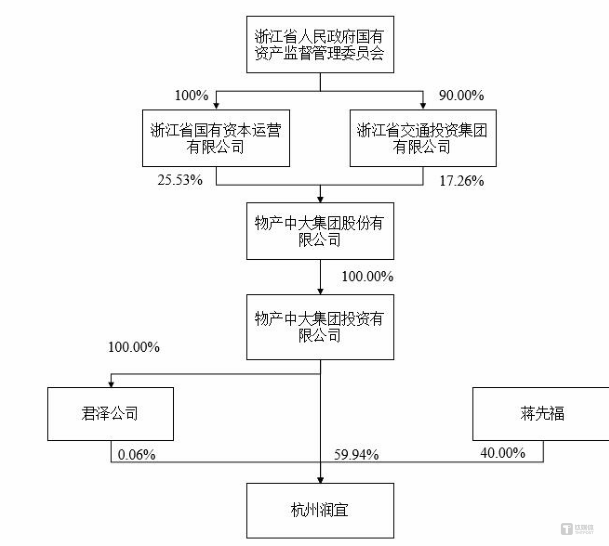
Group 1 - The control of Jiaheng Jiahua will change hands to a new owner, with Xu Yi becoming the new actual controller after the completion of the share transfer agreement signed by the current controlling shareholder, Zeng Bensheng, and three parties including Pinyin and Hangzhou Runyi [1][2] - Jiaheng Jiahua has been facing continuous losses since its listing in 2021, with a significant decline in both revenue and net profit starting from 2022, leading to a net loss of 23.7 million yuan in 2024 [8][11] - The new shareholders, Pinyin and Hangzhou Runyi, are not unknown entities; Pinyin is a B2B platform for fast-moving consumer goods founded in 2017, while Hangzhou Runyi has a background in state-owned assets management [3][5] Group 2 - The share transfer involves a combination of "agreement transfer + partial tender offer + waiver of voting rights," with Zeng Bensheng transferring a total of 29.70% of shares, amounting to approximately 298.9 million shares, at a price of 33.21 yuan per share, totaling 994 million yuan [2] - Pinyin plans to further consolidate its control by initiating a partial tender offer to acquire an additional 21.10% of shares after the transfer [2] - The new shareholders have set performance requirements for the original business, mandating that the net profit attributable to the parent company must be positive from 2026 to 2028 [5]