时尚秀场

Search documents
地标变身T台!2025中国户外秀场上演“场景革命”
Yang Zi Wan Bao Wang· 2025-11-19 09:40
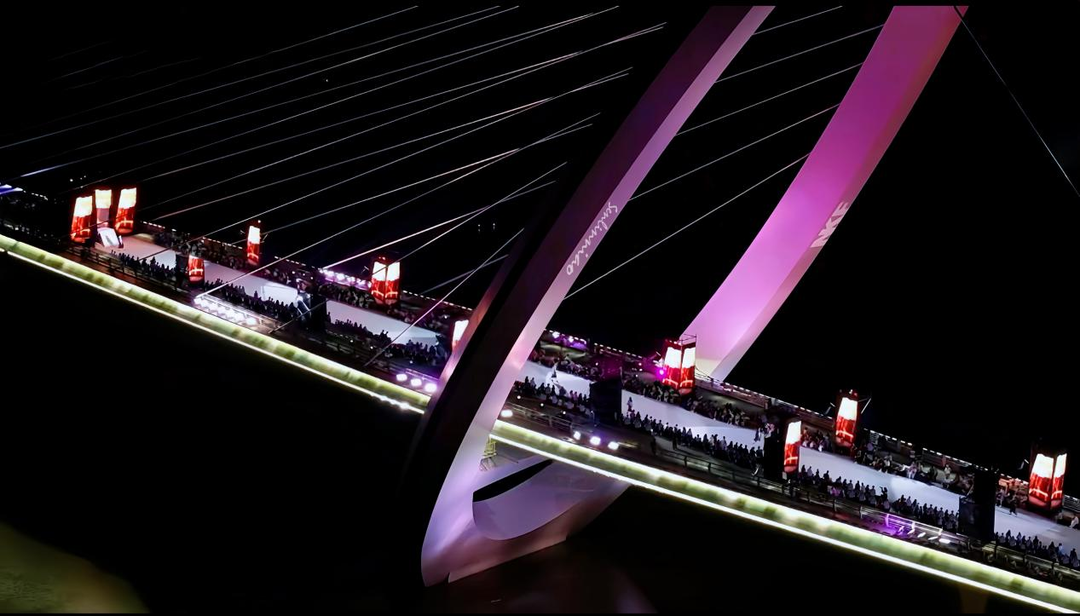
Core Insights - The fashion industry in China is undergoing a "scene revolution" by transforming urban landmarks and natural wonders into creative platforms for fashion shows, redefining the narrative and landscape of fashion by 2025 [1][20]. Group 1: Landmark Empowerment - Landmarks have transitioned from mere backdrops to the main attractions of fashion shows, exemplified by the Guangzhou Haixin Bridge serving as a giant runway for the Biyinlefen show, highlighting its 198-meter length [3][6]. - The Nanjing Eye pedestrian bridge, measuring 827.5 meters, showcased its fashion potential during the 2025 Nanjing International Fashion Week, gaining significant online visibility [6][10]. Group 2: Cultural Integration - Outdoor fashion shows facilitate a deep cultural dialogue, with brands like CABBEEN using local elements to narrate stories, such as the "Treading the Mountains and Seas" show at Xiangzhi Beach, symbolizing the history of Fujian merchants [11]. - The "Above the Forbidden City: The Rhythm of the Central Axis" show at Beijing's Yongdingmen highlighted the creative homage to Chinese heritage and the concept of "revitalizing intangible cultural heritage" [13]. - ZIFEI WANG's show at the Yungang Grottoes integrated historical elements into modern designs, sparking discussions on the revival of Eastern aesthetics [14][16]. Group 3: Scene Innovation - Brands are increasingly bold in utilizing natural settings for fashion shows, as seen with HELLY HANSEN's show in the Zunyi Double River Cave, creating an immersive experience [17]. - ERDOS's "GOLDEN DAYS" show in Beijing Olympic Park poetically expressed natural materials against a backdrop of autumn scenery [17]. - The Snow Song brand's show in Chongqing utilized the city's nightscape as a dynamic runway, merging fashion with the vibrant urban environment [19]. Group 4: Regional Penetration - The success of landmark fashion shows is not only about the immediate impact but also about activating urban spaces and expanding influence, as demonstrated by the 2025 Nanjing International Fashion Week creating a closed-loop ecosystem of culture, commerce, and tourism [20][24]. - The event showcased the diversity and innovation of Nanjing's fashion industry, linking historical and modern elements [22]. - The trend indicates a deeper integration of the fashion industry with urban development, positioning fashion as a catalyst for cultural activation and commercial consumption [24].

依依不舍 运河畔嘉年华
Bei Jing Ri Bao Ke Hu Duan· 2025-10-09 00:15
Core Points - The article highlights a series of vibrant cultural and tourism activities held during the Mid-Autumn Festival and National Day holidays in the Beijing urban sub-center, providing a diverse and engaging experience for residents and visitors [1][3][4]. Group 1: Events and Activities - The "Second West Bank·Beautiful Life Festival" launched on October 1, attracting over 70,000 visitors on its first day, featuring a mix of sports, fashion, music, and food [3]. - The "Water Rhythm·Newborn" 2025 Grand Canal Cultural Fashion Awards showcased over 80 original outfits designed by top national designers, transforming the canal into a natural stage for performances [4]. - The "2025 Beijing Grand Canal Music Festival" held on October 6-7 featured 16 performing artists, including well-known singers, attracting nearly 70,000 music fans [5][6]. Group 2: Cultural Engagement - The Beijing Grand Canal Museum hosted seven events during the holiday, including a classical culture performance and a situational drama, engaging audiences with traditional arts [7]. - The "2025 Public Art Season" at the Beijing Art Center displayed over 200 public art pieces, encouraging community participation in creating a collective art project [10]. - The "2025 International Children's Fashion Week" showcased innovative designs integrating AI technology with traditional Chinese clothing [11]. Group 3: Community and Local Celebrations - Various local markets and cultural activities in towns provided residents with opportunities to enjoy traditional foods and engage in community events, enhancing the festive atmosphere [14][15]. - The "Cultural Exchange Exhibition" at the Beijing City Library featured interactive experiences and discussions on traditional arts, attracting over 107,000 visitors during the holiday [9].