水上客运

Search documents
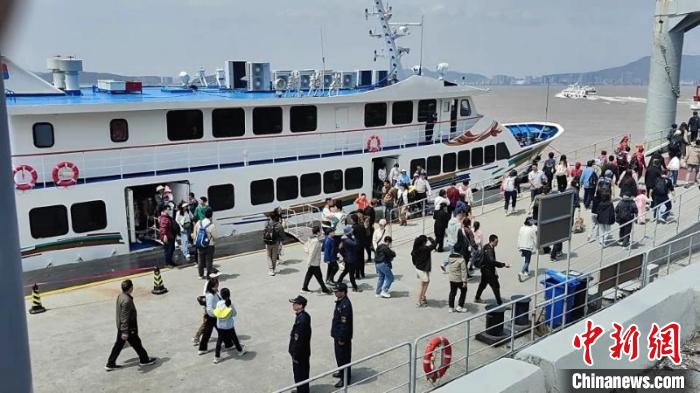
浙江水上客运火爆 普陀山水上客流连续三日超20万
Zhong Guo Xin Wen Wang· 2026-02-21 08:39
Core Insights - Zhejiang's water passenger transport volume remains high during the Spring Festival holiday, with over 1.36 million passengers transported as of February 20 [1] - The Zhoushan Putuo Mountain area is a key water travel hotspot, with daily passenger flow exceeding 200,000 for three consecutive days, setting a historical record [1] - The Zhoushan archipelago accounts for over 90% of the total water passenger transport in Zhejiang, driven by a combination of pilgrimage, sightseeing, and family visits [1] Transport Operations - The weather along the Zhejiang coast has been predominantly clear to partly cloudy, with rising temperatures and wind speeds reduced to below level 7, making it suitable for vessel navigation [1] - The number of daily ferry trips on the Zhujiajian to Putuo Mountain route increased from 220 to 700 to ensure efficient and orderly passenger transport [1] - The passenger flow at Putuo Mountain has reached saturation, prompting maritime authorities to advise travelers to plan their trips wisely and check real-time flight updates to avoid long wait times [1] Future Outlook - Weather forecasts indicate a "clear to rainy" pattern along the Zhejiang coast in the coming week, with favorable travel conditions from February 20 to 22, followed by a peak return period on February 23 to 24 [1] - Maritime authorities have intensified on-site inspections on popular routes and are utilizing smart maritime systems for 24-hour dynamic monitoring of key water areas to ensure safe and orderly passenger returns [1]
单日发客超28万 浙江水上客运迎春节假期新高峰
Zhong Guo Xin Wen Wang· 2026-02-18 13:29
Group 1 - The core viewpoint of the news is that Zhejiang's water passenger transport has reached a new peak during the Spring Festival holiday, with a total of 287,800 passengers transported by water as of February 18 [1] - Favorable weather conditions, including clear to partly cloudy skies and rising temperatures, have contributed to increased travel demand for various purposes such as pilgrimage, sightseeing, and family visits [1] - On February 17, the Putuo Mountain scenic area recorded a single-day passenger flow of 162,900, marking a new high for the Spring Festival travel period, with over 252,000 passengers in the first three days of the holiday [1] Group 2 - To ensure safety and order during peak water transport periods, the Zhejiang maritime department has enhanced safety measures, including increased inspection frequency on popular routes and a dedicated personnel system [2] - The department is implementing a comprehensive monitoring system that includes on-board supervision, smart maritime systems, and drone surveillance to ensure vessel seaworthiness and crew qualifications [2] - A real-time weather monitoring mechanism has been established to track changes in maritime weather, with emergency plans and supplies prepared in advance for adverse weather conditions [2]
海岛游、山水游、城市观光游 春运水上出行市场火热
Yang Shi Wang· 2026-02-11 06:56
Core Insights - The national waterway passenger volume during the Spring Festival is expected to reach 33 million, with an average daily flow exceeding 650,000 passengers since the beginning of the Spring Festival travel period [1][4] - The demand for island tourism, scenic water tours, and urban sightseeing is notably high, particularly on busy routes like the Zhoushan Putuo Mountain line, which saw a peak of 60,000 passengers on February 10 [1][4] Group 1 - The Yangtze River's passenger flow for returning home, family visits, labor migration, and short-distance tourism has significantly increased, with cities like Chongqing, Wuhan, and Yichang experiencing a rise in night tours and popular sightseeing routes [4][7] - The expected number of waterway travelers on the Yangtze River from Anhui to Sichuan during the Spring Festival is projected to be 5.76 million, reflecting a 3% year-on-year increase [7] - In Shenzhen, the passenger flow between the Shekou cruise terminal and Shenzhen Airport is gradually increasing, with 7,000 high-speed passenger ships expected to operate, carrying 260,000 passengers during the Spring Festival [9] Group 2 - The Shenzhen Maritime Bureau has established a dual safety defense system for passenger vessels during the Spring Festival, ensuring safe navigation [11] - The maritime authorities are conducting 100% safety inspections on all passenger vessels involved in the Spring Festival, with ongoing supervision of key passenger vessels like night tour boats [7][11] - Passengers are advised to choose compliant vessels and adhere to safety regulations, including not carrying dangerous items and following staff instructions [11]

春运首日浙江水上客流超10万人次 短途探亲旅游成主流
Xin Hua Wang· 2026-02-03 14:05
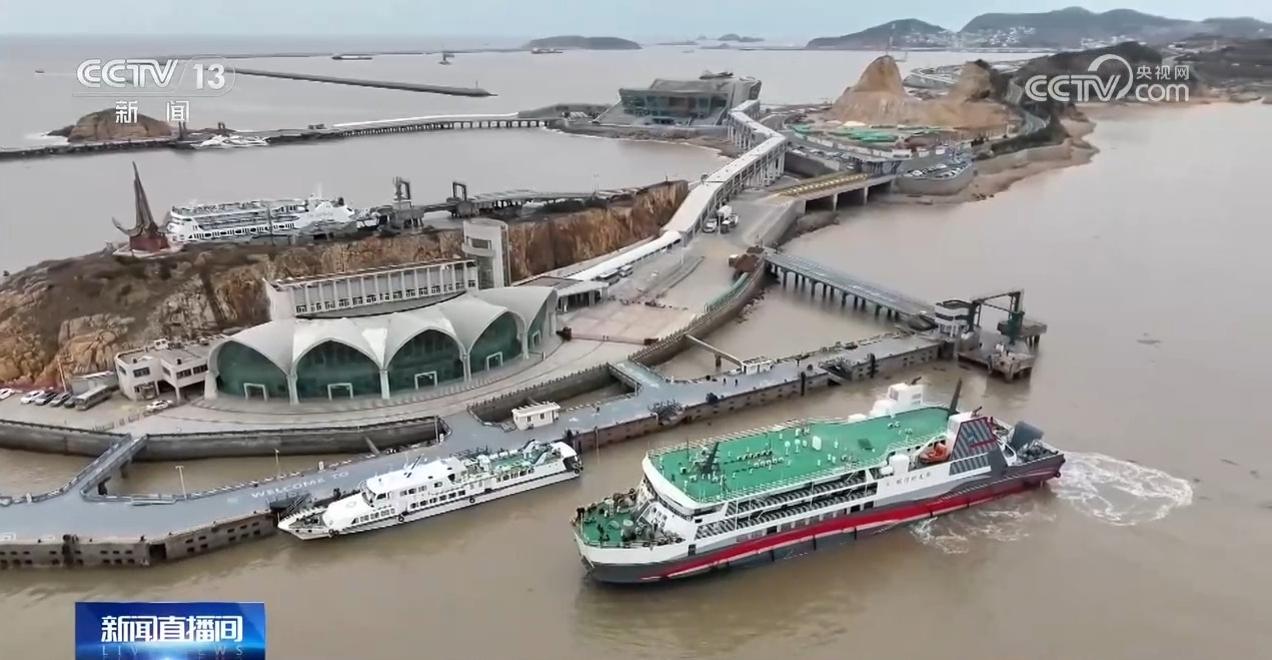
Group 1 - On February 2, the first day of the Spring Festival travel rush, Zhejiang's water passenger transport sent over 100,000 passengers, with all 260 passenger ferries in operation, ensuring smooth operation on key routes [1] - Zhoushan Islands, as the core area of Zhejiang's water passenger transport, accounted for 85% of the total passenger flow, sending 85,000 passengers on the first day [1] - The popular Putuo Mountain route saw a passenger flow of 42,000, indicating a small surge in tourism [1] Group 2 - The travel flow during the Spring Festival is characterized by short-distance family visits and nearby island sightseeing, making up over 70% of the total passenger flow on the first day, particularly prominent in the Zhoushan Islands [1] - During the Spring Festival period, the expected passenger flow in the Zhujiajian area of Putuo Mountain is projected to reach 5.977 million, with comprehensive transportation guarantees in place [1] - A total of 27 ferries will be deployed on the key routes "Zhujiajian-Putuoshan" and "Banshengdong-Putuoshan," with 6 emergency vessels on standby to enhance passenger transport efficiency [1][2]
水巴大砍、大门紧闭!广州多个老城区码头被闲置
Nan Fang Du Shi Bao· 2025-08-20 23:26
Core Insights - Guangzhou aims to develop the Pearl River into a "world-class waterfront tourism destination" but faces challenges with aging infrastructure and reduced utilization of passenger terminals [1][5]. Group 1: Current State of Water Transport - The number of operational water bus routes in Guangzhou has decreased from a peak of 19 to only 3, leading to underutilization of several passenger terminals along the Pearl River [2][3]. - Some terminals, like the Textile Terminal, show minimal activity, with no vessels docking during observation periods, indicating a significant decline in passenger traffic [2][3]. Group 2: Recommendations for Terminal Utilization - Experts suggest transforming underutilized terminals into integrated waterfront attractions by aligning their functions with local foot traffic and nearby attractions [3][4]. - Proposed developments include cultural experiences and light consumption venues at historically significant terminals, enhancing their appeal and functionality [3][4]. Group 3: Upgrading Infrastructure - The Guangzhou Public Transport Group is exploring cultural tourism projects to revitalize terminals, such as the "New Era Riverside Music Platform" at the Textile Terminal [4][6]. - Upgrades should focus on smart technology and cultural preservation, integrating modern amenities while maintaining historical elements [6][11]. Group 4: Demand for New Terminals - There is a pressing need for additional terminals in the eastern and backwater areas to meet the growing demand for Pearl River tourism, with projected passenger numbers exceeding 4.23 million in 2024, a 2.91% increase year-on-year [5][7]. - Current terminal distribution is uneven, with a concentration of facilities in the west, necessitating new developments in the east to accommodate rising tourist numbers [5][7]. Group 5: Enhancing Connectivity and Experience - Suggestions include creating an open platform for resource sharing among different operators to enrich the Pearl River cruise experience and improve connectivity with waterfront attractions [8][9]. - The integration of ticketing systems and transportation links between terminals and nearby attractions is recommended to enhance visitor experience [9][10]. Group 6: Future Development Plans - The Guangzhou Port Authority plans to upgrade existing terminals and ensure all new terminals are equipped with electric charging facilities for boats [11][12]. - Future developments will focus on creating a comprehensive water culture theme park that combines art, leisure, and technology along the river, enhancing the overall tourist experience [12].
“五一”假期浙江普陀山水上客运量预计达60万人次
Zhong Guo Xin Wen Wang· 2025-05-01 05:05
Core Points - Zhejiang's water passenger transport is experiencing a peak period during the "May Day" holiday, with an expected flow of over 900,000 passengers, including 600,000 on the Putuo Mountain route [2][2][2] - The peak travel days are anticipated to be May 2 and 3, with an average of 160,000 passengers entering and exiting Putuo Mountain daily [2][2][2] Summary by Sections - **Passenger Transport Capacity**: To meet the holiday demand, 20 ships with a total capacity of 6,120 passengers will be deployed on the Wugongzhi to Putuo Mountain route, and 5 ships with a capacity of 1,100 passengers will be added on the Shenjiamen to Putuo Mountain route [2][2][2] - **Technology Implementation**: The Putuo Mountain passenger station has implemented a "facial recognition + electronic ticket" system, improving passenger processing efficiency by 30% [2][2][2] - **Safety Measures**: The Zhoushan maritime department has completed safety inspections of passenger vessels before the holiday and will enhance control measures during the holiday period, including increased enforcement personnel and dedicated teams for on-board safety [2][2][2] - **Monitoring and Regulation**: The maritime department has adopted a comprehensive monitoring approach for operating passenger ships, including dynamic monitoring throughout the journey and increased on-site regulatory presence [2][2][2]