
水质检测

Search documents
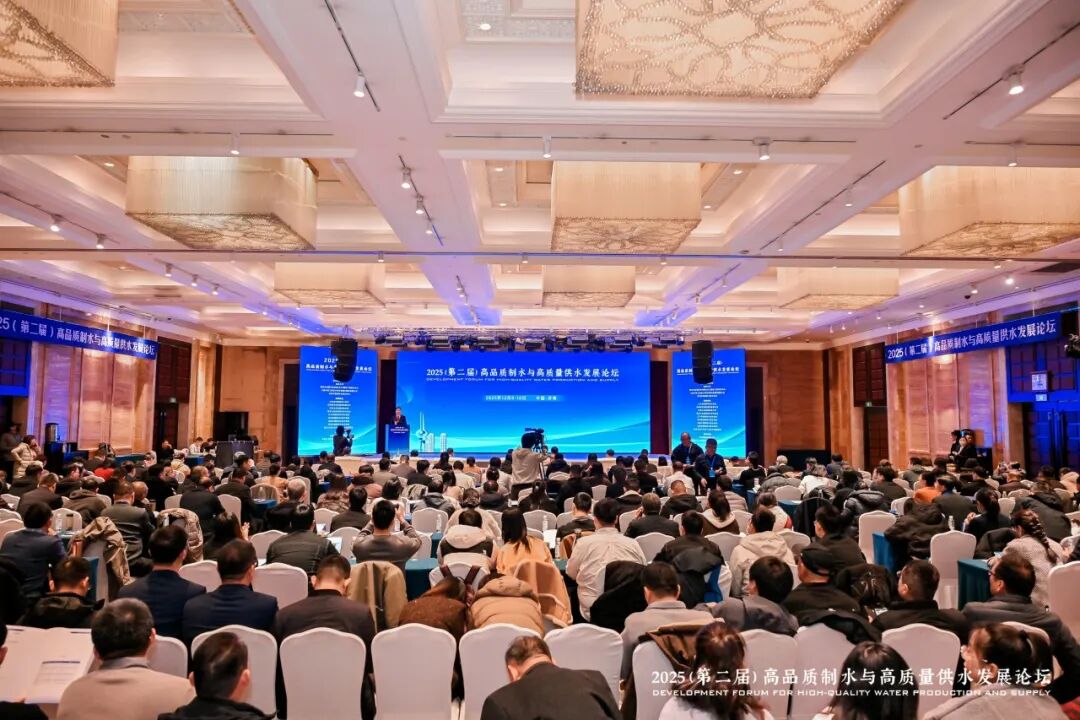
年度压轴!泰林亮相2025第二届高品质制水与高质量供水发展论坛
Xin Lang Cai Jing· 2025-12-12 04:22
Core Insights - The 2025 Second Forum on High-Quality Water Production and Supply was successfully held in Jinan from December 8-10, featuring participation from various prestigious institutions and companies in the water sector [1][10] Group 1: Event Overview - The forum included case sharing on high-quality water production, supply, disinfection, and water safety monitoring from institutions like Harbin Institute of Technology, Tongji University, Tsinghua University, and others [1][10] - The event showcased the collaboration between TaiLin and Jiangsu Hongzhong Baide Biotechnology Co., focusing on accelerating smart water quality monitoring [3][12] Group 2: Product Showcase - TaiLin exhibited a range of products including intelligent analyzers for algae and two worms, automated detection systems, and microbiological testing equipment, emphasizing accurate and efficient water quality detection [3][12] - The product lineup included enzyme substrate method microbiological automatic counting instruments and sampling bottles, aimed at enhancing water quality analysis technology [3][12] Group 3: Technological Insights - Manager Ling provided an in-depth analysis of the core value of smart monitoring technology in ensuring drinking water safety, presenting TaiLin's innovative water ecological detection product system and its applications [6][17] - The company has developed a comprehensive product matrix covering online monitoring, portable detection, and emergency response, creating a full-chain solution from source warning to incident response [6][17] Group 4: Presentation Highlights - During a special report session, Manager Ling delivered a presentation titled "Smart Monitoring Empowers Drinking Water Safety: TaiLin Water Ecological Detection Products and Full-Scene Applications" [7][15] - The presentation highlighted how TaiLin utilizes enzyme substrate methods and intelligent analyzers to transition drinking water safety management from passive response to proactive warning, demonstrating significant improvements in monitoring efficiency and cost reduction [9][19]

水质检测人员必看福利——哈希水专家团队匠心出品|GB5750权威解读+智慧水务攻关|9月免费领!
仪器信息网· 2025-09-14 03:58
Group 1 - The article emphasizes the importance of understanding the new national standards for drinking water, specifically GB5750-2023, which includes key changes in detection methods, limit adjustments, and compliance operation points [3] - It discusses the challenges of intelligent control in wastewater treatment plants, focusing on data-driven process optimization and cost control strategies to improve operational efficiency [3] - The article highlights the hidden pollution risks in drinking water, such as microplastics and resistant genes, and the need for rapid detection technologies and emergency response plans to ensure safety from source to tap [3] Group 2 - It provides a guide for instrument selection, emphasizing the importance of matching monitoring instruments to specific scenarios, along with best practices for sample pretreatment and water quality diagnosis models [3]

指标缺失、检测方法不同,别被简易水质检测笔误导了
Zhong Guo Huan Jing Bao· 2025-05-21 03:08
Core Viewpoint - The article highlights the limitations of simple water quality testing pens, which are often misinterpreted by consumers as reliable tools for assessing drinking water safety. These devices lack comprehensive and accurate evaluation capabilities, potentially misleading the public about water quality safety [1][2]. Group 1: Limitations of Water Quality Testing Pens - Water quality testing pens can only measure a few indicators such as total dissolved solids (TDS), pH, and residual chlorine, failing to cover the 97 indicators outlined in national drinking water safety standards, which include harmful substances like E. coli, lead, and mercury [1][2]. - The testing methods of these pens differ significantly from national standards, which utilize more rigorous techniques such as weight methods for TDS and colorimetric methods for pH and residual chlorine, ensuring more reliable results [2]. Group 2: Regulatory and Public Awareness Recommendations - Government departments are urged to enhance regulation and public education regarding water quality testing, including stricter oversight of misleading advertising for testing pens and collaboration with professional organizations to disseminate knowledge [2]. - Online platforms should take responsibility for content verification and improve content delivery mechanisms using big data algorithms, while the public is encouraged to enhance scientific literacy and seek professional testing services for accurate water quality assessments [3].