
水资源保护

Search documents
昆明阳宗海水质创十余年来最佳
Zhong Guo Xin Wen Wang· 2026-02-16 01:06
Core Insights - The Kunming Yangzonghai Scenic Area has invested over 1.195 billion yuan in high-quality development and protection projects since the 14th Five-Year Plan, focusing on 38 key projects [1] - The water quality of Yangzonghai has improved, with the average water quality stabilizing at Class III or above, the highest level in over a decade [1] - The area has implemented comprehensive pollution control measures, including the investigation of 651 pollution outlets and the establishment of ecological buffer zones [1] Investment and Development - A total of 2.8 billion yuan is planned for ecological protection efforts in 2026, targeting 10 key projects to further improve water quality [1] - The establishment of the first highland lake research center in Yunnan and the development of an ecological environment smart supervision platform highlight the commitment to research and innovation [1] Future Goals - The goal is to achieve an average water quality of Class II by 2030, with ongoing efforts to deepen protection and governance mechanisms [2]
这里为何被命名为翡翠湖?
Guang Zhou Ri Bao· 2026-01-17 06:17
Group 1 - The naming of "Emerald Lake" in Qingyuan City signifies the ecological value of the medium-sized reservoir and reflects the government's commitment to protecting livelihoods and the environment [1][2] - The reservoir has a control area of 28.4 square kilometers and a total capacity of 30.82 million cubic meters, serving as a vital drinking water source for the local population and a flood prevention barrier for the region [1] - The ecological system around Emerald Lake, which includes a 100,000-acre forest, plays a crucial role in maintaining biodiversity and water quality in the Pearl River basin [2] Group 2 - The government has implemented strict measures to protect the water source, including defining protection zones and enforcing project approval limits, demonstrating a commitment to safeguarding the ecological value of Emerald Lake [3] - The community's involvement is essential for the ongoing protection of the lake, emphasizing the need for public awareness and responsibility in preserving natural resources [3] - The lake serves as a symbol of the ecological foundation for the integration of Qingyuan and Guangzhou, highlighting the importance of sustainable development in the region [3]
见证:守护深圳水库生态环境的点点滴滴
Xin Lang Cai Jing· 2026-01-06 23:42
Core Viewpoint - The article highlights the significant efforts made by the Luohu District Procuratorate in Shenzhen to protect the ecological environment of the Shenzhen Reservoir, which plays a crucial role in supporting the economic and social development of Guangdong, Hong Kong, and the Greater Bay Area [1][2]. Group 1: Initiatives and Collaborations - In September 2020, the Luohu District Procuratorate led the establishment of a coordination mechanism for the ecological environment protection of the Shenzhen Reservoir, involving nine other functional units [1]. - The "Shenzhen Reservoir Protection Alliance" was formed to facilitate early detection, accountability, and remediation of ecological violations through various collaborative measures [1][2]. - Regular joint meetings have been held to address water source protection issues and clarify responsibilities among participating units [1]. Group 2: Legal Actions and Outcomes - During the 2022 joint meeting, over ten enforcement challenges were identified, leading to the initiation of six administrative public interest litigation cases to address these issues [2]. - A follow-up inspection on December 13, 2022, revealed effective remediation of illegal activities, such as unlawful planting and operations, in areas surrounding the reservoir [2]. - The Luohu District Procuratorate continued to monitor ecological protection efforts, identifying eleven new issues in April 2023 and pursuing further public interest litigation [2]. Group 3: Community Engagement and Future Commitment - A signing ceremony for a cooperation agreement between the Luohu District Procuratorate and Guangdong Hong Kong Water Supply Company was held before the National Day in 2023, emphasizing community involvement in ecological protection [2]. - The article underscores the ongoing commitment of public interest litigation prosecutors to safeguard the environment, with community members actively participating as observers [3].

陕西饮用水水源保护区划定率近100%
Shan Xi Ri Bao· 2025-09-26 23:33
Core Points - Since the beginning of the 14th Five-Year Plan, Shaanxi has prioritized the safety of drinking water source quality, achieving a 100% designation rate for city and county-level drinking water source protection zones and over 95% for town-level zones [1][2] - The province has established 1,199 centralized drinking water source protection zones, with a continuous 100% compliance rate for water quality in designated urban sources included in national assessments [1] - Shaanxi has implemented comprehensive assessments and technical reviews of proposed protection zones, ensuring all designated sources are included in the protection system [1] Group 1 - Shaanxi has organized provincial departments and experts to conduct on-site inspections and technical reviews of key information related to proposed protection zones, including risk sources and water intake locations [1] - The province has designated 29 county-level and above drinking water source protection zones, as well as 663 town-level zones, all of which are now part of the protection system [1] - Major livelihood projects that may cross secondary protection zones are subject to thorough reviews regarding route selection and environmental impact [1] Group 2 - Shaanxi conducts annual environmental assessments of drinking water sources and has established protective measures such as boundary markers and surveillance systems [2] - The province is utilizing satellite and drone technology for risk source investigations and has developed targeted prevention strategies for high-risk areas [2] - Financial support for water source protection has been reinforced, with a total of 9.25 billion yuan from central government funds and 70.75 million yuan from provincial funds allocated since the start of the 14th Five-Year Plan [2]
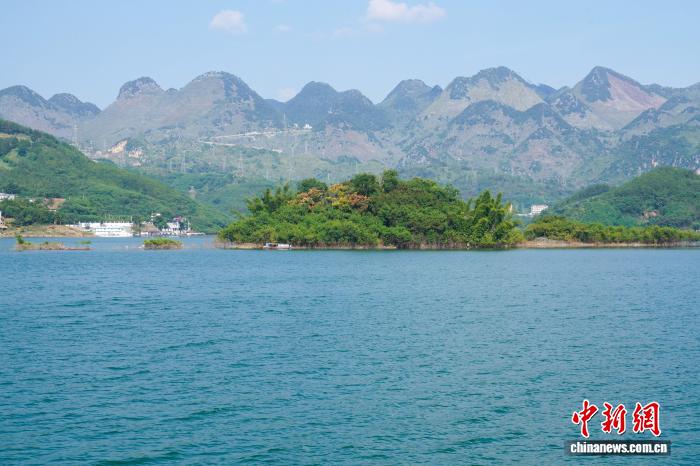
滇黔桂交界万峰湖告别“难管”,10年从“黑水”变“饮水”
Zhong Guo Xin Wen Wang· 2025-09-22 00:04
Core Viewpoint - The article highlights the successful implementation of cross-regional environmental protection regulations for the Wanfeng Lake, leading to significant improvements in water quality and ecological restoration in the area [1][3][5]. Group 1: Environmental Issues - Wanfeng Lake has faced severe ecological challenges due to unregulated fish farming and poor inter-regional governance, resulting in water quality deterioration and eutrophication [3][5]. - In 2017, inspections revealed that the fish farming area exceeded planned limits by 3.93 times, with daily feed inputs surpassing 5,000 tons, leading to a significant increase in nitrogen and dissolved oxygen levels [3]. Group 2: Legislative Actions - The "Wanfeng Lake Protection Regulations" were enacted on January 1, 2023, providing a legal framework for environmental protection in the region [3][5]. - Additional regulations from neighboring regions, including the "Guizhou Wanfeng Lake Protection Regulations" and "Qujing Wanfeng Lake Protection Regulations," were also implemented on the same date [3]. Group 3: Collaborative Efforts - A joint enforcement command was established in March 2022 among the three provinces, focusing on cross-regional environmental law enforcement and emergency response [5]. - As of now, significant actions have been taken, including the removal of 4.3 million square meters of illegal fish farming structures and the closure of three non-compliant enterprises [5]. Group 4: Water Quality Improvement - Following the implementation of protective measures, the water quality in Wanfeng Lake has improved to Class I, meeting drinking water standards, marking the best water quality recorded [3][5]. - By May 2025, the water quality maintained a Class II standard, with transparency exceeding 2.5 meters, indicating a gradual recovery of aquatic biodiversity [5].

以法治之力守护清水长歌
He Nan Ri Bao· 2025-08-14 23:24
Core Viewpoint - The implementation of the "Henan Province South-to-North Water Diversion Drinking Water Source Protection Regulations" has significantly improved ecological protection and water quality in the region, showcasing the commitment of Henan to safeguard its water resources and enhance public awareness of water source protection [2][3][5]. Group 1: Legislative and Regulatory Framework - The "Regulations" have been in effect for over three years, establishing a legal framework for the protection of drinking water sources in Henan [2]. - The regulations were initiated following a significant meeting led by President Xi Jinping in May 2021, which outlined a vision for the high-quality development of the South-to-North Water Diversion project [3]. - The regulations have led to the establishment of a comprehensive monitoring network to ensure water quality safety, involving multiple stakeholders in collaborative governance [3][4]. Group 2: Water Quality Protection Measures - The designated drinking water source protection areas include a first-level protection zone of 47 square kilometers, a second-level protection zone of 253 square kilometers, and a quasi-protection zone of 1,295 square kilometers [5]. - Various measures have been implemented to prevent pollution, restore ecosystems, and manage agricultural runoff, ensuring the safety of the South-to-North Water Diversion project [5]. - Community involvement in water quality protection has increased significantly, with volunteer participation growing from a few individuals to over 8,000, contributing to improved water quality metrics [5]. Group 3: Socioeconomic Impact - The South-to-North Water Diversion project has led to the transformation of communities, such as the relocation of 175 households in Zouzhang Village, which has since developed a thriving agritourism sector [6][8]. - The village has seen an increase in collective economic income to over 2 million yuan, with annual tourist visits reaching 100,000, highlighting the economic benefits of water resource management [8]. - The successful implementation of the regulations has fostered a culture of environmental stewardship among residents, enhancing both ecological and economic outcomes in the region [8].
【省水利厅】陕西着力确保丹江口库区水质安全
Shan Xi Ri Bao· 2025-07-31 00:03
Core Viewpoint - The meeting focused on the progress of the water quality safety assurance work for the Danjiangkou Reservoir in Shaanxi Province, emphasizing the importance of maintaining water quality and implementing effective measures to ensure safety [1][2] Group 1: Progress and Achievements - Since the last meeting, the water quality at the main stream exit of the Han River has stabilized at Class II, with an estimated water supply of approximately 20.5 billion cubic meters to the Danjiangkou Reservoir for the year 2024 [1] - The meeting reported on the implementation of the "Shaanxi Province Danjiangkou Reservoir Upstream Water Quality Safety Assurance Implementation Plan" and proposed work suggestions [1] Group 2: Future Actions and Responsibilities - Future actions will focus on enhancing urban sewage treatment, strengthening hazardous materials transport safety, improving tailings dam safety, and addressing environmental governance issues in mining [1] - The meeting emphasized the need for all levels of government to increase political awareness, tighten responsibilities, and establish long-term mechanisms for collaboration [2] - Local governments are tasked with clarifying responsibilities, implementing task management, and ensuring the effective execution of water quality safety assurance measures [2]
如何协同推进黄河大保护?这些典型案例揭示“关键点”
Xin Hua She· 2025-05-03 06:35
Group 1 - The Supreme People's Procuratorate and the Ministry of Water Resources have jointly released typical cases of prosecutorial supervision and collaborative enforcement for the protection of the Yellow River, highlighting the importance of addressing illegal activities such as pollution and illegal sand mining [1][2] - A total of 10 typical cases were reported, including 3 criminal prosecution cases and 7 public interest litigation cases, focusing on water resource protection, water pollution prevention, flood safety assurance, soil erosion control, and illegal sand mining [1] - The procuratorial authorities are enhancing their problem-oriented approach, utilizing both criminal and public interest litigation functions to address violations, as seen in the case of six companies in Aba County, Sichuan Province, which illegally extracted groundwater [1] Group 2 - The typical cases reflect a greater emphasis on the systematic, holistic, and collaborative governance of the Yellow River, promoting comprehensive management of watershed issues [2] - In a specific case, a mining company in Xunyi County, Shaanxi Province, was found to have illegally discharged water during coal mining, leading to a decline in surrounding groundwater levels, prompting legal action and administrative penalties [2] - The Guanzhong Plain District People's Procuratorate developed a monitoring model for abnormal water resource tax payment data in the coal mining industry, resulting in the collection of 35.04 million yuan in water resource taxes [2]
守护中央水塔 建设人水和谐美丽秦岭
Xi An Ri Bao· 2025-04-28 03:08
Core Viewpoint - The Xi'an Municipal Government has issued the "Qinling Water Resource Protection and Utilization Plan," providing a systematic action guide for the protection of Qinling water resources, which is crucial for ecological sustainability and regional development [1][2]. Summary by Sections Water Resource Protection Framework - The plan outlines various components including water functional zoning, ecological water demand assurance, water resource utilization planning, and monitoring frameworks for water resource protection [1][2]. Importance of Qinling - Qinling, known as China's "central water tower," plays a vital role in climate regulation, soil conservation, and biodiversity maintenance, with its protection area covering approximately 55% of Xi'an's total area [2]. Goals and Objectives - The plan sets short-term goals for 2030 and long-term goals for 2035, aiming for sustainable water resource utilization and ecological protection, ensuring safe water supply for living, ecological, and production needs [2][4]. Principles of Water Management - The plan adheres to the "Four Waters and Four Determinations" principle, emphasizing the rational development and efficient use of water resources, while ensuring ecological balance and water quality [3]. Progress Targets - By 2030, the plan aims to establish a strict water resource management system, improve river water quality, and achieve a 100% compliance rate for drinking water sources [4]. Long-term Vision - By 2035, the plan envisions a modernized water resource protection system, with stable ecological water volumes and a fully established water-saving society, ensuring high-quality water and ecological health in the Qinling region [5]. Community Engagement - The implementation of the plan will involve strengthening organizational coordination, enhancing legal frameworks, and mobilizing community participation in water resource protection efforts [6].