电子教育硬件

Search documents
国补提前释放需求、存储暴涨,今年中国学习平板市场“难太乐观”
Guan Cha Zhe Wang· 2026-01-13 08:40
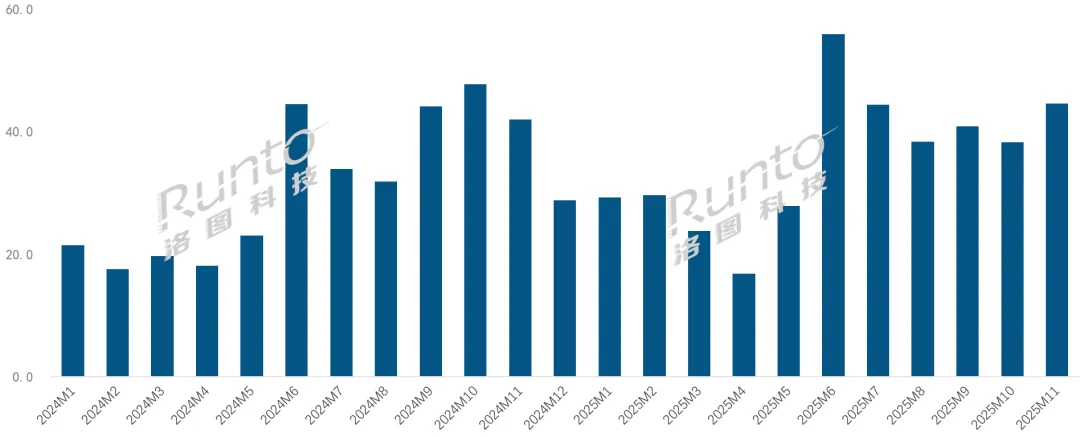
Group 1 - The core viewpoint of the article indicates that the Chinese learning tablet market is experiencing a slowdown in growth, exacerbated by a shortage and price increase of storage chips, leading to market uncertainty [1][6] - The demand for quality educational resources from parents and children, combined with policy incentives, has driven rapid growth in the electronic education hardware market over the past two years, with a monthly sales growth rate of nearly 25% in the first eight months of the year [1] - However, from September onwards, market sales began to decline year-on-year, with an expected total sales volume of just over 6 million units for the year, a decrease from 5.923 million units in 2024, indicating a significant slowdown [1][5] Group 2 - The online sales of learning tablets during the promotional months from September to November fell by 7.6% year-on-year, with a 7.7% decline in sales during the peak promotional months of October and November [2] - Despite the ongoing national subsidy policy and various promotional activities from major e-commerce platforms, the results did not meet expectations due to the early release of market demand and the rational decision-making of consumers influenced by the proliferation of AI [4] - The price increase of storage chips is expected to further amplify market uncertainty, as the global memory chip market faces a supply-demand imbalance, with manufacturers reallocating capacity towards AI-specific memory solutions [6] Group 3 - The rising prices of memory and storage chips are significantly impacting the learning tablet industry, as these devices heavily rely on AI models for processing vast amounts of learning data [6] - The cost of memory and storage accounts for 20%-25% of the Bill of Materials (BOM) for learning tablets, with mid-range models experiencing even higher proportions, leading to potential price increases for end products [8] - The competitive market environment makes it challenging for companies to fully pass on raw material cost increases to consumers, resulting in squeezed profit margins and deteriorating operational quality [9]