纺织材料

Search documents
仙游:生态“高颜值”与产业“高素质”协同并进
Xin Lang Cai Jing· 2026-02-11 00:11
Group 1: Ecological Development - Xianyou County has a forest coverage rate of 63.93%, with water quality in major river basins maintaining a 100% good rate and air quality consistently better than national secondary standards [2] - The county has been recognized as a national "Ecological Civilization Construction Demonstration Zone" [2] - The county aims to integrate ecological civilization construction into all aspects of economic, political, cultural, and social development, promoting a dual-win goal of ecological and economic benefits [2] Group 2: Water Management Initiatives - Xianyou County is implementing a "Five Water Co-Governance" strategy, focusing on wastewater treatment, flood control, and drainage [4] - The county has constructed 1,366 kilometers of new sewage pipelines and completed the governance of 6 safe ecological water systems and 11 small watersheds, totaling over 110 kilometers [4] - The county's wastewater treatment plant processes domestic sewage through 12 procedures, ensuring compliance before discharge into the river [4] Group 3: Industrial Transformation - Yiming Textile, located in Xianyou Economic Development Zone, has an annual output value exceeding 1.1 billion yuan and is recognized as a "hidden champion" in the textile materials industry [6] - The company is focusing on technological innovation and green development, utilizing eco-friendly materials and advanced equipment to reduce resource consumption [6] - The textile industry in Xianyou County employs nearly 30,000 people and is increasingly moving towards high-quality, green development [6] Group 4: Green Factory Recognition - Recently, the Ministry of Industry and Information Technology announced the inclusion of Xianyou Economic Development Zone in the list of new green factories and industrial parks for 2025 [7] - The county is accelerating the optimization of traditional industries and the development of emerging industries, aiming for a green transformation in manufacturing [7] Group 5: Ecotourism Development - Xianyou County boasts numerous natural scenic spots and has been recognized as a national garden county and a major ecological tourism county [9] - The county's tourism strategy has led to a projected visitor reception of 6.2563 million by 2025, reflecting an 11.2% year-on-year growth [9] - The county is implementing a "12345" development strategy in cultural tourism, creating new consumption scenarios to enhance the tourism experience [9]


受鸟类羽毛启发,科学家制备出最黑纺织面料
Ke Ji Ri Bao· 2025-12-08 03:48
Core Viewpoint - Researchers from Cornell University have developed the darkest known textile fabric inspired by bird feathers, applicable to natural fibers like wool, silk, and cotton [2] Group 1: Material Properties - "Super black" materials are defined as substances with light reflectance below 0.5%, holding significant application value in fields such as camera lenses, solar panels, and astronomical telescopes [2] - The newly developed fabric maintains a stable black color that does not diminish with changes in observation angle, addressing common issues with existing super black materials [2] Group 2: Production Method - The team drew inspiration from the deep black color of the Violet-crowned Hummingbird's feathers, using polydopamine to dye white merino wool knit fabric and employing plasma etching to create nanostructures on the fiber surface [2] - The method is described as simple and easily scalable, allowing for widespread adoption in textile manufacturing [2] Group 3: Mechanism of Light Absorption - The deep black color of the bird's feathers is attributed to a rich concentration of melanin and tightly arranged barb structures, which enable light to be reflected internally and nearly completely absorbed [2] - The experimental approach involved using synthetic melanin as a dye and plasma etching to form spike-like nanofibers, enhancing light absorption through multiple reflections within the fibers [2]
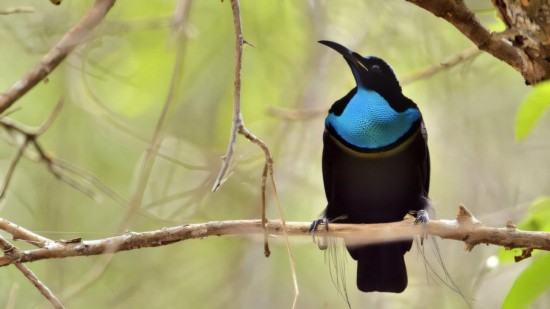
光照12秒就能升至40℃ 这种神奇织物实现“智能保暖”
Yang Shi Xin Wen· 2025-10-13 06:37
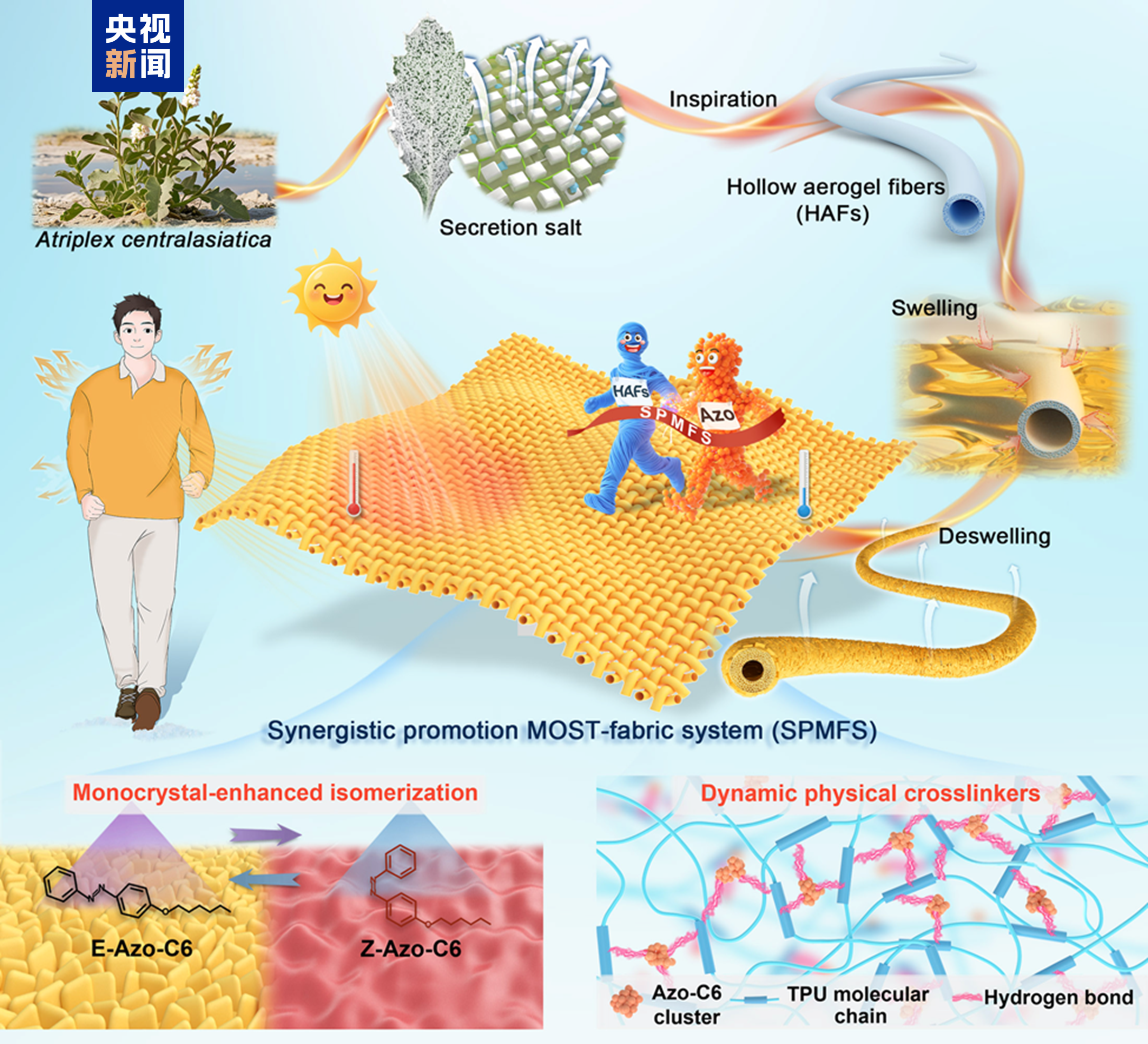
Core Insights - The research team from Tianjin University has developed a new type of molecular solar thermal (MOST) fabric that can efficiently convert light into heat, achieving a surface temperature increase to 40°C within 12 seconds under -20°C conditions, and maintaining its thermal performance even after repeated washing and friction [1][5][6] - This innovation addresses the long-standing challenge of balancing mechanical and thermal management properties in personal thermal management fabrics, which is crucial for energy conservation and enhancing the convenience of medical therapies [1][5] Group 1: Research and Development - The MOST fabric is inspired by the salt-absorbing and salt-excreting mechanisms of the salt-tolerant plant "Kochia scoparia," which adapts to extreme environments through a dynamic cycle [5] - The team utilized thermoplastic polyurethane aerogel fibers as a substrate, which were treated with a special azobenzene/chloroform solution to create a dense crystalline layer on the fiber surface, enhancing both optical and mechanical properties [5][6] Group 2: Performance and Durability - Experimental results show that the new fabric can achieve a temperature increase of 25.5°C within 70 seconds under 420nm blue light, and 21.2°C within 50 seconds in simulated sunlight at -20°C [5] - The fabric exhibits exceptional durability, retaining over 90% of its thermal performance after 50 friction tests, 500 stretch-bend cycles, and 72 hours of continuous washing, overcoming the common issues of traditional MOST materials [5][6] Group 3: Applications and Future Prospects - The MOST fabric allows for precise control of heat release temperature by adjusting light intensity, making it suitable for everyday warmth and portable therapy applications for conditions like arthritis [6] - This biomimetic design not only provides a new method for large-scale production of MOST fabrics but also represents a breakthrough in thermal management fabric performance, with potential applications in smart clothing, medical therapy devices, and outdoor protective gear [6]