仿生设计

Search documents
【中国新闻网】中国团队成功研发新型光电晶体管 实现复杂光照条件下高效探测
Zhong Guo Xin Wen Wang· 2026-01-07 02:58
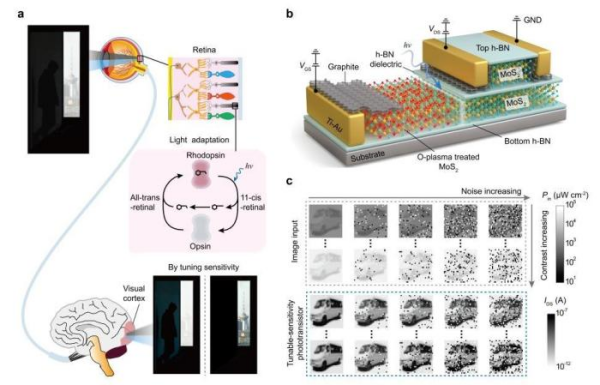
Core Viewpoint - A research team from the Shenyang Materials Science National Research Center has developed a biomimetic adjustable sensitivity phototransistor inspired by the human eye's visual adaptation mechanism, providing a new solution for high-sensitivity and noise-resistant detection of low-contrast targets under complex lighting conditions [1][2]. Group 1: Innovation and Design - The new phototransistor's biomimetic design addresses the challenge of detecting low-contrast targets and offers a new direction for the development of intelligent sensing devices [1]. - The core component of the device is a "gate light-sensitive window" made from specially treated molybdenum disulfide, which automatically adjusts its conductivity based on light intensity [2]. Group 2: Functionality and Performance - The device can dynamically adjust its sensitivity, akin to an "intelligent aperture," allowing it to amplify weak light signal changes while suppressing irrelevant background light or noise [2]. - Experimental data indicates that the sensitivity of this biomimetic photodetector exceeds traditional devices by over 1000 times when detecting low-contrast targets, maintaining stable and clear identification of key features even in strong and chaotic lighting conditions [4].

研判2025!中国仿生三维电子皮肤行业设计概念、产业链及市场规模分析:行业技术实现里程碑突破,推动人形机器人实现“具身智能”[图]
Chan Ye Xin Xi Wang· 2025-11-25 01:37
Core Insights - The Chinese bionic three-dimensional electronic skin industry is at a critical turning point from technological breakthroughs to industrialization, with significant advancements expected by 2024 [1][8] - The market size for this industry is projected to grow from 1.28 million yuan in 2024 to 20.95 million yuan by 2028, reflecting a robust growth rate of 103% [1][8] Industry Overview - Human tactile capabilities rely on the skin's ability to perceive multimodal mechanical stimuli, which is facilitated by mechanoreceptors that convert applied forces into electrical signals [2] - Current electronic skin technologies have not yet perfectly mimicked the three-dimensional distribution of mechanoreceptors, posing challenges in achieving high-precision force and strain measurements [2] Technological Advancements - The bionic three-dimensional electronic skin (3DAE-Skin) features a three-layer structure that mimics human skin, achieving a pressure resolution of approximately 0.1 mm, close to that of real skin [3][4] - The design incorporates a rigid polymer base for the epidermis, a sensor array for the dermis, and an arch structure for the subcutaneous layer, with elastic moduli corresponding to human skin layers [3][4] Industry Chain - The upstream of the bionic three-dimensional electronic skin industry includes various materials such as polyimide (PI), polyethylene terephthalate (PET), and silicone, while the downstream applications span humanoid robots, healthcare, consumer electronics, and industrial automation [5] Market Size - The market for bionic three-dimensional electronic skin is expected to reach 1.28 million yuan in 2024 and grow to 20.95 million yuan by 2028, indicating a strong growth trajectory [1][8] Key Institutions and R&D Progress - The Tsinghua University team led by Zhang Yihui published groundbreaking research in 2024, achieving simultaneous decoupling of pressure, shear force, and strain perception [8][9] - The Zhejiang Tsinghua Flexible Electronics Technology Research Institute is set to release the first commercial bionic three-dimensional electronic skin in 2025, integrating 240 metal sensors in a fingertip area [8][9] Industry Development Trends 1. The industry is moving towards achieving micro and nano-level resolution, with advancements in micro-nano fabrication and AI algorithms expected to drive a revolution in sensing precision [10][11] 2. The evolution from single-point force sensing to comprehensive "tactile-temperature-chemical" perception is anticipated, enhancing robotic environmental understanding [12] 3. The integration of biodegradable materials and self-healing systems is expected to open new avenues for medical-grade applications in bionic electronic skin [13]


小鹏 IRON 机器人遭“真人疑云”,董事长哽咽辟谣
Huan Qiu Wang Zi Xun· 2025-11-07 03:48
Core Viewpoint - The emergence of the new generation IRON humanoid robot by Xiaopeng Motors has sparked significant public interest and debate regarding its authenticity and technological capabilities [1][4]. Group 1: Product Features - The IRON robot features a bionic design with a "skeleton-muscle-skin" structure, boasting 82 degrees of freedom and equipped with three self-developed Turing AI chips, achieving a total computing power of 2250 TOPS [4]. - The robot incorporates all-solid-state battery technology to ensure safety and extended operational range [4]. Group 2: Public Response and Clarification - Following public skepticism about the robot's authenticity, Xiaopeng Motors' chairman, He Xiaopeng, released an unedited video demonstrating the robot's internal structure, humorously acknowledging the high level of realism [4]. - During a technology launch event, He Xiaopeng further addressed the concerns by publicly cutting open the robot's leg covering to reveal its mechanical components, expressing hope that this would be the last time he needed to prove its robotic nature [4]. Group 3: Future Plans - The IRON robot has entered practical training at Xiaopeng's factory in Guangzhou, with plans for mass production by the end of 2026 [4]. - Baosteel has been announced as the first ecological partner for industrial inspection scenarios involving the IRON robot [4].


Science Robotics发表!MIT开发FIREFLI可吞服胶囊设备,诊断肠系膜缺血准确率超90%
机器人大讲堂· 2025-10-25 13:31
Core Viewpoint - The article discusses the development of a groundbreaking medical robot, FIREFLI, designed for the diagnosis of acute mesenteric ischemia (AMI), a condition with a high mortality rate of up to 55% due to delayed diagnosis and treatment [1][3]. Group 1: FIREFLI Capsule Design and Technology - The FIREFLI capsule is inspired by the bioluminescent properties of fireflies, utilizing a "light-emitting - light-sensing" mechanism to detect changes in light reflection caused by ischemic conditions in the intestines [4]. - The capsule features a pH-responsive polymer coating that ensures it activates only in the small intestine, preventing premature activation in the stomach [4]. - Inside the capsule, three sets of flexible printed circuit boards (PCBs) are integrated, each containing a white LED and a 10-channel photodiode sensor, allowing for the detection of light reflection across a spectrum of 350-1000 nm [5]. Group 2: Diagnostic Performance and Validation - Animal studies using pigs demonstrated that the FIREFLI capsule could accurately diagnose ischemia, achieving a diagnostic accuracy of 89%, sensitivity of 98%, and specificity of 88% based on the "tissue brightness" biomarker [8][10]. - The study found that the "tissue brightness" indicator was more effective than color change indicators, which had a lower diagnostic accuracy of 65% and sensitivity of only 37% [10]. - The system maintained consistent performance over time, with ischemic tissue brightness remaining below the threshold during a 5-hour monitoring period, providing reliable data for clinical decision-making [11]. Group 3: Safety and Practicality - Safety trials indicated that the FIREFLI capsule passed through the gastrointestinal tract without causing any obstruction or retention, confirming its design's safety [12]. - The capsule is designed for efficient power management, allowing it to operate for over 5 hours on a single charge, which is sufficient to cover the average transit time through the small intestine [14].
天津大学研制新型仿生自发热织物
Zhong Guo Hua Gong Bao· 2025-10-17 04:33
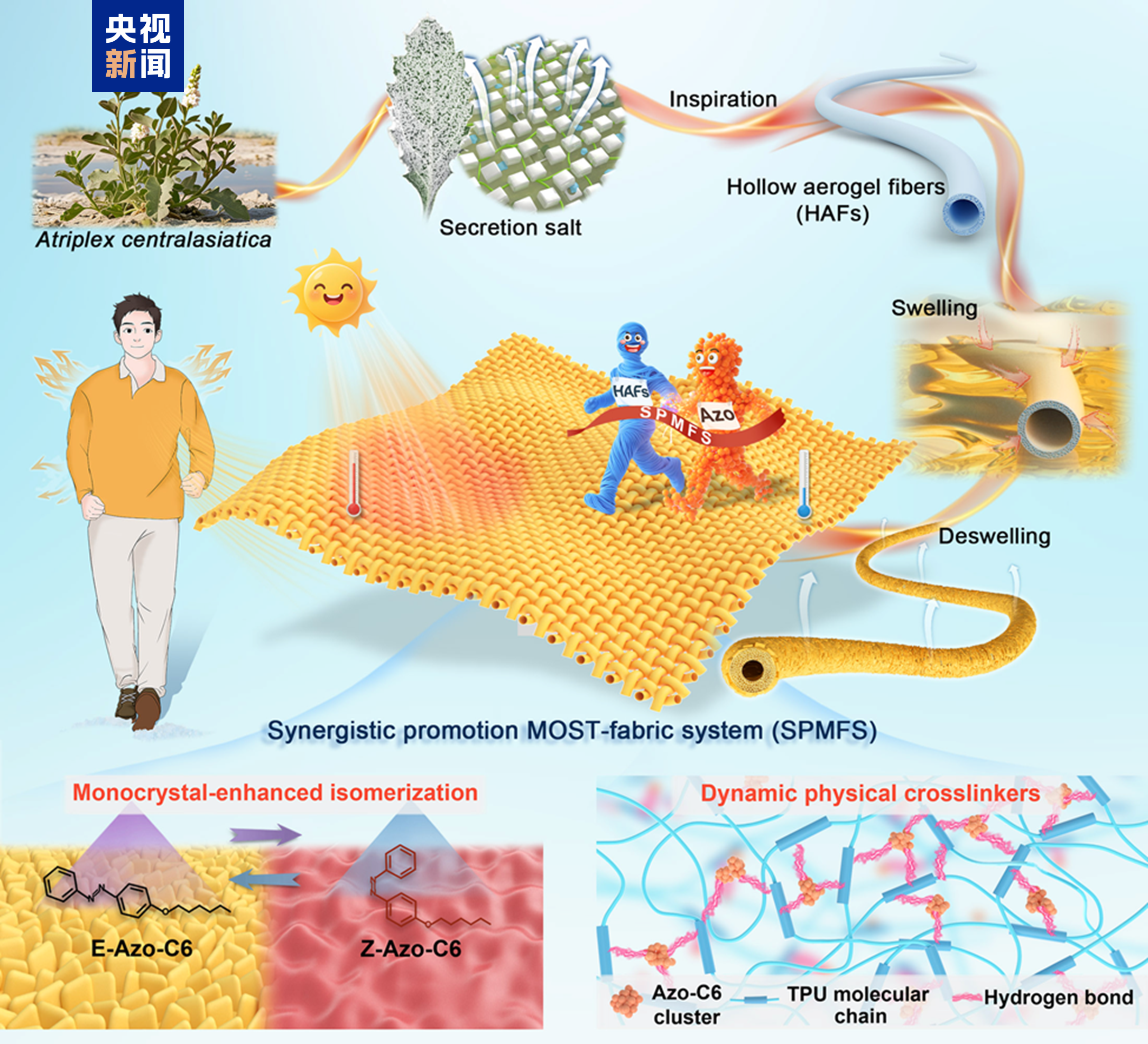
Core Insights - The research team from Tianjin University has developed a new type of molecular solar thermal (MOST) fabric that can efficiently convert light into heat and maintain excellent mechanical properties, inspired by the salt-absorbing mechanisms of salt-tolerant plants [1][2][3] Group 1: Technology and Innovation - The MOST fabric can rapidly increase surface temperature in extreme cold conditions, achieving a temperature rise of 25.5°C within 70 seconds under 420 nm blue light, and 21.2°C in 50 seconds at -20°C [2] - The fabric demonstrates remarkable durability, retaining over 90% of its light-heat performance after 50 abrasion cycles, 500 stretch-bend cycles, and 72 hours of continuous washing [2] Group 2: Applications and Future Prospects - This innovative fabric allows for precise control of heat release by adjusting light intensity, making it suitable for daily warmth and as a portable therapy device for conditions like arthritis [3] - The research represents a breakthrough in personal thermal management, shifting from reliance on external energy sources to efficient solar energy utilization, with potential applications in smart clothing, medical therapy devices, and outdoor protective gear [3]
光照12秒就能升至40℃ 这种神奇织物实现“智能保暖”
Yang Shi Xin Wen· 2025-10-13 06:37
Core Insights - The research team from Tianjin University has developed a new type of molecular solar thermal (MOST) fabric that can efficiently convert light into heat, achieving a surface temperature increase to 40°C within 12 seconds under -20°C conditions, and maintaining its thermal performance even after repeated washing and friction [1][5][6] - This innovation addresses the long-standing challenge of balancing mechanical and thermal management properties in personal thermal management fabrics, which is crucial for energy conservation and enhancing the convenience of medical therapies [1][5] Group 1: Research and Development - The MOST fabric is inspired by the salt-absorbing and salt-excreting mechanisms of the salt-tolerant plant "Kochia scoparia," which adapts to extreme environments through a dynamic cycle [5] - The team utilized thermoplastic polyurethane aerogel fibers as a substrate, which were treated with a special azobenzene/chloroform solution to create a dense crystalline layer on the fiber surface, enhancing both optical and mechanical properties [5][6] Group 2: Performance and Durability - Experimental results show that the new fabric can achieve a temperature increase of 25.5°C within 70 seconds under 420nm blue light, and 21.2°C within 50 seconds in simulated sunlight at -20°C [5] - The fabric exhibits exceptional durability, retaining over 90% of its thermal performance after 50 friction tests, 500 stretch-bend cycles, and 72 hours of continuous washing, overcoming the common issues of traditional MOST materials [5][6] Group 3: Applications and Future Prospects - The MOST fabric allows for precise control of heat release temperature by adjusting light intensity, making it suitable for everyday warmth and portable therapy applications for conditions like arthritis [6] - This biomimetic design not only provides a new method for large-scale production of MOST fabrics but also represents a breakthrough in thermal management fabric performance, with potential applications in smart clothing, medical therapy devices, and outdoor protective gear [6]
新型仿生光热织物可实现“智能保暖”
Ke Ji Ri Bao· 2025-10-13 01:30
Core Insights - Tianjin University has developed a new type of molecular solar thermal (MOST) fabric inspired by the "salt-absorbing and salt-excreting" mechanism of salt-tolerant plants, which offers efficient photothermal conversion and excellent mechanical properties without the need for complex electronic devices [1][2] - The fabric can rapidly increase its temperature by 21.2℃ within 50 seconds under simulated sunlight at -20℃, paving the way for advancements in next-generation wearable thermal management technology [1] Summary by Sections Fabric Performance - The new MOST fabric demonstrates superior thermal management capabilities, achieving a temperature increase of 25.5℃ within 70 seconds under 420nm blue light [2] - The fabric maintains over 90% of its photothermal performance after 50 friction tests, 500 stretch-bend cycles, and 72 hours of continuous washing, addressing the durability issues faced by traditional MOST materials [2] Innovative Design - The research team utilized a biomimetic strategy by drawing inspiration from the plant "Kochia scoparia," employing thermoplastic polyurethane-based aerogel fibers as the substrate, which undergo a unique soaking and drying process to enhance their properties [1][2] - This design approach not only provides a new method for large-scale production of MOST fabrics but also achieves a breakthrough in thermal management fabric performance [2] Application Potential - The fabric can precisely control heat release temperature by adjusting light intensity, making it suitable for everyday warmth and as a portable therapeutic medium for conditions like arthritis [2] - The innovation is expected to facilitate the transition of personal thermal management from reliance on external energy sources to efficient utilization of solar energy, with potential applications in smart clothing, medical therapy devices, and outdoor protective gear [2]
震撼!不用电机的手术机器人诞生,灵感来自水蛭,已能精准切除肠道肿瘤
机器人大讲堂· 2025-08-25 12:10
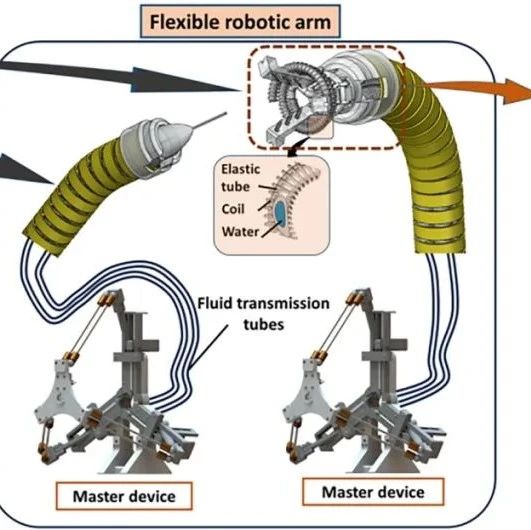
Core Viewpoint - A new soft robotic system for teleoperated endoscopic surgery has been developed by a research team from UNSW, which operates solely on hydraulic transmission without the need for motors, showcasing significant potential for precise surgical operations in narrow intestinal spaces [1][2]. Group 1: Importance of Soft Surgical Robots - Colorectal cancer is the third most common cancer globally, with a high mortality rate. Endoscopic submucosal dissection (ESD) is a crucial treatment method that avoids external incisions [2][4]. - Existing ESD robotic systems face challenges such as mechanical structure limitations, complexity, and high costs, which hinder their clinical application [4][5]. Group 2: Innovative Design Inspired by Nature - The research team drew inspiration from the mouth structure of leeches, leading to the design of a unique three-claw gripper that mimics the leech's suction capabilities [6][7]. - The three-claw design allows for automatic alignment and even force distribution, reducing the risk of tissue damage compared to traditional two-claw systems [7][8]. Group 3: Mechanical Control System - The system features a purely mechanical master-slave control mechanism, eliminating the need for electronic controls, which enhances reliability and reduces energy loss during operation [9][11]. - The design includes a Delta structure master controller that translates hand movements into precise actions at the surgical end, utilizing hydraulic pressure generated by syringes [11][12]. Group 4: Performance and Testing - The soft robotic arm can extend by 70 mm and generate a maximum force of 3.88 Newtons, surpassing the force required for ESD procedures [12][19]. - Rigorous in vitro and ex vivo experiments demonstrated the system's capability to perform complete ESD procedures, showcasing its clinical application potential [15][18]. Group 5: Future Prospects - Future improvements will focus on enhancing tactile feedback and integrating imaging technology for better visual feedback during procedures [20]. - The innovative design of this soft robotic system may also be applicable to other endoscopic surgeries, potentially revolutionizing minimally invasive surgical techniques [20].
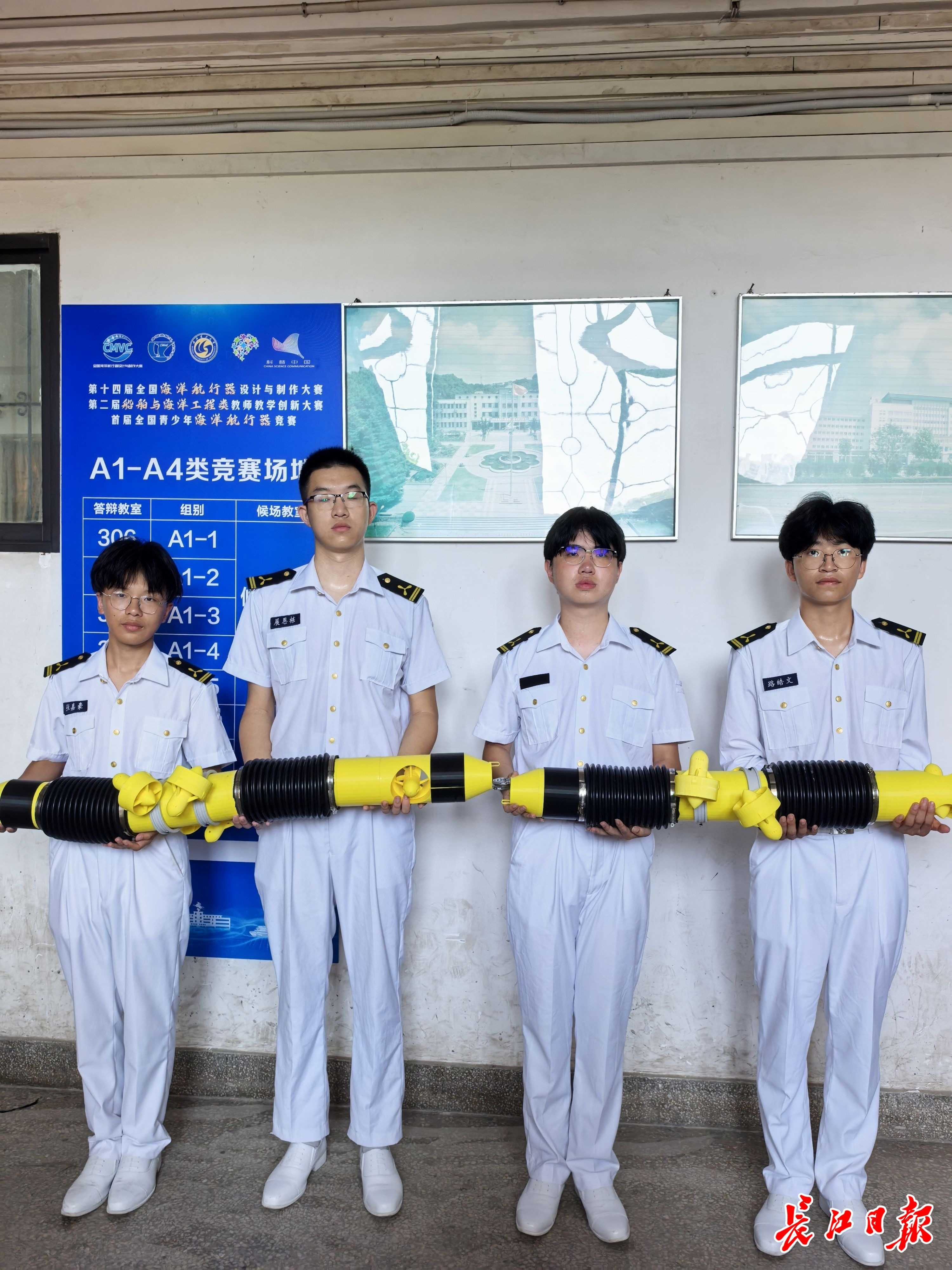
“水蛇”机器人潜入深海给管道做体检 武汉大学生突破性创新斩获全国一等奖
Chang Jiang Ri Bao· 2025-08-13 00:46
Core Insights - The "Bionic Water Snake Subsea Pipeline Inspection Robot" developed by the Wuhan University of Technology team won the national first prize at the 14th National Marine Vehicle Design and Manufacturing Competition, standing out among 3,345 teams from nearly 400 institutions [1][4]. Group 1: Innovation and Design - The robot features a three-segment design with a 3mm thick silicone "skin" and flexible joints, allowing it to mimic the movement of a real water snake, enabling it to navigate through narrow pipelines [4]. - The bionic design addresses the limitations of traditional inspection equipment, providing a new solution for subsea pipeline operations and maintenance [4]. Group 2: Technical Capabilities - Equipped with 32 ultrasonic probes at its head, the robot can detect defects along the pipeline walls, transmitting real-time data to the surface, similar to how a doctor performs an ultrasound [4]. - The robot is applicable for various environments, including subsea oil and gas pipelines, wind power equipment, river dams, sunken ship pipelines, and urban underground corridors [4]. Group 3: Team Background and Future Plans - The team consists of undergraduate students born in the 2000s, who were inspired by the school's innovation and entrepreneurship initiatives [4]. - The team leader expressed intentions to enhance the robot's pressure resistance and intelligence for more effective operations in deep-sea environments [4].
当机器人长出“橡胶肌肉”:美国西北大学这项突破,让钢铁直男变柔韧高手
机器人大讲堂· 2025-08-09 03:06
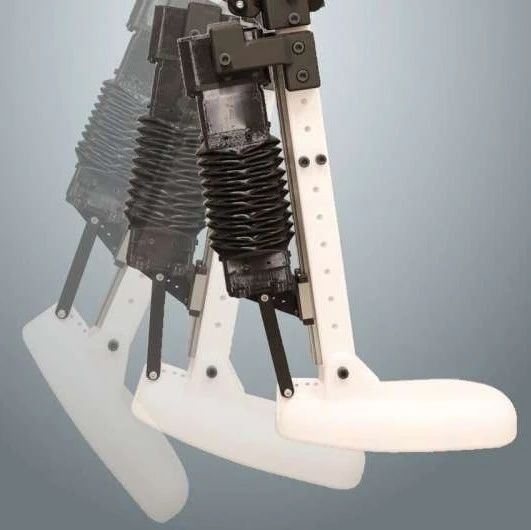
Core Insights - The article discusses the development of bio-inspired artificial muscles by Northwestern University, which aim to provide robots with unprecedented flexibility and adaptability, moving away from traditional rigid mechanical systems [1][3]. Group 1: Breakthrough in Robotics - The new artificial muscles allow robots to perform complex and delicate movements, mimicking biological muscle contractions and expansions, thus enhancing human-robot collaboration and precision tasks [1][4]. - The research addresses the industry challenge of balancing material performance and driving efficiency in flexible robotics, potentially transforming automation in traditional manufacturing [1][3]. Group 2: Design and Functionality - The artificial muscles are based on a bionic design that combines rigid skeletal structures with soft muscle-like actuators, enabling robots to navigate unstructured environments safely and naturally [4][5]. - The team utilized a 3D-printed structure called "HSA" (Hand-Shear-Assisted) that can stretch and expand, simulating muscle behavior, and is encased in a rubber origami structure for effective actuation [4][5]. Group 3: Practical Applications - A life-sized robotic leg was constructed to demonstrate the capabilities of the artificial muscles, featuring a hard plastic skeleton and rubber tendons, which can absorb impacts and mimic biological movement [8][9]. - The robotic leg, powered by a compact battery, can perform thousands of knee bends on a single charge and successfully execute tasks like kicking a volleyball, showcasing the practical utility of the artificial muscles [9].