跨境保健品

Search documents
番泻苷“暗战”:跨境电商不是法外之地,“排毒神话”谁来买单?
3 6 Ke· 2026-02-05 11:15
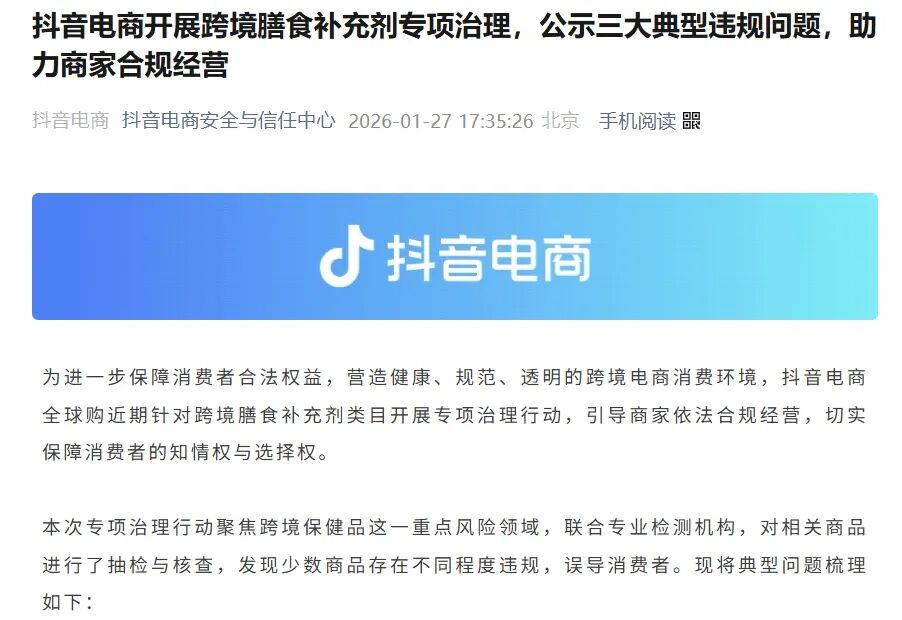
Core Viewpoint - The "health myth" surrounding cross-border imported health supplements is being challenged as violations of ingredient regulations come to light, particularly with the recent crackdown by Douyin E-commerce on dietary supplements containing illegal additives [1][4]. Group 1: Regulatory Actions - Douyin E-commerce has initiated a special governance program for cross-border dietary supplements, revealing several cases of violations, including products containing illegal additives like "sennosides A/B" [1][4]. - The announcement highlighted that certain products were found to contain risk substances not permitted by Chinese regulations, leading to their removal from the platform [4][8]. Group 2: Ingredient Violations - Sennosides, the active components of senna leaves, are being misrepresented by sellers who use alternative names to avoid detection, misleading consumers about the product's true nature [4][6]. - The pharmacological effects of sennosides A and B include strong laxative properties, which can cause acute digestive issues and long-term health risks, including dependency and nutrient absorption problems [6][7]. Group 3: Market Dynamics - The cross-border e-commerce sector for dietary supplements is currently managed under ordinary food regulations in China, making the addition of sennosides illegal [8][10]. - Many popular products on major e-commerce platforms contain sennosides, with some brands misleadingly labeling their products to obscure the presence of these harmful ingredients [10][12]. Group 4: Consumer Awareness and Industry Standards - There is a pressing need for consumers to develop a scientific understanding of health products, recognizing that "natural" does not equate to safe, and that rapid effects often signal the presence of banned substances [17][18]. - E-commerce platforms are encouraged to implement stricter controls, such as a negative list for cross-border health products, to prevent the sale of items containing illegal ingredients [20]. Group 5: Regulatory Environment - Regulatory bodies are intensifying their scrutiny of illegal additives, and the industry must adapt to a more compliant framework to ensure consumer safety and restore public trust [20]. - The future of the industry hinges on moving away from "wild growth" towards a model that prioritizes compliance and quality, ultimately benefiting both consumers and legitimate businesses [20].