
跨境电商监管

Search documents
番泻苷“暗战”:跨境电商不是法外之地,“排毒神话”谁来买单?
3 6 Ke· 2026-02-05 11:15
Core Viewpoint - The "health myth" surrounding cross-border imported health supplements is being challenged as violations of ingredient regulations come to light, particularly with the recent crackdown by Douyin E-commerce on dietary supplements containing illegal additives [1][4]. Group 1: Regulatory Actions - Douyin E-commerce has initiated a special governance program for cross-border dietary supplements, revealing several cases of violations, including products containing illegal additives like "sennosides A/B" [1][4]. - The announcement highlighted that certain products were found to contain risk substances not permitted by Chinese regulations, leading to their removal from the platform [4][8]. Group 2: Ingredient Violations - Sennosides, the active components of senna leaves, are being misrepresented by sellers who use alternative names to avoid detection, misleading consumers about the product's true nature [4][6]. - The pharmacological effects of sennosides A and B include strong laxative properties, which can cause acute digestive issues and long-term health risks, including dependency and nutrient absorption problems [6][7]. Group 3: Market Dynamics - The cross-border e-commerce sector for dietary supplements is currently managed under ordinary food regulations in China, making the addition of sennosides illegal [8][10]. - Many popular products on major e-commerce platforms contain sennosides, with some brands misleadingly labeling their products to obscure the presence of these harmful ingredients [10][12]. Group 4: Consumer Awareness and Industry Standards - There is a pressing need for consumers to develop a scientific understanding of health products, recognizing that "natural" does not equate to safe, and that rapid effects often signal the presence of banned substances [17][18]. - E-commerce platforms are encouraged to implement stricter controls, such as a negative list for cross-border health products, to prevent the sale of items containing illegal ingredients [20]. Group 5: Regulatory Environment - Regulatory bodies are intensifying their scrutiny of illegal additives, and the industry must adapt to a more compliant framework to ensure consumer safety and restore public trust [20]. - The future of the industry hinges on moving away from "wild growth" towards a model that prioritizes compliance and quality, ultimately benefiting both consumers and legitimate businesses [20].

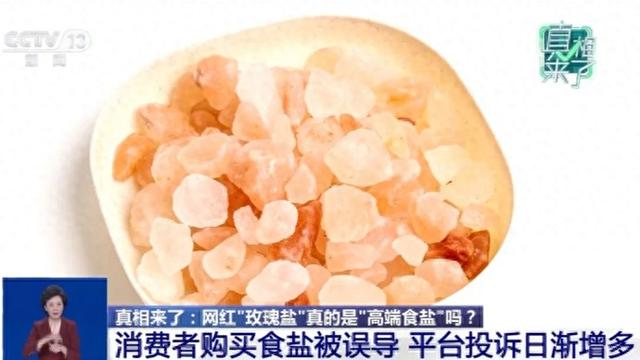
“玫瑰盐”更高端?安全比颜值更重要
Xin Lang Cai Jing· 2025-12-25 18:26
Core Viewpoint - The rising popularity of "rose salt" as a high-end product has been challenged by recent findings of heavy metals, raising concerns about health risks associated with such consumer goods [1][2]. Group 1: Product Characteristics and Market Trends - Rose salt has gained traction due to its pink appearance and health claims, with some sellers promoting it as containing various minerals and even having mystical properties [1]. - The marketing strategies for rose salt appeal to consumer desires for uniqueness and health, leading to its perception as a premium product despite lacking compliance with food safety standards in China [2]. Group 2: Regulatory and Consumer Awareness Issues - The use of rose salt is restricted to industrial purposes in China, yet its popularity persists, highlighting regulatory gaps in cross-border e-commerce that allow illegal sales [2]. - Consumers often fall prey to health-related marketing traps, driven by misconceptions such as "imported equals high quality" and "expensive means better," which some businesses exploit to enhance consumer anxiety [2][3]. Group 3: Recommendations for Consumers - To combat health-related consumer traps like rose salt, a robust regulatory framework is essential, alongside increased consumer awareness and scientific literacy [3]. - Consumers are encouraged to focus on the practical value of products rather than being swayed by flashy marketing, as the primary function of salt is to provide flavor and necessary sodium [3].
玫瑰盐热销:别让“粉红滤镜”遮蔽安全底线
Xin Lang Cai Jing· 2025-12-22 11:05
Core Viewpoint - The rising popularity of pink Himalayan salt, marketed as a high-end health product, is misleading consumers as it does not meet national food safety standards in China, highlighting significant challenges in food safety regulation and oversight [2][3]. Group 1: Product Characteristics and Misleading Marketing - Pink Himalayan salt, also known as Himalayan rock salt, is primarily imported from Pakistan and is characterized by its pink color due to impurities, which disqualifies it from being classified as edible salt under Chinese standards [2]. - Many consumers are misled into believing that pink salt is a more nutritious option, while it is actually intended for industrial use, bath products, or as crafts [3]. Group 2: Regulatory Challenges and E-commerce Impact - The influx of pink salt into the Chinese market mainly occurs through cross-border e-commerce, which complicates regulatory oversight due to the products being classified under different categories for customs [3]. - In 2024, the General Administration of Customs reported 4,200 batches of unapproved food products, a 78.12% increase from 2023, with labeling non-compliance being the most frequent issue [3]. Group 3: Recommendations for Improved Oversight - It is suggested that the State Administration for Market Regulation and the General Administration of Customs establish a joint verification mechanism for high-risk imported foods sold online, particularly those misrepresented as food products [4]. - E-commerce platforms should implement algorithmic checks to ensure that products claiming to be edible or health-related are linked to valid certifications, preventing non-compliant items from being listed [4].
警惕“保税仓发货”成为造假温床
Guang Zhou Ri Bao· 2025-04-29 21:27
Core Insights - The rise of cross-border e-commerce has led to the emergence of a black market for counterfeit imported health products, which has raised significant concerns among consumers and regulators [1][2] - Illegitimate businesses are exploiting regulatory loopholes in cross-border e-commerce to sell domestically produced health products as imported ones, misleading consumers and disrupting the market [1][2] Group 1: Regulatory Issues - The misuse of bonded zone policies has made it easier for counterfeiters to operate, as the inspection standards for cross-border e-commerce retail are relatively lenient compared to traditional imports [2] - Counterfeiters often register shell companies, allowing them to quickly re-emerge after being caught, complicating enforcement efforts [2] Group 2: Consumer Protection Challenges - The complexity of the rights protection process for cross-border goods often leads consumers to abandon their pursuit of accountability [2] - There is an urgent need to strengthen regulation in bonded zones to combat the black market for counterfeit imports [2] Group 3: Recommendations for Improvement - Authorities should increase penalties for companies that forge import qualifications and engage in false advertising, including placing them on a credit blacklist [2] - A joint enforcement mechanism should be established among customs and market regulation departments to ensure full electronic monitoring of imported health and cosmetic products [2] - Cross-border e-commerce platforms should provide complete logistics information to help consumers verify the authenticity of products [2]