
麻类种植与加工

Search documents
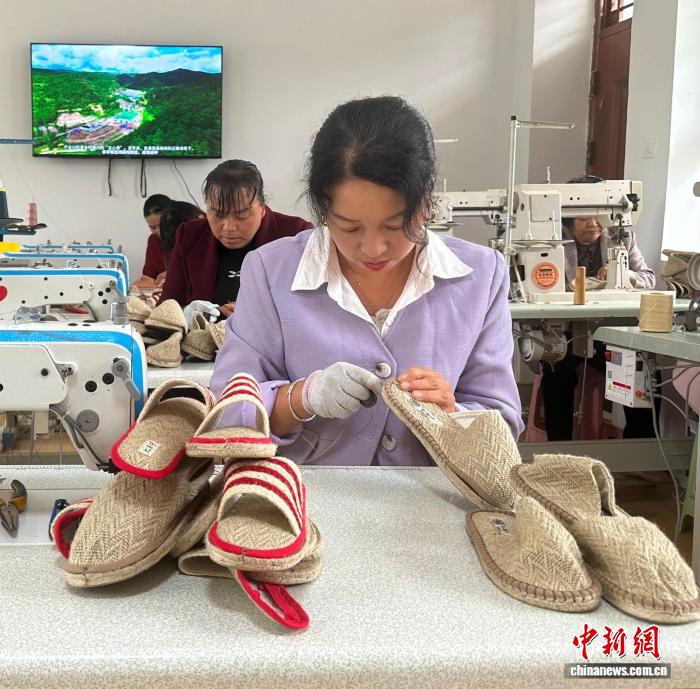
从田间到市场 “轩辕故里”清水千年汉麻产业全链条焕新
Zhong Guo Xin Wen Wang· 2025-08-30 08:49
Core Viewpoint - The article highlights the revitalization of the hemp industry in Qingshui County, Gansu Province, showcasing its transition from traditional cultivation to a modernized, full-chain industry model, emphasizing the economic and environmental benefits of hemp cultivation [1][2]. Industry Overview - Qingshui County has a long history of hemp cultivation, dating back over 5,000 years, with current cultivation covering 50,000 acres [1]. - The county has established a complete industrial chain that includes planting, processing, research, and sales, positioning itself as a rare high-quality hemp raw material base in China [2]. Economic Impact - In 2024, Qingshui County is projected to achieve a hemp production of 25,000 tons, generating a value of 75 million yuan, benefiting over 1,600 households through planting and labor opportunities [2]. - The county has signed six cooperation projects with a total investment exceeding 1.3 billion yuan, focusing on deep processing of hemp products [4]. Technological Advancements - The county collaborates with research institutions to enhance key technologies such as variety selection, green retting, and mechanical harvesting, significantly improving the competitiveness of the hemp industry [4]. - Experts emphasize the advantages of hemp, including its ability to absorb heavy metals and pesticides from the soil, making it an environmentally friendly crop [1]. Policy Support - Qingshui County has implemented a "plant first, subsidize later" policy, providing subsidies of 100 to 150 yuan per acre to stimulate planting enthusiasm [4]. - The local government aims to expand planting scale, improve product quality, and extend the industrial chain, fostering a sustainable industrial ecosystem [5].

印度对孟加拉国和尼泊尔黄麻产品发起反倾销期中复审调查
news flash· 2025-07-21 06:57
Core Viewpoint - The Indian Ministry of Commerce has initiated a mid-term review investigation into the anti-dumping measures on jute products originating from or imported from Bangladesh and Nepal, following a request from domestic industry associations [1] Group 1: Investigation Details - The investigation will assess whether there is a need to re-evaluate the dumping margins and the extent of damage caused by exporters/producers from Bangladesh and Nepal [1] - The period for the anti-dumping investigation is set from April 2024 to March 2025, lasting 12 months [1] - The damage investigation will cover multiple periods: April 2021 to March 2022, April 2022 to March 2023, April 2023 to March 2024, and April 2024 to March 2025 [1]