Consumer Hardware

Search documents
His house burned down. He used the insurance money to build PopSockets.
Yahoo Finance· 2026-03-04 19:34
Loading the player... Does a consumer hardware company need to get on the VC treadmill to succeed? Eleven years and 290 million products sold across 115 countries later, PopSockets has proven that the bootstrapped, low-dilution path more viable than the industry gives it credit for. The global consumer hardware brand was built on less than $500k, no institutional capital, and a philosophy professor’s determination. Watch as founder and former CEO of PopSockets David Barnett joins Equity to talk about h ...
The Best Tech ETF to Invest $2,000 in Right Now
Yahoo Finance· 2026-02-01 15:13
Core Insights - The tech sector has significantly expanded over the past two decades, leading to the recommendation of investing in tech exchange-traded funds (ETFs) for efficient exposure to various industries [1] Group 1: Investment Strategy - A well-chosen tech ETF serves as a convenient option for investors seeking exposure to tech companies without the complexity of selecting individual stocks [2] - The Invesco Nasdaq 100 ETF (NASDAQ: QQQM) is highlighted as a suitable investment choice, particularly for those with $2,000 to invest, due to its built-in hedge and alignment with investor needs [2] Group 2: ETF Composition - QQQM mirrors the Nasdaq-100 index, which tracks approximately 100 of the largest non-financial companies on the Nasdaq stock exchange, excluding banks, insurance companies, and REITs [4] - The tech sector constitutes over 63% of QQQM, with nine of its top ten holdings being tech companies, indicating a strong focus on leading tech firms [4] - The top holdings in QQQM include Nvidia (8.63%), Apple (7.19%), Microsoft (6.65%), and Amazon (4.85%), among others, showcasing a concentration in major tech players [5] Group 3: Performance History - The Nasdaq-100 has delivered an average annual return of over 19% over the past decade, with a $2,000 investment growing to approximately $12,250 by January 27 [7] - Since its inception in October 2020, QQQM has averaged 15.5% annual returns, positioning it as a potentially consistent market-beating ETF [7] - A hypothetical average return of 10% annually would result in doubling the investment every 7.2 years, although past performance does not guarantee future results [8]
1 Tech ETF to Buy Hand Over Fist and 1 to Avoid in 2026
The Motley Fool· 2025-12-11 21:15
Core Viewpoint - The article discusses the investment potential of tech-focused exchange-traded funds (ETFs) as the market approaches 2026, highlighting one ETF to embrace and another to avoid. Group 1: Recommended ETF - The Invesco Nasdaq 100 ETF (QQQM) is a relatively new ETF launched in 2020 that tracks the Nasdaq-100 index, which includes the 100 largest non-financial stocks on the Nasdaq stock exchange [4] - QQQM has a lower expense ratio of 0.15% compared to its predecessor, the Invesco QQQ Trust ETF (QQQ), which has an expense ratio of 0.20%, potentially saving long-term investors hundreds or thousands in fees [5] - The tech sector represents 65% of QQQM, with other sectors including consumer discretionary (17.6%), healthcare (4.9%), telecommunications (3.5%), and industrials (3.2%) [6] Group 2: Companies in QQQM - QQQM provides exposure to leading tech companies such as Nvidia, Amazon, Microsoft, Alphabet, and Apple, as well as emerging software firms like Palantir Technologies and Shopify [7][8] - The ETF allows investors to cover a broad range of tech industries while also providing some hedging against potential downturns in the tech sector [8] Group 3: ETF to Avoid - The Vanguard Information Technology ETF (VGT) has outperformed the Nasdaq-100 over the past decade but has a high concentration in three stocks: Nvidia (18.2%), Apple (14.3%), and Microsoft (12.9%), which together account for over 45% of the ETF [9][11] - VGT's focus solely on the information technology sector excludes significant tech companies like Amazon and Alphabet, which are categorized under consumer discretionary and communication services, respectively [13][14] - The concentration in a few stocks raises concerns about the sustainability of VGT's strong returns, as it relies heavily on the performance of these three companies [12]

Alibaba Unveils AI Smart Glasses: S1 Model Starts at $537
Bloomberg Television· 2025-11-27 10:35
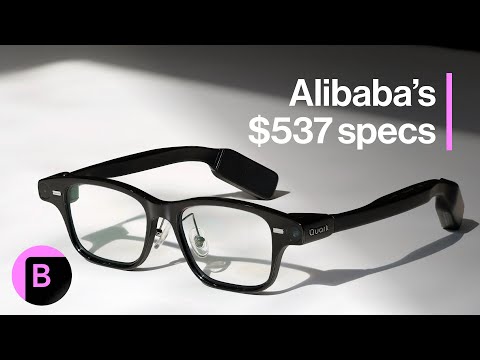
Market Trend - Alibaba is venturing into consumer hardware with smart glasses [1] - Smart glasses are gaining popularity in US and European markets, indicating a market opportunity in China [2] Product & Pricing - Alibaba's smart glasses are estimated to be priced around $545, cheaper than metal glasses costing about $800 [3] - The cheaper price point may offer comparable or even better features, similar to the smartphone market [3] Technology & Comparison - The technology for smart glasses is readily available and can be delivered at a good price [2] - Alibaba's glasses allow users to act normally with overlaid information, differing from Apple Vision [4]

Why the S&P 500’s Top 8 Stocks Aren’t as Concentrated as They Appear
Medium· 2025-11-03 21:49
Core Insights - The S&P 500's top eight stocks account for 27% of its total market capitalization but only 20-22% of its total earnings, indicating a modest premium rather than a bubble [1][2][4] - The concentration narrative is misleading as these companies operate in diverse sectors with different growth drivers and competitive dynamics [12][19] Market Capitalization vs. Earnings - The gap between market capitalization and earnings suggests that the market is pricing these companies at a 20-25% premium relative to their actual profit contribution [2][4] - A truly dangerous concentration would involve a much larger disparity between market cap and earnings [4] Business Diversification of Top Stocks - The top eight stocks include companies from various sectors: - NVIDIA focuses on semiconductors and AI chips [5] - Microsoft spans enterprise cloud, productivity software, gaming, and AI [6] - Apple operates in consumer electronics and services [7] - Amazon is diversified across e-commerce, cloud computing, and entertainment [8] - Meta primarily generates revenue from digital advertising [9] - Broadcom specializes in semiconductors and infrastructure software [9] - Alphabet operates in search, video, cloud, and AI [10] - Tesla is involved in electric vehicles and energy solutions [11] Quality Premium Justified by Fundamentals - The median operating margins for the top ten stocks increased by approximately 7 percentage points from 2015 to 2025, compared to 4 percentage points for the rest of the S&P 500 [14] - The median return on capital for the top ten stocks rose from 18% to 73%, indicating strong competitive advantages [14] Earnings Growth Comparison - In Q3 2025, the top companies delivered 14.9% year-over-year earnings growth, while the remaining companies grew at 6.7%, highlighting their superior profitability [15] - Analysts project that the top companies will contribute 33% of total S&P 500 earnings growth in 2025, down from 52% in 2024, suggesting a potential broadening of market contributions [16] Concentration Risk - Concentration risk exists primarily due to mechanical factors related to passive indexing rather than fundamental issues [17] - Historical examples show that concentration in specific sectors has occurred in the past without leading to market failures [18] Conclusion on Market Dynamics - The current concentration in the S&P 500 reflects efficient capital allocation towards profitable and innovative businesses rather than irrational market behavior [19][20] - The diversity of sectors represented by the top eight stocks supports a narrative of quality and competitive advantage [20]