EV Batteries

Search documents
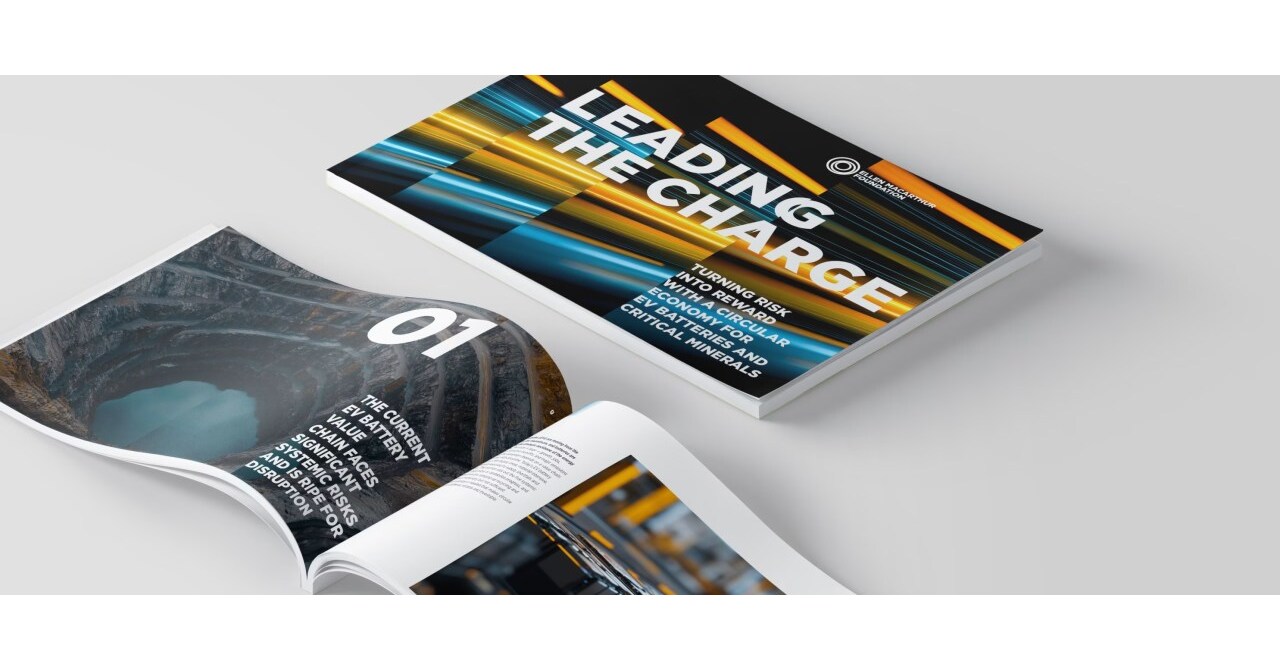
CATL und die Ellen Macarthur Foundation geben mit wegweisendem Whitepaper die Richtung für kreislauffähige EV-Batterien vor
Prnewswire· 2026-01-25 03:22
Core Insights - The article discusses a whitepaper released by the Ellen MacArthur Foundation at the World Economic Forum 2026, which presents an integrated, actionable roadmap for a circular economy in EV batteries and critical minerals [1][2] Group 1: Circular Economy Roadmap - The whitepaper outlines a clear, industry-oriented direction for constructing, using, recovering, and recycling EV batteries to maximize their value and reduce systemic risks across the value chain [2] - It emphasizes the collaboration between CATL and the Foundation, translating circular economy principles into practical measures based on real operational experiences [3] Group 2: Environmental and Economic Opportunities - A circular EV battery system can provide significant opportunities in environmental, economic, product development, and overall value creation by reducing the need for newly mined materials, lowering emissions, and promoting renewable energy integration [4] - The economic value is enhanced through improved material efficiency, reduced waste and operating costs, and the creation of new revenue streams, while also strengthening supply chain resilience [4] Group 3: Key Measures for Circularity - The whitepaper identifies five interconnected actions necessary to maintain battery materials in high-quality use and strengthen system resilience [5] - CATL is already implementing these measures at a system level across its operations, managing batteries as centrally controlled assets to increase utilization and ensure predictable returns at the end of their lifecycle [5][6] Group 4: Recycling and Emission Reduction - CATL's recycling activities achieve recovery rates of 99.6% for nickel, cobalt, and manganese, and 96.5% for lithium, with processing capacity expanded to 270,000 tons per year [6] - The company is also utilizing alternative chemicals like sodium-ion batteries and reducing lifecycle carbon emissions per kilowatt-hour by up to 60%, enhancing circular performance in mobility, exchange, and energy storage [6] Group 5: Strategic Goals and Future Collaboration - The report marks a significant milestone in the collaboration between CATL and the Foundation to accelerate the circular economy for critical minerals, with a focus on reviewing these approaches in real environments [9] - CATL aims for CO2 neutrality in all its battery plants and targets CO2 neutrality across its entire value chain by 2035, aligning with the broader agenda for sustainable energy transition [8][9]


NIO and CATL Strengthen EV Battery Ties Amid China Price War
ZACKS· 2026-01-08 15:51
Core Insights - CATL and NIO have established a long-term strategic partnership focused on advanced long-life battery technologies under a five-year agreement [1][10] - The collaboration aims to enhance battery lifespan, reduce ownership costs, and improve durability, which is expected to attract more customers [2][10] Battery Development - The partnership will involve joint development of batteries with extended lifespans, reinforcing innovation in the new energy vehicle (NEV) sector [2] - NIO and CATL will also work on battery swap technology, allowing EV owners to replace depleted batteries in under 100 seconds [3][10] Ecosystem and Market Impact - The collaboration seeks to create a scalable battery swap ecosystem, potentially benefiting other automakers and addressing high battery replacement costs [4][10] - The EV industry faces challenges such as high battery replacement expenses and intense competition, which could impact many companies in the market [4][5] Market Position - CATL holds a dominant position in the global EV battery market with a 38% share, capable of powering up to 20,000 EVs with 1 gigawatt-hour of battery capacity [5] - NIO achieved record deliveries of 48,135 vehicles in December 2025, marking a 54.6% year-over-year increase, with cumulative deliveries reaching 997,592 by the end of 2025 [7]

RR vs. Microvast: Which Small-Cap Tech Stock Should You Bet On?
ZACKS· 2025-11-27 15:31
Core Insights - Microvast Holdings, Inc. (MVST) and Richtech Robotics Inc. (RR) are both small-cap tech stocks in high-growth sectors, with MVST focusing on battery technologies for electric vehicles (EVs) and energy storage, while RR specializes in robotic solutions for automation in the U.S. service industry [1] Richtech Robotics - RR's Q3 fiscal 2025 revenues were $1.2 million, down 18.4% year-over-year, due to a shift to a Robotics-as-a-Service (RaaS) model aimed at long-term recurring revenues [2] - The company achieved a gross margin of 74.4%, an increase of 420 basis points from the previous year, indicating effective cost management [2] - Richtech's product offerings, such as ADAM and Titan 440, position it to capture a larger share of the RaaS market, projected to grow at a CAGR of 17.1% through 2034 [3] - The company has a cash reserve of $86 million with no current debt, allowing for investment in product development [3] - Despite the positive aspects, RR's net loss widened to $4.1 million from $1.3 million year-over-year, primarily due to a 254.7% increase in general and administrative expenses [4] - Competition from larger firms like Deere & Company and Rockwell Automation poses risks to RR's market penetration [4] Microvast Holdings - MVST reported record Q3 2025 revenues of $123.3 million, a 21.6% increase year-over-year, driven by higher sales in Asia and Europe [5] - The company experienced a gross margin expansion of 440 basis points year-over-year, attributed to operational execution and cost controls [5] - MVST maintained an adjusted EBITDA of $21.9 million, with a year-to-date figure of $76.3 million, indicating scalable operations [6] - The Huzhou Phase 3.2 expansion is expected to add nearly 2 GWh of annual production capacity, addressing customer demand [6] - Despite revenue growth, MVST reported a net loss of $1.5 million in Q3 2025, largely due to changes in warrant/loan valuation [7] - The competitive landscape in the EV battery market includes major players like General Motors and Toyota, which impacts MVST's pricing power [8] Financial Estimates and Valuation - The Zacks Consensus Estimate for RR's fiscal 2025 sales is $5 million, suggesting an 18.2% year-over-year increase, with a projected loss per share of 15 cents [11] - For MVST, the fiscal 2025 sales estimate is $462.3 million, indicating a 21.7% year-over-year increase, with an expected EPS of 17 cents [12] - MVST trades at a forward price-to-sales multiple of 2.05, below its 12-month median of 2.4, while RR's multiple is 37.58, lower than its median of 44.42 [13] Investment Verdict - Despite RR's higher valuation, it is justified by its scalability and potential for higher margins through the RaaS model [15] - MVST faces challenges in maintaining profitability in a competitive EV battery market [15] - Richtech Robotics is considered a better investment opportunity due to its recurring revenue model, strong gross margin, and high solvency profile [16]


Trump Sanctions Revive Barter Trade: China's Chery Trades Half-Built Cars for Iran's Copper - General Motors (NYSE:GM)
Benzinga· 2025-10-06 09:45
Core Insights - Barter trade activities between Chery Automobile and Iran have increased due to U.S. sanctions, allowing Chery to supply vehicles in exchange for Iranian metal ores [1][2][4] Group 1: Barter Trade Dynamics - Chery, the largest vehicle exporter in China, has engaged in barter trade with Iran, supplying semi-knocked-down vehicles in exchange for access to Iranian metal ores, which constituted over half of Chery's exports by 2016 [3] - The trade is facilitated through a separate company that routes the vehicles to Chery's local partner in Iran, MVM, for assembly [3] - Chery's approach of not trading in U.S. dollars allows it to operate without violating the sanctions imposed on Iran [4] Group 2: Impact of Sanctions - The U.S. sanctions, intensified after the abandonment of the Iran Nuclear Deal in 2018, have restricted Iran's access to the global financial system, prompting the barter trade [2] - Iran supplies metal ores such as Copper and Zinc to Tongling Nonferrous Metals Group Holdings, which then distributes them to other companies in China [4] Group 3: Chery's Financial Activities - Chery's recent IPO on the Hong Kong stock exchange raised $1.2 billion, with its share price increasing by 11% to HK$34.16 from an initial price of HK$30.75 [7] - Other companies, such as Contemporary Amperex Technology Co. Ltd. (CATL), also saw significant financial success, raising over $4.6 billion and experiencing a 12.5% surge in share price [7]


全固态电池专家电话会议要点-China EV batteries_ Takeaways from ASSB expert call
2025-09-15 01:49
Summary of Key Points from the ASSB Expert Call Industry Overview - The focus of the call was on the development of all-solid-state batteries (ASSBs) in China, particularly in the context of the electric vehicle (EV) battery market [1] Core Insights and Arguments 1. **Material Development**: - The mainstream roadmap for ASSB electrolyte material is shifting from oxide/polymer to sulfide-based materials due to better performance and higher ionic conductivity [2] - The supply of lithium sulfide (Li2S) is identified as a key bottleneck for sulfide-based electrolyte material [2] - Production methods for lithium sulfide include solid-phase synthesis and chemical vapor deposition (CVD) for better purity but at higher costs, while carbothermic and liquid-phase methods are cheaper but yield lower purity [2] - The estimated unit cell cost for ASSB is over CNY4 per Wh, with cost breakdowns: 18% for cathode (high-nickel NCM), 22-25% for anode (lithium metal), and 40% for electrolyte (sulfide-based) [2] 2. **Manufacturing Challenges**: - The electrode preparation process is transitioning from wet to dry processes to minimize hydrolysis of sulfide-based electrolytes [3] - The stacking procedure will replace the winding procedure due to the low flexibility of electrolyte materials [3] - Isostatic pressing is being introduced to improve solid-to-solid contact, which is currently challenging to achieve uniformly under ~300MPa pressure [3] - The pouch cell form factor is preferred for ASSBs due to higher energy density and reduced volume expansion [3] - Estimated unit equipment spending for ASSB production is at least CNY350-400 million per GWh [3] 3. **Competition Landscape**: - The material supply and manufacturing processes for ASSBs are still immature, with most players in pilot production stages [4] - Current sample products show low cell capacity (20-30Ah) and competitive energy density (~350Wh/kg) compared to traditional lithium-ion batteries [4] - ASSBs face challenges such as slower charging rates and lower cycle life, impacting their application in certain downstream markets [4] - Domestic equipment vendors have production capabilities for core equipment, but the performance of domestic isostatic laminators remains less favorable [4] Additional Important Insights - The expert emphasized that it will take time for ASSB technology to reach mass production, with most players at similar stages of development [4] - The transition to ASSBs is seen as a long-term evolution in the EV battery market, with significant challenges still to be addressed before widespread adoption can occur [4]
野村:中国汽车市场再迎两位数同比增长,展望中期电动汽车市场存部分担忧
野村· 2025-07-15 01:58
Investment Rating - The report assigns a "Buy" rating to BYD (1211 HK), Desay SV (002920 CH), and Contemporary Amperex Technology (300750 CH) [54][60][65]. Core Insights - The China auto market has shown another double-digit year-on-year growth, with wholesale unit deliveries reaching 2.5 million units in June, marking a 14.5% increase year-on-year and a 7.8% increase month-on-month [1][7]. - The electric vehicle (EV) market is experiencing suboptimal growth, with EV penetration at 52.7% in June, which is below expectations and historical highs [1][7]. - Concerns are raised regarding the slowing growth of EV penetration, potentially due to aggressive pricing strategies from internal combustion engine (ICE) car manufacturers and the upcoming 50% cut to EV purchase tax exemptions starting next year [2][7]. Summary by Sections China Auto Market Performance - In 1H25, the China auto market reported a total of 13.5 million wholesale shipments, reflecting a 12.9% year-on-year growth, while retail sales (excluding minivans) reached 10.9 million units, up 10.8% year-on-year [8]. - The overall growth momentum in 1H25 was slightly above expectations, supported by government subsidies for scrapping and trade-in programs [8]. Electric Vehicle Market - Monthly retail sales of PV EVs reached 1.1 million units in June, representing a 30.2% year-on-year increase [1][9]. - The report highlights that BEVs outperformed PHEVs/EREVs in terms of growth, with BEVs showing 45% year-on-year growth in wholesale shipments during 1H25 [9]. OEM Strategies and Market Dynamics - OEMs are currently preparing their strategies for 2H25, with expectations of model launches and adjustments in response to government policies against over-competition [3]. - BYD remains a top pick due to its strategies aimed at regaining market share, including reducing SKUs and improving model features without price increases [4]. Battery Market Insights - EV battery installations grew by 35.9% year-on-year to 58.2 GWh in June, with total installations for 1H25 reaching 300 GWh, a 47.3% increase year-on-year [5]. - CATL and BYD maintained their market leadership in the battery sector, holding 43.7% and 21.5% market shares, respectively [5]. Lithium Market Trends - The price of lithium carbonate in China rebounded from a low of CNY 60,000 per tonne in late June to CNY 63,000 per tonne in early July [5][48]. - The report anticipates potential downside risks to lithium production in July due to weakened demand and government interventions [5][48].