全固态电池技术

Search documents
亿纬锂能两款全固态电池下线!
鑫椤锂电· 2026-03-19 08:04
Core Viewpoint - EVE Energy has made significant progress in the commercialization of solid-state batteries, with the successful launch of "Longquan No. 3" and "Longquan No. 4" models, expanding its product matrix to cover both consumer electronics and new energy vehicle applications [1][3][4] Group 1: Product Development - The launch of "Longquan No. 3" and "Longquan No. 4" marks the first complete coverage of EVE Energy's solid-state battery products across key application scenarios [3] - The "Longquan No. 2" model, launched in September 2025, features an energy density of 300Wh/kg and a volume energy density of 700Wh/L, targeting high-end fields such as humanoid robots and low-altitude flying vehicles [4] - The new models indicate a successful transition from specialized applications to mass-market consumer electronics and power batteries, demonstrating EVE Energy's ability to scale production [4] Group 2: Strategic Intent - EVE Energy's strategic intent is clear: to penetrate the high-end specialty market first and gradually expand into the large-scale civilian market [3] - The "Longquan No. 3" model is aimed at high-end drones, smart wearable devices, portable medical instruments, and next-generation mobile terminals, showcasing high volume energy density and low-pressure adaptability [4] - The introduction of solid-state batteries for new energy vehicles signifies a shift from theoretical concepts to practical, testable solutions for automotive manufacturers [4]



全固态电池会不会取代磷酸铁锂?欧阳明高最新预判来了!
第一商用车网· 2026-03-16 07:30
Core Viewpoint - The article discusses the rising trend of all-solid-state batteries (ASSBs) as a core technology in the battery industry, highlighting the significant investments and developments by major automotive manufacturers and lithium battery giants in China and globally. The focus is on the potential timeline for the commercialization of ASSBs and their impact on the dominance of lithium iron phosphate (LFP) batteries in the market [1][5][12]. Group 1: All-Solid-State Battery Development - ASSBs are seen as a key technological leap, with major automotive manufacturers increasing R&D investments to accelerate vehicle testing and validation [1][5]. - By 2025, China is expected to hold 44% of the global new patent filings for ASSBs, surpassing Japan and leading the world in both total patent volume and growth rate in this technology [5][11]. - The development of ASSBs is categorized into three generations, with the first generation targeting energy densities of 200-300 Wh/kg by 2025-2027, and the third generation aiming for 500 Wh/kg by 2030-2035 [9][11]. Group 2: Technical Challenges and Innovations - ASSBs face significant technical challenges, including the need for breakthroughs in key materials, interface stability, and cell design, particularly in areas such as electrochemical stability and thermal stability [7][9]. - The industry is expected to see a high-quality development cycle starting in 2026, driven by innovations in safety, charging capabilities, and autonomous driving technologies [5][11]. Group 3: Market Position and Future Outlook - The potential for ASSBs to replace LFP batteries is debated, with current LFP technology still providing significant advantages in cost and performance, making it a cornerstone of the current electric vehicle market [12][13]. - The development of ASSBs and the continued use of LFP batteries are not mutually exclusive; both technologies can coexist, with LFP batteries serving as a stable foundation while ASSBs are developed for future applications [13][14].
每日市场观察-20260316
Caida Securities· 2026-03-16 02:45
Market Overview - On March 16, 2026, A-shares experienced fluctuations around the previous day's closing position, with all three major indices closing down, each declining by less than 1%[1] - The total trading volume in the Shanghai and Shenzhen markets reached 2.42 trillion yuan, a decrease of over 430 billion yuan compared to March 12[1] - Only a few sectors, including food and beverage, construction, banking, and real estate, saw gains, while the majority of sectors declined[1] Sector Performance - Energy-related sectors such as chemicals, wind power, and lithium batteries showed resilience, supporting the market amid a weak overall performance[1] - Technology sectors (computing power, AI) and non-ferrous metals collectively retreated, negatively impacting the indices[1] - Approximately 1,500 stocks rose, with the proportion of rising stocks close to 30%, remaining stable compared to March 12[1] Investment Insights - The market's recent pullback confirms a weak market effect, prompting a defensive investment style among market participants due to geopolitical tensions and energy price fluctuations[1] - Investors are advised to focus on energy-related sectors, blue-chip stocks, and the pharmaceutical sector for potential opportunities[1] Fund Flow - On March 13, the Shanghai Composite Index saw a net outflow of 3.668 billion yuan, while the Shenzhen Composite Index experienced a net inflow of 6.444 billion yuan[5] - The top three sectors for net inflow were infrastructure, batteries, and agricultural chemicals, while IT services, software development, and consumer electronics faced the largest outflows[5] Private Fund Performance - As of the end of February 2026, the average return of private equity funds reached 6.89%, with 85.04% of the 12,270 products achieving positive returns[15]
2025全固态电池固态电解质出货48.9吨
起点锂电· 2026-03-09 02:11
Core Viewpoint - The article emphasizes the dominance of Chinese companies in the global all-solid-state electrolyte market, projecting significant growth in the shipment of sulfide solid electrolytes, which are expected to account for 98% of the market by 2025 and continue to be the main focus for the next 3-5 years [2][4]. Group 1: Growth Drivers - **Technological Breakthroughs**: The room temperature conductivity of sulfide electrolytes is approaching that of liquid electrolytes, making it the only feasible route for achieving high energy density and fast charging. Improvements in interface impedance and mechanical processing compatibility enhance mass production feasibility [2][6]. - **Industry Chain Scaling**: Domestic companies are overcoming challenges in producing high-purity lithium sulfide and other core materials, significantly reducing costs [3]. - **Policy Support**: The inclusion of all-solid-state batteries in the "14th Five-Year Plan" with a national investment of 6 billion yuan in R&D and local subsidies is expected to drive growth in sulfide solid electrolyte shipments [4]. - **Increasing Downstream Demand**: Companies like CATL and BYD are accelerating their adoption of sulfide solid-state batteries, which are becoming standard in high-end electric vehicles and specialized applications, further boosting demand [5]. Group 2: Future Development Trends - **Material System Evolution**: The focus will shift from single systems to high-stability, high-conductivity composite systems, with advancements aimed at increasing room temperature ionic conductivity and enhancing mechanical strength [6]. - **Overcoming Solid-Solid Impedance**: Addressing high interface impedance and improving compatibility between electrodes and electrolytes will be key, with efforts to reduce interface resistance significantly [7]. - **Cost Reduction and Scale Production**: Innovations in synthesis processes and the transition to thin-film production methods are expected to enhance production efficiency and reduce costs, facilitating the commercialization of solid-state batteries [8]. - **Collaborative Technological Routes**: The industry will pursue a dual approach, advancing sulfide-based electrolytes while also developing hybrid systems with halides and oxides, aiming for a clear path to commercialization by 2027-2030 [9].
多家车企明确2027年计划开展全固态电池装车示范工作;MinerU完成10余家国产AI芯片算力适配丨智能制造日报
创业邦· 2026-02-13 03:37
Group 1 - Multiple automotive companies, including Geely and Chery, have announced plans to conduct all-solid-state battery vehicle demonstration work by 2027, with Geely aiming for small-scale industrialization by 2027 and full commercialization by 2030 [2] - Chery plans to achieve a 0.5GWh pilot production line by 2026 and start all-solid-state battery vehicle demonstrations in 2027, moving towards large-scale application [2] Group 2 - MinerU, an AI document parsing tool developed by the Shanghai Artificial Intelligence Laboratory, has completed compatibility adaptations with over 10 domestic AI chip manufacturers, achieving a 99% accuracy rate in capturing elements from PDFs and complex web pages [2] - This initiative aims to enhance the ecological compatibility and adaptability of the MinerU project through a full-stack optimization strategy [2] Group 3 - The first national AI application scenario center, LuckyMate.AI, has opened in Shenzhen's Huaqiangbei, providing a platform for AI technology demonstration, industry connection, and urban application [2] Group 4 - EssilorLuxottica, the parent company of Ray-Ban, expects a more than threefold increase in sales of AI smart glasses in collaboration with Meta by 2025, having sold over 7 million pairs of AI glasses last year [2]


聚力攻坚|第三届全固态电池创新发展高峰论坛召开
Xin Lang Cai Jing· 2026-02-13 03:32
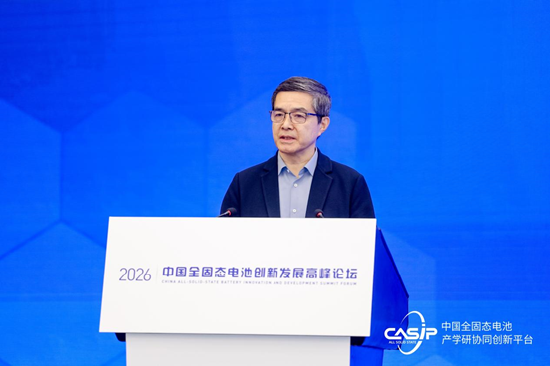
Core Insights - The third China All-Solid-State Battery Innovation Development Summit Forum was successfully held in Beijing, focusing on key issues in the all-solid-state battery industry and providing systematic support for technological breakthroughs and high-quality development [1][16]. Group 1: Strategic Direction and Collaboration - The Chinese battery industry is experiencing rapid growth and technological iteration, with applications expanding from vehicles and energy storage to robotics and low-altitude aircraft [2][17]. - The All-Solid-State Battery Collaborative Innovation Platform aims to address common industry challenges and promote interdisciplinary collaboration [2][17]. Group 2: Research and Breakthroughs - The demand for batteries is surging under carbon neutrality goals, with solid-state batteries facing challenges such as electrolyte performance and solid-solid interface compatibility [4][19]. - Innovations in interface design and molecular engineering have led to breakthroughs in reducing interface resistance and enhancing electrolyte performance [4][19]. Group 3: Material Innovations - Key materials research is focused on high-capacity, high-voltage cathodes, stable anodes, and electrolytes with high ionic conductivity [6][21]. - Various teams are exploring advanced materials and strategies to improve the performance and stability of solid-state batteries [22][23]. Group 4: Manufacturing and Standardization - The manufacturing of all-solid-state batteries faces challenges related to material systems and solid-solid interface science, requiring breakthroughs in engineering processes and cost-effectiveness [11][27]. - A comprehensive standard system for solid-state batteries is being developed to guide industry management and technological advancement [12][28]. Group 5: Safety and Interface Design - Achieving stable interfaces in solid-state batteries relies on multidimensional collaborative design, with a focus on balancing performance gains and stability risks [29][14]. - The safety risks and failure mechanisms of solid-state batteries differ significantly from liquid systems, necessitating collaborative efforts from academia and industry [29][14]. Group 6: Forum Outcomes - The forum identified key scientific and technological challenges, facilitating efficient collaboration between academia and industry to support the all-solid-state battery sector's development [15][30].
早报|影石CEO回应年会送房送车/12306新增「低人一等座」提醒/OpenAI发布新模型,用英伟达对手芯片
Sou Hu Cai Jing· 2026-02-13 01:43
Group 1 - The State Administration for Market Regulation opposes manufacturers engaging in "involution" and selling cars at a loss, aiming to promote healthy competition in the automotive market [3] - The newly released guidelines clarify the boundaries of pricing behavior in the automotive industry, encouraging compliance and fair competition among manufacturers and sellers [3] - The guidelines specify that automotive manufacturers must not engage in pricing behaviors that aim to eliminate competitors or monopolize the market, which poses significant legal risks [3] Group 2 - OpenAI announced the release of a new real-time programming model, GPT-5.3-Codex-Spark, which is a more compact version of GPT-5.3-Codex, optimized for low-latency hardware [5][7] - The Codex-Spark model can generate over 1000 tokens per second and is currently available as a research preview for ChatGPT Pro users [5][7] - The model operates on Cerebras' Wafer Scale Engine 3, which features 40 trillion transistors and 900,000 AI cores, providing extremely low latency [7] Group 3 - Multiple automotive companies, including Geely, Chery, and BYD, have disclosed their plans for solid-state battery technology, with Geely aiming for small-scale production by 2027 and a long-term goal of mass production by 2030 [18][19][20] - Chery plans to start pilot production of solid-state batteries by 2026 and aims to validate the technology in real vehicles by 2027 [20] - BYD is focusing on sulfide solid-state batteries, expecting to achieve small-scale production by 2027 [23] Group 4 - Meizu's smartphone business is reportedly facing dissolution, with the Meizu 23 project allegedly halted [25][26] - The company has not officially responded to the rumors, and customer service has stated that no notifications regarding the business's status have been received [26] Group 5 - ByteDance is set to release the upgraded Doubao model on February 14, 2026, which will include significant enhancements to its foundational model capabilities [34][35] - The Doubao 2.0 model is expected to be a multimodal model with 1 trillion parameters, marking a substantial advancement in the company's AI capabilities [35] Group 6 - Xiaomi has launched its first-generation robot VLA model, which features 4.7 billion parameters and excels in visual language understanding and real-time execution capabilities [39][42] - The model has achieved state-of-the-art results in various benchmarks and is designed for high efficiency in real-world tasks [42] Group 7 - Lenovo reported a 72% year-on-year increase in AI-related revenue, which now accounts for 32% of the company's total revenue, driven by growth in AI PCs, smartphones, and servers [32][36] - The company has successfully navigated challenges in the global AI supply chain, maintaining its commitment to double-digit revenue growth and profitability [32]





第三届中国全固态电池创新发展高峰论坛召开
Huan Qiu Wang Zi Xun· 2026-02-12 01:39
Group 1 - The third China All-Solid-State Battery Innovation Development Summit Forum was held, focusing on key materials, process innovations, and intellectual property strategies [1] - The forum gathered over 400 participants, including academicians, industry representatives, and experts, to address common challenges in the all-solid-state battery industry [1] - The chairman of the forum emphasized the rapid growth of China's battery industry and the need for systematic improvements in battery technology, particularly in fast charging, safety, and efficiency [1] Group 2 - The demand for batteries is surging under the "dual carbon" goals, with solid-state batteries emerging as a key direction despite facing challenges in electrolyte performance and interface compatibility [2] - Innovations in interface design and molecular engineering have led to breakthroughs in reducing interface resistance and enhancing electrolyte performance, highlighting the need for deeper integration of basic research and industrial technology [2] - The conference focused on exploring high-capacity cathodes, stable anodes, and high ionic conductivity electrolytes, aiming to develop low-cost and high-energy-density battery systems [2] Group 3 - Discussions at the conference highlighted the importance of multi-dimensional collaborative design for achieving stable interfaces in solid-state batteries [3] - The combination of sulfide and halide electrolytes is seen as a mainstream approach to enhance interface stability while balancing performance gains and stability risks [3] - The forum identified key scientific and technological challenges, facilitating efficient collaboration between academia and industry to support the high-quality development of the solid-state battery sector [3]
红旗全固态电池样车下线,能量密度380Wh/kg
Zhong Guo Jing Ying Bao· 2026-02-03 00:22
Core Viewpoint - The first prototype of the Hongqi all-solid-state battery developed by China FAW has successfully rolled off the production line and is entering the vehicle testing phase [1] Group 1: Battery Technology Development - The Hongqi all-solid-state battery features a 66Ah cell that has passed extreme thermal abuse testing at 200°C, with a sulfide electrolyte ionic conductivity exceeding 10mS/cm and an energy density of 380Wh/kg, significantly surpassing current mainstream liquid lithium batteries [1] - The project took 470 days and achieved breakthroughs in key technology areas such as sulfide electrolyte, high-pressure module packaging, and system lightweight integration [1] Group 2: Research and Development Investment - China FAW began its all-solid-state battery research in 2014 and developed its first solid-state battery module to VDA size standards in 2019 [1] - The average annual increase in R&D investment over the past three years is 8.6%, with key support from Jilin Province expected in 2025 through a "challenge and lead" mechanism to advance the development of 400Wh/kg all-solid-state battery technology [1] Group 3: Future Plans and Production Goals - In 2026, the focus will be on testing the reliability of the battery system under various working conditions, with plans for small-scale production by the end of 2027 and large-scale production technology reserves by 2030, aiming to reduce costs by over 50% [1]


新型三维硅负极为全固态电池装上“呼吸阀”
Huan Qiu Wang Zi Xun· 2026-02-02 01:28
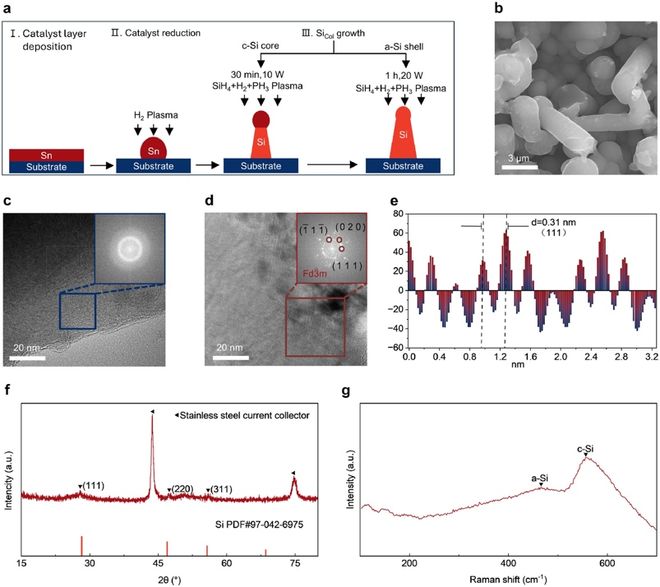
Core Viewpoint - The research team from Ningbo University, in collaboration with Ningbo Engineering Institute and Ningbo Dongfang University, has made significant advancements in the field of all-solid-state lithium battery anode materials by developing a three-dimensional "breathable" silicon nanowire anode, providing a new technical pathway for silicon anode all-solid-state lithium batteries [1][2]. Group 1: Research Achievements - The newly developed silicon nanowire anode features a unique "dual-phase" core-shell structure, which enhances its electrochemical performance and practicality [2][3]. - The silicon anode exhibits remarkable mechanical robustness and safety, maintaining power supply even under bending or cutting conditions [3]. Group 2: Technical Innovations - The research utilizes plasma-enhanced chemical vapor deposition technology to create an integrated three-dimensional columnar silicon architecture, allowing for effective ion transport and mechanical integrity [2][3]. - The design mimics a forest of trees, where silicon nanowires stand upright on the current collector, forming a three-dimensional network with ample voids, enabling the silicon to expand without damaging the surrounding electrolyte [3]. Group 3: Industry Implications - All-solid-state lithium batteries are recognized as the "ultimate goal" in battery technology due to their higher safety, energy density, and superior cycling performance [1]. - Silicon is considered one of the most promising anode materials for all-solid-state batteries due to its theoretical capacity being ten times that of traditional graphite anodes, despite challenges related to volume expansion during charge and discharge cycles [1].