
Fast Moving Consumer Goods (FMCG)

Search documents
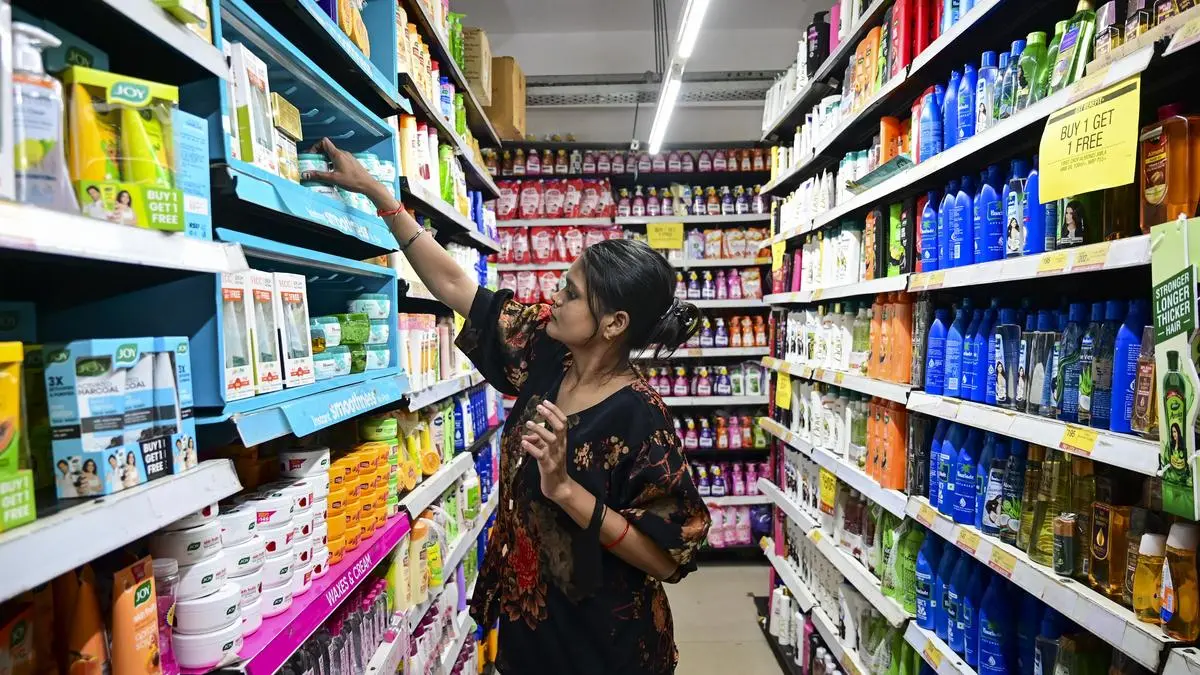
Urban Consumption Shows Green Shoots As Consumption Recovery Broadens
Www.Ndtvprofit.Com· 2026-01-29 14:53
Core Insights - Urban demand in India is showing signs of recovery after nearly two years of rural consumption leading the way, driven by improving corporate salary growth, selective hiring, and fiscal support through tax and GST cuts [1][3][8] Urban Consumption - Urban households are facing significant cost pressures, with inflation affecting essential expenses such as school fees, rent, and utilities, which have risen sharply [2] - Urban consumption began to improve in Q3 FY26, supported by GST cuts and an increase in urban wage growth, which rose to 7% in H1 FY26 from 3% in Q4 FY25 [3][4] - Salary growth among large listed companies improved to approximately 6.4% in the first half of FY26, indicating a positive shift in momentum for urban consumption [4] - Job creation in urban areas is improving, particularly at mid and senior levels, although entry-level hiring remains challenging due to AI adoption [5] Rural Consumption - Rural demand, which previously led the recovery, is facing potential moderation due to falling crop prices below MSP levels, impacting farm incomes [6][8] - Despite these risks, rural consumption has remained strong, with rural wage growth picking up and high-frequency indicators showing resilience [6][7] - Agriculture accounts for about 40-45% of total rural income, with allied sectors like construction and services expected to perform well [7] Overall Economic Outlook - Economists agree that India's consumption recovery is entering a new phase, with urban demand showing early signs of revival while rural consumption remains resilient but faces risks from soft crop prices [8]



Global FMCG Cos face disruption in Sep qtr, upbeat about future growth on favourable macros
BusinessLine· 2025-10-26 13:10
Core Insights - Multinational FMCG companies in India experienced sales impacts in the September quarter due to GST reforms and heavy rains, but anticipate growth in upcoming quarters supported by favorable macroeconomic conditions [1][2] Company Performance - Unilever reported that its emerging market performance is improving, particularly in India, despite short-term impacts from GST reforms, which are expected to benefit 40% of its portfolio with nearly a 10% price reduction [3] - Reckitt's net revenue growth in India was affected by new GST slabs, but it achieved volume-led growth in its Dettol brand [4] - Reckitt's CFO noted that the impact of GST phasing in Q3 was low to mid-single digits, with like-for-like growth in India being low single digits [5] - Heineken's beer volume in India declined by mid-single digits due to heavy rains, but its organic net revenue grew by a mid-single-digit percentage, supported by price hikes [7][8] - Coca-Cola and PepsiCo reported disruptions in the September quarter due to weather conditions, with Coca-Cola's COO highlighting the potential for long-term growth in India despite current competitive pressures [9][10] - Pernod Ricard's sales in India increased by 3%, although they were negatively impacted by excise policy changes in Maharashtra [10][11] - Nestle SA noted strong performance and good momentum in India in its global earnings report [12]

Unilever appoints Indian-origin Srinivas Phatak as new CFO: Here's how much salary he will get
MINT· 2025-09-16 08:14
Group 1 - Indian-origin executive Srinivas Pathak has been appointed as the new Chief Financial Officer of Unilever PLC, replacing Fernando Fernandez, who has been promoted to Chief Executive Officer [1] - Phatak has been serving as the acting CFO since March 2023 and was previously the Deputy Chief Financial Officer and Group Controller [2] - The Unilever Board unanimously agreed that Phatak is the best candidate for the CFO role due to his strong industry experience and performance as acting CFO [2] Group 2 - Srinivas Phatak will receive an annual fixed pay of €1.2 million ($1.4 million) along with eligibility for an annual bonus and performance share plan awards [3] - Phatak is a Chartered Accountant and has over 25 years of experience with Unilever, having held various finance and commercial roles [4] - He was previously CFO for Hindustan Unilever Limited and played a key role in Unilever's enterprise-wide transformation projects [4] Group 3 - Phatak steps into the CFO position at a pivotal time as Unilever prepares to spin off its ice cream business and streamline management to bolster margins [5]


摩根士丹利:印度必需消费品研究
摩根· 2025-06-27 02:04
Investment Rating - The report assigns an "In-Line" investment rating to the India Consumer Staples sector [3]. Core Insights - India's Consumer Staples sector is characterized by high consumption growth, with households spending nearly 50% of their expenditure on food [16]. - The total addressable market (TAM) for India's FMCG market is estimated at approximately US$164 billion, with varying growth drivers across sub-categories [35][32]. - The sector has underperformed relative to the MSCI India index over the past three years, indicating potential challenges in stock performance [10]. Summary by Sections Consumption Landscape - India's consumption growth is among the highest globally, with significant expenditure on food [16]. - The penetration of packaged foods in India remains low compared to global peers, indicating room for growth [38]. Growth Drivers - Key growth drivers include volume growth, market share, raw material price movements, and currency fluctuations [19]. - The FMCG market is projected to grow at a compound annual growth rate (CAGR) of 10-11% over the next five years [35]. Key Players - Major players in the sector include HUL, Nestle, Britannia, and Dabur, with varying degrees of rural revenue contribution [24][89]. - The rural market is crucial, with companies like Dabur and HUL having significant exposure [89]. Market Performance - The report highlights that rural food and beverages (F&B) have outperformed, while rural home and personal care (HPC) remains weak [27]. - The FMCG sector's revenue growth has shown fluctuations, with a notable decline in certain periods [92]. Distribution and Market Strategy - Companies are focusing on expanding their distribution reach, particularly in rural areas, to tap into the growing consumer base [62]. - The rise of e-commerce and modern trade channels is reshaping the market dynamics, with increasing revenue shares from these segments [70][72]. Financial Metrics - The report provides insights into revenue contributions and growth trends for various categories, indicating a shift towards premium products [49][50]. - The financial performance of key players shows varying gross margins and EBITDA margins, reflecting operational efficiencies and cost management strategies [103]. Future Outlook - The sector is expected to benefit from innovations and expansions into adjacent categories, with companies identifying aspirational brands for future growth [79]. - The overall sentiment in the sector remains cautiously optimistic, with macroeconomic factors and consumer sentiment playing a significant role in shaping future performance [19][40].