Dettol

Search documents
Why We Are Investing In Asian Healthcare
The Smart Investor· 2026-03-12 03:30
Group 1: Investment Opportunities in Healthcare - Investing in dividend stocks from the healthcare industry can provide income and help manage tax obligations [1] - The healthcare sector encompasses a wide range of opportunities, including drug manufacturers, medical device manufacturers, and hospital suppliers [2] - Singapore's healthcare masterplan indicates investment opportunities in promoting healthier lifestyles and improving access to affordable healthcare services [3] Group 2: Shift in Healthcare Delivery - The Ministry of Health's approach emphasizes prevention and healthier lifestyles to reduce chronic diseases, benefiting companies like Apple with health-monitoring devices [4] - The pandemic has accelerated the decentralization of healthcare, focusing on home-based monitoring and local health hubs to enhance accessibility and reduce costs [7] - Companies like Abbott Laboratories are capitalizing on the demand for continuous glucose monitoring systems, with significant revenue growth [8] Group 3: Market Growth and Government Support - Singapore's healthcare market is projected to reach S$68.7 billion by 2029, driven by an aging population [11] - The government's healthcare budget is expected to rise to S$30 billion by 2030, creating opportunities for private companies to meet healthcare needs [12] - The structural shift in demographics presents fertile ground for investment in the healthcare sector [12]



Reckitt Benckiser Conference: CFO Flags Emerging Markets Surge, Warns Europe Stays Flat in 2026
Yahoo Finance· 2026-03-11 21:51
Core Insights - Reckitt Benckiser is experiencing significant growth in emerging markets, particularly in China, which is expected to deliver double-digit growth in 2026 following a similar trend in 2025 [1][4][7] - The company's shift to a geography-led structure has contributed to this acceleration, allowing for dedicated leadership in emerging markets [3][4] - Europe is projected to remain a low-growth environment in 2026, with no clear catalysts for recovery [4][6] Emerging Markets Growth - China is highlighted as a major growth driver, benefiting from 20 years of investments, including local manufacturing and R&D facilities [2][7] - Reckitt's investments in live-streaming and e-commerce have significantly increased its market presence in China, with e-commerce now accounting for about 80% of its business there [8] - India is also expected to maintain steady high single-digit growth, supported by strong distribution and operational execution [9] Operating Model and Strategy - The transition to a geography-led structure has allowed Reckitt to prioritize emerging markets, which were previously overshadowed by developed markets [3][4] - The company is maintaining elevated capital expenditures (CapEx) at around 4% of revenue to support supply chain and manufacturing projects, rather than focusing on immediate gross-margin expansion [5][13] Market Performance - In Europe, category growth has deteriorated significantly, with projections indicating flat growth for 2026 [6][9] - North America is expected to show improvement in 2026, despite a challenging Q1 due to seasonal factors [11] Innovation and Product Development - Reckitt is investing approximately 2.9% of net revenue in R&D, with a focus on innovation to sustain top-line growth of 4%-5% [18][19] - New product launches, such as Lysol Air Sanitizer and Mucinex 12-hour cold and flu product, are part of the company's strategy to enhance its portfolio [19] Financial Outlook - The company aims to offset stranded costs from its Essential Home transaction through productivity programs, although it does not expect to fully offset these costs within 2026 [15] - Operating margins are projected to be around 24.9%, with a target to reduce fixed costs below 19% by the end of 2027 [15] Future Investments - Reckitt is planning significant investments in U.S. manufacturing capabilities, which will increase the share of products made in the U.S. to over 80% by 2027 [20] - The company is also exploring bolt-on M&A opportunities, particularly in the self-care sector, which is seen as under-penetrated in emerging markets [18]
Reckitt Benckiser Group (OTCPK:RBGL.D) Conference Transcript
2026-03-11 20:02
Reckitt Benckiser Group Conference Summary Company Overview - **Company**: Reckitt Benckiser Group (OTCPK:RBGL.D) - **Date of Conference**: March 11, 2026 Key Industry Insights Emerging Markets Performance - Reckitt's like-for-like sales growth in emerging markets accelerated significantly in 2025, surpassing the medium-term ambition of high single-digit growth [4][5] - Transition from a Global Business Unit (GBU) model to a geography model in January 2025 has led to a greater focus on emerging markets, contributing to growth acceleration [5][7] - Long-term investments in China are yielding results, with a state-of-the-art manufacturing facility in Taicang and a new R&D facility set to open [8][9] - China accounted for nearly half of Reckitt's like-for-like sales growth in 2025, with expectations for continued double-digit growth in 2026 [10][11] Competitive Advantages in China - Reckitt's leading brands in consumer health (Durex, Dettol, Move Free) align with Chinese consumer preferences for Western branding [11][12] - E-commerce has become a significant channel, with 80% of business in China now online, up from 20% pre-COVID [12][13] - Live streaming capabilities have been established to engage consumers effectively, with 800 million Chinese consumers participating in social commerce monthly [14] India Market Strategy - India remains a brick-and-mortar market, with a focus on distribution and operational execution [15][16] - High single-digit growth is expected to continue in India, supported by strong local sales teams and expanded distribution points [16][17] Mature Markets Challenges - In Europe, category growth has slowed significantly, with no growth expected in 2026 [20][21] - Reckitt is adapting to a flat growth environment by focusing on competitive execution and responding to value-seeking consumer behaviors [21][22] - North America is expected to contribute more significantly to growth in 2026, driven by strong performance in non-seasonal businesses [23][24] Financial Performance and Projections Earnings Growth - Gross margins for core Reckitt are expected to remain flat, while Mead Johnson may see slight contraction due to previous operational leverage [32][34] - Operating expenses are targeted to grow ahead of sales, with a focus on reducing fixed costs [35][39] Transformation and Portfolio Management - Mead Johnson is viewed as a non-core asset, with ongoing interest from potential buyers, but no specific timeline for a transaction has been set [43][44] - Reckitt is considering bolt-on M&A opportunities, particularly in the self-care category, which has significant growth potential [46] Innovation and R&D - Reckitt has increased R&D investment to 2.9% of net revenue, with a focus on launching innovative products [47][48] - New product launches are expected to support top-line growth, with a balanced approach to innovation across categories [51][62] Supply Chain and Operational Efficiency - A shift from cost-focused to value-focused supply chain management is underway, with increased CapEx to enhance manufacturing capabilities [53][54] - New manufacturing facilities are expected to improve local production and meet consumer demand more effectively [55][56] AI and Digital Transformation - Reckitt is leveraging AI to enhance productivity and speed up product development cycles, with ongoing efforts to upskill employees [71][74] - The company aims to replicate successful digital strategies from China in other emerging markets [64][65] Conclusion - Reckitt Benckiser is navigating a complex landscape with strong growth in emerging markets, particularly China and India, while facing challenges in mature markets like Europe. The company's focus on innovation, operational efficiency, and digital transformation positions it well for future growth.
Reckitt Benckiser Group PLC (OTC:RBGPF) Earnings Report Highlights
Financial Modeling Prep· 2026-03-05 19:06
Core Insights - Reckitt Benckiser Group PLC reported an earnings per share (EPS) of $2.49, matching estimates, with revenue of approximately $9.78 billion, slightly below the estimated $9.79 billion [2][6] - The company projects a like-for-like net revenue growth of 4% to 5% for 2026, supported by a 5% increase in sales compared to the previous year, particularly in emerging markets [3][6] Financial Metrics - Reckitt's price-to-earnings (P/E) ratio is approximately 33.54, indicating a premium investors are willing to pay for earnings [4] - The price-to-sales ratio is about 2.82, and the enterprise value to sales ratio is around 3.42, reflecting the company's market value relative to its sales [4] - The enterprise value to operating cash flow ratio stands at approximately 19.02, and the earnings yield is about 2.98%, providing insights into valuation and return on investment [5] - The debt-to-equity ratio is approximately 1.47, indicating the proportion of debt used to finance assets, while the current ratio is around 0.56, suggesting the ability to cover short-term liabilities [5]
Reckitt Benckiser Group Q4 Earnings Call Highlights
Yahoo Finance· 2026-03-05 10:03
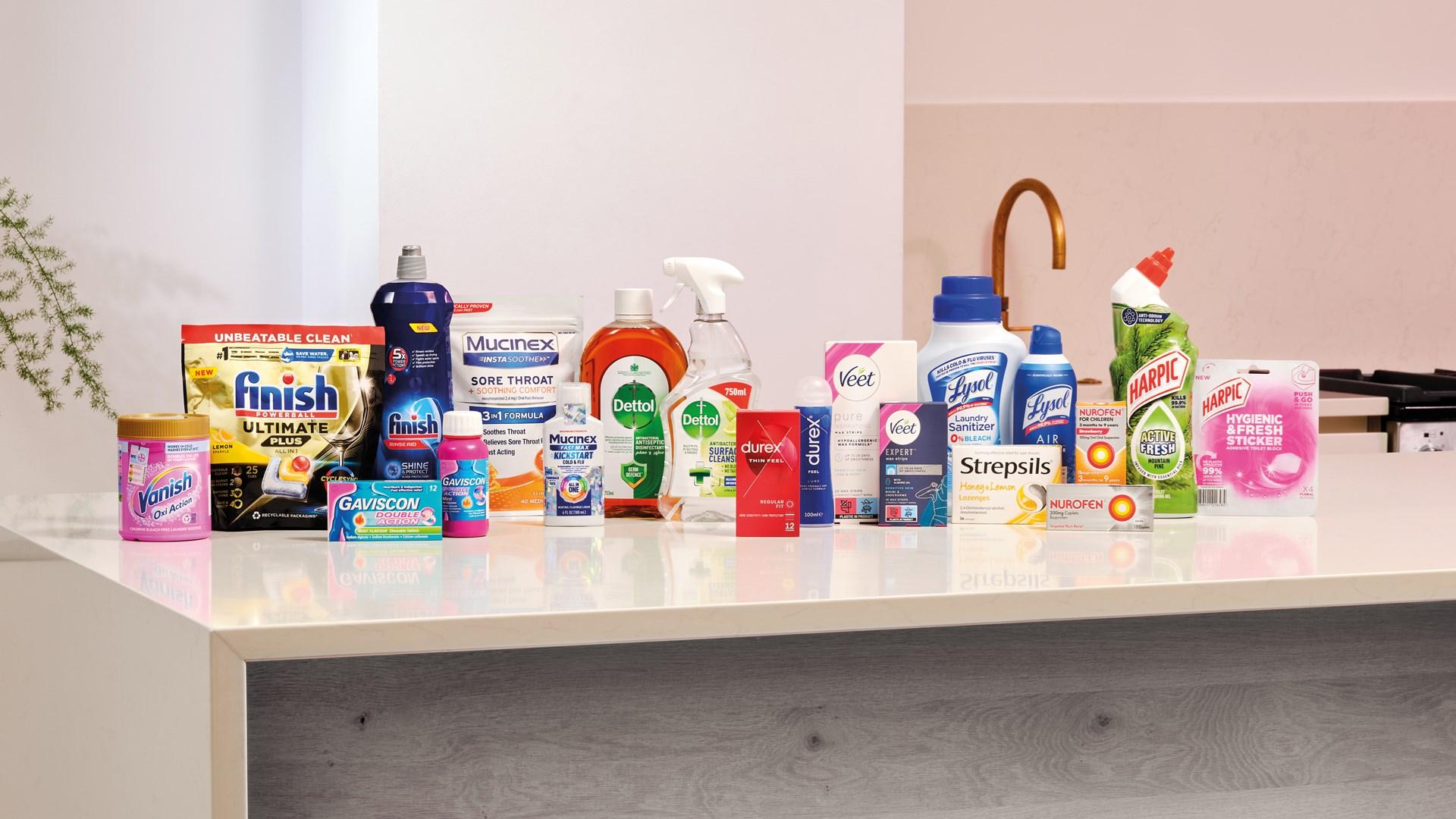
Core Insights - The company reported strong financial performance in 2025, with growth driven by emerging markets and margin expansion supported by the Fuel for Growth program [4][5] - Core Reckitt's net revenue grew by 5.2% in 2025, surpassing the company's guidance of above 4% [3] - The company aims for 4%-5% growth in 2026, primarily led by emerging markets, while acknowledging challenges in Europe and seasonal OTC categories [5][16] Financial Performance - Adjusted operating profit increased by 5.3% at constant currency, with Core Reckitt's operating margin expanding by 90 basis points to 26.7% [1] - Group net revenue rose by 5%, with Mead Johnson Nutrition contributing 3.8% growth [3] - Free cash flow was £1.7 billion, with a conversion rate of 71% [6][7] Capital Returns and Leverage - The company returned £2.3 billion to shareholders, including £900 million in buybacks and a £1.6 billion special dividend [6][7] - Net debt to adjusted EBITDA ended the year at 1.6x, with expectations to peak near 2.5x by mid-2026 [8] - A 5% increase in the full-year dividend was proposed, aligning with the company's sustainable dividend growth strategy [9] Regional Performance - Emerging markets showed broad-based growth, with Core Reckitt growth of 14.6% and volumes up 6.7%, particularly in China and India [2][10] - Europe experienced a decline of 1.4% due to slowing category growth and increased promotional activity, although adjusted operating margin rose to 31.4% [11] - North America was broadly flat, with a 0.2% increase in like-for-like net revenue [12] Strategic Initiatives - The Fuel for Growth program is central to investment capacity and margin performance, with fixed costs improving to 19.4% of net revenue in 2025 [12] - Capital expenditure increased to £592 million, focusing on localization, automation, and digitization to enhance supply chain resilience [13] - Innovation remains a priority, with new product launches planned, including Mucinex 12 Hour Cold and Fever [14] Category Performance - Self-care net revenue increased by 3%, driven by high single-digit growth in non-seasonal self-care products [15] - Germ protection grew by 8.4%, led by strong performance from Dettol in emerging markets [15] - Intimate Wellness was the fastest-growing category, up 12.5% like-for-like, with significant growth in brands like Durex and Veet [15]
Reckitt Benckiser at CAGNY: CEO touts “simpler, sharper” strategy, AI-driven innovation and cost cuts
Yahoo Finance· 2026-02-19 17:27
Core Insights - Reckitt Benckiser Group is focusing on a "simpler, sharper" business model, having streamlined its portfolio by divesting non-core segments, including the Essential Home business and Mead Johnson nutrition segment [1][2] - The core business now generates approximately GBP 10 billion in net sales (over $13 billion), while the non-core segments account for around GBP 4 billion in sales [2] Portfolio Actions and Business Streamlining - The company has sold over 90 "tail brands" from its hygiene and home business, now operating under the name Vestasy [1] - Mead Johnson remains a non-core segment, with Reckitt exploring various options for its future [1] Growth Priorities - Reckitt's growth strategy is centered around 11 "Powerbrands," which are premium brands with strong consumer trust and potential for expansion into new markets and categories [3] - Emerging markets are crucial for Reckitt's growth, contributing about 40% of the core business revenue and presenting significant opportunities for category penetration [3][4] Market Context and Opportunities - The distribution of households earning over $25,000 annually has shifted, with emerging markets now surpassing North America and Europe, making execution in these markets critical [4] - There are category-level tailwinds, such as increased consumer focus on self-care and germ protection, along with growth potential in automatic dishwashing, where only 14% of households globally own a dishwasher [4] Brand-Building and Innovation - Brand-building and innovation are emphasized as key growth levers, with Dettol being described as a "love mark" used over 1 billion times annually and extended into more than 10 categories [5] - Lysol has seen a 1,000 basis point increase in household penetration over the past five years and has expanded into six categories, including new products like Lysol Air Sanitizer and Lysol Laundry Sanitizer [5]
Reckitt Benckiser Group (OTCPK:RBGL.D) 2026 Conference Transcript
2026-02-19 16:02
Summary of Reckitt's Conference Call Company Overview - **Company**: Reckitt - **Key Brands**: Lysol, Mucinex, Dettol, Finish, Durex - **Core Business**: Focused on health, hygiene, and home care products Strategic Updates - **Portfolio Simplification**: Reckitt has exited two non-core segments, including the sale of the Essential Home segment (Vestasy), which comprised over 90 brands, resulting in a more focused core business with approximately GBP 10 billion in net sales or over $13 billion [4][6] - **Management Restructuring**: Multiple management layers have been removed, leading to increased accountability and streamlined operations [5][39] - **Growth Ambition**: Reckitt aims for a 4%-5% like-for-like growth, particularly driven by emerging markets, which currently represent 40% of the core business [9][12] Market Insights - **Emerging Markets Growth**: Emerging markets have surpassed North America and Europe in terms of households with incomes over $25,000, indicating a significant growth opportunity [10][11] - **Consumer Trends**: Increased consumer engagement in self-care and hygiene products, with only 14% of households globally owning dishwashers, presents a growth opportunity for brands like Finish [12][13] Financial Performance - **Sales Growth**: Emerging markets delivered a 14% top-line growth in the first three quarters of 2025, with China being the largest contributor [42] - **Cost Management**: The "Fuel for Growth" program aims for a 300 basis point improvement in fixed costs by the end of 2027, targeting 19% of net revenue [41][42] Innovation and Product Development - **Product Launches**: Reckitt is set to launch a 12-hour cold and fever relief product in 2026, the first of its kind in the category, which has been in development for over 15 years [36][37] - **AI Utilization**: Reckitt is leveraging AI for concept generation and market insights, significantly reducing the time needed for product development and increasing success rates [29][30] Brand Strategy - **Power Brands**: Reckitt's 11 Power Brands are positioned as premium offerings with strong consumer trust, allowing for higher growth margins and reinvestment in marketing and innovation [8][9] - **Consumer Engagement**: The company emphasizes iconic brand building and consumer obsession, utilizing data and AI to enhance product offerings and marketing strategies [22][27] Regional Focus - **North America**: Represents about 25% of core Reckitt's revenue, with a focus on expanding premium categories and improving supply chain execution [45][46] - **Europe**: Accounts for about one-third of core Reckitt's revenue, facing decelerating growth but focusing on premiumization and competitive positioning [42][43] Conclusion - Reckitt is positioned for sustainable growth through a simplified structure, strong brand equity, and a focus on emerging markets. The company is committed to delivering consistent revenue growth and enhancing shareholder value through disciplined capital allocation and innovation [55][56][61]
Reckitt Benckiser Group (OTCPK:RBGL.D) 2026 Earnings Call Presentation
2026-02-19 15:00
A SIMPLER, SHARPER RECKITT CAGNY 19th February 2026 CAUTIONARY NOTE CONCERNING FORWARD –LOOKING STATEMENTS This presentation and any other information discussed at the presentation (collectively, the "presentation") has been prepared by Reckitt Benckiser Group plc (the "Company") solely for your information. The opinions presented herein are based on general information gathered at the time of writing and are subject to change without notice. Information in this presentation sourced from third parties has b ...
Reckitt Benckiser Group (OTCPK:RBGL.Y) Update / Briefing Transcript
2025-12-04 16:02
Summary of Reckitt's Focus on Emerging Markets Presentation Company Overview - **Company**: Reckitt - **Focus**: Emerging Markets - **Key Personnel**: Chris Licht (CEO), Nitish Kapoor (President of Emerging Markets), Ryan Daley (Chief Category Growth Officer), Shannon Eisenhardt (CFO) Industry Insights - **Emerging Markets**: Largest geographic area for Reckitt, with significant growth opportunities - **Market Dynamics**: Some emerging markets have already reached advanced market status, while others are still developing Core Points and Arguments 1. **Growth Potential**: Reckitt has seen steady growth in emerging markets, transitioning from mid-single digit growth to high single digit growth over the last decade, with a recent surge to almost 14% growth in the last nine months [11][22][25] 2. **Brand Strength**: Reckitt has established strong, trusted brands in emerging markets, such as Dettol, Harpic, and Durex, which are leaders in their respective categories [14][15][21] 3. **Market Penetration**: The company has increased its market penetration significantly, with Dettol being used over a billion times a year and Harpic growing from GBP 500,000 in revenue in India 27 years ago to an expected GBP 250 million this year [14][17] 4. **Consumer Trends**: Rising incomes and new consumption habits in emerging markets are driving demand for Reckitt's products, with emerging markets expected to contribute 50% of world GDP by 2030 [27][29] 5. **Category Development**: Reckitt is focusing on both mature and nascent categories, with plans to expand into self-care and intimate wellness products, which are gaining traction in these markets [30][54] Additional Important Insights 1. **Local Expertise**: Reckitt's leadership in emerging markets has an average tenure of 21 years, providing deep local knowledge and continuity [9][10] 2. **Distribution Reach**: Products were available in over 10 million stores last year, with 125 million online orders shipped, indicating strong distribution capabilities [18] 3. **Innovation Pipeline**: Reckitt has a robust innovation pipeline ready to be deployed in emerging markets, allowing for quick adaptation to consumer needs [25][32] 4. **Social Impact**: The company is actively involved in societal change, such as improving hygiene practices in India, which has led to a significant increase in household penetration for Harpic [44][47] 5. **Healthcare Partnerships**: Reckitt is engaging with healthcare professionals and policymakers to drive awareness and education about its products, particularly in addressing antibiotic overuse [57][61] Conclusion Reckitt is well-positioned to capitalize on the growth opportunities in emerging markets through its strong brand portfolio, local expertise, and innovative strategies. The company aims to sustain high single-digit growth by leveraging rising incomes and evolving consumer habits while also contributing positively to societal health and well-being.
Global FMCG Cos face disruption in Sep qtr, upbeat about future growth on favourable macros
BusinessLine· 2025-10-26 13:10
Core Insights - Multinational FMCG companies in India experienced sales impacts in the September quarter due to GST reforms and heavy rains, but anticipate growth in upcoming quarters supported by favorable macroeconomic conditions [1][2] Company Performance - Unilever reported that its emerging market performance is improving, particularly in India, despite short-term impacts from GST reforms, which are expected to benefit 40% of its portfolio with nearly a 10% price reduction [3] - Reckitt's net revenue growth in India was affected by new GST slabs, but it achieved volume-led growth in its Dettol brand [4] - Reckitt's CFO noted that the impact of GST phasing in Q3 was low to mid-single digits, with like-for-like growth in India being low single digits [5] - Heineken's beer volume in India declined by mid-single digits due to heavy rains, but its organic net revenue grew by a mid-single-digit percentage, supported by price hikes [7][8] - Coca-Cola and PepsiCo reported disruptions in the September quarter due to weather conditions, with Coca-Cola's COO highlighting the potential for long-term growth in India despite current competitive pressures [9][10] - Pernod Ricard's sales in India increased by 3%, although they were negatively impacted by excise policy changes in Maharashtra [10][11] - Nestle SA noted strong performance and good momentum in India in its global earnings report [12]