Home Goods Retail

Search documents
Marcus Lemonis named Bed Bath & Beyond CEO, details future plans for retailer
Fox Business· 2026-01-05 18:46
Core Insights - Bed Bath & Beyond has appointed Executive Chairman Marcus Lemonis as its new CEO, with plans to cut costs and pursue expansion opportunities, including acquisitions [1] - Lemonis emphasizes the importance of home ownership and aims to make the journey of home-related purchases more achievable and affordable for customers [2] Company Strategy - The company owns several brands, including Bed Bath & Beyond, Overstock, buybuy Baby, and Kirkland's Home, and has a blockchain asset portfolio [4] - Lemonis states that the core business is stabilized and outlines plans to return Bed Bath & Beyond to profitable growth [4] - The strategy includes prioritizing an omnichannel retail model and expanding revenue streams by offering high-margin services such as warranties, insurance products, and financing tools [5] Technological Integration - Plans are in place to develop tools and services that assist customers during significant home-related moments, leveraging AI technology to create additional revenue [8] Acquisition and Investment Plans - The company will pursue acquisitions and investments to fill category gaps, enhance consumer services, and create business synergies over the next 12 months [9] - In September, Bed Bath & Beyond acquired the Kirkland's Home trade name and related assets for approximately $10 million, aiming to convert existing Kirkland's stores into Bed Bath & Beyond Home locations, which is expected to add about $350 million to net revenue [10][11]


Stock up now on these items before prices jump in early 2026, Wells Fargo says
Fox Business· 2025-12-27 19:39
Core Insights - Consumers are advised to stock up on essentials, especially home goods, due to expected "noticeable" price increases in early 2026 according to Wells Fargo [1] - Retailers have been holding or modestly increasing prices during the holiday season while offering targeted promotions and deeper discounts on select items [1] Inventory and Pricing Trends - In early 2025, many retailers strategically increased inventory purchases to avoid additional tariffs [2] - From May to September, retailers raised their inventory levels by 14%, but inventory in transit from overseas suppliers is projected to rise by 62% in early 2026 [5] - Home goods retailers, heavily reliant on imports, are implementing strategic price increases, leading to faster price hikes compared to apparel [8] Consumer Behavior and Recommendations - Major furniture purchases should be made now to avoid significant price increases expected in early 2026, as warned by Wells Fargo [10] - Apparel may also see price increases, but its lower base price may mitigate the impact compared to big-ticket items [9]

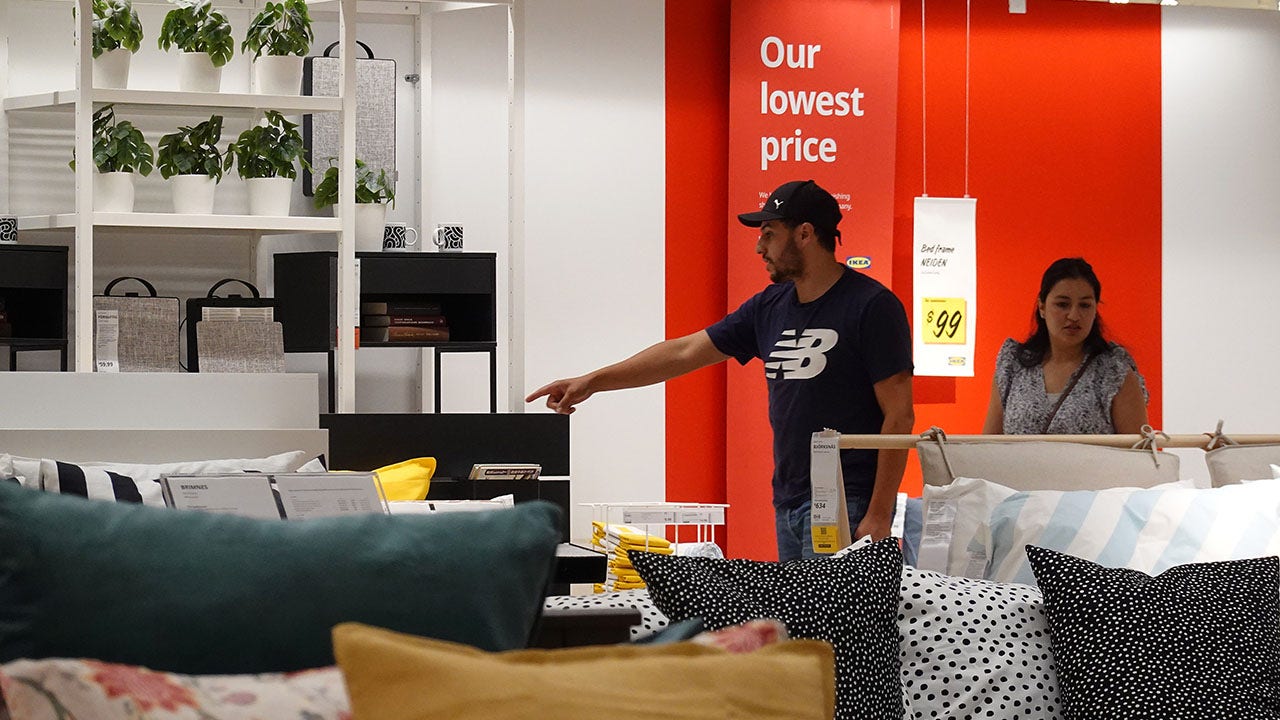
Bed Bath & Beyond, Brand House Collective appoint chief merchant
Yahoo Finance· 2025-12-09 12:00
Group 1 - Bed Bath & Beyond and The Brand House Collective are proactively building their leadership team ahead of their merger, with Marcus Lemonis highlighting the significance of the recent hire of Gomez as they prepare for 2026 [2] - The merger includes various strategic moves such as the un-branding and re-branding of Bed Bath & Beyond, the acquisition of Kirkland's intellectual property for $5 million, and the acquisition of Kirkland's Home for $10 million [2] - The home goods sector is experiencing a slowdown in sales after a pandemic-driven boom, with recent challenges arising from tariffs and economic uncertainty [3] Group 2 - As part of the merger, approximately 40 stores will close, and analysts from Jefferies expect a quicker transition of Kirkland stores to Bed Bath & Beyond locations [4] - Lemonis has increased his involvement with Bed Bath & Beyond since joining the board in 2023, leading to upgrades in technology infrastructure and customer data management [5] - Analysts see potential in the revitalization of the Bed Bath brand, with plans for over 200 stores, but caution that significant changes may introduce execution risks amid growing competition [6]
When will Kirkland’s stores become Bed Bath & Beyond? What we know
Yahoo Finance· 2025-12-03 19:14
Core Insights - Bed Bath & Beyond has entered into a merger agreement to acquire The Brand House Collective, previously known as Kirkland's Inc, valued at $26.8 million [1][2] - The merger will lead to the conversion of approximately 250 Kirkland's stores into Bed Bath & Beyond locations, with some stores set to close [4][5] - The acquisition aims to create a more efficient consumer engagement and is expected to eliminate over $20 million in duplicate costs [2] Company Strategy - The executive chairman of Bed Bath & Beyond, Marcus Lemonis, emphasized that the acquisition is a significant step towards building a profitable, growth-oriented company [2] - Early conversions of Bed Bath & Beyond stores have shown double-digit sales growth post-reopening [2] - The company plans to open 300 new stores over the next 24 months, although it will not open any locations in California due to regulatory challenges [6] Market Position - Bed Bath & Beyond filed for bankruptcy in 2023 and closed all physical stores, but is now attempting a comeback through planned reopenings [7] - The Brand House Collective has identified over 40 underperforming Kirkland's stores for closure in early 2026 [7] - The acquisition of Kirkland's intellectual property for $10 million is expected to facilitate more store conversions [4]
Bed Bath & Beyond Buys Brand House Collective, Bath & Body Works Reset
Forbes· 2025-12-01 14:05
Acquisition of The Brand House Collective - Bed Bath & Beyond Inc. has agreed to acquire The Brand House Collective for approximately $26.8 million, marking a significant shift in the home goods retail landscape [2] - The all-stock transaction will see shareholders of The Brand House Collective receive 0.1993 shares of Bed Bath & Beyond common stock for each share they own, with about 40% of The Brand House Collective's shares already held by Bed Bath & Beyond [3] - The strategic goal is to reposition Bed Bath & Beyond as a comprehensive home retailer, leveraging the brand's legacy and the operational strengths of The Brand House Collective [4] Cost-Cutting Measures - As part of the acquisition, Bed Bath & Beyond expects to eliminate over $20 million in duplicated costs, which includes the closure of 40 stores in the upcoming year [5] Background and Context - Bed Bath & Beyond filed for Chapter 11 bankruptcy in April 2023, liquidating all remaining stores, with its brand name and intellectual property later acquired by Overstock.com [6] - The partnership with The Brand House Collective began in late 2024, leading to early conversions that resulted in double-digit sales growth [7] Leadership and Structure - The acquisition is anticipated to close in the first quarter of 2026, pending shareholder approval and lender consent, with the new retail group to be led by The Brand House Collective's current CEO, Amy Sullivan [8] - Sullivan will oversee merchandising, store operations, digital commerce, and customer experience across Bed Bath & Beyond and its associated brands [9] Bath & Body Works Transformation - Bath & Body Works has announced a transformation plan under new CEO Daniel Heaf, focusing on realigning the brand with its core strengths in body care and home fragrances [10] - The company experienced a 1% decline in net sales year-on-year to $1.59 billion, with net income dropping over 27%, prompting a need for strategic realignment [10] - Heaf aims to simplify the product assortment and enhance brand storytelling while leveraging new channels to engage younger consumers [11][12] Industry Trends - Both Bed Bath & Beyond and Bath & Body Works are navigating challenges in a shifting retail environment, with legacy brands striving to reinvent themselves amid changing consumer behaviors and economic pressures [13]

How Trump's tariffs are crushing small businesses while big retailers weather the costs
CNBC· 2025-11-07 16:32
Core Insights - U.S. small businesses are significantly impacted by President Trump's tariffs, struggling to cope with increased costs compared to larger retailers [1][3] - The complexity of supply chains for small businesses has escalated, with some reporting a tenfold increase in challenges [1] - Small businesses account for approximately 43% of U.S. GDP, highlighting their importance to the economy [2] Impact on Small Businesses - Small business owners report a decline in top line revenue year-over-year due to tariffs [2] - The current economic climate, exacerbated by tariffs, poses a threat to the livelihoods of small business owners [2] - Many small businesses lack the resources to stockpile inventory, making them more vulnerable to tariff impacts [2]

At Home exits bankruptcy with nearly $2B in debt eliminated, most stores open
Yahoo Finance· 2025-10-27 11:38
Group 1 - At Home has emerged from Chapter 11 bankruptcy with a new financial structure, eliminating nearly all of its $2 billion in funded debt and securing $500 million in exit financing [3][7] - The company is heavily reliant on seasonal sales, with 40% of its net sales coming from holiday and seasonal decor and accessories [3][7] - The new ownership includes funds from Redwood Capital Management, Farallon Capital Management, and Anchorage Capital Advisors, leading to changes in the board of directors [4][7] Group 2 - CEO Brad Weston described the company's new phase as an "exciting new beginning," emphasizing a focus on becoming more relevant and connected to customers [4][7] - The company currently operates 229 stores across 39 states, down from 260 at the time of its bankruptcy filing [7] - The challenges faced by At Home include tariffs impacting most of its merchandise and ongoing consumer uncertainty regarding discretionary spending [3][7]
Affirm Expands Wayfair Checkout Partnership, Integrating BNPL
PYMNTS.com· 2025-10-22 18:08
Core Insights - Affirm is enhancing its partnership with Wayfair by integrating its buy now, pay later (BNPL) option into Wayfair's checkout process, aiming to improve customer experience during peak shopping periods [1][2][3] Partnership Expansion - The partnership is being expanded ahead of Wayfair's "Way Day" sales event from October 26 to 29 and the upcoming holiday shopping season, with the initial collaboration dating back to 2017 [2] - Affirm's BNPL solution will now be available for consumers at checkout for various brands under Wayfair, including Joss & Main, AllModern, Birch Lane, and Perigold [3] Consumer Benefits - Affirm allows consumers to split purchases into biweekly or monthly payments, with terms extending up to 36 months and rates starting at 0% APR, making it an attractive option for shoppers [5] - The integration of BNPL options is seen as a natural progression to meet the needs of Wayfair shoppers, who value flexible payment solutions [3][4] Market Trends - Research indicates that rising tariffs and inflation have led consumers to seek flexible payment plans, which has helped maintain demand in the retail sector [6] - The trend of early holiday shopping is also noted as consumers aim to budget more effectively amid economic pressures [6] Competitive Landscape - Affirm is not the only player in the BNPL space; competitors like Sezzle are also promoting their payment options to capture demand during the holiday season [7] - The popularity of BNPL services is growing, particularly for larger purchases such as furniture and home décor, with increasing usage both online and in physical stores [7]



S&P 500 Gains and Losses Today: Robinhood and Western Digital Surge; Vistra Stock Slides
Investopedia· 2025-09-29 22:15
Group 1: Robinhood Performance - Robinhood shares surged over 12% to an all-time high, driven by CEO Vlad Tenev's announcement of surpassing 4 billion event contracts traded on its prediction markets [4][9] - Analysts from Piper Sandler cited the growth in prediction markets as a reason for raising their price target on Robinhood's stock [4] Group 2: Market Overview - Major U.S. equities indexes experienced modest gains, with the S&P 500 advancing 0.3%, the Dow increasing by 0.2%, and the Nasdaq rising by 0.5% [3] - The overall market sentiment was influenced by the potential implications of a government shutdown later in the week [3] Group 3: Other Notable Stock Movements - Shares of Western Digital rose by 9.2% following price target increases from Morgan Stanley and Rosenblatt Securities, attributed to growing demand for hard drives in support of artificial intelligence [5] - Coinbase Global's shares gained 6.8% as the price of Bitcoin and other major cryptocurrencies increased, with regulatory clarity around crypto being advocated by SEC Commissioner Hester Peirce [6] - AppLovin's shares jumped 6.3% to a record high after Morgan Stanley raised its price target, highlighting the upcoming launch of Axon Ads Manager [7] Group 4: Negative Stock Movements - Shares of Vistra fell by 4.5% after announcing a power supply agreement for its Comanche Peak nuclear facility, raising concerns due to a lack of information about the buyer [11] - Carnival's shares dropped 4% despite reporting strong bookings, as the company issued a lower-than-expected forecast for net yields [12] - Williams-Sonoma's shares sank 4.7% following President Trump's announcement of potential tariffs on imported furniture, negatively impacting businesses reliant on imports [10]




Wayfair Inc. (W) Ayfair Inc. Presents At Goldman Sachs 32nd Annual Global Retailing Conference 2025 Transcript
Seeking Alpha· 2025-09-04 21:11
Company Overview - The company is a $12 billion retailer of home goods operating in four countries: the U.S., Canada, the U.K., and Ireland [1] - The product categories include furniture and decor, housewares, and home improvement, including large appliances [1] - The total addressable market (TAM) in the four countries exceeds $0.5 trillion, indicating a large and fragmented market [1] Competitive Landscape - The company competes with a long list of competitors, with the scale of operations being a significant factor in its competitive positioning [1]