Office

Search documents
Commercial real estate leaders expect higher expenses in 2026
Youtube· 2025-12-30 15:26
Core Insights - The commercial real estate sector is facing challenges, with leaders expressing less optimism for 2026 compared to previous years [1][2] Group 1: Market Sentiment - A survey indicates that 83% of respondents expect revenue improvements by the end of 2026, down from 88% last year [2] - Fewer respondents plan to increase spending, with 68% anticipating higher overall expenses next year [2] Group 2: Office Sector - Vacancy rates in the office sector are expected to drop below 18% as tenant demand increases, with a notable flight to quality in Class A buildings [3] - Office construction is at its lowest level in over 30 years, indicating a significant slowdown in new developments [3] Group 3: Multifamily Sector - In the multifamily sector, rents are beginning to ease due to a record level of new supply, although it has led investment sales volume since 2015 [4] - The share of multifamily in total investment volume is expected to decrease as investors diversify into other sectors like office and data centers [4] Group 4: Data Centers - Data centers are highlighted as a bright spot in the commercial real estate landscape, with demand significantly outpacing supply [5] - Nine major global markets have fully pre-leased their new construction pipeline, indicating strong demand [5] - However, data centers face challenges related to financing, grid capacity, zoning, and local politics [6] Group 5: Prop Tech and AI Integration - The integration of AI in real estate operations is becoming increasingly significant, with many companies relying on AI to inform investment decisions [7][9] - The interest in property technology (Prop Tech) is surging, reflecting the growing importance of data in commercial real estate [8]


Here's what to expect for commercial real estate in 2026
CNBC· 2025-12-30 14:17
Core Insights - The commercial real estate (CRE) outlook for 2026 is shaped by a slower-than-expected economy, rising unemployment, and a pause in construction across most sectors [3][10] - Despite challenges, there is a growing optimism in the CRE sector, with capital beginning to flow again and interest rates decreasing [11][17] General Investment - Various reports indicate a "new equilibrium" in the CRE market, with terms like "firmer fundamentals" and "ongoing recovery" being used [5] - A Deloitte survey shows that 83% of global executives expect revenue improvement by the end of 2026, down from 88% the previous year, with 68% anticipating higher expenses [6][7] Capital Markets - Colliers predicts a 15% to 20% increase in sales volume in 2026 as institutional and cross-border capital reenters the market [15] - CoStar reports a 40% year-over-year increase in third-quarter sales volume, with banks easing back into commercial real estate lending [16][17] Specific Sectors - The office market is believed to have bottomed, with vacancy rates expected to drop below 18% as tenants return [19] - Industrial construction has decreased by 63% since 2022, but net absorption is projected to rise to 220 million square feet due to reshoring and data center demand [21] - Retail is shifting towards smaller footprints, with the average retail lease falling below 3,500 square feet for the first time since 2016 [23] - Multifamily rents are easing due to a record level of new supply, although multifamily has led investment sales volume since 2015 [25] - Data centers are experiencing high demand, with 100% of new construction in nine major markets already pre-leased, but face financing and local political challenges [26][27] REITs - Public-to-private REIT transactions and portfolio mergers are expected to dominate as listed valuations lag behind private market pricing [28] - REIT stocks, which underperformed in 2025, may outperform in 2026 due to a divergence between stock market valuations and REIT valuations [29][30]

Why commercial real estate outlook for 2026 is slightly less optimistic
Youtube· 2025-12-30 12:36
Core Viewpoint - The commercial real estate sector is showing signs of recovery as interest rates decline, but sentiment among leaders is less optimistic compared to the previous year, with expectations for revenue improvement decreasing slightly from 88% to 83% for 2026 [1][2]. Sector Summaries Office Sector - Vacancy rates in the office sector are projected to drop below 18% as more tenants return, indicating a potential bottoming out of the market [3]. - There is a notable trend of "flight to quality," with Class A buildings nearing full occupancy, while office construction is at its lowest in over 30 years [3]. Multifamily Sector - The multifamily sector is experiencing easing rents due to a record level of new supply entering the market, although it has led investment sales volume since 2015 [4][8]. - Despite the easing of rents, demand remains strong as many potential homebuyers are unable to purchase homes, leading to increased rental demand [8][9]. Data Centers - Data centers are highlighted as a bright spot in the commercial real estate landscape, with demand significantly outpacing supply, and 100% of new construction in nine major global markets is already fully pre-leased [4][5]. - However, data centers face challenges related to financing, grid capacity, zoning, and local politics [5]. Future Outlook - The multifamily sector may benefit from potential incentives for affordable housing construction, although specifics are not yet defined [6][7]. - There is an expectation of future supply shortages in the rental apartment market as the construction of new buildings takes time, despite the current influx of new supply [9].

The State Of REITs: November 2025 Edition
Seeking Alpha· 2025-11-18 17:33
REIT Sector Performance - The REIT sector experienced a decline of -4.03% in October, resulting in a year-to-date return of -4.69% for the average REIT, significantly underperforming the broader market indices such as NASDAQ (+4.7%), Dow Jones (+2.6%), and S&P 500 (+2.3%) [1] - The Vanguard Real Estate ETF (VNQ) had a less severe decline of -2.45% in October but has outperformed year-to-date with a return of +2.98% [1] - The spread between the 2026 FFO multiples of large cap REITs (16x) and small cap REITs (12.7x) widened, indicating that investors are paying 26% more for each dollar of FFO from large cap REITs compared to small cap REITs [1] Property Type Performance - In October, micro cap REITs led the sector with the smallest average decline of -2.81%, followed by mid caps (-3.11%), large caps (-4.45%), and small caps (-5.05%) [3] - 14 out of 18 property types averaged negative returns in October, with only 22.22% of property types achieving a positive total return [5] - Office properties had the worst performance at -12.74%, while Hotels (+3.82%) and Data Centers (+2.53%) were the best performers [5][6] Year-to-Date Performance - Year-to-date through October 2025, Office properties (-16.87%), Single Family Housing (-14.94%), and Land (-14.91%) have underperformed, while Health Care (+19.74%) has significantly outperformed [7] - The average P/FFO for the REIT sector declined from 14.1x to 13.5x during October, with 22.2% of property types experiencing multiple expansion [8] Individual Securities - Sotherly Hotels (SOHO) saw a significant increase of +165.00% on October 27th due to an acquisition announcement, with shareholders set to receive $2.25/share, a 152.7% premium [10] - Office Properties Income Trust (OPI) faced a dramatic decline of -88.76% ahead of its delisting and subsequently filed for Chapter 11 bankruptcy, with a year-to-date return of -96.15% [11] Dividend Yield - High dividend yields are a key attraction for investors in the REIT sector, with many REITs trading below their NAV, leading to attractive yields despite potential risks [15]




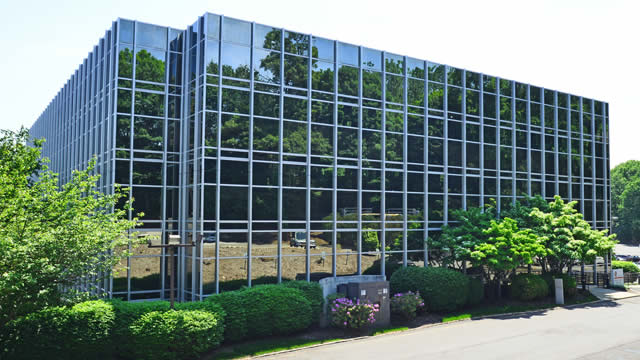
CMCT(CMCT) - 2025 Q3 - Earnings Call Transcript
2025-11-14 18:00
Financial Data and Key Metrics Changes - The company's core FFO was negative $10.5 million for Q3 2025, compared to negative $11.5 million in the prior year, indicating a slight improvement [17] - Overall net operating income (NOI) was $7 million, down from $9.8 million in the previous quarter [6][7] - The company reported a negative FFO of $11.1 million, or negative $14.75 per diluted share, compared to negative $28.4 million in the prior year [17] Business Line Data and Key Metrics Changes - Office segment NOI decreased to $5 million in Q3 2025 from $5.4 million in Q3 2024, primarily due to lower rental revenues and occupancy declines [14][15] - Hotel NOI was $850,000 in Q3 2025, down from $1 million in the prior year, impacted by renovation disruptions [16] - Multifamily segment NOI increased to $792,000 in Q3 2025 from $508,000 in the prior year, driven by lower real estate taxes [16] Market Data and Key Metrics Changes - Multifamily occupancy at 701 South Hudson improved to approximately 81% from 68% at the end of the second quarter [9] - San Francisco experienced a third-quarter rent growth of 5.2%, the strongest year-over-year growth rate since 2015 [11] - The office portfolio was 73.6% leased at the end of Q3 2025, with a notable increase to 86.6% when excluding one Oakland property [12] Company Strategy and Development Direction - The company is focused on strengthening liquidity and balance sheet while growing its multifamily business [4] - A definitive agreement was made to sell the lending business for approximately $44 million, considered a non-core asset [5] - The company aims to benefit from a recovering commercial real estate market, supported by lower interest rates and increased office leasing activity [6] Management's Comments on Operating Environment and Future Outlook - Management expressed optimism about improving cash flow in 2026, driven by office leasing activity, hotel renovations, and multifamily performance [8] - The company believes headwinds from COVID are largely behind, with return-to-office trends creating positive momentum [12] - Management anticipates meaningful opportunities for multifamily NOI growth through rising rents and improved occupancy [11] Other Important Information - Barry Berlin, the CFO, will step down following the sale of the lending division, with Brandon Hill set to assume the role [8] - The company is nearing completion of an $11 million renovation at the Sheraton Grand Sacramento, funded through various sources [12] Q&A Session Summary - There were no questions during the Q&A session, leading to the conclusion of the conference [21]

The State Of REITs: May 2025 Edition
Seeking Alpha· 2025-05-23 18:25
REIT Performance Overview - The REIT sector experienced a significant decline in April 2025, with an average total return of -6.45%, underperforming the broader market indices such as the Dow Jones Industrial Average (-3.1%), S&P 500 (-0.7%), and NASDAQ (+0.9%) [1] - Year-to-date, the average total return for REITs stands at -9.10%, which is worse than the -7.65% return for the same period in 2024 [12] Performance by Market Capitalization - Microcap REITs underperformed larger peers for the sixth consecutive month, with returns of -8.87% [3] - Large-cap REITs (-2.93%) outperformed mid-caps (-5.45%) and small caps (-8.69%) in April, with large-cap REITs outperforming small caps by 1081 basis points in the first four months of 2025 [3] Property Type Performance - Only 11.11% of REIT property types averaged a positive total return in April, with a 20.17% spread between the best (Data Centers +7.28%) and worst-performing property types (Timber -12.90%) [5][6] - Year-to-date, Office REITs (-24.06%) and Hotel REITs (-22.90%) significantly underperformed, while Health Care (+7.23%), Infrastructure (+6.88%), and Casinos (+6.00%) were the only property types with positive returns [7] Price/FFO Multiples - The average P/FFO for the REIT sector decreased from 13.9x to 13.4x in April, with 83.3% of property types experiencing multiple contraction [8] - Data Centers (26.9x), Multifamily (24.6x), and Infrastructure (18.7x) currently trade at the highest average multiples among REIT property types, while Hotels (5.9x) and Offices (8.2x) have the lowest [9] Individual REIT Performance - Digital Realty Trust (DLR) achieved a strong gain of +12.04% in April, despite a year-to-date return of -8.72% [11] - Wheeler REIT (WHLR) was the worst-performing REIT in April, with a staggering decline of -63.61% for the month and -98.29% year-to-date [11] Dividend Yield Insights - The high dividend yields of the REIT sector are a primary reason for investment, with many REITs trading below their NAV, resulting in attractive yields [15]