Real Estate - Second - hand Housing

Search documents
杭州二手房市场:12月成交6862套,全年达88456套
Sou Hu Cai Jing· 2026-01-03 19:40
Core Insights - The core viewpoint of the article highlights a significant increase in the transaction volume of second-hand homes in Hangzhou during December 2025, indicating a revival in market activity towards the end of the year [1] Group 1: Market Performance - In December 2025, the transaction volume of second-hand homes in Hangzhou reached 6,862 units, reflecting a month-on-month growth of 4.6%, marking a continuous recovery trend [1] - The total transaction volume for the entire year of 2025 in Hangzhou's second-hand housing market was 88,456 units [1] Group 2: Buyer Demographics - The primary group of homebuyers is gradually entering the market, contributing to the renewed vitality of the housing sector [1] - Over 53% of the transactions involved properties priced below 2 million yuan, indicating a strong demand for affordable housing options [1]
二手房大逃杀:割肉、陷阱与百万血泪的终极博弈
Sou Hu Cai Jing· 2025-07-23 06:13
Core Viewpoint - The article highlights the severe downturn in China's second-hand housing market in 2025, illustrating the struggles of homeowners facing significant price drops and the aggressive tactics employed by real estate agents to facilitate sales [1][2][3][5][10]. Market Conditions - In the first half of 2025, Shanghai recorded 130,000 second-hand home transactions, the highest in four years, but the average transaction cycle extended to 142 days [3]. - The conversion rate for viewings plummeted from 15:1 in 2022 to 45:1, indicating a drastic increase in the number of viewings required to secure a buyer [3]. Homeowner Experiences - Homeowners are experiencing immense pressure to lower their asking prices, with some reducing their prices multiple times, leading to significant financial losses [1][5][8]. - A homeowner in Shenzhen faced a loss of 440,000 after selling their property for 3.31 million, despite initially listing it for 8 million [5]. Real Estate Agent Tactics - Real estate agents are employing aggressive strategies to pressure homeowners into lowering prices, often using scripted tactics to manipulate emotions and create urgency [2][3][6]. - Agents are also leveraging market conditions to negotiate lower prices, with some homeowners feeling exploited by their own agents [5][6]. Market Dynamics - The inventory of second-hand homes in 22 major cities has surpassed 3 million, with a depletion cycle of 23 months, indicating a significant oversupply [8]. - Despite apparent stability in some areas, hidden discounts such as renovation compensation and parking space gifts are prevalent, with 60% of transactions in certain districts reflecting these practices [8]. Changing Strategies - Homeowners are adapting by employing creative marketing strategies to enhance the appeal of their properties, such as showcasing personal touches to attract buyers [5][10]. - New survival strategies are emerging among homeowners, including community initiatives and self-managed sales platforms, reflecting a shift in the market dynamics [10]. Regulatory Changes - Local governments are beginning to implement measures such as floating price guidance for second-hand homes to protect both buyers and sellers [10]. - Homeowners are increasingly seeking legal protections, such as price maintenance agreements with agents, to safeguard against further price drops [10].

重点城市二手房周度成交分析报告(5月第二周)
3 6 Ke· 2025-05-13 01:56
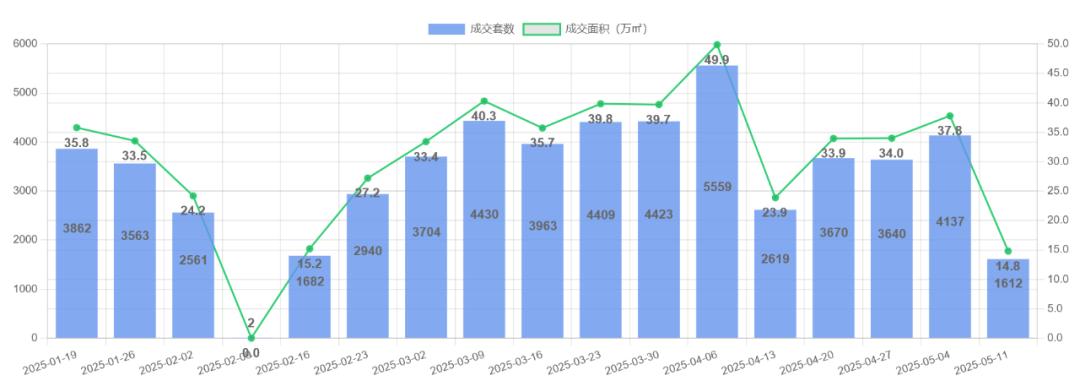
Market Overview - The Beijing second-hand housing market has shown significant fluctuations, with a sharp decline in transaction volume in the first week of May 2025, dropping to 1,612 units, a 61.0% decrease compared to the previous week, marking a six-week low [4] - The Shanghai second-hand housing market also experienced a notable drop, with transactions falling to 2,710 units, a 53.2% decrease week-on-week, also reaching a six-week low [8] - In Shenzhen, the market saw a drastic decline in transactions, plummeting by 70% to 428 units, indicating a significant downturn [11] - Hangzhou's market faced a similar fate, with transactions dropping to 631 units, a 64% decrease, marking the lowest level in six weeks [13] - Chengdu's market experienced a sharp decline of 78.5% in transactions, falling to 1,219 units, also a six-week low [17] Transaction Volume Analysis - Beijing's average weekly transaction volume over the past four weeks was 3,265 units, indicating a stark contrast to the recent drop [4] - Shanghai's average weekly transaction volume over the last four weeks was 5,216 units, highlighting the recent significant decline [8] - Shenzhen's average weekly transaction volume was 1,218 units, reflecting the drastic drop in the latest week [11] - Hangzhou's average weekly transaction volume was 1,527 units, showing a significant reduction in the latest week [13] - Chengdu's average weekly transaction volume was 4,296 units, indicating a sharp decline from previous levels [17] Area and Demand Characteristics - In Beijing, the average area per unit remained stable at 92.0 square meters, suggesting consistent demand structure despite the drop in transactions [4] - Shanghai's average area per unit was stable at 82.0 square meters, indicating a focus on essential housing needs [8] - Shenzhen saw an increase in average unit size to 102.0 square meters, suggesting a shift towards larger units [11] - Hangzhou's average unit size dropped to 99 square meters, indicating a rise in smaller unit transactions [13] - Chengdu's average unit size increased to 97 square meters, reflecting a growing demand for improved housing options [17] Market Influences - The sharp declines in transaction volumes across these markets are attributed to the impact of the May Day holiday and a prevailing wait-and-see attitude towards policy changes [4][8][11][13][17] - Continuous monitoring of policy adjustments and market recovery post-holiday is recommended to assess future trends [11][13][17]