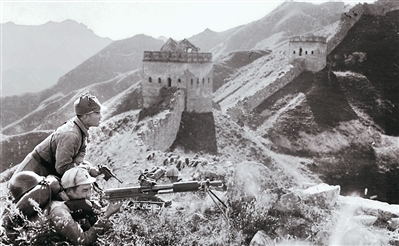
《战斗在古长城》

Search documents
老照片里的长城(众生相)
Ren Min Ri Bao Hai Wai Ban· 2025-09-30 21:49
Core Viewpoint - The article highlights the deep connection between the Yan family and the Great Wall of China, showcasing their extensive exploration and research over 40 years, culminating in the publication of a book titled "Great Wall Morphology Atlas" that aims to document and understand the architectural beauty and historical significance of the Great Wall [4][6]. Group 1: Exploration Journey - The Yan family, consisting of Yan Xinqiang and his son Yan Gongming, has visited the Great Wall over a thousand times since 1984, traveling from Beijing to various provinces including Hebei, Shanxi, and even Ningxia and Gansu [4][5]. - Their first visit to the Great Wall was in 1984 at the ancient northern pass of Gubeikou, where they relied on limited transportation options to reach the Wall [4][5]. - The father-son duo gained recognition in the Great Wall exploration community and made significant contributions to identifying the locations of historical photographs related to the Great Wall [5]. Group 2: Research and Discoveries - The Yan family successfully identified the location of a historical photograph taken by photographer Sha Fei in 1938, which had remained a mystery for years, by analyzing architectural details such as wall materials and window configurations [5][6]. - They developed a methodology termed "morphology," focusing on the physical characteristics of the Great Wall rather than relying on vague geographical names, which allowed them to uncover more secrets of the Wall [6]. - Their research efforts led to the publication of "Great Wall Morphology Atlas," which aims to provide a comprehensive understanding of the Great Wall's defensive architecture and aesthetic beauty [6]. Group 3: Personal Experiences and Legacy - The article recounts personal anecdotes from the Yan family's explorations, including a memorable winter encounter in 1987 when they sought refuge from a snowstorm [6]. - The father-son duo emphasizes the importance of documenting the lesser-known aspects of the Great Wall, aiming to inspire future generations to appreciate its rich history and intricate details [6].