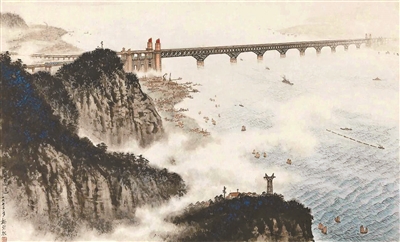
《武汉防汛图》

Search documents
长江的气质 尽在画家笔端
Bei Jing Qing Nian Bao· 2026-01-30 02:05
Core Viewpoint - The exhibition "Flowing Eastward: A Fine Art Exhibition of Yangtze River Themes from the Collection of the National Art Museum of China" showcases the artistic representation of the Yangtze River, highlighting its cultural significance and historical narratives through various artworks [1]. Group 1: Historical Context - The Yangtze River, as China's longest river, has been a source of inspiration for countless artists and poets throughout history, reflecting the evolution of Chinese civilization and culture [2]. - The cultural development along the Yangtze River has paralleled that of the Yellow River, with both rivers contributing to a rich tapestry of Chinese cultural identity [2]. - Since the Tang and Song dynasties, the focus of Chinese civilization has gradually shifted southward, with the Yangtze River playing a crucial role in the flourishing of cultural and artistic expressions [2]. Group 2: Artistic Evolution - Notable historical artworks include Wu Daozi's "Three Hundred Miles of Jialing River" and Wang Ximeng's "A Thousand Li of Rivers and Mountains," which reflect the grandeur of the Yangtze River region [3]. - The development of Yangtze-themed paintings has evolved into a classic format, with artists like Zhao Fu and Qiao Zhongchang contributing to the literary dimensions of these artworks [3]. - The 20th century marked a period of unprecedented exploration and innovation in Yangtze River art, exemplified by Li Xiong's "Wuhan Flood Prevention Map," which captures the spirit of collective effort during a significant historical event [3]. Group 3: Contemporary Representations - Contemporary artists have depicted the Yangtze River's landscapes and human experiences, showcasing the contrast between the majestic Three Gorges and the expansive Taihu Lake [4]. - Works like Qian Songyan's "Changshu Fields" and Wei Zixi's "Heavenly Moat Becomes a Thoroughfare" illustrate the transformation of agricultural and industrial landscapes in modern China [5][8]. - The exhibition features over 140 selected artworks that collectively narrate the relationship between the Yangtze River and China's national development, enhancing viewers' understanding and appreciation of the country's natural and cultural heritage [17].

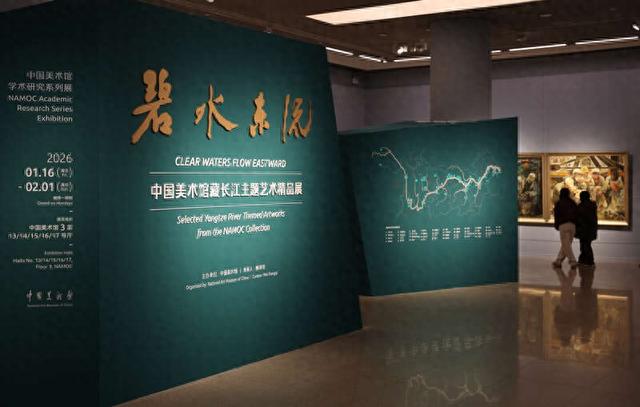
近28米长卷《武汉防汛图》亮相,中国美术馆开幕长江主题艺术精品展
Xin Lang Cai Jing· 2026-01-20 04:32
Core Viewpoint - The "Bishu Dongliu - Jiangsu Theme Art Exhibition" organized by the China Art Museum showcases over 140 pieces of art related to the Yangtze River, highlighting its significance in national construction and the construction of national spirit [1][3]. Group 1 - The exhibition features works from renowned artists such as Fu Baoshi, Li Xiongcai, Guan Shanyue, and Wu Guanzhong, with nearly half of the exhibits being rarely displayed in recent years [1][3]. - It is a sister exhibition to the 2021 "Advancing in the Current - Art Exhibition of Yellow River Theme" and is divided into three sections: "Millennial Cultural Context: The Yangtze River," "Raising Grand Plans: National Epic," and "Remembering Homesickness" [3][5]. - The exhibition includes a nearly 28-meter-long scroll painting "Wuhan Flood Prevention Map" by Li Xiongcai, displayed in a way that exceeds previous exhibitions [5]. Group 2 - The exhibition presents representative paintings depicting major bridges and water conservancy projects, along with well-known poems and literature related to the Yangtze River, creating a narrative structure that intertwines nature, history, and culture [5]. - Accompanying the exhibition are academic seminars and public education activities such as "Curator-led Tours" [5][7]. - The exhibition is located in the 13th to 17th halls of the China Art Museum and will be open until February 1 [7].