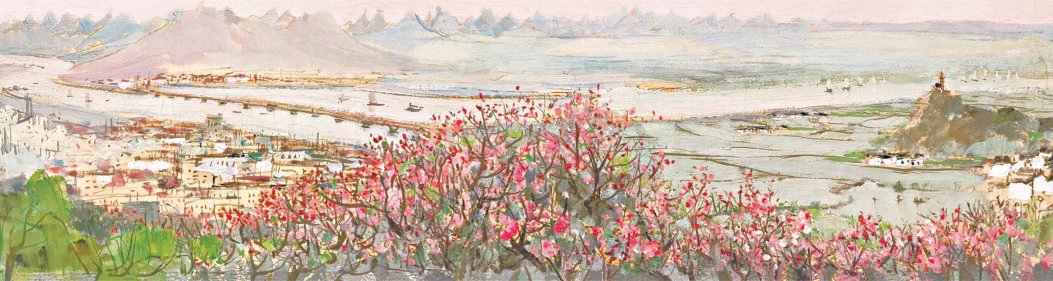
《西陵峡》

Search documents
长江的气质 尽在画家笔端
Bei Jing Qing Nian Bao· 2026-01-30 02:05
Core Viewpoint - The exhibition "Flowing Eastward: A Fine Art Exhibition of Yangtze River Themes from the Collection of the National Art Museum of China" showcases the artistic representation of the Yangtze River, highlighting its cultural significance and historical narratives through various artworks [1]. Group 1: Historical Context - The Yangtze River, as China's longest river, has been a source of inspiration for countless artists and poets throughout history, reflecting the evolution of Chinese civilization and culture [2]. - The cultural development along the Yangtze River has paralleled that of the Yellow River, with both rivers contributing to a rich tapestry of Chinese cultural identity [2]. - Since the Tang and Song dynasties, the focus of Chinese civilization has gradually shifted southward, with the Yangtze River playing a crucial role in the flourishing of cultural and artistic expressions [2]. Group 2: Artistic Evolution - Notable historical artworks include Wu Daozi's "Three Hundred Miles of Jialing River" and Wang Ximeng's "A Thousand Li of Rivers and Mountains," which reflect the grandeur of the Yangtze River region [3]. - The development of Yangtze-themed paintings has evolved into a classic format, with artists like Zhao Fu and Qiao Zhongchang contributing to the literary dimensions of these artworks [3]. - The 20th century marked a period of unprecedented exploration and innovation in Yangtze River art, exemplified by Li Xiong's "Wuhan Flood Prevention Map," which captures the spirit of collective effort during a significant historical event [3]. Group 3: Contemporary Representations - Contemporary artists have depicted the Yangtze River's landscapes and human experiences, showcasing the contrast between the majestic Three Gorges and the expansive Taihu Lake [4]. - Works like Qian Songyan's "Changshu Fields" and Wei Zixi's "Heavenly Moat Becomes a Thoroughfare" illustrate the transformation of agricultural and industrial landscapes in modern China [5][8]. - The exhibition features over 140 selected artworks that collectively narrate the relationship between the Yangtze River and China's national development, enhancing viewers' understanding and appreciation of the country's natural and cultural heritage [17].

一江碧水入画来
Xin Lang Cai Jing· 2026-01-12 20:06
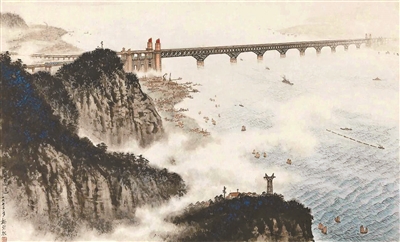
Core Viewpoint - The article discusses the significance of the Yangtze River in Chinese art, highlighting various artistic expressions and historical contexts that reflect the river's cultural and historical importance [9][14]. Group 1: Historical Context of Yangtze River in Art - The Yangtze River has been a subject of artistic expression since ancient times, with notable works from various dynasties, including the Southern Song Dynasty's "Yugong Mountain and River Map" [9]. - The "Yangtze River Ten Thousand Miles Map" has been a recurring theme in Chinese painting, with artists like Xia Gui and Zhao Fu being among the earliest to depict it [9]. - The article mentions significant historical events associated with the Yangtze River, including the Japanese bombing of Chongqing during World War II, which is captured in Wu Zuoren's painting "Chongqing Bombing" [10]. Group 2: Modern Artistic Expressions - The exhibition "Clear Water East Flow" at the National Art Museum of China will showcase over 150 pieces of art related to the Yangtze River, including contemporary works by artists focusing on the river theme [9]. - Artists like Li Hu and Zong Qixiang have depicted the Yangtze River's cultural and historical narratives through their works, emphasizing realism and emotional depth [10]. - The construction of major bridges like the Wuhan Yangtze River Bridge and Nanjing Yangtze River Bridge inspired a wave of artistic creations reflecting national pride and socialist construction [10]. Group 3: Artistic Movements and Themes - The article highlights the 1960s as a significant period for artists who captured the beauty of the Three Gorges, with notable figures like Fu Baoshi leading expeditions to create iconic works [11]. - The Three Gorges have become a symbol in art, with many artists exploring its natural beauty and cultural significance, as seen in works by Li Hu and Zong Qixiang [12]. - The article also notes the evolution of artistic representation of the Yangtze River, from traditional ink paintings to modern photography, reflecting the river's ongoing relevance in contemporary art [13].