
长江文化

Search documents
40年回响再续!“新时代长江之歌”创作征集,用旋律为母亲河谱写新篇
Yang Shi Wang· 2026-02-24 06:52
Core Viewpoint - The "New Era Yangtze River Song" creation solicitation activity aims to promote the cultural significance of the Yangtze River and support the high-quality development of the Yangtze River Economic Belt through music and storytelling [4]. Group 1: Event Overview - The Yangtze River Economic Belt development has been a major national strategy, receiving continuous attention and promotion over the years [4]. - The solicitation invites both professional musicians and amateur creators to participate, emphasizing the importance of love for the Yangtze River [4]. - The creative styles are unrestricted, allowing for various musical expressions, including vocal and instrumental works [4]. Group 2: Submission Guidelines - Each participant can submit up to two original works that have not been publicly published or awarded at the provincial level or above [5]. - Submissions must include a complete score and lyrics, with audio or video files in MP3 or MP4 format [7]. - A creative description of 200-500 words is required, detailing the background, inspiration, and essence of the work [8]. Group 3: Rewards and Recognition - Outstanding works will receive an official certificate and be showcased through mainstream media platforms, increasing visibility [6]. - Selected authors will have the opportunity to participate in public singing activities along the Yangtze River, with coverage by major media [6]. - Excellent works will be included in a dedicated promotional matrix, contributing to the dissemination of Yangtze culture [6]. Group 4: Copyright and Legal Considerations - Participants must ensure their works are original and free from copyright disputes, with legal responsibilities resting on the submitter for any infringements [8]. - Copyright for selected works will be shared between the organizer and the author, allowing for various public uses by the organizer [8]. - Non-selected works will remain the property of the authors, with the organizer allowed to use them for promotional purposes [8].

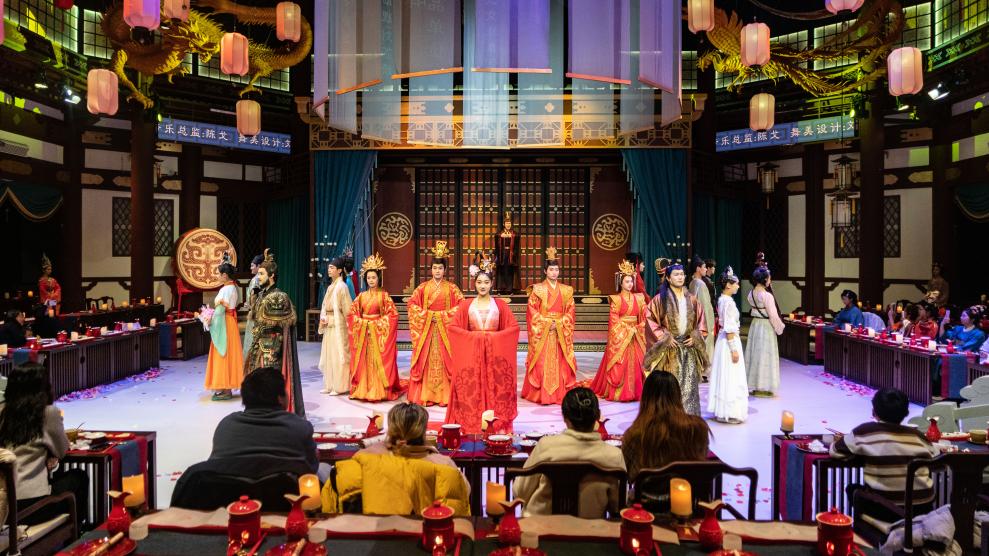
到武汉赴一场新春盛会:寻味三国,邂逅知音
Xin Hua She· 2026-02-21 08:48
Core Viewpoint - The article highlights the vibrant cultural and tourism activities in the Zhiyin Cultural Tourism Area of Wuhan during the Spring Festival, showcasing its integration of historical and modern elements to attract visitors [1][3]. Group 1: Tourism Activities - The Zhiyin Cultural Tourism Area offers various activities such as exhibitions, lantern festivals, and markets, drawing visitors to experience a rich cultural celebration [1]. - The area spans approximately 144.6 hectares and includes attractions like Guishan, Yuehu, and the ancient Qin Terrace, with plans to achieve a national 4A tourism rating by December 2025 [1]. - During the Spring Festival, the area received nearly 250,000 visitors in the first five days, with popular spots including the Guishan TV Tower and Zhiyin Hall [5]. Group 2: Cultural Events - The Zhiyin Hall has launched an immersive dining theater show titled "The Banquet of Three Kingdoms," blending classical performances with modern interpretations, allowing audience interaction and local cuisine tasting [1][3]. - The ancient Qin Terrace hosts a New Year gathering featuring traditional guqin music and interactive activities like flower arrangement and Hanfu experience, enhancing the cultural experience for visitors [5]. - The 2026 Wuhan New Spring Lantern Festival features five large-scale light displays, contributing to the festive atmosphere and enhancing the night scenery of the city [5].
处处体现“逐立上游”
Xin Lang Cai Jing· 2026-02-16 22:33
Group 1 - The core theme of the Spring Festival Gala in Yibin is titled "Standing Upstream," representing the cultural significance of the Yangtze River and the spirit of progress in Yibin as a city located at the river's upper reaches [3][6] - The main stage is strategically located at Hejiangmen, symbolizing Yibin's identity as the "First City of the Yangtze River," aiming to create a memorable visual impression for viewers [3][4] - The performance integrates local cultural elements, including the intangible cultural heritage of Sichuan, specifically the "Spring Wine" tradition, enhancing the regional cultural representation [4][5] Group 2 - The program features a blend of modern and technological elements, including a segment with 5,000 drones forming a "Yangtze River Dolphin," showcasing innovative use of technology in the performance [5] - The event highlights Yibin's historical significance as a key city on the Tea Horse Road, using a horse as a central motif to illustrate the city's journey from history to modernity [5][6] - Following the gala, Yibin plans to establish a year-round light and sound show at the Three Rivers and Six Banks area, enhancing the city's cultural offerings during holidays and weekends [4]
长三角议事厅|以文为脉,赋能长江流域城市更新与协同发展
Xin Lang Cai Jing· 2026-02-06 03:25
Core Viewpoint - The article emphasizes the importance of cultural empowerment in urban renewal along the Yangtze River, highlighting the need for tailored strategies based on geographical and cultural contexts to achieve high-quality urban development [1][7]. Group 1: Urban Renewal Strategies - Chongqing's urban renewal is rooted in Ba-Shu culture, focusing on "going with the flow" and adapting to the mountainous terrain, preserving historical and industrial memories while integrating new functions [3][8]. - Wuhan's urban renewal showcases a strong commercial gene, emphasizing multi-dimensional integration of historical context, modern industry, and community life, particularly in waterfront areas [4][8]. - Suzhou adopts a meticulous approach to urban renewal, adhering to strict cultural preservation guidelines while implementing gradual updates to infrastructure, emphasizing the balance between protection and development [5][6][8]. Group 2: Cultural Empowerment and Collaboration - The article identifies a common pattern among Chongqing, Wuhan, and Suzhou, where culture serves as a strategic asset to enhance economic, social, and ecological benefits, moving from static preservation to active cultural transmission [7][8]. - It suggests that cultural empowerment should be integrated into urban renewal projects, promoting collaboration among government, market, and society to enhance inclusivity and sustainability [9][10]. Group 3: Recommendations for Future Development - The article proposes innovative mechanisms for deepening cultural integration and collaboration among cities along the Yangtze River, including establishing a cultural development alliance and enhancing resource sharing [9][10][11]. - It emphasizes the need for a digital foundation to support cultural initiatives, advocating for the creation of a "Yangtze Cultural Cloud Platform" to digitize and preserve cultural resources [12]. - The establishment of a comprehensive oversight and evaluation system is recommended to ensure effective cultural heritage protection and urban renewal, addressing conflicts and promoting cooperation among regions [13][14].
长江的气质 尽在画家笔端
Bei Jing Qing Nian Bao· 2026-01-30 02:05
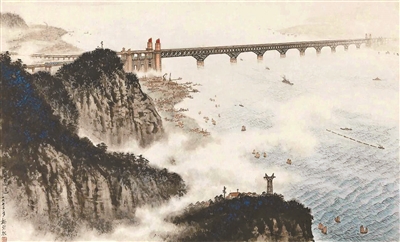
Core Viewpoint - The exhibition "Flowing Eastward: A Fine Art Exhibition of Yangtze River Themes from the Collection of the National Art Museum of China" showcases the artistic representation of the Yangtze River, highlighting its cultural significance and historical narratives through various artworks [1]. Group 1: Historical Context - The Yangtze River, as China's longest river, has been a source of inspiration for countless artists and poets throughout history, reflecting the evolution of Chinese civilization and culture [2]. - The cultural development along the Yangtze River has paralleled that of the Yellow River, with both rivers contributing to a rich tapestry of Chinese cultural identity [2]. - Since the Tang and Song dynasties, the focus of Chinese civilization has gradually shifted southward, with the Yangtze River playing a crucial role in the flourishing of cultural and artistic expressions [2]. Group 2: Artistic Evolution - Notable historical artworks include Wu Daozi's "Three Hundred Miles of Jialing River" and Wang Ximeng's "A Thousand Li of Rivers and Mountains," which reflect the grandeur of the Yangtze River region [3]. - The development of Yangtze-themed paintings has evolved into a classic format, with artists like Zhao Fu and Qiao Zhongchang contributing to the literary dimensions of these artworks [3]. - The 20th century marked a period of unprecedented exploration and innovation in Yangtze River art, exemplified by Li Xiong's "Wuhan Flood Prevention Map," which captures the spirit of collective effort during a significant historical event [3]. Group 3: Contemporary Representations - Contemporary artists have depicted the Yangtze River's landscapes and human experiences, showcasing the contrast between the majestic Three Gorges and the expansive Taihu Lake [4]. - Works like Qian Songyan's "Changshu Fields" and Wei Zixi's "Heavenly Moat Becomes a Thoroughfare" illustrate the transformation of agricultural and industrial landscapes in modern China [5][8]. - The exhibition features over 140 selected artworks that collectively narrate the relationship between the Yangtze River and China's national development, enhancing viewers' understanding and appreciation of the country's natural and cultural heritage [17].
武汉最大灯会亮灯了!持续到3月
Chang Jiang Ri Bao· 2026-01-29 00:38
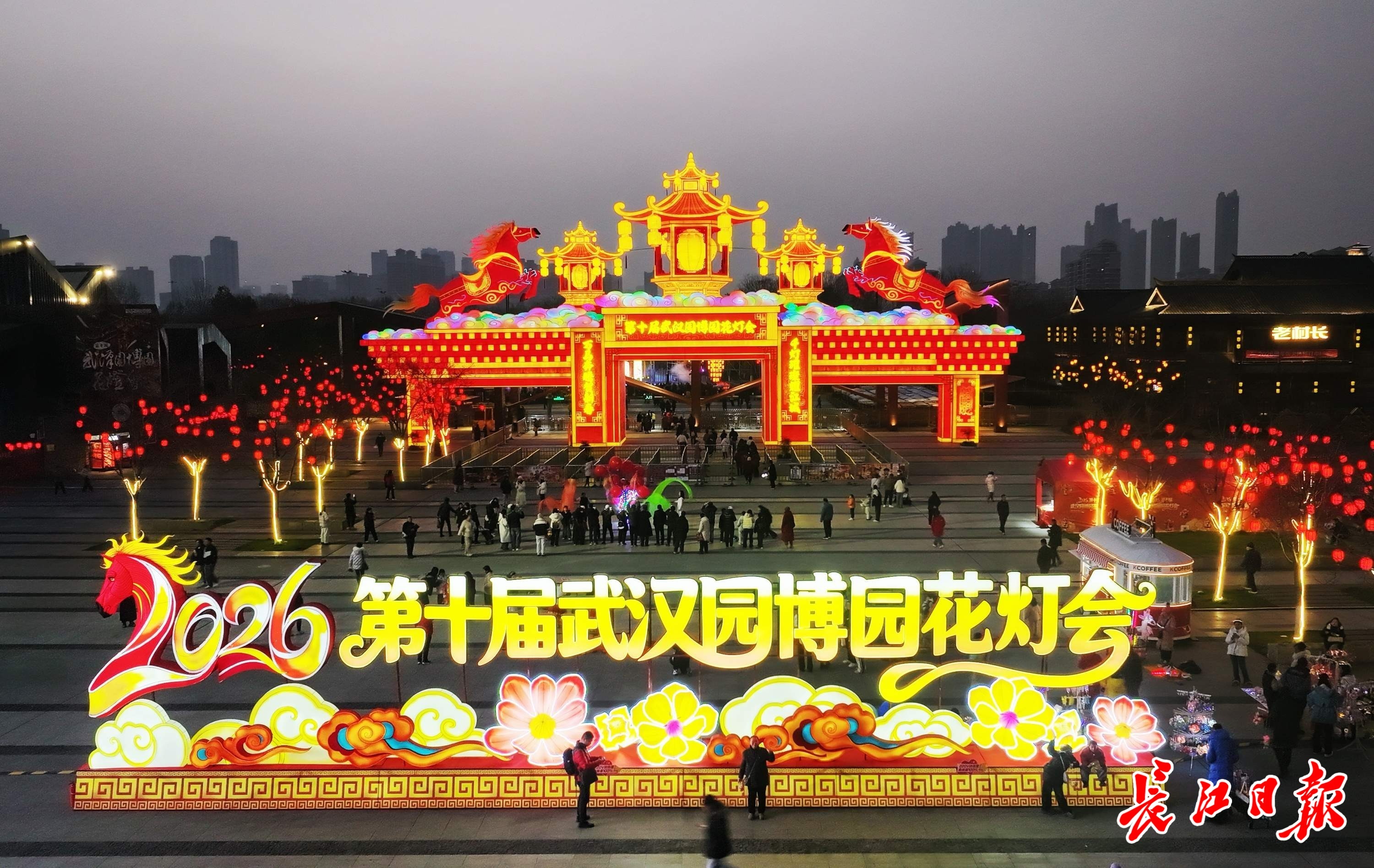
Core Viewpoint - The 10th Wuhan Garden Expo Lantern Festival, themed "Galloping Horses Celebrate the New Year, Thousands of Lights Shine on Jiangcheng," showcases a blend of cultural heritage, technological light effects, and human warmth, enhancing the visitor experience and promoting consumption [4][10]. Group 1: Event Overview - The festival, which has been held annually since 2016, has become a significant cultural event in Wuhan, recognized as one of the "Top Ten Lantern Festivals in the Country" and featured on CCTV three times [4][5]. - This year's festival features nearly 70 sets of colorful lanterns across five thematic sections, including "Success in the New Year" and "Heroes Recognized," creating a vibrant visual experience [4][5]. Group 2: Cultural Integration - The festival emphasizes the diversity of Yangtze River culture, with lantern displays representing historical figures and stories from the Three Kingdoms and traditional Chinese literature, alongside modern artistic expressions [5][8]. - The integration of traditional craftsmanship and modern aesthetics is evident, with intricate designs reflecting both historical and contemporary themes, appealing to a wide audience [7][8]. Group 3: Visitor Experience Enhancements - The festival has improved visitor experience through enhanced safety measures, service details, and optimized visitor flow, including the introduction of scenic lighting and themed tour routes totaling approximately 3.2 kilometers [10]. - A concurrent traditional market in the nearby Hankou Street features over a hundred renowned brands and local delicacies, enriching the festive atmosphere and providing a comprehensive cultural experience [10]. Group 4: Event Duration and Accessibility - The 10th Wuhan Garden Expo Lantern Festival will run until March 22, 2026, with daily lighting from 18:00 to 22:00, and extended entry times for certain gates [10].
从“十三五”到“十四五” 长江经济带10年发展取得“八大成效”
Xin Lang Cai Jing· 2026-01-04 16:56
Core Viewpoint - The report highlights the significant achievements of the Yangtze River Economic Belt over the past decade, emphasizing its increasing contribution to China's GDP and the successful implementation of various strategic initiatives aimed at sustainable development and regional coordination [2]. Group 1: Economic Contribution - During the 13th Five-Year Plan period, the GDP of the Yangtze River Economic Belt accounted for 45.37% of the national total, which increased to 46.43% during the 14th Five-Year Plan period, showing an improvement of over 1 percentage point [2]. - By September 2025, the GDP share of the Yangtze River Economic Belt is projected to reach 47.02%, indicating a clear "advancement" effect [2]. Group 2: Strategic Initiatives - The "Outline of the Development Plan for the Yangtze River Economic Belt" was officially issued in September 2016, outlining six major tasks including ecological protection, transportation corridor construction, and industrial innovation [2]. - Over the past decade, various ministries and 11 provinces have implemented policies and development plans to support the strategic objectives of the Yangtze River Economic Belt, resulting in eight significant outcomes [2]. Group 3: Environmental and Infrastructure Development - Efforts to protect the ecological environment have shown effectiveness, with a focus on collaborative protection and sustainable development, enhancing ecological restoration and value transformation [3]. - The construction of a comprehensive transportation corridor has been steadily advanced, optimizing the transportation layout to facilitate economic circulation [3]. Group 4: Urbanization and Open Economy - The promotion of new urbanization has been strengthened, with significant reforms aimed at poverty alleviation and rural revitalization, creating new economic growth spaces through urban-rural integration [3]. - The establishment of a comprehensive open economy has been emphasized, enhancing the overall effects of reform and opening up, and creating a competitive policy and institutional framework [3]. Group 5: High-Quality Development Strategies - The implementation of practical policy measures has been crucial for maintaining stable economic growth, focusing on expanding domestic demand and effective investment [4]. - The cultural heritage of the Yangtze River is being promoted, leveraging cultural parks to connect economic development with cultural empowerment [4]. Group 6: Future Development Trends - The 14th Five-Year Plan period will see the Yangtze River Economic Belt focusing on high-quality development through comprehensive innovation, with an emphasis on opening up as a core strategy [4][5]. - The development will involve effective interaction between local governments and central authorities, continuously adjusting development strategies to enhance growth potential [5].
彭雷霆:擦亮长江文化“金字招牌”
Jing Ji Ri Bao· 2025-12-08 00:04
Core Insights - The article emphasizes the importance of leveraging the cultural heritage of the Yangtze River to enhance the cultural tourism industry in Hubei, which is crucial for establishing Hubei as a strategic hub for the rise of Central China [1][2] Group 1: Cultural Heritage and Economic Development - Hubei aims to transform its historical cultural resources into developmental advantages by promoting the Yangtze culture, which has already shown initial success in boosting the cultural tourism sector [1] - The article highlights the need for a better mechanism to promote the mutual enhancement of culture and economy, as the current cultural tourism products lack significant brand recognition despite the rich cultural resources [1][2] Group 2: Strategic Initiatives for Cultural Tourism - To achieve the goals of becoming a strong economic and cultural province, Hubei should adopt a philosophy of mutual promotion between cultural and economic development, emphasizing values such as innovation and inclusivity inherent in Yangtze culture [2] - Hubei should focus on creating a cohesive image of "Yangtze Civilization" to establish itself as a world-renowned tourist destination, leveraging the unique characteristics of Yangtze culture to develop consumer-oriented tourism products [2] - The integration of technology is essential for innovating the expression of Yangtze culture, utilizing advancements like artificial intelligence and virtual reality to create immersive cultural tourism experiences [2]
蓝皮书解读|长江文化文艺创作、学术研究和传播领域均呈现新趋势
Xin Hua Cai Jing· 2025-11-26 09:05
Core Insights - The "Yangtze Culture Blue Book: Yangtze Culture Development Report (2024-2025)" was officially released, highlighting new trends in artistic creation, academic research, and dissemination in the Yangtze cultural sector over the past year [1] Group 1: Artistic Creation - Yangtze-themed artistic creation is transitioning towards "project-based" and "high-quality" development, driven by national and local policies [2] - Major projects like "Wind Right, Sail Suspended" and large-scale artistic creation activities have been launched, enhancing the quality and professionalism of Yangtze-themed artistic works [2] - Various artistic works reflecting the contemporary Yangtze landscape have been created, including long cultural essays, documentaries, orchestral music, and dance poetry [2] Group 2: Academic Research - Academic research on Yangtze culture is characterized by interdisciplinary integration, with key research hubs in Wuhan, Beijing, and Nanjing [4] - The focus of research includes topics like the "Yangtze National Cultural Park," "cultural industry," and "cultural tourism integration," with a notable presence of collaboration among scholars [4] - Numerous academic seminars and publications have emerged, providing important platforms for discussion and dissemination of Yangtze culture [4] Group 3: Cultural Dissemination - A unique dissemination pattern of Yangtze culture has formed, emphasizing the historical depth and contemporary value of the culture [6][7] - The volume of public discourse surrounding Yangtze culture exceeded 1.718 billion by June 2024, indicating significant engagement [7] - Collaborative media efforts across 13 provinces have enhanced the reach and impact of Yangtze culture, with initiatives like "Cultural China Tour: Yangtze Song" [7]
2025长江文化南京论坛举行
Xin Hua Ri Bao· 2025-11-21 14:31
Group 1 - The forum emphasized the significance of the Yangtze River as a symbol of Chinese civilization and its role in shaping Jiangsu's geography, economy, and culture [1] - The forum aimed to deepen international cooperation among river basin countries, enhancing the protection and transmission of river culture while promoting green development [1][2] - The event highlighted the importance of high-quality development along the Yangtze River Economic Belt, aligning with the directives from the 20th Central Committee of the Communist Party of China [2] Group 2 - The forum featured discussions on the integration of historical culture preservation with urban green development and the revitalization of Yangtze culture [3] - Key initiatives announced included the "From Yangtze to Ocean" aquatic biological protection action plan and the launch of the "Eternal River - Yangtze Cultural Series" publishing project [3] - The forum attracted participation from various international organizations, think tanks, and government officials, indicating a collaborative approach to sustainable development [3]